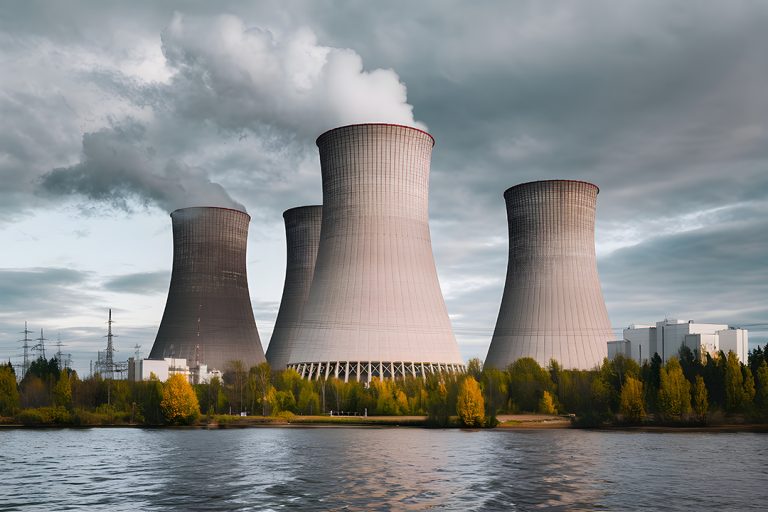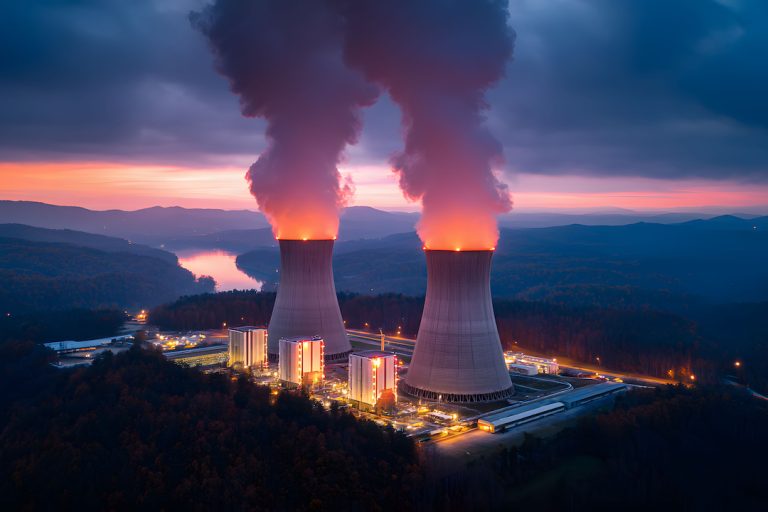
In China, the AI stock trade has already unwound. The tech-heavy STAR 50 index fell about 40% from its midyear peak by late October, erasing roughly $480 billion in market value by Reuters’ count, and the broader CSI300 index lost 8.5% in October, its worst month in more than a decade. In the same weeks, four of the biggest U.S. tech companies told investors they plan to spend roughly $720 billion to $740 billion this year, most of it on data centers and the chips inside them.
Those two pictures sum up the argument now running through markets. One side sees a spending boom that has outrun the revenue needed to pay for it. The other sees demand so strong that the real problem is building fast enough. This piece lays out both, along with three stories from the past two weeks that have fed the debate: a tech chief’s comment about the memory in your PC, AI hardware sitting in warehouses waiting for electricity, and a new generation of chips arriving before the last one is switched on.
The RAM Fight
On an October 29 episode of the Cheeky Pint podcast, hosted by Stripe co-founder John Collison, OpenAI chief executive Sam Altman was asked about local inference, meaning people running AI models on their own computers instead of in the cloud. He argued that it is “quite terrible” for the world’s limited supply of DRAM, the main working memory in computers, to sit in personal machines where it is “being used 5% of the time.” His point was utilization. In a supply-constrained market, he said, “you want maximum utilization in the cloud,” where the same memory can serve many users back to back.
The clip spread fast, and much of the reaction was hostile. Critics pointed out that AI data centers are a big reason memory is scarce and expensive to begin with. Notebookcheck noted that memory makers are prioritizing data center demand, adding to price pressure on PCs and other hardware, and that Altman’s position lines up with OpenAI’s business of running its models in the cloud. Altman did not say people shouldn’t own computers, but the remark touched a nerve with buyers already paying more.
The shortage behind it is not in dispute. Nvidia finance chief Colette Kress told analysts in August that the company was experiencing “extreme pricing conditions in memory,” driven in large part by the AI build-out itself, with prices headed higher into next year. Nvidia expects its gross margin to bottom at 71% to 72% in the fourth quarter. The International Energy Agency expects a shortage of high-bandwidth memory, the specialized kind used in AI chips, to last through at least the end of 2027.
Chips With Nowhere to Plug In
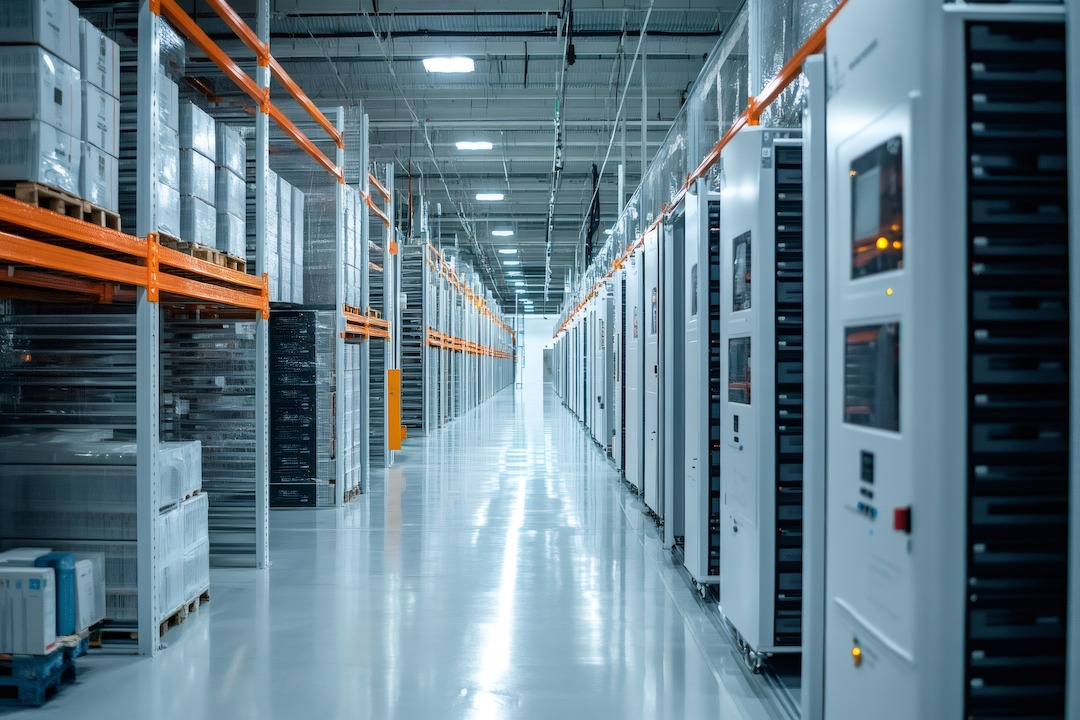
The RAM fight is about who gets scarce hardware. The next story is about hardware that has been bought and can’t yet be used. Business Insider reported on October 20 that Amazon set up an “Early Rack Receipt” process, citing internal emails from August, under which it expected to take delivery of about $5 billion of Nvidia GB300 server racks before final deployment, with roughly $3 billion more each month. Some Amazon Web Services sites had room for the racks but not the electricity to run them, so finished equipment was staged in warehouses. The industry has a name for this: dark GPUs, chips that have been purchased but can’t be switched on or fully used.
Amazon pushed back. A spokesperson called staging hardware near deployment sites a routine “best business practice” and disputed the suggestion that it lacked a clear path to bring the equipment online. How many racks are waiting, and for how long, has not been disclosed.
Amazon isn’t alone. Microsoft spent $45.2 billion on capital projects in the September quarter, below its own forecast of more than $50 billion, because capacity that third parties were supposed to deliver was delayed. A year ago, Microsoft chief executive Satya Nadella described the same problem in plainer terms: “a bunch of chips sitting in inventory that I can’t plug in.”
Power is the bottleneck. Morgan Stanley estimated that U.S. data center developers face a net power shortfall of 34%, or 32 gigawatts, through 2028, Reuters reported on October 5. Nvidia chief executive Jensen Huang told analysts in August that customers first have to secure “the land, power, and shell, which oftentimes is a couple, two, three years out.”
Both camps read the same facts their own way. Skeptics see billions of dollars tied up in equipment that earns nothing until it is plugged in. Optimists see proof that the constraint is electricity, not customers. Huang said on the same call that Nvidia’s demand is “much greater” than the roughly 70% growth its supply allows next fiscal year.
Old Before They’re Switched On?
Waiting has a cost because the next chip is already here. Nvidia began production shipments of its Vera Rubin platform in August and expects it to make up about 20% of its data center revenue in its fiscal third quarter. Kress claimed Rubin delivers 35 times lower token cost than Grace Blackwell Ultra, the GB300 generation sitting in Amazon’s warehouses. A token is a small unit of AI output, so that is Nvidia’s measure of how cheaply each generation produces answers. It is the company’s own figure, not an independent test.
That feeds the sharpest bear argument. Investor Michael Burry, known from “The Big Short,” argued last November that the big cloud companies spread the cost of their servers over five to six years while Nvidia’s product cycle runs two to three, and that this will understate their depreciation by about $176 billion between 2026 and 2028. Depreciation is the yearly charge a company books to spread out what equipment cost. The companies don’t all agree with each other, either. Amazon cut the assumed life of some servers from six years to five in 2025, citing the faster pace of AI technology, while Meta extended most of its servers to five and a half years.
The bull side’s evidence is that old chips keep earning. Rental prices tracked by Silicon Data rose about 38% for Nvidia’s H100, launched in 2022, and about 20% for the A100, launched in 2020, since the start of 2026. CoreWeave’s chief executive said some of its A100 contracts run through 2029.
The two sides are partly talking past each other. A chip can stay useful for years and still lose most of its resale value early. Being outdated is not the same as being obsolete. The debate is over how fast the value falls, and whether it falls before the investment pays back.
What a Pop Looks Like: China’s October
China offers the closest real-world look at the bear case playing out. The CSI300 lost 15% over 12 weeks, its longest losing streak on record, and Hong Kong’s tech majors ended October near their lowest level in two years. Reuters tied the October slide to a U.S. tech sell-off that reignited concerns about the returns on heavy AI spending. Business Insider listed waning optimism about U.S. AI spending, disappointment with the pace of China’s own tech progress, a prolonged property downturn and weak consumer spending.
Beijing has stepped in. Thirty-one securities firms and fund managers applied for more than 100 billion yuan, about $15 billion, in liquidity support through central bank swap operations, alongside cheaper financing for share buybacks. Analysts at 22V Research said the measures look aimed at putting “a floor under markets” rather than starting a broad rally.
Skeptics see the template for what could happen elsewhere once doubts about AI returns set in. Others note that China’s slide had China-specific causes, and argue the market may now be too pessimistic. UBS’s head of China internet research, Kenneth Fong, said some stocks are being priced as if the current spending peak were a permanent drag on earnings, with little value given to a recovery in cash flow or to AI paying off.
Two Readings of the Same Numbers
Nobody can say with certainty whether this is a bubble. What the evidence supports is two competing readings, each backed by credible sources.
The Bubble Case
The bear case starts with arithmetic. Gartner estimates that AI data center owners would need about $8.5 trillion in cumulative revenue through 2030 to cover announced spending, financing costs and a 12% return, against no more than $3.6 trillion of AI revenue it attributes to those data centers. It puts more than $3.5 trillion of AI infrastructure spending at risk of write-downs by the end of 2030, and warns most providers won’t recover their investment before the current generation of chips is replaced.
Bank of America describes the boom as a classic capital cycle that usually ends in disappointment, according to Fortune. The cash strain is visible. Alphabet’s free cash flow was negative $9.1 billion in the September quarter and Meta’s was negative $2.12 billion, while Amazon’s was negative $42.4 billion over the past 12 months. Add Burry’s depreciation argument and the warehoused racks, and skeptics see spending that has run ahead of returns.
The Boom Case
The bull case starts with demand. Nvidia says its supply will remain a bottleneck at least through the end of its fiscal year 2028, and that demand is running above what it can ship. Google Cloud revenue rose 103% and Amazon Web Services 39% in the September quarter. Dan Greenhaus of Solus Alternative Asset Management told Fortune that past AI warnings were followed by new market highs, and CoreWeave chief executive Mike Intrator said the company’s deal backlog is enough to cover its debt.
Even some analysts who expect losses don’t call it a bubble. IoT Analytics concluded in October that the AI market is not in a bubble today, though its own model shows returns on the data center build-out falling below a 15% hurdle from 2028. It expects write-downs the largest companies can absorb because they fund most of their spending from operating cash flow, with debt-funded cloud providers more exposed.
That last point is where the two cases meet. Few credible sources argue every dollar will earn its keep, and few argue the demand is imaginary. The disagreement is over how much gets written off, who absorbs it, and when.
Five Things to Watch
FAQ
Credible sources disagree. Gartner says AI data center owners need about $8.5 trillion in revenue through 2030 but will see no more than $3.6 trillion, while Nvidia and the big cloud companies report demand running ahead of supply. IoT Analytics expects losses but says the market is not in a bubble today. No one can settle it in advance.
Some are. Business Insider reported that Amazon is storing Nvidia racks in warehouses because some sites lack power, and Microsoft said delayed third-party capacity held back its spending. Amazon calls the staging routine. How many chips are waiting, and for how long, has not been disclosed.
Outdated, possibly. Obsolete, probably not. Nvidia’s newer Rubin chips are already shipping, and Nvidia claims they produce AI output far more cheaply. But older chips still earn money: rental prices for the 2020-era A100 and 2022-era H100 rose this year, and some A100 contracts run through 2029. The bigger question is how fast the chips lose value on paper.
No. He argued that memory sitting in personal computers is used only a small share of the time and does more work in a data center, in the context of people running AI models at home. Critics answered that AI demand is what made memory scarce, and that his view suits OpenAI’s cloud business.
The slide combined fading optimism about U.S. AI spending with problems specific to China: disappointment over the pace of domestic tech progress, a long property downturn and weak consumer spending. The STAR 50 fell about 40% from its midyear peak, and Beijing has stepped in with liquidity support.
Sources
- Business Insider via AOL: China’s AI Trade Has Crashed. Now Beijing Is Trying to Stop the Stock Market Slide, November 3, 2026
- Reuters via Business Recorder: China Stocks Post Biggest Monthly Loss on AI Selloff, October 31, 2026
- Associated Press via NY1: Amazon’s 3Q Results Miss Analysts’ Estimates but Posts Solid Sales Gains in Cloud Computing Unit, October 29, 2026
- 24/7 Wall St.: Alphabet Raised $41 Billion in One Quarter to Pay for AI, October 29, 2026
- Analytics India Magazine: Microsoft’s Azure Revenue Grows 48% in September Quarter, October 29, 2026
- Meta Platforms: Meta Reports Third Quarter 2026 Results (Form 8-K, Exhibit 99.1), October 21, 2026
- Alphabet: Alphabet Announces Third Quarter 2026 Results (Form 8-K, Exhibit 99.1), October 28, 2026
- Amazon.com: Amazon.com Announces Third Quarter Results (Form 8-K, Exhibit 99.1), October 29, 2026
- Tom’s Hardware: OpenAI CEO Says It’s ‘Quite Terrible’ for Your PC to Have RAM, October 30, 2026
- Notebookcheck: “Quite Terrible”: Sam Altman Says PCs Waste the World’s Limited DRAM Supply, October 30, 2026
- Nvidia: Second Quarter Fiscal 2027 Earnings Call Transcript, August 26, 2026
- International Energy Agency: Key Questions on Energy and AI, Executive Summary, April 16, 2026
- Business Insider via Investing.com: Amazon Stockpiles Nvidia AI Hardware Ahead of Power Availability, October 20, 2026
- Business Standard: Explained: What Are Dark GPUs and How Are They Holding Back the AI Boom?, October 30, 2026
- Data Center Dynamics: Microsoft Has AI GPUs “Sitting in Inventory” Because It Lacks the Power Necessary to Install Them, November 3, 2025
- The Motley Fool: What Michael Burry’s Bet Against AI Means, November 22, 2025
- Tiger Newspress: Michael Burry Sounds Alarm on $176B Depreciation Gap Among Tech Giants, November 12, 2025
- Analytics India Magazine: Why Nvidia’s Six-Year-Old GPU Is Still Making Money, August 17, 2026
- Gartner: Gartner Says Over $3.5 Trillion of AI Infrastructure Spending Could Be Exposed to Impairment by the End of 2030, October 14, 2026
- Fortune: Wall Street Debates if the Latest AI Bubble Warnings Are Another Head Fake or the Real Thing, October 17, 2026
- IoT Analytics: Are We in an AI Bubble?, October 6, 2026
- Bloomberg: Nvidia Tells Data Center Clients to Trim China Business, FT Says, November 3, 2026
- Gotrade News: Nvidia Stock (NVDA) Falls 1.3% as Chip Stocks Slide (Nov 2), November 3, 2026
Disclaimer
Sources: company regulatory filings and earnings-call transcripts, Gartner, the International Energy Agency, IoT Analytics, and wire and financial press as cited. The combined 2026 spending range is an AktieGo calculation from company guidance. Nvidia’s performance comparisons are company claims. Forecasts and estimates are revised over time. AktieGo doesn’t independently verify third-party data, so figures should be checked at the time you’re reading this.
These are speculative investments carrying significant risk including potential total loss of capital. Coverage on aktiego.com is provided for informational and educational purposes only. aktiego.com is not a registered investment advisor. Nothing in this article constitutes financial, investment, or professional advice. Readers are encouraged to conduct their own due diligence and consult a qualified financial advisor before making any investment decisions. For more information please see our full DISCLAIMER.