The Market Is Watching the Wrong Number
Brent crude hit $105.73 on Friday. Everyone is tracking the Strait of Hormuz. Nobody is talking about what is already broken.
The ceasefire is holding. Just.
The US naval blockade of Iranian ports is still active. Iran is still seizing ships. Both sides are using economic strangulation as leverage while diplomats circle an agreement that has not materialised.
The oil market is obsessed with the gate.
Nobody is counting what was destroyed on the other side of it.
The real supply story is not in the Strait. It is in the rubble of refineries, pipelines, gas processing facilities, desalination plants and aluminium smelters across six countries. A repair bill that has more than doubled in three weeks. A five-year recovery timeline for Qatar’s LNG infrastructure. A global turbine supply chain that was already backlogged before a single missile was fired.
That damage does not reverse when a deal is signed.
It was already done.
What Happened — The Short Version
On February 28, the United States and Israel launched coordinated strikes on Iran. Tehran retaliated immediately. Not just against US military positions and Israel. Against every major Gulf state simultaneously.
For the first time in history, all six Gulf Cooperation Council states were targeted by the same actor within 24 hours.
The Strait of Hormuz closed. Twenty million barrels of oil and petroleum products per day, roughly 20% of global supply, were cut off overnight. The IEA called it the largest supply disruption in the history of the global oil market.
IEA head Fatih Birol went further on Thursday.
“We are facing the biggest energy security threat in history.”
A ceasefire was announced on April 8. It was violated within hours. The Strait briefly reopened on April 17. It closed again two days later. Trump extended the ceasefire indefinitely on April 21, contingent on Iran submitting a unified proposal. The naval blockade stays in effect. Iran says it will not reopen the Strait while US Navy interceptions continue.
As of Friday April 25, Brent is at $105.73. Up 53.86% year on year.
The market knows the Strait is closed.
What it has not fully priced is the scale of what was destroyed while everyone was watching.
The Number That Matters Most
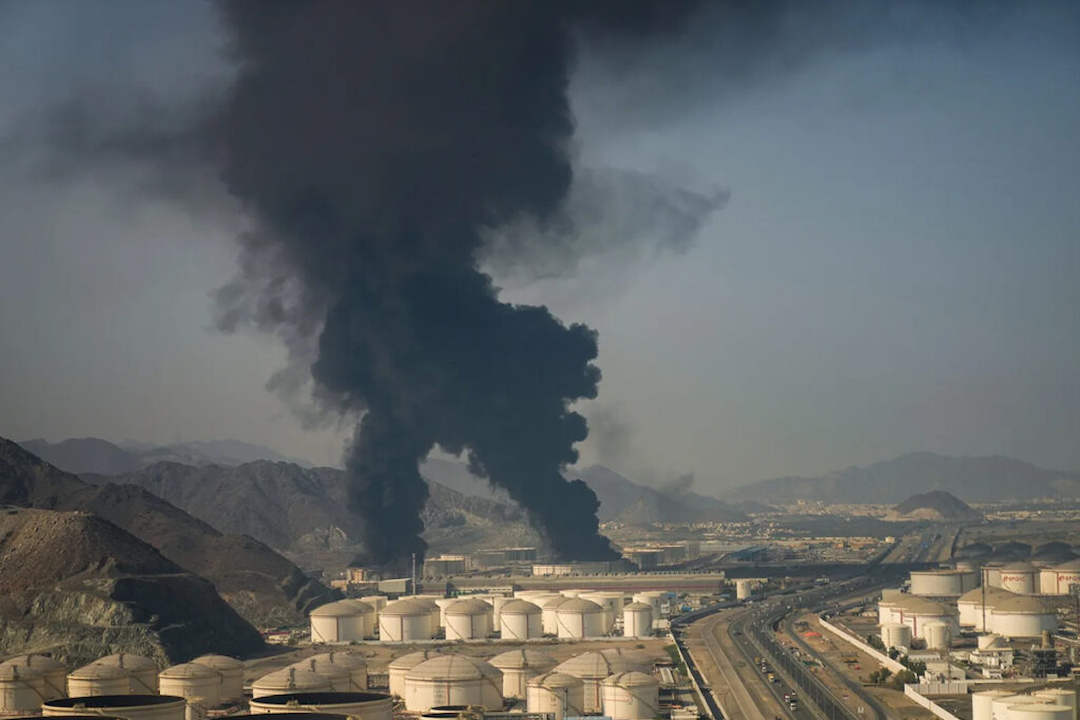
More than 80 oil and gas facilities across the Gulf have been damaged since February 28.
That figure comes from the IEA, confirmed by Birol directly.
More than 150 total attacks on energy infrastructure, including nuclear sites, have been recorded since the conflict began. AFP confirmed it, based on ACLED crisis monitoring data.
France’s Finance Minister Roland Lescure put the industrial damage in the starkest terms of any government official so far. Between 30 and 40 percent of Gulf refining capacity has been damaged or destroyed. The shortage: 11 million barrels a day. The restoration timeline for damaged facilities: up to three years.
The repair bill has more than doubled in three weeks.
In March, Rystad Energy estimated the cost at $25 billion. Three weeks later, revised to between $34 billion and $58 billion. Oil and gas facilities alone account for $30 to $50 billion. Non-hydrocarbon infrastructure, aluminium smelters, steel plants, power stations, desalination facilities, adds another $3 to $8 billion.
“This is no longer just a story about damaged facilities in the Gulf,” said Rystad senior analyst Karan Satwani. “It is a stress test for the global energy supply chain.”
The world has already lost more than 500 million barrels of production.
Saudi Arabia — The Backbone Took a Hit
Saudi Arabia is the world’s top oil exporter. It was also supposed to be the buffer.
It cannot buffer this.
On April 8, the day of the first ceasefire, Iran launched its largest coordinated strike on Saudi energy infrastructure. The East-West pipeline, Saudi Arabia’s only export route while the Strait remains closed, was hit at a pumping station. Flow dropped 700,000 barrels per day. The Manifa offshore facility lost 300,000 bpd. Khurais lost another 300,000 bpd.
Total capacity cut: 600,000 barrels per day. JPMorgan called it a measurable supply shock equivalent to roughly 10% of Saudi pre-conflict crude exports.
By April 12 the pipeline was restored to full capacity. Manifa is back online. Khurais restoration is ongoing. No confirmed date.
Also hit across the conflict: Ras Tanura, Saudi Aramco’s largest crude processing plant, 550,000 bpd capacity, temporarily halted and since restarted. The Satorp refinery, 460,000 bpd, part-owned by TotalEnergies, units halted. The Riyadh refinery, 120,000 bpd, attacked and directly affecting refined product exports. The Ju’aymah LPG facility hit by fires, impacting LPG and NGL exports. Samref, part-owned by ExxonMobil, drone hit.
The Saudi Ministry of Energy confirmed the attacks depleted a significant portion of operational and emergency inventories, limiting the kingdom’s ability to offset supply shortfalls.
The world’s swing producer no longer has much swing left.
UAE — A City Under Fire
The UAE received more missile and drone attacks than any other country in this conflict. Including Israel.
Since February 28, UAE air defences have engaged 537 ballistic missiles, 2,256 drones, and 26 cruise missiles.
Most were intercepted. But 75% of Patriot interceptor stocks are now spent. The numbers do not lie.
What got through, or fell as interception debris, caused significant industrial damage.
Habshan, Abu Dhabi’s largest natural gas processing facility, was suspended multiple times. Operations remain under damage assessment. Shah gas field was shut after a March 16 drone attack. Ruwais, one of the largest refineries in the world, suffered multiple fires from interception debris. The Borouge petrochemicals plant suspended operations for damage assessment. Fujairah port, the UAE’s critical crude and fuels hub outside the Strait, has been periodically shut. Das Island LNG is operating at reduced levels. Khor Fakkan port took a debris strike. Jebel Ali, Dubai’s main container port, was suspended as a precaution.
The single largest industrial loss: Emirates Global Aluminium’s Al Taweelah plant in Abu Dhabi. Significant damage confirmed March 28. Repairs expected to take up to one year.
Qatar — The Five-Year Problem

Qatar’s Ras Laffan Industrial City is the single most consequential infrastructure loss of the conflict.
LNG trains S4 and S6 were destroyed. Force majeure has been declared on some long-term supply contracts. The capacity reduction is 17%, equivalent to 12.8 million tonnes per annum offline.
Full recovery: up to five years.
This is not a diplomatic estimate. It is a supply chain constraint.
The large-frame gas turbines required to power LNG main refrigeration compressors are supplied by only three original equipment manufacturers globally. All three entered 2026 with production backlogs of two to four years, driven by data centre electrification demand and coal plant retirements. That backlog existed before a single missile hit Ras Laffan.
Repair demand is now competing with existing order queues for the same hardware. Rystad is direct: the delay is structural, not temporary.
Shell’s gas-to-liquids plant at Ras Laffan sustained extensive damage. Italy’s Prime Minister Giorgia Meloni flew to Algeria this week for emergency energy talks, seeking to replace lost Qatari LNG. Asia, which receives 84% of Hormuz-transiting crude and depends on Qatar for LNG, is absorbing most of the impact.
Qatar cannot buy its way to the front of that queue.
Kuwait and Bahrain — The Overlooked Front
Kuwait absorbed sustained, systematic attacks on its energy infrastructure.
The Mina Al Ahmadi and Mina Abdullah refineries were repeatedly targeted, attacks arriving in waves. Mina Al Ahmadi took its latest drone hit on April 3, causing fires across several operational units. Kuwait Petroleum Corporation headquarters was hit. Two power and water desalination plants sustained significant material damage. Two electricity-generating units were shut down.
Bapco Energies in Bahrain declared force majeure on impacted operations at its 400,000 bpd refinery after a direct drone hit. Gulf Petrochemical Industries had multiple units catch fire. Alba aluminium is assessing the extent of damage.
Kuwait’s Patriot interceptor stockpile: approximately 75% depleted.
Bahrain’s: up to 87% depleted.
These numbers outlast any ceasefire. When the guns go quiet, the Gulf states rebuild their air defence capacity from near zero, against a regional threat that has not gone away.
Iraq is not immune. The Majnoon oil field was targeted. The Lanaz plant in Erbil was suspended after a drone-strike fire. Iraq has begun exporting crude oil via tanker trucks through Syria. Its oil revenue in March dropped more than 70% compared to February.
The Global Ripple
The damage does not stay in the Gulf.
The Philippines declared a state of national energy emergency on March 24, the first country in the world to do so. It imports 98% of its oil from the Middle East. Supplies confirmed until June 30.
India is buying crude from Russia as Middle East supplies dry up. Export duties on diesel and aviation fuel have been raised. LPG, the main cooking fuel for millions of households, hit first. Long queues. Delayed deliveries.
Shell’s CEO warned Europe could face fuel shortages by April. British supermarket chain Asda has already reported fuel station shortages.
The IMF April 2026 World Economic Outlook put it plainly. The global economy is drifting closer towards the adverse scenario. Chief Economist Pierre-Olivier Gourinchas warned of oil above $110 per barrel under their most severe projection, a sustained price environment that would reshape capital allocation globally.
The conflict has pulled roughly 4 to 5 million barrels per day from effective demand in Asia alone. About 5% of global supply. Commonwealth Bank of Australia wrote on Friday that the longer the Strait stays closed, the greater the economic costs. Their view: the US blinks first, driven by mounting political and economic pressure at home.
The Recovery Timeline
Kpler analyst Homayoun Falakshahi estimates 70 to 80 percent of supply can return within weeks once the conflict resolves. The remaining 20 to 30 percent takes considerably longer.
Even the optimistic scenario is not clean. Gulf storage tanks filled during the conflict have to be drawn down before production can fully resume. Strategic reserves in importing countries have been depleted and will need restocking. Infrastructure cannot be repaired on a diplomatic timeline.
Rystad projects July 2026 at the earliest for Hormuz flows to reach 90% of pre-war levels. Another two months for those barrels to reach refineries.
Trafigura’s chief economist Saad Rahim was blunt at the FT Global Commodities Summit.
“You’ve already lost a billion barrels even if this resolves tomorrow. If it’s another month, it’s 1.5 billion barrels.”
The world has already lost 500 million barrels of production. That oil does not come back.
The Scenario Table
| Scenario | Hormuz status | Supply recovery | Price outlook |
|---|---|---|---|
| Deal reached, Strait reopens | Gradual, July target | 70-80% within weeks, remainder months | Brent eases toward $80-85 floor |
| Prolonged limbo, ceasefire holds | Minimal traffic | Partial Q4 at earliest | Brent holds $100-110, infrastructure premium persists |
| Ceasefire collapse, conflict resumes | Closes fully | Years for full restoration | $120-$150+, IMF $110+ adverse scenario triggered |
Goldman Sachs holds its 2026 Brent average at $85, with a $71 Q4 base case, pricing in a resolution. JPMorgan has modelled a $60 path if OPEC+ accelerates unwinding. Wall Street is simultaneously running $200 scenarios.
Tom Kloza, chief analyst at Gulf Oil, said it plainly.
“I think everybody is trying to assess what oil markets will look like in the day after. But to be honest, everyone is flying blind.”
What to Watch
The ceasefire is open-ended. No new deadline. The naval blockade stays active. Iran will not reopen the Strait while US interceptions continue. Both sides are applying economic pressure. Neither has blinked.
Watch for the Saudi Aramco Khurais restoration update. 300,000 bpd still offline. Watch for UAE Habshan and Ruwais damage assessments. Operational status remains unclear. Watch QatarEnergy force majeure updates. Any extension tightens Asian LNG supply further. Watch the OPEC+ May 3 ministerial meeting. Watch for US arms resupply announcements to Gulf states. The depleted interceptor stockpiles are a vulnerability that no ceasefire fixes.
The Strait of Hormuz will reopen.
The infrastructure damage is already written in concrete, steel and scorched turbine casings across six countries.
The oil market is spending too much time watching the gate.
Not enough time counting what was lost on the other side of it.
Sources
- CNBC — Oil Rises as Hormuz Stays Shut, April 24 2026
- CNBC — Brent Nears $100 as Ceasefire Doubts Grow
- France 24 — France Confirms 30-40% Gulf Energy Infrastructure Destroyed
- Rystad Energy / SPE Journal — War Damage Reshapes Global Energy Supply Chains
- Engineering News-Record — Gulf War Damage Creates $58B Repair Job
- Yahoo Finance / Rystad — Middle East Energy Infrastructure Damage Close to $60 Billion
- GMA News / AFP — Gulf Energy Infrastructure Faces Long Costly Repairs, April 22 2026
- gCaptain / Bloomberg — List of Gulf Energy Infrastructure Damaged
- Bloomberg — Saudi Oil Output Capacity Cut 600,000 Barrels a Day
- The Defense News — Saudi Arabia Restores East-West Pipeline
- AGBI — Oil and Gas Facilities Targeted in UAE, Bahrain and Kuwait
- Al Jazeera — Kuwait Power and Water Plants Damaged
- Wikipedia — 2026 Iran War Fuel Crisis
Editorial Disclosure
This analysis is based on publicly available data from the IEA, Rystad Energy, AFP, ACLED, Reuters, Bloomberg, CNBC, France 24, and Gulf state government and national oil company statements published between February 28 and April 24, 2026. Assets and markets discussed include Brent crude oil, WTI crude oil, and energy infrastructure across Saudi Arabia, the UAE, Kuwait, Qatar, Bahrain, and Iraq. Commodity prices are highly volatile and subject to geopolitical, supply, and demand factors beyond any single analysis. All price data cited reflects the dates stated and is subject to change. The conflict in the Middle East is ongoing and fast-moving — material developments may have occurred since writing. Forward-looking commentary including repair timelines, recovery projections, and price forecasts reflects editorial opinion based on cited analyst and institutional projections only and should not be treated as prediction. The information provided on this website is for informational and educational purposes only. Our content is derived strictly from verified online sources to ensure accuracy and objectivity. This analysis does not constitute financial, investment, or professional advice. Readers are encouraged to consult with qualified professionals before making decisions based on this information. For more information, please see our full DISCLAIMER.