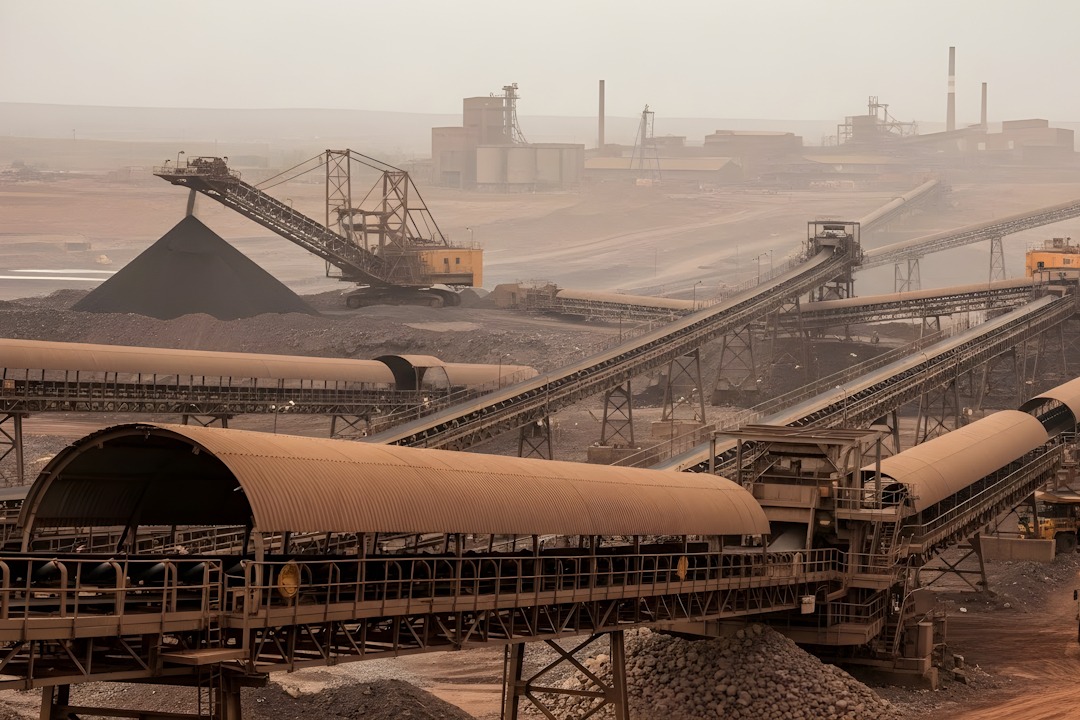
China refines roughly 90 percent of the world’s rare earth elements and produces close to 95 percent of the permanent magnets that depend on them. That single fact drives every defense procurement conversation in Washington, every automaker’s supply chain audit, and a growing share of capital allocation across junior mining exchanges. The rare earth trade is not a story about scarce rocks. It is about a processing chokehold that took three decades to build and that the West is now trying to unwind in three to five years.
Most of the money and headlines chasing that story have gone to a handful of large, already well-covered names. The smaller half of the trade, the TSX Venture and CSE-listed juniors doing the early resource definition work in Quebec, the Northwest Territories, and Ontario, gets far less attention despite sitting closer to the ground-floor risk and reward.
China’s Rare Earth Monopoly: Why 90 Percent Processing Control Still Runs the Market
Rare earth elements are not actually rare. Cerium is more abundant in the earth’s crust than copper. What is scarce is the ability to separate seventeen chemically similar elements from ore and turn them into the high-purity oxides and metals that magnet makers require. The separation step, not the mining, is where China built its advantage, and it now controls approximately 90 percent of global rare earth processing capacity alongside dominant shares of tungsten and antimony, according to a multi-institutional 2026 analysis covering European, US, and Japanese sources.
The concentration is worse further downstream. China accounts for 92 percent of refined neodymium-praseodymium supply and 98 to 99 percent of separated heavy rare earths, including dysprosium and terbium, the two elements that let a magnet hold its strength at high temperature. Magnet manufacturing follows the same pattern. Almost every neodymium-iron-boron magnet on earth is made in China or by a Chinese-owned facility abroad.
Neodymium-iron-boron, or NdFeB, is the magnet chemistry behind almost every electric motor and precision actuator built in the last two decades. A single electric vehicle traction motor uses one to three kilograms of NdFeB magnets. A direct-drive offshore wind turbine uses roughly 600 kilograms per megawatt of capacity. Humanoid robotics and drone motors are the newest sources of demand, layering on top of a base that was already growing from EVs and wind.
None of this happened by accident. Chinese state support kept domestic rare earth prices low for two decades, which pushed Western separation and magnet plants out of business one by one until only the mines remained, mostly shipping raw concentrate to Chinese buyers for processing. The result by 2026 is a market where a new generation of resource-stage juniors is racing to define deposits large enough, and rich enough in NdPr, to matter once separation capacity outside China finally catches up.
China’s Rare Earth Export Controls: Licensing, Entity Lists, and the November Deadline
Beijing’s export control regime has moved in cycles rather than a straight line, and understanding the cycle matters more than memorizing any single announcement. China introduced its first licensing regime on seven rare earth elements in April 2025, aimed at sectors feeding defense and high-tech industries. It expanded the list again in October 2025 with rules modeled on the US Foreign Direct Product Rule, requiring a license for any foreign-made product containing as little as 0.1 percent Chinese-origin rare earth content.
Washington and Beijing pulled back from the brink at the APEC summit in Busan at the end of October 2025. China agreed to suspend the October measures until November 10, 2026, and the US suspended its own Affiliates Rule for the same period. The April 2025 controls on the original seven elements stayed in force throughout, along with a dual-use licensing system that continues to slow exports to US and allied military end users.
The truce did not hold cleanly. China added rare-earth compounds including samarium, gadolinium, and lutetium to its licensing catalogue on January 1, 2026. In June, Beijing added ten US entities to its export control list, including rare earth miners MP Materials and USA Rare Earth by name, alongside a new whistleblower mechanism for reporting export control violations that took effect July 1.
The restrictions are deliberately temporary and reversible. China is not trying to starve the West of rare earths outright. It is managing a cycle of tightening and loosening that preserves pricing power and negotiating leverage while keeping the incentive for large-scale Western investment just below the threshold where it becomes unstoppable. The November 10, 2026 suspension deadline is the next hard date on the calendar, and it is the single most important catalyst for the entire rare earth sector.
NdPr, Dysprosium, and Terbium Prices: What the 2026 Numbers Say About Scarcity
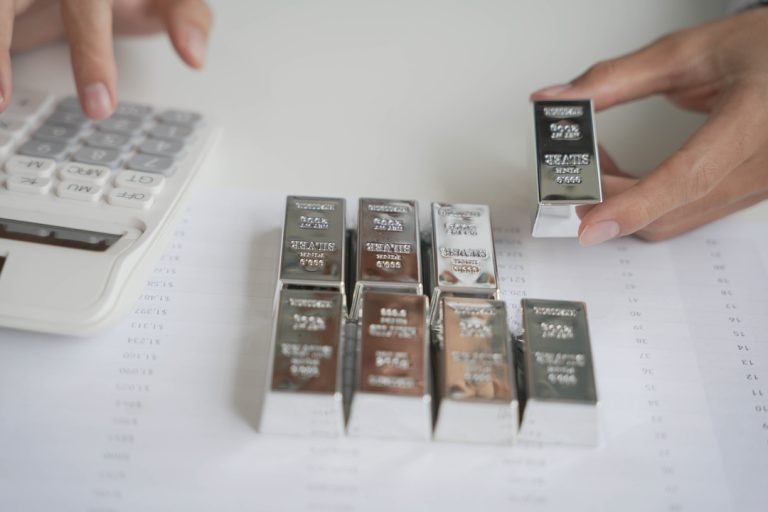
Price is where export control turns towards a balance sheet. The NdPr alloy benchmark rose 21.4 percent in the first days of July 2026 alone to roughly 133 dollars per kilogram, clearing the prior 2026 high near 126 dollars and extending a 10 percent gain from June. Neodymium and praseodymium metal each traded near 145 to 150 dollars per kilogram on the same benchmark, according to industry price tracking published by Rare Earth Mining.
Heavy rare earths moved even more sharply. Terbium oxide climbed roughly 30 percent through the second quarter to near 970 dollars per kilogram in China, and dysprosium held near its highs around 209 dollars per kilogram domestically, closer to 220 dollars for Northeast Asian buyers. Those are not incremental moves. They reflect a market where physical availability outside China remains structurally thin no matter what the licensing headlines say week to week.
Washington has started intervening directly in price rather than waiting for the market to clear on its own. In mid-2025 the Department of Defense structured a 400 million dollar preferred equity investment in MP Materials that included a ten-year price floor of 110 dollars per kilogram for NdPr oxide, nearly double the prevailing China-based rate at the time. That floor is now closer to the market price than it was a year ago, which is itself a signal of how far Western pricing has diverged from Chinese domestic pricing as buyers pay a premium for supply security rather than for the metal itself.
That premium makes a Quebec carbonatite or an Ontario pegmatite worth drilling. Avalon, Mont Royal, North American Niobium, and Volta Metals are all, in one way or another, a bet that the premium holds long enough for a resource definition story to become a financeable one.
Project Vault and the DoD Price Floor: Washington’s Answer to Chinese Leverage
The US government has moved from subsidizing rare earth projects to co-owning them. Project Vault, a critical minerals stockpile funded through the Export-Import Bank at roughly 12 billion dollars, creates a standing government buyer for domestic production at defined volumes and has extended into direct equity co-investment in producers. USA Rare Earth closed a 3.1 billion dollar funding package in late January 2026, combining a 1.3 billion dollar senior secured loan with a 1.6 billion dollar private equity investment, and the Department of Commerce took a 10 percent equity stake as part of the arrangement.
MP Materials remains the template. Its DoD preferred stock deal came bundled with a 150 million dollar direct loan for heavy rare earth separation capacity and purchase commitments tied to magnet output at its planned Fort Worth facility. Lynas Rare Earths, the only company outside China separating both light and heavy rare earths at commercial scale, has its own DoD-backed heavy rare earth agreements moving toward production.
Canada has its own, smaller version of the same playbook. Natural Resources Canada’s Critical Minerals Infrastructure Fund, the Canadian government’s critical minerals research consortium work, and provincial programs in British Columbia, Quebec, and the Northwest Territories are all functioning as early-stage versions of what Washington is doing at a much larger scale, funding the road access, technical reports, and pilot metallurgy that Canadian juniors cannot yet afford on their own.
Avalon Advanced Materials (TSX: AVL): Nechalacho and a Twenty-Year-Old Deposit Getting a Second Look
Avalon holds one of the longest-running rare earth stories in Canada. Its Nechalacho project in the Northwest Territories carries a large, unusually heavy-rare-earth-rich resource, with a 2013 Definitive Feasibility Study that predates the current cycle entirely. Rather than a new discovery, the investment case here is a two-decade-old deposit getting rebuilt for 2026 economics, technology, and supply chain politics.
The stock trades a with a market capitalization that has moved between roughly 20 million and 55 million dollars over the past year, and underwent a 1-for-180 share consolidation effective July 13, 2026, so any pre-July share price reference needs adjusting for that split. What has moved the story in 2026 has been a sequence of concrete rebuilding steps rather than a single headline event. In January, Avalon commissioned an updated Preliminary Economic Assessment designed to modernize the 2013 DFS with current processing technology and cost assumptions. In March, it hired a dedicated project director for Nechalacho and a separate project director for a planned Lake Superior lithium refinery, splitting management focus by asset. In June, the company held an investor call specifically to discuss evaluating a Nasdaq listing alongside the share consolidation, a step aimed at broadening its US investor base.
The mechanism is straightforward: Nechalacho’s heavy rare earth content, including dysprosium and terbium, sits in the part of the basket that commands the steepest scarcity premium, and a company that can credibly re-cost and re-permit an asset this advanced has a shorter runway to production than a grassroots discovery. Water Tower Research initiated coverage on the stock in April 2026, a modest but real signal of institutional research attention for a name this small.
What drives it from here is the refreshed PEA itself, expected to give the market its first current-generation economics for Nechalacho, followed by whatever the Nasdaq listing evaluation concludes. Both are near-term, dated catalysts rather than multi-year waits.
Mont Royal Resources (TSXV: MRZL): Ashram and a Fifteen-Year Project Finally Moving
Investors researching this story may still find it under its old name. Ashram, one of North America’s largest undeveloped rare earth deposits, was developed for fifteen years under Commerce Resources Corp before Commerce merged into Mont Royal Resources in a transaction that completed in October and November 2025. Commerce shareholders received Mont Royal shares, Commerce’s TSXV listing was delisted, and the project now trades exclusively under Mont Royal’s dual ASX and TSXV listing. Anyone still tracking a Commerce Resources ticker is tracking a delisted security.
Mont Royal with a market capitalization near 23 to 26 million Canadian dollars and shares trading around 0.11 to 0.12 Canadian dollars as of late July 2026. The project’s monazite-dominant carbonatite resource carries roughly 21 percent NdPr distribution alongside meaningful dysprosium and terbium content, and an updated Preliminary Economic Assessment released June 8, 2026 put post-tax net present value at 2.03 billion Canadian dollars, a 22 percent internal rate of return, and 1.23 billion Canadian dollars of initial capital cost over an initial 30-year mine life.
The idea behind the new PEA is a smarter logistics plan. Ashram sits in a remote part of northern Quebec, and the project’s economics have historically been held back by the cost of getting concentrate to a port. The updated study routes concentrate south by road to Sept-Iles and, under a separate agreement with the Port of Saguenay, offers an alternative path that reduces the capital risk carried by earlier ice-bound port concepts. Natural Resources Canada extended conditional funding of up to 2.6 million Canadian dollars in February 2026 specifically to advance those access road studies through the Critical Minerals Infrastructure Fund. Ashram also carries one of the largest fluorspar co-products of any rare earth deposit globally, a byproduct credit few peer projects can claim.
The next step is finalizing the execution on the road and port strategy alongside continued First Nations and government engagement, the two items management named as its immediate focus following the June PEA. No offtake agreements are in place yet, which is the next milestone investors should watch for.
North American Niobium and Critical Minerals Corp (CSE: NIOB): Fresh Drill Results From an Overlooked Corner of Quebec
This is about as close to ground floor as the rare earth trade gets on a public exchange. The company was called First American Uranium until it renamed itself North American Niobium and Critical Minerals Corp in November 2025 after acquiring a large land package in Quebec’s Grenville Province, a geological belt known for hosting niobium and rare earth-bearing carbonatite and pegmatite systems. The market capitalization sits around 9 to 10 million Canadian dollars, with shares trading near 0.40 Canadian dollars and swinging double digits week to week on modest volume.
The company launched a fully funded, 2.69 million Canadian dollar 2026 exploration program across four Quebec properties in December 2025, and drilling began in April 2026. Since then the news flow has been genuinely dated and specific rather than promotional filler: a 66-metre cumulative pegmatite intersection at the Blanchette property in early July, initial Seigneurie assays confirming dysprosium mineralization in a first hole, and, on July 14, a second Seigneurie hole returning dysprosium grades nearly three times higher than the first alongside the highest niobium oxide grade recorded on the project to date.
The plan is straightforward exploration de-risking: each new assay narrows the uncertainty around whether Seigneurie, Blanchette, and Bardy host mineralization at economic grade and width. Historic assays at Blanchette of 2.7 percent total rare earth oxide compare favorably with the grade range at established carbonatite producers like Mount Weld and Bayan Obo, though historic numbers are not a resource estimate and should be read as an exploration target, not a reserve.
The next step is simply more drilling. With a fully funded 2026 program still underway and results arriving on a roughly weekly cadence through the summer, this is a name where the next catalyst is never more than a few weeks away, for better or worse.
Volta Metals (CSE: VLTA): Consolidating Full Ownership of a Top-10 North American Deposit
Volta’s Springer deposit near Sturgeon Falls, Ontario, roughly 70 kilometres east of Sudbury, is a rare earth and gallium project that has moved fast by junior-mining standards. An updated Mineral Resource Estimate released February 23, 2026 reported 56.6 million tonnes indicated at 0.70 percent total rare earth oxide, including a higher-grade core of 11.5 million tonnes at 1.10 percent, plus 119.5 million tonnes inferred at 0.58 percent. Praseodymium and neodymium together account for approximately 90 percent of the deposit’s net metal value, and the update placed Springer among the ten largest rare earth deposits in North America by S&P Global Market Intelligence’s count.
The stock trades around 0.18 to 0.19 Canadian dollars with a market capitalization near 21 to 30 million Canadian dollars. The freshest catalyst is very recent: on July 21, 2026, Volta signed a definitive agreement to acquire the remaining 20 percent interest in Springer from RZJ Capital Management, moving the company from an 80 percent stake toward full ownership for 1 million dollars in cash plus 10 million shares at a deemed price of 0.20 dollars. That follows a December 2025 site visit to Springer by Ontario’s mining minister and the chief of Nipissing First Nation, on whose traditional territory the deposit sits, a visible marker of the local relationship the project will need to advance permitting.
The thought here is ownership consolidation ahead of a value-defining study. Buying out a minority partner before a Preliminary Economic Assessment removes a layer of shared upside and gives Volta full control over financing and permitting decisions going forward, which matters more the closer a project gets to that PEA.
What’s next is that PEA, targeted for completion by the end of 2026, which will be the first formal economic study of Springer and the milestone the rest of the market is waiting on to size the opportunity.
Why Separation and Magnets Still Decide Who Wins
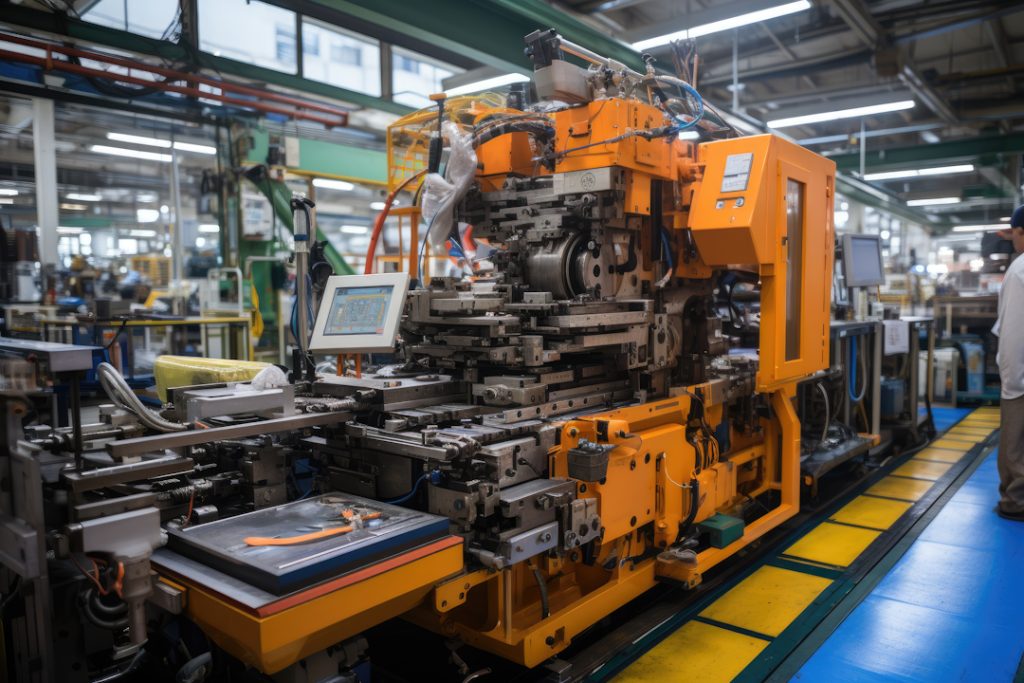
None of the four projects above reaches revenue by mining alone. Every one of them produces a concentrate or mixed rare earth carbonate that still needs to be separated into individual oxides, and none of the four currently owns separation capacity. That gap is the same one the broader Western rare earth buildout is racing to close, and Ucore, Noveon, and Vulcan illustrate it briefly as downstream context rather than as investment subjects.
Ucore Rare Metals (TSXV: UCU | OTCQX: UURAF), a Nova Scotia-based developer, is building a commercial separation module in Louisiana under its RapidSX technology, backed by 22.4 million dollars in cumulative US Department of Defense funding and targeting a first production line in 2027. On the magnet side, Noveon Magnetics in Texas and Vulcan Elements in North Carolina, both privately held and not currently investable, have together attracted several hundred million dollars in 2026 financing to build the sintered NdFeB magnet capacity that would eventually consume separated oxide from projects like the four above.
The realistically speaking Avalon, Mont Royal, North American Niobium, and Volta are all, at best, several years from being able to sell a separated product rather than raw concentrate. Their near-term economics depend on finding an offtake partner, whether a separator, a Chinese or Japanese trading house, or eventually a Western facility like Ucore’s, willing to buy concentrate before that capacity exists at scale. None of the four has a confirmed offtake agreement in place as of this writing.
Rare Earth Investment Risks: Financing, Permitting, and the China Reversal Scenario
The rare earth investment case rests on China staying restrictive enough to keep Western supply chains economically viable and the West staying committed enough to keep funding them. Both assumptions can break, and a credible thesis has to sit with the ways it could fail rather than skip past them. The risks below apply generally across the sector, with specific notes on the four companies profiled here.
- Development and operational risk. All four companies are pre-resource-definition or pre-economic-study stage in the strictest sense. North American Niobium has no resource estimate at all yet; Volta’s PEA is not due until year-end; Avalon is re-costing a study that is now more than a decade old; Mont Royal has no offtake agreement despite a completed PEA. None has begun construction.
- Commodity price reversal. NdPr, dysprosium, and terbium prices have moved sharply higher through 2026 on supply fear rather than on a structural change in mined output. A sustained thaw in Chinese licensing, of the kind seen briefly in mid-2025, could reverse a meaningful share of the recent price gains and undercut the economics behind the Ashram and Springer studies, both of which lean on current or forecast pricing rather than a conservative long-run average.
- Financing and dilution risk. This is the single largest risk across this specific roster. Companies with market capitalizations in the 9 to 55 million dollar range fund themselves almost entirely through equity placements, and Avalon’s recent 1-for-180 share consolidation is itself a marker of how much historical dilution has already occurred. Expect further placements, warrants, and share issuance at all four names between now and any construction decision.
- Permitting, regulatory, and Indigenous consultation risk. Every project here sits on or near Indigenous traditional territory, from Nechalacho in the Northwest Territories to Ashram in Nunavik to Springer on Nipissing First Nation land. Consultation and permitting processes in these jurisdictions are genuine, multi-year gating items, not formalities, and a breakdown in any of these relationships would materially delay the relevant project.
- Offtake and separation risk. As the prior section lays out, none of the four companies has a confirmed buyer for its eventual concentrate. A resource estimate or a positive PEA is necessary but not sufficient without somewhere to sell the product, and Western separation capacity remains years away from matching the volume this generation of Canadian juniors could eventually produce.
- Market liquidity risk. All four names are thinly traded microcaps on the TSX, TSXV, or CSE. North American Niobium’s roughly 9 to 10 million dollar market cap in particular means even modest buying or selling can move the share price sharply, and exiting a meaningful position can itself move the market against the seller.
These risks argue do not against the thesis. They argue for sizing positions, since almost every catalyst named above is a matter of when rather than if, and at this end of the market the when can slip by years, not months.
Rare Earth Catalysts to Watch Through Year End 2026
The next five months carry real, dated catalysts across all four names. North American Niobium’s fully funded exploration program continues through the summer, with fresh assays from Seigneurie, Blanchette, and Bardy likely on a near-weekly cadence. Volta Metals is targeting its first Preliminary Economic Assessment for Springer by the end of 2026, following the July 21 move toward full ownership of the project. Mont Royal continues advancing the road and port access studies behind its June PEA, backed by Natural Resources Canada funding, while working toward its first offtake agreement. Avalon’s refreshed Nechalacho PEA and the outcome of its Nasdaq listing evaluation are both near-term items to watch. Sitting above all four is the same date that governs the entire sector: the November 10, 2026 expiration of China’s export control suspension, and August is effectively the real deadline, since buyers need to place fourth-quarter heavy rare earth orders before that window closes.
The pattern across all of it is the same. China built a processing monopoly over three decades by outcompeting Western capacity on cost while the West treated rare earths as a commodity rather than a strategic asset. That era ended with the April 2025 export licensing regime, and Avalon, Mont Royal, North American Niobium, and Volta Metals sit at the earliest, riskiest, and potentially highest-torque end of the Western response. Mining is the easiest part of that response to fund. Turning a resource estimate into a signed offtake agreement, and eventually into separated oxide, is where Avalon, Mont Royal, North American Niobium, and Volta Metals will actually be tested.
Sources
- Rare Earth Exchanges: China’s 2026 export controls redraw the global supply chain map
- GlobalSecurity.org: China suspends October 2025 export control measures until November 10, 2026
- Morgan Lewis: Recent China export control actions signal active enforcement for rare earths and strategic minerals, July 2026
- Rare Earth Mining: Rare earth market outlook, July 2026
- Rare Earth Mining: Rare earth stocks to watch, 2026 analysis
- Barchart: Avalon initiates updated Preliminary Economic Assessment for Nechalacho project
- Newsfile Corp: Updated Preliminary Economic Analysis confirms Ashram as a major long-life North American rare earths development project, June 8, 2026
- GlobeNewswire: North American Niobium and Critical Minerals Corp launches its $2.69 million district-scale fully funded 2026 Quebec exploration program, December 1, 2025
- Nasdaq: Volta enters agreement to acquire remaining 20% interest in its flagship Springer rare earth project
Editorial Disclosure
This article is based entirely on publicly available information including company disclosures, government publications, industry research, and named financial and technology publications. Publicly traded securities discussed include Avalon Advanced Materials Inc (TSX: AVL; OTCQB: AVLNF), Mont Royal Resources Limited (ASX: MRZ; TSXV: MRZL), North American Niobium and Critical Minerals Corp (CSE: NIOB; OTCQB: NIOMF), and Volta Metals Ltd (CSE: VLTA; OTCQB: VOLMF). Ucore Rare Metals Inc (TSXV: UCU), MP Materials Corp (NYSE: MP), USA Rare Earth Inc (Nasdaq: USAR), and Lynas Rare Earths Ltd (ASX: LYC) are referenced for downstream and macro context only and are not the investment subjects of this article. Noveon Magnetics, Inc. and Vulcan Elements are privately held and not currently investable. Commerce Resources Corp is referenced solely as the historical name of the Ashram project’s prior owner; its shares were delisted from the TSX Venture Exchange in November 2025 following its merger into Mont Royal Resources and are no longer a tradable security. aktiego.com has not received any compensation from any company mentioned, their management, investor relations representatives, or any third party in connection with this article. No staff member or principal of aktiego.com holds a position in any security mentioned at the time of publication. Financial figures, share prices, and market capitalizations are sourced from named company disclosures and financial data providers as cited in the sources section above and reflect data available as of approximately July 27, 2026; figures are subject to change and should be independently verified before any investment decision. Avalon Advanced Materials completed a 1-for-180 share consolidation effective July 13, 2026; all pre-split price references above are flagged accordingly. The Mont Royal Resources Preliminary Economic Assessment for Ashram and the Volta Metals Mineral Resource Estimate for Springer were both prepared by named independent qualified persons under NI 43-101; North American Niobium’s cited assay results are exploration results, not a resource estimate, and are described as such above. Investing in early-stage mining and exploration equities involves operational, financing, permitting, commodity price, and liquidity risk, including the risk of total loss of capital. aktiego.com is not a registered investment advisor. Nothing in this article constitutes financial, investment, or professional advice. Readers are encouraged to conduct their own due diligence and consult a qualified financial advisor before making any investment decisions. For more information please see our full DISCLAIMER.