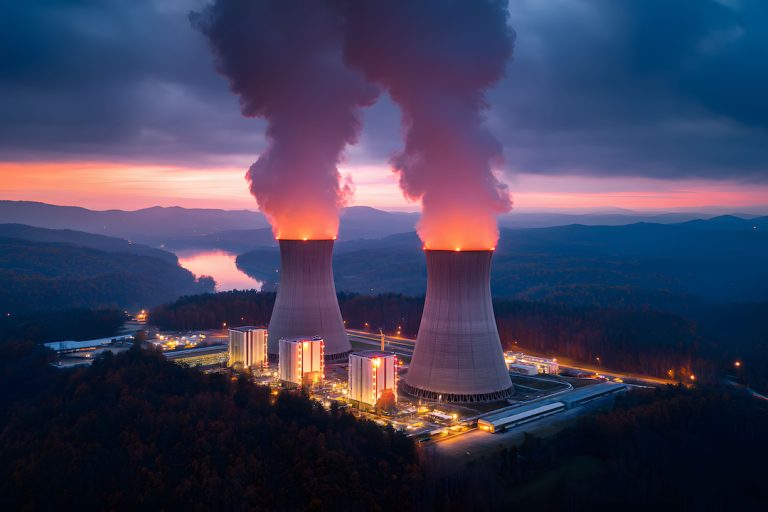

A missile strike on a gas plant in Qatar in March knocked out close to a third of the world’s helium supply. Most people did not notice, because most people think helium is for balloons. Chipmakers noticed immediately, because there is no substitute for it anywhere in semiconductor manufacturing.
Helium has no futures contract and no ETF. The only way to invest in the shortage is through the small handful of companies actually pulling it out of the ground, and four of them trade on the TSX Venture Exchange out of Saskatchewan and Alberta, the same region driving the Canadian side of the response below.
The Qatar Strike That Took a Third of Global Helium Offline
Ras Laffan Industrial City is home to the world’s largest liquefied natural gas complex, and helium is extracted there as a byproduct of that LNG processing. On March 4, 2026, Iranian missile and drone strikes hit the facility directly, and QatarEnergy declared force majeure on all LNG-related output. Qatar alone had supplied roughly a quarter of the world’s helium. Combined with the closure of the Strait of Hormuz disrupting what shipping routes remained, between 30 and 38 percent of global helium production came off the market, roughly 5.2 million cubic meters a month.
Spot prices, which sat around 300 dollars per thousand cubic feet before the strike, surged to between 600 and 900 dollars, with some analysts projecting a path to 2,000 dollars if the disruption drags on. Seagate and Western Digital both reported full production allocations tightening in March, with hard drive component price increases of 20 to 30 percent following in short order. South Korean chipmakers Samsung and SK Hynix were estimated to be carrying roughly six months of helium inventory when the strike hit, a buffer that is not indefinite.
The timing compounded the damage. The privatization of the US Federal Helium Reserve completed in early 2026, removing a decades-old stabilizing buffer from the market just before the Qatar disruption hit. In July, China, which produces almost no helium of its own, added to the chaos by banning helium exports entirely, a move most read as strategic stockpiling rather than a genuine production story.
Why Chipmakers Cannot Simply Switch to Something Else
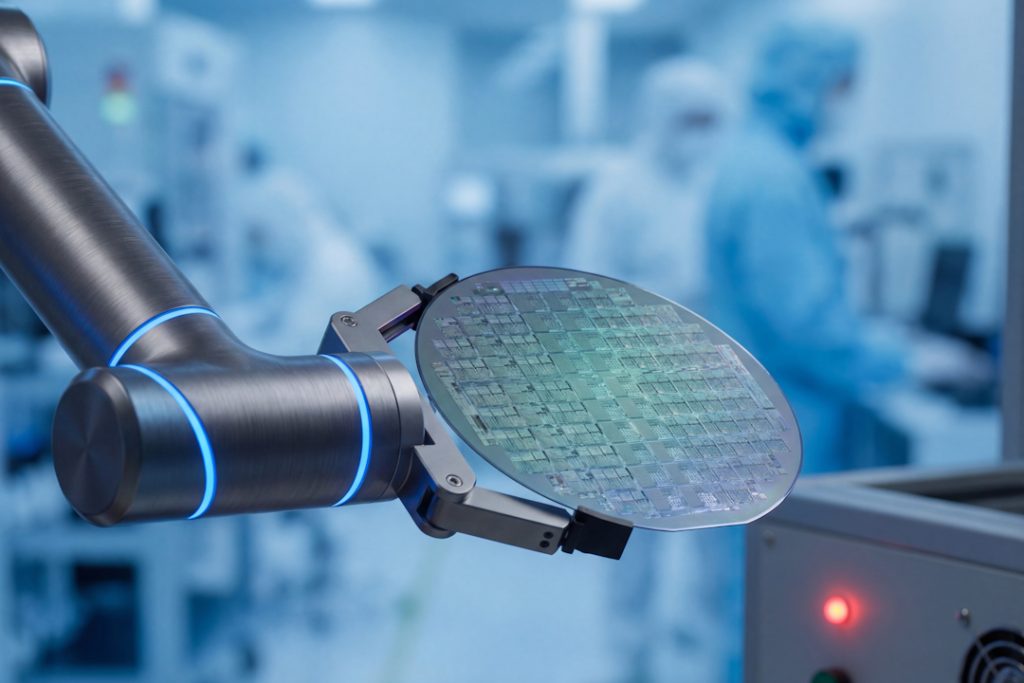
Helium is used at multiple stages of semiconductor fabrication: as a cooling agent during wafer etching, as a carrier gas for other process chemicals, and for leak detection in vacuum chambers. Moody’s Ratings flagged the shortage as a direct threat to the AI data center buildout specifically because none of those functions have an industrial-scale substitute. A chip fab cannot simply swap in a different gas the way a manufacturer might substitute one input for another during a shortage.
Demand was already structurally tight before the Qatar strike. Long-term growth from EUV lithography, medical imaging, quantum computing hardware, and commercial space launch was projected to keep helium supply constrained through the rest of the decade even without a supply shock. The Qatar disruption did not create the tightness. It detonated a market that was already running with almost no spare capacity.
Where the Replacement Supply Is Actually Coming From
The US and Qatar together still produce roughly 85 percent of the world’s helium, and that concentration is precisely why a single strike on one facility could remove a third of global supply overnight. The projects positioned to diversify that concentration are scattered and mostly small: Saskatchewan and Alberta in Canada, Tanzania, South Africa’s Renergen project, Montana, and Colorado. Greenfield helium developments typically take seven to ten years to move from discovery to meaningful commercial production, so almost none of this new supply arrives in time to fix the current shock. It arrives in time to change who controls the next one.
Canada’s helium juniors are not a speculative side story to that diversification. They are a meaningful part of where the next decade of non-Qatar, non-US supply is actually expected to come from, concentrated almost entirely in Saskatchewan’s Helium Fairway and northern Alberta.
Helium Evolution (TSXV: HEVI): Already Shipping While Others Are Still Drilling
Helium Evolution holds over five million acres of helium land rights across southern Saskatchewan, the largest public land position in the province, including a 49 percent working interest in the Mankota and Grasslands core area alongside partner North American Helium. The company’s Soda Lake facility reached commercial production in late 2025 and has been delivering first sales since, processing 12 million cubic feet per day at a 20 percent working interest.
The stock trades around 0.19 to 0.20 Canadian dollars with a market capitalization near 30 million dollars. That makes Helium Evolution the most operationally advanced of the four names here: it is the only one already generating revenue from commercial deliveries rather than working toward a first production date. The company is actively advancing additional wells to reactivate and expand the Soda Lake facility, and a recently completed 3D seismic program is informing drilling targets for the rest of its 2026 exploration campaign.
Pulsar Helium (TSXV: PLSR): Two US Federal Labs Confirmed Its Best-Kept Secret
Pulsar’s story runs through a single number most helium juniors would kill for. Its Topaz project in Minnesota, the most recent new helium discovery in the United States, was already known for unusually high helium concentrations of 8.1 percent at its Jetstream number one well, several times richer than a typical helium-bearing gas stream. What sets Pulsar apart is that the number has now been independently verified rather than taken on the company’s word: two US federal laboratories, including the US Geological Survey’s Noble Gas program, independently confirmed the helium-3 isotope concentration at the same site.
Helium-3 carries its own scarcity premium separate from ordinary helium-4, with applications in superconducting research and neutron detection that make it valuable well beyond its share of total gas volume. The stock trades around 0.61 Canadian dollars, up 7 percent in the most recent session tracked, and Pulsar carries the broadest listing footprint of the four, trading simultaneously on the TSXV, London’s AIM market, and the US OTCQB. The company also holds helium exploration ground in Greenland, a jurisdiction that carries its own distinct geopolitical texture entirely separate from the Middle East story driving Qatar’s supply crisis.
Avanti Helium (TSXV: AVN): Racing Toward Production in Montana by Mid-2026
Avanti controls more than 141,000 acres of helium assets spread across Alberta, Montana, and Saskatchewan, the widest jurisdictional spread of the four companies here. Its Sweetgrass project in Montana carries two wells with combined gas output capacity of roughly 18,500 million cubic feet per day at a 1.1 percent helium concentration, and the company has stated it remains on track to achieve helium production by mid-2026, which would make it one of only a handful of new domestic helium production facilities entering the US market in the near term.
The stock trades around 0.085 Canadian dollars, up over 10 percent in the most recent session. In January, Avanti signed a non-binding memorandum of understanding with an established helium technology provider, a step toward processing technology that could shorten the path from gas in the ground to sellable product. Company messaging has explicitly positioned Sweetgrass as supporting semiconductor, aerospace, healthcare, and defense buyers directly, the same customer base rattled by the Qatar disruption.
First Helium (TSXV: HELI): Up 100% in a Year, Still Trading Under a Nickel
First Helium’s Worsley project in northwestern Alberta spans roughly 53,000 to 79,000 acres depending on which filing is referenced, and combines a helium discovery well with existing oil production that funds ongoing exploration without requiring constant external financing. Historic data across the property shows helium content ranging from 0.5 to 1.9 percent, and the company has set a stated target of over 100 million dollars in annual revenue within three to five years if vertical drilling across the property performs as modeled.
The stock trades around 0.04 to 0.045 Canadian dollars, up roughly 100 percent over the past year, making it the smallest and most speculative of the four by share price even as its percentage gain has been the largest. In April 2026, the company acknowledged the heightened global focus on helium supply security directly in a public statement, tying its own Worsley development explicitly to the broader shortage narrative rather than treating the connection as implicit. The company funds its helium exploration primarily from cash generated by its existing oil operations at the same property, a structural advantage over pure-play helium explorers with no other revenue source.
Key Risks: Distressed Peers, Thin Trading, and a Shortage That Could Ease

Not every Canadian helium junior has weathered this cycle well. Royal Helium, once among the largest public land holders in Saskatchewan, filed for creditor protection in January 2025 and now trades on the distressed NEX board at roughly 0.02 Canadian dollars, down 90 percent over the past year. That history is a direct reminder that a hot commodity narrative does not protect a company from its own balance sheet, and any of the four names above could face similar financing pressure if a well underperforms or a financing round falls through.
Only Helium Evolution is currently generating revenue from commercial sales. Pulsar, Avanti, and First Helium are all pre-production or early-production, dependent on wells, processing infrastructure, and offtake arrangements that have not yet been fully proven at commercial scale.
The Qatar disruption itself could resolve faster than the market currently expects. QatarEnergy has publicly targeted its Helium 5 plant for operational status by 2027, and any earlier-than-expected restoration of Ras Laffan output would ease the price spike driving investor interest in these names, potentially sharply.
All four companies are thinly traded microcaps, with share prices ranging from roughly 4 cents to 61 cents Canadian and market capitalizations in the tens of millions of dollars. News-driven moves of 10 percent or more in a single session have already occurred at both Avanti and Pulsar, and position sizing should account for that volatility.
Helium recycling and conservation technology represent a long-term demand offset that could reduce the severity of future shortages. Closed-loop systems capable of recapturing and re-liquefying helium in MRI machines and semiconductor fabs are underinvested today but not unfunded, and broader adoption would reduce the structural scarcity underpinning the entire investment case.
Jurisdictional risk varies across the four. Pulsar’s Greenland exploration ground carries a different political risk profile than the Canadian and Montana assets held by the other three, and investors should weigh that difference rather than treat all four companies as interchangeable geographic bets.
Forward-Looking FAQ
Not necessarily. Commercial sales from Soda Lake provide real cash flow, but the company’s plans to reactivate and expand the facility likely require additional capital beyond current production revenue, and no full funding timeline has been disclosed.
A disclosed development timeline and cost estimate for extracting and processing the confirmed helium-3 and helium-4 at Topaz, which the company had not released as of the most recent information available.
As of the most recent company statements, yes, but mid-2026 has effectively already arrived, so upcoming disclosures should clarify whether that target has been met or slipped.
Meaningfully. The company has structured its funding specifically around cash flow from existing Worsley oil operations, so a decline in oil output or pricing would directly constrain the capital available for helium drilling.
Unclear. The target predates the March 2026 strikes on Ras Laffan, and no updated timeline accounting for the physical damage and force majeure declaration had been disclosed as of this writing.
Sources
- Fortune: The AI economy runs on helium, the Iran war just created a $650 billion problem
- DataDeep: The 2026 helium shortage, how a supply shock is disrupting semiconductors and tech
- Foreign Affairs Forum: The Hormuz hit to helium, geopolitical disruption, supply chain fragility, and the future of the chip-driven global economy
- Bivashvlog: Helium shortage 2026, price, China ban, India impact explained
- YiGas Group: Global helium supply trends in 2026, market disruption, regional shifts
- Investing News Network: Top Canadian helium stocks
- Canadian Mining Report: Helium crisis crushes chip production, but these North American helium stocks could outperform
- NAI 500: AI boom unleashes global helium crunch, Canada emerges as the surprise winner
- Green Stock News: List of helium stocks, company press release archive
- StockAnalysis: First Helium Inc quote, news, and company profile
- Stockopedia: Royal Helium share price and creditor protection history
Editorial Disclosure
This article is based entirely on publicly available information including company disclosures, government publications, industry research, and named financial and news publications. Publicly traded securities discussed include Helium Evolution Incorporated (TSXV: HEVI), Pulsar Helium Inc (TSXV: PLSR; AIM: PLSR; OTCQB: PSRHF), Avanti Helium Corp (TSXV: AVN; OTC: ARGYF), and First Helium Inc (TSXV: HELI; OTCQB: FHELF). Royal Helium Ltd (NEX: RHC.H) is referenced solely as a cautionary example of financial distress within the same sector, having filed for creditor protection in January 2025, and is not presented as an investment subject of this article. QatarEnergy, North American Helium, Seagate, Western Digital, Samsung, and SK Hynix are referenced for context only and are not otherwise covered here. aktiego.com has not received any compensation from any company mentioned, their management, investor relations representatives, or any third party in connection with this article. No staff member or principal of aktiego.com holds a position in any security mentioned at the time of publication. Financial figures, share prices, and market capitalizations are sourced from named company disclosures and financial data providers as cited in the sources section above and reflect data available as of approximately August 18, 2026; figures are subject to change and should be independently verified before any investment decision. Helium spot price figures are sourced from named industry publications and represent estimates rather than a centrally cleared, publicly quoted commodity price, since no helium futures contract or exchange-traded product currently exists. Investing in early and development-stage resource exploration equities involves operational, financing, permitting, commodity price, geopolitical, and liquidity risk, including the risk of total loss of capital. aktiego.com is not a registered investment advisor. Nothing in this article constitutes financial, investment, or professional advice. Readers are encouraged to conduct their own due diligence and consult a qualified financial advisor before making any investment decisions. For more information please see our full DISCLAIMER.