
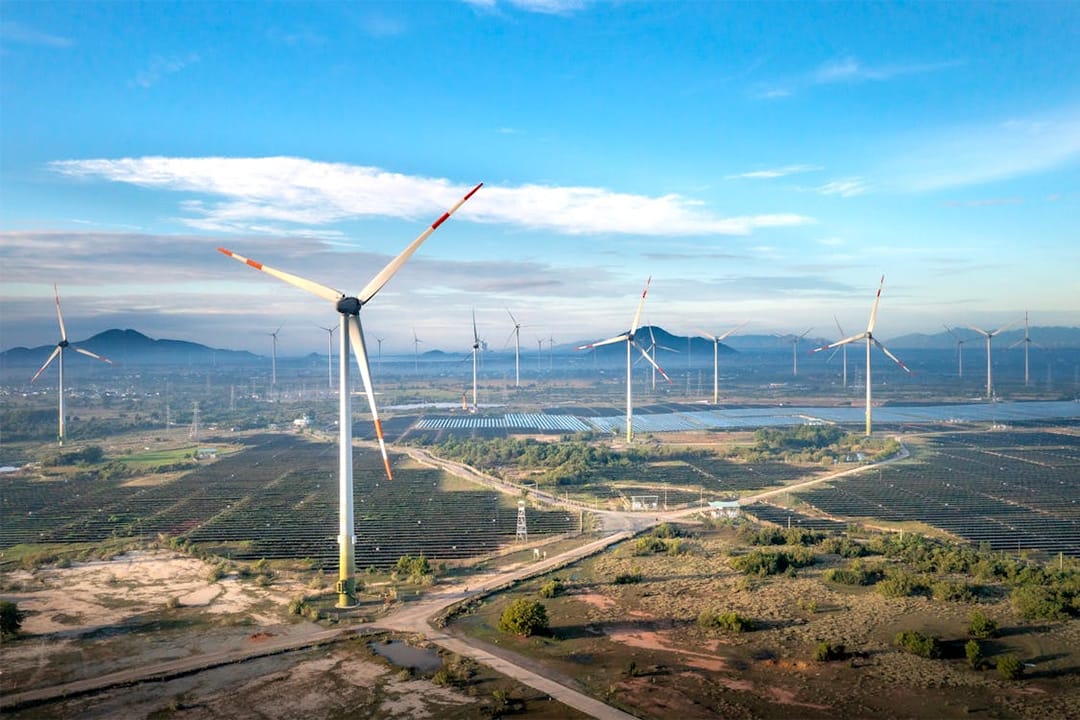
Oil at $106 a barrel, global inventories drawing at a record pace, and a 21-mile-wide waterway holding the energy market hostage for the third straight month. The Strait of Hormuz closure did not create the clean energy investment thesis. It just made it impossible to argue against. The same week, the UAE confirmed its exit from OPEC, cutting the spare capacity buffer the market has relied on for decades. The Department of Energy wrote a $400 million check to restart a shuttered nuclear plant. And a construction start deadline that could shift billions in renewable tax credit investment is six weeks away. The energy security argument and the energy transition argument are now the same argument. The capital is starting to reflect that.
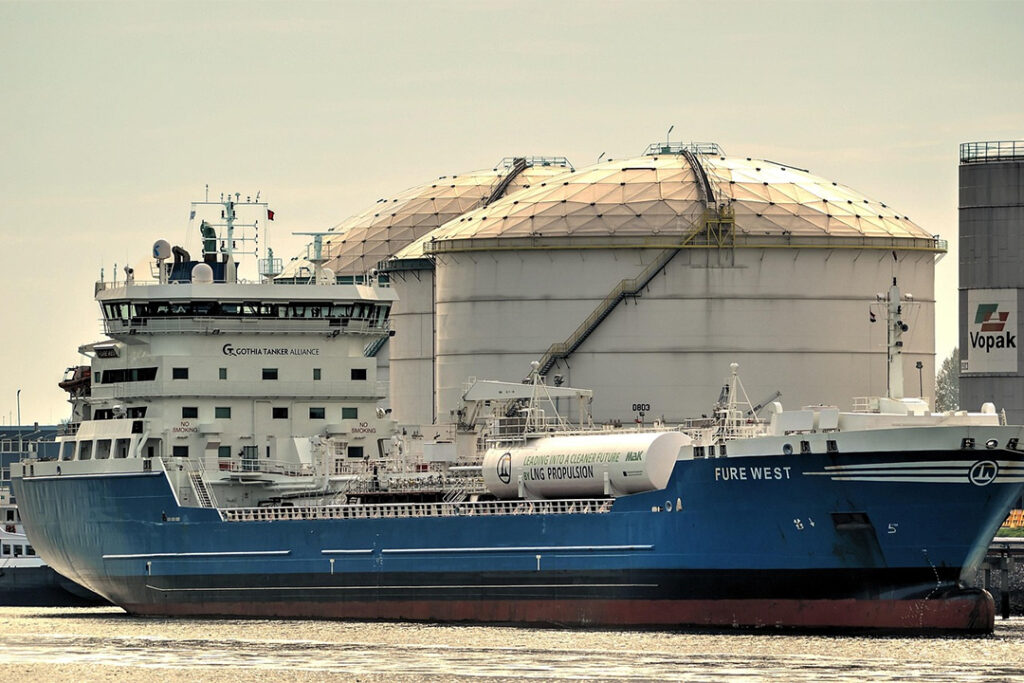
$106 oil turned the clean energy pitch from climate story to security trade
Brent crude averaged $117 per barrel in April and hit $138 on April 7, the highest level since mid-2022, as the Strait of Hormuz closure became the largest supply disruption in global oil market history according to the EIA. By the week of May 18, prices had eased to around $106 per barrel as US-Iran diplomatic signals provided brief relief. Global oil inventories are falling at 8.5 million barrels per day in the second quarter of 2026. The IEA’s May Oil Market Report put North Sea Dated crude in a range of nearly $50 per barrel in April alone, a level of volatility that makes long-term energy cost planning nearly impossible for any business running on fossil fuel inputs.
The investment response has been measurable. SPAC issuance hit 62 deals in Q1 2026, raising $11.8 billion, nearly four times the volume of Q1 2025, with energy transition cited as a priority sector. Public equity markets are repricing energy independence as core infrastructure rather than ESG optionality. That is a different kind of capital with a different mandate and a longer time horizon.
For smaller clean energy developers, the shift in framing matters. Projects that struggled to attract financing on a climate narrative alone are now being evaluated through an energy security lens. Domestic solar manufacturing, grid-scale battery storage, and distributed energy infrastructure all carry a different risk profile when the alternative is exposure to a chokepoint that can move oil $30 in a single month. The pitch has changed. The addressable capital pool has grown with it.
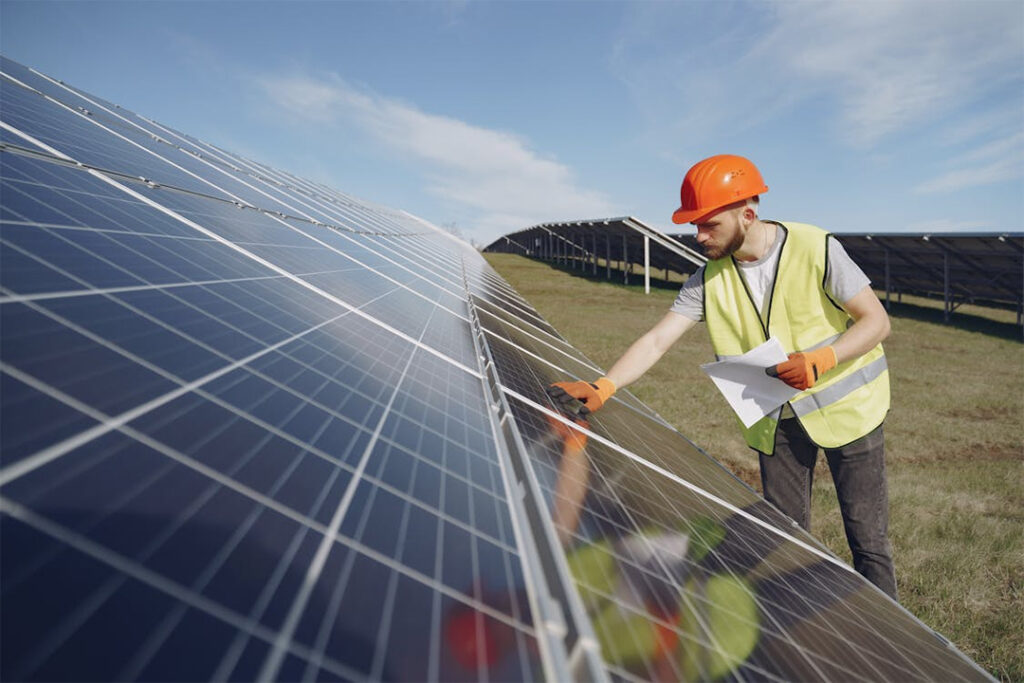
July 4 is the date that moves billions in renewable tax credit investment
July 4, 2026 is the construction start deadline to capture the full value of Section 45Y production tax credits and Section 48E investment tax credits, the successor incentive structures to the original Section 45 and Section 48 credits established under the Inflation Reduction Act. Miss that date and a project captures a reduced credit value. The deadline is not widely discussed outside the project finance community, but the capital flows around it are significant.
Deal flow in Q1 2026 was slower than expected for one specific reason. At least 33 gigawatts of renewable capacity was grandfathered under the old Section 48 incentives, and equity went there first. Investors and tax equity buyers naturally prioritized the most certain, most familiar credit structures before committing to the newer 45Y and 48E frameworks. That backlog has been absorbing capital since the start of the year. The expectation across the project finance community is that deal flow accelerates sharply in the second half of 2026 once those grandfathered projects are absorbed and developers pivot to the new credit regime.
For smaller renewable developers, the practical implication is a compressed timeline. Projects that want to qualify under Section 45Y or 48E need to be in the ground by July 4. Developers with permitted, shovel-ready sites are the immediate targets for tax equity investment and acquisition interest. The companies that spent 2024 and 2025 advancing permitting and grid interconnection studies are the ones positioned to capture that capital. The ones still in early development are waiting for the next cycle.

The UAE left OPEC and the spare capacity math no longer works
The UAE formally exited OPEC effective May 1, 2026. The decision was framed as non-political by Abu Dhabi, but the market implications are structural. Because the UAE held meaningful spare crude production capacity, its departure reduces the buffer OPEC can deploy in response to supply disruptions. The EIA revised its OPEC spare capacity forecast for 2027 down to 2.5 million barrels per day from a prior estimate of 3.8 million barrels per day. That 1.3 million barrel per day reduction is not a rounding error. It is the difference between a market that can absorb a regional shock and one that cannot.
The broader OPEC+ picture is complicated further by the Hormuz situation. Iranian production is curtailed by the US blockade. Russian volumes carry sanctions risk. The effective spare capacity available to stabilize prices in an emergency is smaller than it has been in years, and the UAE’s exit makes it smaller still. The IEA’s base case assumes Hormuz flows gradually resume from the third quarter of 2026 if a diplomatic deal is reached. If that assumption proves wrong, the oil market deficit persists into the fourth quarter and price volatility stays elevated.
For clean energy investors and developers, elevated and volatile oil prices tighten the levelized cost of energy math in their favor. Every dollar increase in the long-run oil price assumption improves the relative economics of solar, wind, and battery storage. Smaller independent power producers and project developers with contracted revenues under power purchase agreements are insulated from that volatility entirely. The grid infrastructure and distributed energy segment looks increasingly attractive as the alternative, oil-linked cost structure becomes harder to model.
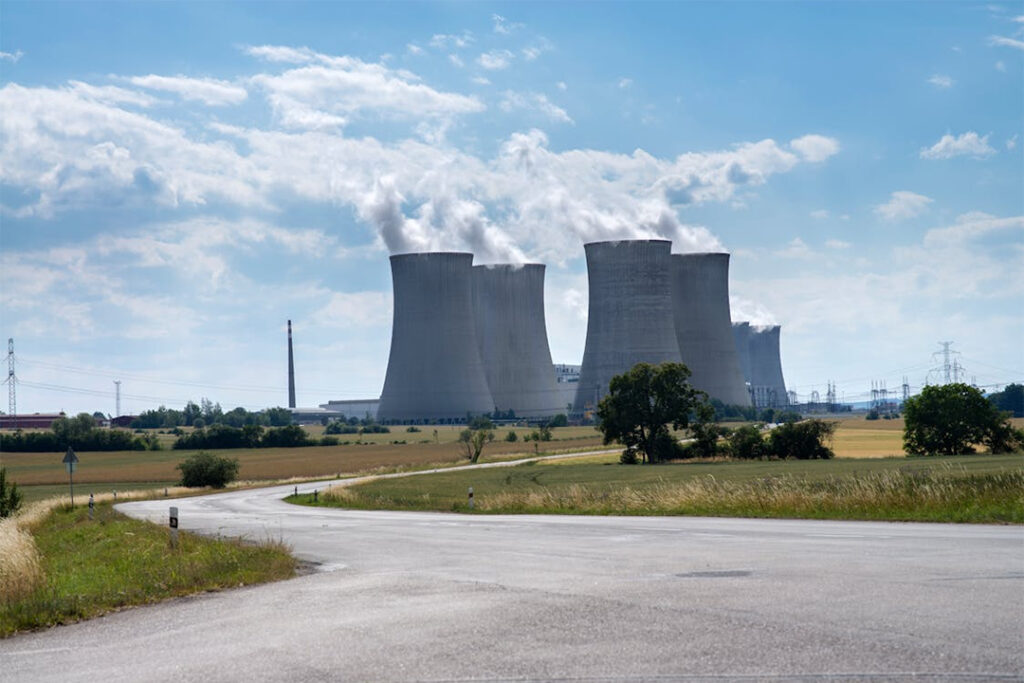
The DOE just put $400 million into small nuclear. The microcap opportunity is live.
The Department of Energy announced Tier 2 awards under its $900 million Generation III+ Small Modular Reactor program in May 2026. Holtec Government Services received $400 million to deploy two SMR-300 reactors at the Palisades Nuclear Generating Station site in Covert, Michigan, a plant that was shut down in 2022 and has been in a restart process since. The award is the largest single commitment under the program and the clearest signal yet that the federal government views small modular reactors as a near-term deployment priority rather than a long-range research bet.
The microcap layer in nuclear is active. NANO Nuclear Energy filed multiple SEC Form 8-Ks this week around its ZEUS portable solid-core reactor program and its Advanced Fuel Transportation subsidiary, which holds an exclusive license to a patented high-assay low-enriched uranium (HALEU) fuel transportation basket developed by three US national laboratories, designed to supply the fuel enrichment level required by most next-generation SMR and microreactor designs. HALEU fuel supply is a genuine bottleneck for SMR deployment and the company positioning itself as the domestic transport solution for that fuel is playing a specific, defensible niche.
The hyperscaler demand story is layered on top. Meta signed nuclear power agreements totaling up to 6.6 gigawatts earlier in 2026 to supply AI data centers. Microsoft, Google, and Amazon have all signed or announced nuclear offtake deals in the past 18 months. The demand side for clean, firm power is not speculative. It is contracted. For smaller nuclear developers, fuel suppliers, and reactor component manufacturers with real regulatory progress and a defined path to deployment, that demand backdrop is the most favorable the sector has seen in 40 years.
What to Watch
Iran diplomatic timeline: the IEA’s base case assumes Hormuz flows resume gradually from Q3 2026. Any diplomatic framework or ceasefire announcement before then would move oil prices sharply lower and reset the energy security premium currently embedded in clean energy valuations. Watch the G7 and UN channels closely through June.
July 4 construction start deadline: six weeks away. Watch for an acceleration in shovel-ready project announcements, tax equity commitments, and small developer acquisitions as the deadline concentrates deal activity. This is the most immediate capital flow catalyst in the US renewables market right now.
Federal Reserve June 17 to 18 meeting: project finance for renewable energy is rate-sensitive. The cost of debt on a 20-year solar or wind project changes materially with every 25-basis-point move. Any shift in the Fed’s rate guidance at the June meeting will flow directly into project financing economics for smaller developers.
NRC and DOE SMR timelines: with the Holtec Palisades award confirmed, watch for NRC construction permit progress and any additional Tier 2 announcements under the Gen III+ program. Further federal commitments to small nuclear would accelerate the investment case for the supply chain and fuel companies positioned around it.
Sources
- EIA Short-Term Energy Outlook May 2026: Brent forecast, Hormuz disruption, inventory draws, UAE OPEC exit
- IEA Oil Market Report May 2026: North Sea Dated price range, OPEC+ production, inventory depletion
- Fortune: The Iran war just made the clean energy transition non-negotiable, April 23 2026
- Yale Climate Connections: What the Iran conflict means for gas prices and clean energy, April 2026
- Renewable Energy World: Scuttlebutt at the 2026 Solar and Wind Finance Investment Summit, April 23 2026
- Project Finance Law: Infocast Solar Wind Summit 2026, M&A consolidation and market conditions
- Oil and Gas News: UAE OPEC exit limited near-term impact, Hormuz escalation, May 2026
- Department of Energy: Generation III+ Small Modular Reactor Program Tier 2 awards, May 2026
- NANO Nuclear Energy Inc: SEC Form 8-K ZEUS reactor and HALEU fuel transport, May 2026
- Carbon Credits: Meta signs three nuclear deals of up to 6.6 GW for AI data centers, January 2026
Editorial Disclosure
This analysis is based entirely on publicly available information including press releases, regulatory filings, government agency reports, and verified market data. Securities discussed include NANO Nuclear Energy Inc. (Nasdaq: NNE), Holtec Government Services LLC (private subsidiary of Holtec International, private), and VanEck Junior Gold Miners ETF referenced for comparative context only (NYSE Arca: GDXJ). Energy companies referenced in market context include Meta Platforms Inc. (Nasdaq: META), Microsoft Corporation (Nasdaq: MSFT), Alphabet Inc. (Nasdaq: GOOGL), and Amazon.com Inc. (Nasdaq: AMZN). aktiego.com has not received any compensation from any company mentioned, their management, investor relations representatives, or any third party. No staff member or principal of aktiego.com holds a position in any security mentioned at the time of publication. All commodity price data sourced to EIA, IEA, and named exchanges, timestamped May 18 to 24, 2026. Forward-looking commentary regarding diplomatic outcomes, regulatory timelines, tax credit structures, and market developments is opinion only. Project finance and tax credit information sourced to named published industry sources and does not constitute tax or legal advice. Microcap and smaller-operator references are included for market context only and do not constitute investment recommendations. Coverage on aktiego.com is provided for informational and educational purposes only. aktiego.com is not a registered investment advisor. Nothing in this article constitutes financial, investment, or professional advice. Readers are encouraged to conduct their own due diligence and consult a qualified financial advisor before making any investment decisions. For more information please see our full DISCLAIMER.