
Executive Summary
Every precision-guided munition in the US inventory, every missile defense radar, every stealth aircraft, and every naval fire control system depends on semiconductors. The most advanced of those chips, the ones inside the guidance systems of THAAD interceptors, the F-35 APG-81 fire control radar, and the Patriot LTAMDS replacement radar, are made using gallium nitride, a wide-bandgap semiconductor material that China embargoed for export to the US in December 2024. This article focuses on what those chips actually do inside weapons systems, why the overall semiconductor supply chain is now under new stress from the Iran war itself, and what the first large-scale battlefield deployment of AI targeting means for the companies that make it.
The semiconductor dimension of the Iran war operates on two separate timelines. The first is the immediate defense dependency: the GaN chips inside the weapons being fired in Iran right now were manufactured before the Chinese embargo and are in service. Replacing them as they are consumed or degraded requires a domestic GaN production capability that the US is investing in but has not yet scaled. The second timeline is the indirect threat from the war to the global civilian chip supply chain. Taiwan produces 90% of the world’s most advanced logic chips. Taiwan imports 97% of its energy, roughly 37% sourced from the Middle East. Taiwan holds approximately 11 days of liquid natural gas in reserve on land. Qatar, the primary source of the helium used in extreme ultraviolet lithography machines that print chips at 3 nanometer scale, has been offline since Iranian strikes hit Ras Laffan on March 2. Helium spot prices have surged 40 to 100% since the shutdown. Without helium, EUV machines do not slow down. They stop entirely.
The third dimension is AI. The Washington Post confirmed, and the Pentagon’s own Chief Digital and AI Officer publicly stated, that the Maven Smart System built by Palantir, incorporating Anthropic’s Claude AI models, enabled the processing of approximately 1,000 prioritized targets in the first 24 hours of Operation Epic Fury. That is the first large-scale combat use of AI-assisted targeting in history. The DoD spent $13.4 billion on AI in 2026 alone. Palantir formalized Maven as a protected program-of-record with $13 billion in multi-year funding. Intel, with its domestic Arizona and Oregon fabrication capacity, has emerged as the safe-haven play in a semiconductor sector otherwise facing significant headwinds from the war. TSMC’s shares have fallen 7% since the conflict began. Samsung and SK Hynix lost a combined $200 billion in market capitalization in early March.
Chips in the Kill Chain
A Tomahawk cruise missile contains a guidance system that processes GPS signals, terrain-matching data, and inertial navigation inputs simultaneously to maintain accuracy within meters over a flight of more than 1,000 miles. A PAC-3 Patriot interceptor makes course corrections in the final seconds of flight using a seeker head that combines millimetre-wave radar with a signal processor running at speeds measured in billions of operations per second. A THAAD interceptor uses a kinetic kill vehicle that must detect, track, and collide with an incoming ballistic missile warhead at closing speeds of several kilometers per second, guided by sensors and processors that have no mechanical equivalent. None of these capabilities exist without semiconductors.
The specific semiconductor architecture that defines modern missile defense radar is gallium nitride. GaN is a wide-bandgap material that can operate at higher voltages, higher temperatures, and higher frequencies than silicon, while wasting far less of its input energy as heat. In radar terms, this means a GaN transmit-receive module delivers approximately ten times the power density of the gallium arsenide modules it replaced, while occupying a fraction of the space and consuming less electricity. Raytheon, which describes GaN as foundational to nearly all the cutting-edge defense technology it produces, spent more than 15 years and $200 million developing GaN technology before commercial viability was reached. The company is the only US defense contractor to operate its own GaN foundry, located in Andover, Massachusetts.
GaN is now in operational use across every major US missile defense and airborne radar program. Raytheon delivered the first AN/TPY-2 THAAD radar with a full complement of GaN devices in September 2024, giving the system the ability to see targets twice as far as previous versions and engage hypersonic weapons at the point where a missile’s booster separates from the warhead. The F-35’s APG-81 fire control radar, produced by Northrop Grumman, uses GaN transmit-receive modules. The Navy’s SPY-6 radar, installed on upgraded Arleigh Burke-class destroyers, uses GaN. Raytheon’s LTAMDS, the GhostEye radar system that will replace the ageing Patriot radar, received a $2.09 billion low-rate initial production contract from the Army in August 2024 and is built entirely around next-generation GaN components that the company says deliver more than twice the performance of the Patriot system it replaces.

The intersection with the gallium crisis from Article 3 is direct. China produces more than 90% of global primary gallium. China imposed export controls on gallium in 2023 and escalated to a full embargo on US-destined gallium in December 2024. A USGS 2022 analysis found that a 30% supply disruption of gallium could cause cascading effects representing approximately $600 billion in US economic output decline, or 2.1% of GDP. The GaN chips currently inside operational THAAD, Patriot, and F-35 radar systems were manufactured before the embargo. They are in service and functioning. The production ramp-up commitments described in Article 2, scaling THAAD from 12 interceptors per year to 400, Patriot PAC-3 to triple current output, and LTAMDS to full-rate production, all require a steady supply of GaN chips that must be produced without Chinese gallium. That supply chain does not yet exist at the required scale domestically.
How the Iran War Is Threatening the World’s Chip Supply Without Firing a Shot at Taiwan
There is a separate semiconductor crisis running in parallel to the gallium-GaN story, and it is not about military chips. It is about the entire global civilian semiconductor supply chain, which is concentrated in Taiwan to a degree that makes any geopolitical shock in the Persian Gulf a direct threat to chip production worldwide.
Taiwan Semiconductor Manufacturing Company produces approximately 90% of the world’s most advanced logic chips. Every Nvidia GPU that powers an AI data center runs on a TSMC chip. Every Apple processor runs on a TSMC chip. Every AMD chip that matters runs on a TSMC chip. The semiconductor industry is projected to reach approximately $1 trillion in annual sales in 2026, and TSMC sits at the center of nearly all of it. The company has committed $165 billion to building advanced fabrication plants in the United States, with facilities in Arizona already in production. But the Arizona fabs produce a fraction of what the Taiwan fabs produce, and the process expertise concentrated on the island represents decades of accumulated manufacturing knowledge that cannot be replicated on a short timeline.
Taiwan imports approximately 97% of its energy. Roughly 37% of the fuel that powers its electric grid comes from the Middle East, primarily in the form of liquid natural gas. LNG is critical not just for the power grid but for the fabrication plants themselves. Semiconductor fabs require an uninterrupted, stable power supply to maintain production yields. A degree of instability at the wrong moment means scrapped wafers and lost output worth hundreds of millions of dollars. Taiwan holds approximately 11 days of LNG in reserve on land, the smallest buffer among all major semiconductor economies. South Korea holds 52 days. Japan holds roughly three weeks.
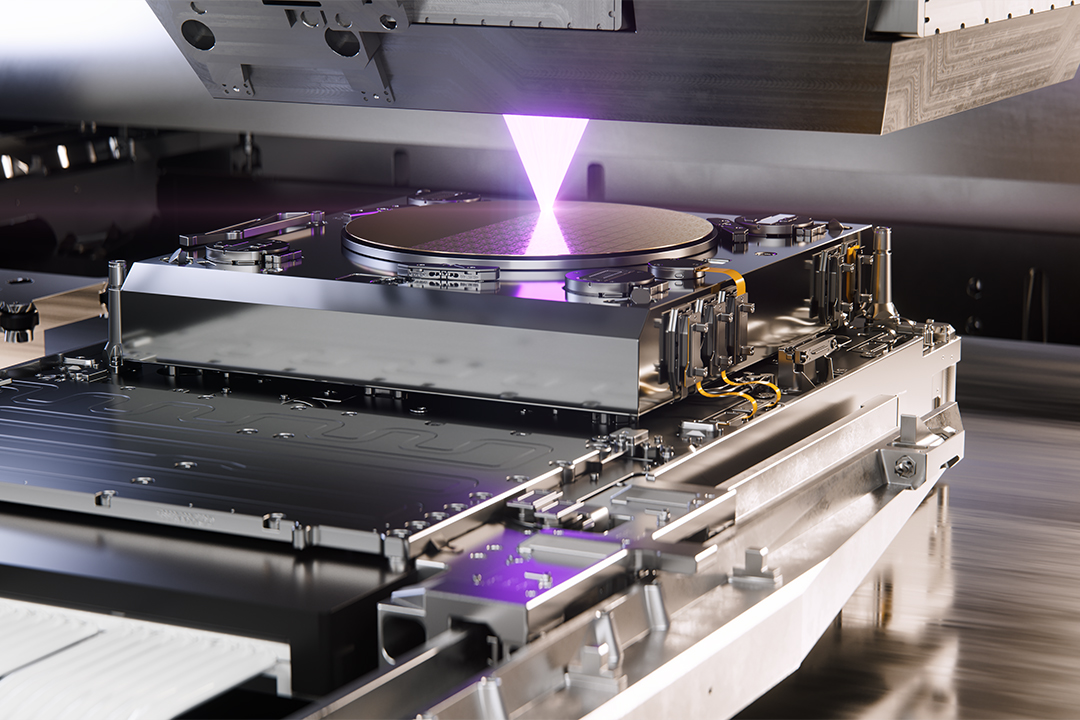
Qatar, which supplies approximately 34% of the world’s helium, was struck by Iranian drones on March 2 and halted all LNG and helium production at Ras Laffan. Helium is not a lifting gas in the semiconductor context. It is the cooling medium for the extreme ultraviolet lithography machines produced by ASML of the Netherlands. EUV machines print transistors at 3 nanometer scale. They are the reason TSMC can make the chips it makes. Helium cools the superconducting components inside these machines and purges their etching chambers of contamination. There is no substitute. When helium is unavailable, EUV machines do not slow down. They stop. Analyst Shanaka Perera, whose post on X triggered broad industry discussion, described helium as the molecule the market is not pricing. SK Hynix sourced 64.7% of its helium from Qatar in 2025. Helium spot prices surged between 40% and 100% following the Ras Laffan shutdown. Bloomberg Economics analyst Michael Deng told Tom’s Hardware that helium shortages could force chipmakers to prioritize production of higher-margin AI chips over less profitable components, deepening shortages in automobiles and consumer electronics.

Taiwan’s Ministry of Economic Affairs stated in mid-March that LNG and helium supplies are secured through end of May 2026, and that negotiations for June are ongoing. Morgan Stanley estimated that several weeks’ worth of LNG supply was en route to the country as of early March, though at a significant premium. The government announced plans to raise the mandatory LNG reserve from 11 to 14 days by next year. Fitch Ratings flagged Taiwan and South Korea as the most exposed semiconductor economies to the Hormuz closure. Wood Mackenzie’s base case assumes Qatar’s production gradually ramps back by end of May 2026, but contract prices linked to oil will keep rising through June. The TSMC share price fell 7% from the start of the conflict through mid-March. The combined market capitalization loss for Samsung and SK Hynix exceeded $200 billion in early March, driven by helium exposure and soaring energy costs.
The connection to the defense supply chain is layered. The chips inside the weapons being fired in Iran today were manufactured at TSMC and other foundries before the current crisis. They are in service. The US Air Force has estimated that 90% of its precision-guided munitions rely on TSMC chips, according to Microchip USA, citing industry analysis. If Taiwan’s fabrication capacity is constrained by energy or helium shortages, the pipeline of future chips for future weapons narrows. The CHIPS Act’s $52 billion investment in domestic semiconductor production is a partial answer to this vulnerability. So is TSMC’s $165 billion US investment. Neither is operational at the scale required to replace Taiwan’s output in any near-term scenario.
1,000 Targets in 24 Hours: What AI-Assisted Targeting Means in Practice
The Iran campaign has produced the first large-scale battlefield deployment of AI-assisted targeting in history. The scope and speed of the opening phase, more than 1,000 targets struck in the first 24 hours and more than 1,700 in the first few days, was not achievable with traditional military planning processes. It required artificial intelligence.
The Washington Post was the first to report the specific mechanism. The US military deployed Palantir’s Maven Smart System, which incorporates Anthropic’s Claude AI models at its core, for real-time targeting and target prioritization during Operation Epic Fury. The Pentagon’s own Chief Digital and AI Officer, Cameron Stanley, confirmed this at Palantir’s AIPCON 9 conference in March 2026: the system had gone from identifying a target to generating a course of action to actioning that target, all from one integrated platform, replacing a process that previously required eight or nine separate systems and hundreds of hours of human labour. CENTCOM Commander Admiral Brad Cooper stated publicly that US warfighters were leveraging advanced AI tools that sift through vast amounts of data in seconds so leaders can make smarter decisions faster than the enemy can react, while humans retain final decision authority on all strikes.
Maven Smart System ingests data from more than 150 sources simultaneously: satellite imagery, drone video, radar feeds, infrared sensors, signals intelligence, and geolocation data. Claude processes this input stream, identifies potential targets, assigns priority scores, and presents human commanders with ranked lists of strike options in seconds rather than hours. The NGA director stated at AIPCON that Maven can generate 1,000 targeting recommendations per hour. The 18th Airborne Corps reportedly achieved targeting output comparable to the 2,000-person targeting cell used during Operation Iraqi Freedom, with approximately 20 people. Maven now has more than 20,000 active users, quadrupled from March 2024. The Pentagon spent $13.4 billion on AI in 2026 alone. Maven’s initial $480 million contract from May 2024 was raised to $1.3 billion in May 2025, followed by a $10 billion Army enterprise framework agreement in July 2025. On March 25, 2026, the Pentagon formalized Maven as a protected program-of-record with multi-year funding of approximately $13 billion, entering it into the Future Years Defense Program as a protected line item.

There is a significant controversy running alongside the operational success story. The Pentagon is investigating whether Maven contributed to the US strike on an Iranian girls’ school that killed more than 170 people, mostly children, after satellite imagery verified the school’s location adjacent to an IRGC compound. The incident illustrates the core limitation of AI targeting at scale: systems that process drone footage and signals data can misclassify civilian infrastructure when physical barriers, a wall built between a school and a military compound 13 years ago, are not visible from the primary surveillance angle. CENTCOM Commander Cooper’s statement that humans will always make final decisions on what to shoot addresses the legal and ethical framework. Whether 20 operators closing 1,000 kill chains per day is consistent with that principle in practice is the question the November 2026 UN Convention on Certain Conventional Weapons Review Conference is expected to examine.
The Palantir-Claude relationship also has a political dimension that became relevant to the investment story. Trump issued an executive order on February 27, 2026, one day before the Iran strikes began, designating Anthropic a supply chain risk to national security following disagreements over Anthropic’s restrictions on fully autonomous targeting. Despite the order, Claude remained operational on classified Pentagon networks throughout the campaign because it was the only frontier-scale AI model operating within certain classified systems at the time and no replacement was ready. The DoD subsequently suspended the Anthropic designation, but the episode illustrated that AI model availability is now a weapons system dependency in the same category as rare earth minerals and GaN chips.
$52 Billion, $165 Billion from TSMC, and Why It Is Still Not Enough
The CHIPS and Science Act of 2022 allocated $52 billion in federal funding to rebuild domestic semiconductor production, with an additional $200 billion in authorized research funding. The premise of the legislation was the same vulnerability that the Iran war is now making visible in real time: the United States had allowed nearly all advanced semiconductor manufacturing to concentrate in a geographically and geopolitically exposed region, Taiwan, and had to rebuild domestic capability before a crisis forced the issue. The crisis arrived before the rebuild was complete.
TSMC’s commitment of $165 billion to build advanced fabrication plants in Arizona is the largest single foreign investment in US manufacturing history. The first Arizona fab, producing chips at the 4 nanometer node, reached volume production in early 2025. A second fab targeting 3 nanometer production is under construction. A third, targeting 2 nanometer production, was announced alongside the $165 billion commitment. Local Taiwanese supply chain companies including United Integrated Services, Chang Chun Petrochemical, and Rayzher Industrial have set up operations near TSMC’s Arizona facilities. The ecosystem is being transplanted, but it is in early stages. The Arizona fabs produce a fraction of the output of Taiwan’s Hsinchu operations, and the process expertise gap between US and Taiwanese fab workers narrows slowly.
Intel’s domestic position has become the most immediately relevant CHIPS Act story for defense investors. Intel operates fabrication plants in Hillsboro, Oregon, and Chandler, Arizona, and received $8.5 billion in direct CHIPS Act funding in 2024 alongside $11 billion in loans. In late 2025, Intel formalized a strategic equity partnership with the US government, giving the DoD direct visibility into and interest in Intel’s fabrication capacity. Intel’s server CPU capacity is reported as sold out through 2026, driven by a flight to domesticity among US enterprise and defense buyers who cannot rely on Asian chip supply chains during the Iran crisis. Among the major semiconductor names, Intel is the clearest domestic beneficiary of the current disruption. Globalfoundries, which operates in Malta, New York, and Burlington, Vermont, is the primary alternative for mature-node defense chips and received $1.5 billion in CHIPS Act funding.

The gap between what exists and what is needed is not primarily a funding problem at this point. It is a time problem. TSMC’s Arizona fabs took five years from groundbreaking to volume production. Intel’s advanced process nodes are one to two generations behind TSMC’s leading edge. The DoD has identified the most critical defense semiconductor needs, GaN for radar, silicon carbide for power electronics, and advanced logic chips for guidance and AI processing, and is investing through the CHIPS Act’s defense set-aside and through the National Semiconductor Technology Center. None of this produces new chips on a timeline relevant to a campaign that is in its fourth week.
Who Benefits, Who Is Exposed, and What the AI Targeting Story Does to Valuations
| Company | Ticker | Exchange | Relevance | Investment Thesis and Key Variables |
| Palantir Technologies | PLTR | NYSE | Maven AI targeting system; confirmed active in Epic Fury; $13B program-of-record | Maven Smart System is the primary AI targeting platform for the Iran campaign confirmed by the Pentagon’s own CDAO. The $13B multi-year program-of-record formalized March 25, 2026 gives Maven protected budget status across future fiscal years. Maven has 20,000+ active users. The Army’s $10B enterprise framework agreement from July 2025 covers 75 legacy Palantir contracts consolidated into a single vehicle. Palantir’s +15% week gain in the first week of the conflict reflected the market’s immediate recognition of its war-fighting role. The controversy over the school strike is a regulatory risk, but DoD dependency on Maven at this scale makes near-term program cancellation implausible. |
| RTX Corporation (Raytheon) | RTX | NYSE | Only US defense contractor with its own GaN foundry in Andover MA; THAAD radar; Patriot; LTAMDS | Raytheon spent 15 years and $200M developing GaN and operates the only GaN foundry in the US defense industrial base. Its THAAD AN/TPY-2 GaN radar was delivered to MDA in September 2024. Its LTAMDS GhostEye Patriot replacement received a $2.09B LRIP contract in August 2024. Its Tomahawk is the sole-source cruise missile. The sole-source GaN foundry position is strategically irreplaceable in the near term: no other US company can produce GaN radar components at the required defense grade without using Raytheon’s facility or importing from non-domestic sources. |
| Northrop Grumman | NOC | NYSE | F-35 APG-81 GaN radar; B-21 Raider; SPY-6 via partnership | Northrop produces the APG-81 GaN fire control radar for the F-35 and the APG-77 for the F-22. It is also the prime on the B-21 Raider, the B-2 replacement, which uses the same GaN-dependent avionics architecture. The B-2’s confirmed role in the Kharg Island strikes validates the B-21 program’s strategic rationale for two decades of procurement. Northrop does not operate its own GaN foundry and sources GaN components from the commercial supply chain, which creates some exposure to the gallium embargo. |
| Intel Corporation | INTC | NASDAQ | Domestic foundry in Arizona and Oregon; CHIPS Act $8.5B; server capacity sold out 2026; strategic equity partnership with DoD | Intel has emerged as the safe-haven semiconductor play during the Iran crisis. Domestic fabrication capacity in the continental US is insulated from Hormuz, Taiwan LNG, and helium supply disruptions. Server CPU capacity reported as sold out through 2026. The strategic equity partnership with the US government formalized in late 2025 gives DoD direct interest in Intel’s fab capacity. Intel’s process nodes remain one to two generations behind TSMC’s leading edge, but for the mature-node chips used in most defense electronics and for server-class processors, Intel’s domestic position is the most relevant. |
| TSMC | TSM | NYSE (ADR) | 90% of world’s advanced chips; Arizona fabs operational; Taiwan energy exposure; shares -7% since war | TSMC is simultaneously the most critical and most geopolitically exposed company in the semiconductor space. Its Taiwan operations produce chips that are irreplaceable at the leading edge. Its Arizona fabs are growing but not yet at scale. The 11-day LNG reserve and the helium supply disruption from Qatar are near-term risks; Taiwan’s government says supplies are secured through May. Wood Mackenzie’s base case for Qatari LNG resumption is mid-May to end of May. If the conflict extends beyond June, the energy and materials pressure on Taiwan’s fabs becomes acute. |
| ASML Holding | ASML | NASDAQ | Only maker of EUV lithography machines; helium is essential input to ASML machines; no alternative | ASML holds a monopoly on extreme ultraviolet lithography machines, the tools that print chips at 3 nanometer and below. Helium, now in shortage due to Qatar’s offline status, is essential for EUV operation. ASML itself does not consume helium directly but its customers, principally TSMC, Intel, and Samsung, cannot run their most advanced fabs without it. The company’s share price is sensitive to any reduction in orders from TSMC, which accounts for the largest share of ASML’s revenue. A prolonged Taiwan energy crisis that forces production cuts at leading-edge fabs would reduce ASML’s near-term order book. |
| Globalfoundries | GFS | NASDAQ | US domestic foundry; CHIPS Act $1.5B; mature-node defense chips; Malta NY and Burlington VT | Globalfoundries operates fabs in Malta, New York, and Burlington, Vermont, and is the primary US domestic source for mature-node semiconductor chips used in defense electronics. It received $1.5 billion in CHIPS Act funding. Mature-node chips, which run at 28 nanometers and above, are not leading-edge AI chips but they are the chips in weapons guidance systems, communications equipment, and electronic warfare systems across most of the US inventory. Globalfoundries benefits from the same flight-to-domesticity dynamic as Intel. |
| Samsung Electronics / SK Hynix | 005930 KRX / 000660 KRX | Korea Stock Exchange | Combined $200B+ market cap loss since war; high helium exposure (SK Hynix 64.7% from Qatar); South Korean energy dependence on Gulf | South Korea is one of the most exposed semiconductor economies to the Hormuz closure. It relies on the Middle East for a large share of its energy and sourced 64.7% of its helium from Qatar in 2025, which is now offline. The KOSPI fell 12% and triggered circuit breakers on March 2. Samsung and SK Hynix are the world’s dominant memory chip producers. Memory chips are foundational to AI data centers. A sustained helium shortage that forces SK Hynix to curtail production would tighten AI chip supply globally at the worst possible moment given the AI boom’s insatiable demand. |
What to Watch Going Forward
The single most important near-term variable for semiconductor investors is TSMC’s operational status. Any announcement from TSMC of production adjustments, power rationing at leading-edge fabs, or helium supply interruptions would be a tier-one market signal. The Taiwan Ministry of Economic Affairs update on helium and LNG supply status, expected before the end of May, is the next scheduled checkpoint. Watch for any TSMC guidance revision during its quarterly earnings call.
The second variable is the helium spot price and the speed at which alternative suppliers can ramp. The US produces helium from natural gas fields in Wyoming, Kansas, and Texas. Russia and Australia are also significant producers. The logistics of redirecting helium to Taiwan in the cryogenic tanker containers required for semiconductor-grade purity are not trivial. Air Products and Messer are the primary helium distributors to semiconductor fabs globally. Any statements from these companies about supply commitments to Taiwanese customers are the best real-time indicator of how serious the supply crunch is becoming.
The third variable is Palantir’s Maven program. Its formalization as a protected program-of-record means the $13 billion multi-year budget commitment survives changes in administration or conflicts. The school strike investigation is the primary near-term risk: if Congress uses it as grounds for operational restrictions on AI targeting, Palantir’s revenue trajectory changes. Watch Congressional Armed Services Committee hearings on AI targeting rules of engagement.
The fourth variable is the speed at which CHIPS Act fabs come online at Intel and TSMC’s Arizona facilities. Any announcement of accelerated production milestones, new defense contracts routed to domestic fabs, or additional CHIPS Act emergency authorisations following the Iran crisis would extend the Intel and Globalfoundries domestic thesis further.
Sources
- Bloomberg — Iran Conflict Threatens Global Chip Supply Chain
- Tom’s Hardware — Pentagon Formalizes Palantir’s Maven AI
- Tom’s Hardware — Global Chip Supply Chain Under Threat
- Blockonomi — TSMC Helium Crisis
- CNBC — Iran War and Semiconductor Demand
- The Register — Pentagon AI Chief Praises Palantir
- Taipei Times — Enhancing Supply Chain Resilience
- CSIS — China’s Control over Gallium
- Financial Content — Operation Epic Fury Semiconductor Analysis
- Microchip USA — Semiconductors as National Defense Priority
Editorial disclosure
This article is based on a research report covering semiconductor supply chain vulnerabilities, AI military targeting systems, and defense technology investment implications arising from the 2026 Iran conflict. It discusses publicly traded companies including Palantir Technologies, RTX Corporation, Intel Corporation, TSMC, ASML, Globalfoundries, Samsung, and SK Hynix. This article includes discussion of active military operations, civilian casualties under investigation, and forward-looking investment analysis subject to significant uncertainty. All data reflects publicly available sources as of March 25, 2026. Commentary reflects the author’s own assessment. The information provided on this website is for informational and educational purposes only. Our content is derived strictly from verified online sources to ensure accuracy and objectivity. This analysis does not constitute financial, investment, or professional advice. Readers are encouraged to consult with qualified professionals before making decisions based on this information. For more information, please see our full DISCLAIMER.

 Watch on YouTube