The AI energy crisis has a cooling problem. This company just raised money to solve it.
Data centers do not just need electricity.
They need cold.
Every server that processes an AI workload generates heat. That heat has to go somewhere. Cooling systems run continuously, often consuming as much energy as the computing equipment itself. In a world where AI data center construction is racing ahead of grid capacity, cooling infrastructure is not a secondary concern. It is a binding constraint on how fast AI can actually scale.
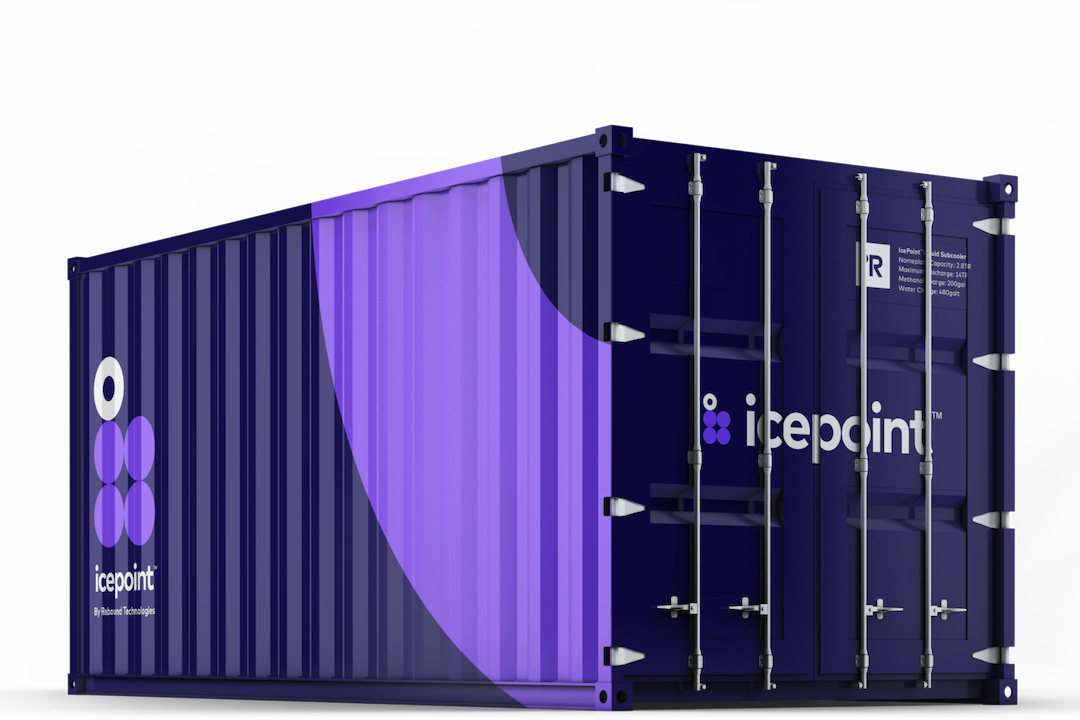
On April 15, 2026, Rebound Technologies announced a $2 million strategic investment from KCC Manufacturing, its preferred manufacturing partner, following the successful completion of key production milestones for its IcePoint thermal energy storage system. The investment deepens a manufacturing partnership and funds the commercial scale-up of a technology that decouples when cooling is produced from when it is used.
That decoupling is the idea that matters.
What IcePoint actually does and why the physics are so useful
Conventional cooling systems run hardest when demand is highest. A data center at peak compute load needs maximum cooling at exactly the moment the grid is most stressed and electricity most expensive. The two peaks coincide perfectly, and perfectly badly.
IcePoint breaks that coincidence.
The system produces and stores cooling during periods of lower demand, typically overnight or during off-peak hours when grid electricity is cheap and abundant. It then deploys that stored cooling during peak periods when demand spikes and electricity costs are highest. The data center stays cold. The grid sees a flattened load profile. The facility’s energy bill goes down.
The underlying technology uses ice as a thermal storage medium, which is why it is called IcePoint. Ice has a high energy density for cold storage. Producing ice at night and melting it during the day is not a new concept. Rebound’s contribution is engineering that makes the system high-performance, reliable, and commercially deployable at the scale that modern data centers, food processing facilities, and district cooling infrastructure require.
According to the Lawrence Berkeley National Laboratory’s data center energy research, cooling accounts for approximately 30 to 40% of total data center energy consumption. At the scale of hyperscale data centers consuming hundreds of megawatts, that percentage represents enormous absolute energy volumes and equally enormous cost and grid impact.
Shifting even a fraction of that cooling load away from peak periods reduces peak demand charges, reduces stress on local grid infrastructure, and allows the same physical cooling capacity to serve higher compute loads without requiring additional grid connections.
The grid capacity problem is what makes this commercially urgent right now
Electricity demand is growing faster than grid capacity can be built in most of the markets where AI infrastructure is being deployed.
In Northern Virginia, home to the world’s largest concentration of data centers, utilities are warning of potential capacity constraints within years. In Texas, ERCOT has flagged growing demand from data centers and manufacturing as a stress on peak capacity management. In the UK and Europe, grid connection queues for large new facilities stretch years into the future.
Thermal energy storage does not solve the grid investment deficit. It buys time and reduces peak demand in ways that defer expensive infrastructure upgrades. A facility that can shift 20 to 30% of its cooling load off-peak through IcePoint can connect to the grid at a lower contracted capacity, reducing interconnection costs and potentially accelerating the timeline from site selection to operational facility.
The International Energy Agency projected in its 2025 Electricity report that global electricity demand from data centers could more than double by 2030, with grid flexibility and demand management becoming critical enablers of that growth. Thermal energy storage sits directly in that enablement category.
KCC Manufacturing’s investment is the signal that matters most here
A $2 million investment from a manufacturing partner is not a large funding round.
What it is, is a manufacturer putting its own money into a company after working alongside its team through the early production phases and watching the technology perform in real manufacturing conditions. KCC Manufacturing is a nearly 50-year-old, 100% employee-owned HVAC manufacturer that has built its reputation on custom-engineered solutions for the heating, ventilation, and air conditioning industry.
When a company with that background and that stake in its own reputation writes a check after seeing the production process up close, it is a specific kind of validation. Not financial modeling. Not a market thesis. An engineering judgment made by people who know exactly what commercial-scale HVAC manufacturing looks like and decided IcePoint was worth backing.
That judgment is worth more than the dollar amount suggests.
The three markets Rebound is targeting and why each one pulls
Data centers are the obvious headline application. The combination of high cooling loads, peak demand charges, and grid capacity constraints creates near-perfect economic conditions for thermal energy storage.
Food processing is the second target. Cold storage and food processing facilities run cooling systems continuously, with significant peaks during processing and packaging operations. Energy costs are a major input cost for food producers. Demand flexibility that reduces peak charges improves margins in an industry where margins are thin.
District cooling infrastructure is the third. Cities and large commercial campuses that operate centralized cooling systems serve multiple buildings from shared chiller plants. Thermal storage at the district level allows the central plant to produce cold during off-peak hours and distribute it across the network during peak periods, reducing total energy consumption and peak demand simultaneously.
Three different markets. The same underlying physics. The same commercial logic.
The manufacturing partnership with KCC provides the production capacity to serve all three.
Sources
- Lawrence Berkeley National Laboratory — Data Center Energy Research
- International Energy Agency — Electricity 2025
- Rebound Technologies — Official Website
- KCC Manufacturing — Official Website
Editorial disclosure
This article is based on a press release issued by Rebound Technologies Inc. and has been independently rewritten and editorially expanded. It covers a $2 million strategic investment from KCC Manufacturing in Rebound Technologies and the scale-up of its IcePoint thermal energy storage technology. Rebound Technologies is a private company. Market context is sourced from Lawrence Berkeley National Laboratory and the International Energy Agency. Commentary reflects the author’s own assessment. The information provided on this website is for informational and educational purposes only. Our content is derived strictly from verified online sources to ensure accuracy and objectivity. This analysis does not constitute financial, investment, or professional advice. Readers are encouraged to consult with qualified professionals before making decisions based on this information. For more information, please see our full DISCLAIMER.