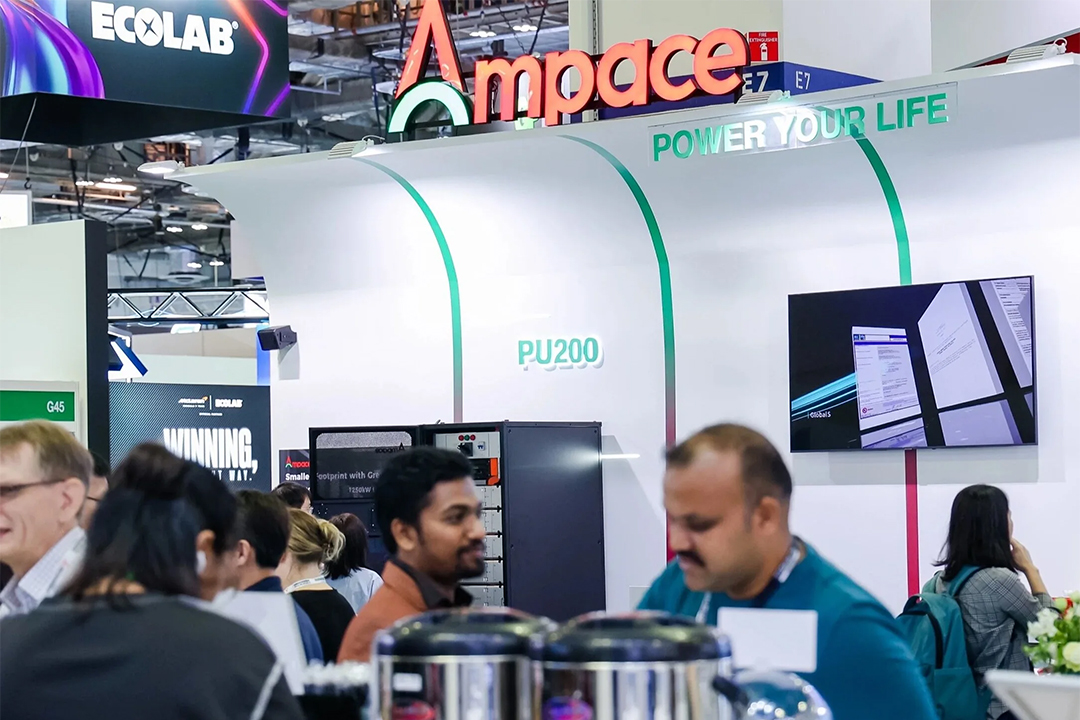
The Data Centre World London 2026 floor is buzzing with a single, urgent problem: AI is breaking the traditional power chain. Ampace is stepping into the gap at Booth C145 with their new AI-focused infrastructure portfolio. This isn’t just about “bigger batteries.” It’s a specialized response to the violent load spikes and thermal headaches inherent in 2026-era AI clusters.
I’ve been watching the data center evolution, and we’re past the point where standard backup works. AI workloads aren’t steady; they’re erratic. They’re heavy. Ampace’s PU100 and PU200 systems are designed for that “instant-on” demand that traditional UPS systems struggle to handle without tripping or overheating.
The AIDC Challenge: Power and Heat
As GPU densities climb, the power demand isn’t just rising—it’s fluctuating wildly. High-frequency load spikes can destabilize a facility in milliseconds. Ampace is pitching “AI Continuity” as the fix.
- PU200 (The Powerhouse): This system uses semi-solid cell technology and is rated for a 10C discharge rate. That means it can dump massive amounts of energy instantly to catch a GPU cluster’s sudden surge.
- Thermal Resilience: Most lithium systems start to sweat at 25°C. The PU200 is built to run at 30°C ambient, specifically to handle the “hot aisle” realities of high-density AI racks. It can even recharge immediately after a full discharge—a rare feat in thermal management.
- PU100 (The Versatile Backup): Aimed at commercial and regional data centers, it offers 10–15 minute rapid response backup with a 6C rate capability.
Safety: The Semi-Solid Advantage
In a mission-critical environment, a single “thermal event” is a catastrophe. Ampace is leaning hard into its safety record—zero reported incidents across 75 million users.
I’m looking at the chemistry here, and the move to semi-solid LFP (Lithium Iron Phosphate) is the key. By reducing liquid electrolytes, they’ve managed to cut gas emissions and thermal runaway risks by up to 90%. It’s a cleaner, more stable way to store energy at scale.
Comparative Analysis: The New Data Center Power Landscape
The market is shifting. We’re moving away from the “VRLA (Lead Acid) vs. Li-ion” debate and into a specialized competition between AI-tuned lithium systems and legacy infrastructure providers.
| Metric | Ampace PU200 | Industry Standard (VRLA) | Legacy Li-ion (Standard) |
| Footprint Reduction | ~65% | 0% (Baseline) | ~40-50% |
| Discharge Rate | 10C (Instantaneous) | 1C – 2C | 3C – 5C |
| Operating Temp | 30°C+ | 20°C – 25°C | 25°C |
| Safety Tech | Semi-Solid / LFP | Acid / Lead | Liquid LFP / NMC |
| Lifespan | 15 Years | 3 – 5 Years | 10 – 12 Years |
Market Insight: The “Friend-Shoring” of Energy
With the Data Center Power Market projected to hit $56.5 billion by 2034, the competition is fierce. Ampace isn’t just competing with the likes of Schneider Electric or Vertiv; they are positioning themselves as a specialized “AIDC” (AI Data Center) partner.
I see the strategic alignment. As hyperscalers move toward 800V HVDC architectures to feed 1MW+ racks, the ability of the battery system to handle transient response—those split-second spikes—becomes the primary differentiator. If your battery can’t catch the spike, your rack goes dark. Ampace is betting that their “AI Continuity” branding will resonate with engineers tired of thermal throttling and safety anxieties.
Editorial Disclosure: This report is for informational purposes only. It is based on an Ampace press release dated February 28, 2026, and verified market data from the Q1 2026 period. This content does not constitute technical or financial advice. All deployment results and safety claims are as reported by the manufacturer. Please read our full Disclaimer.