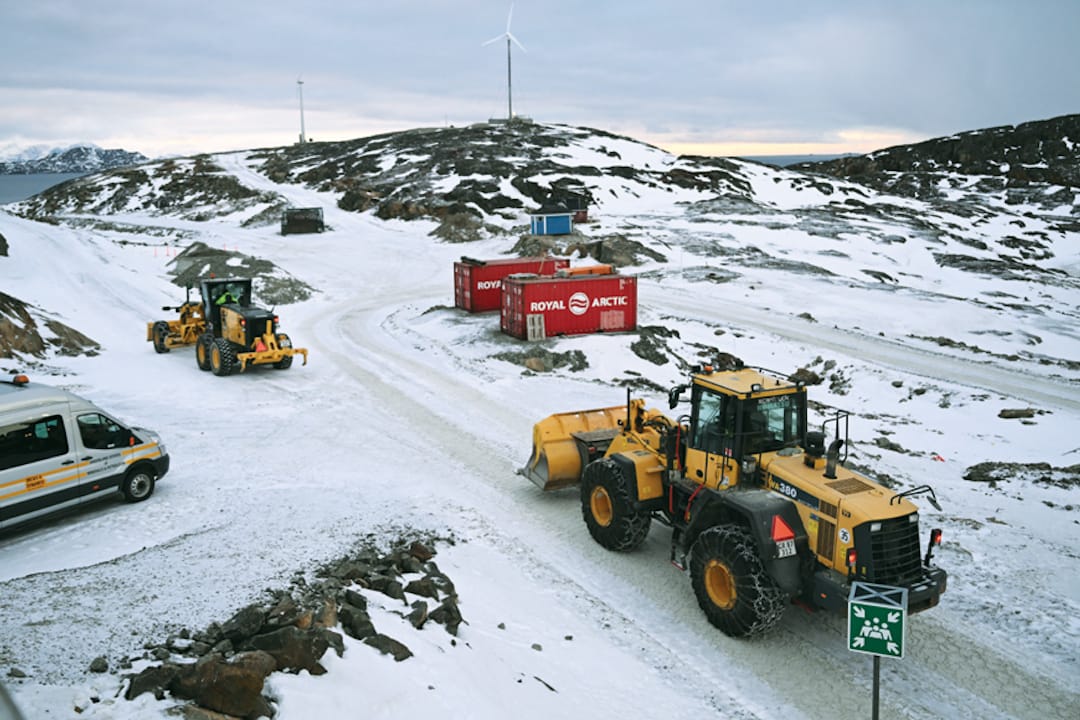
There is a deposit in eastern Greenland that has been studied by geologists for decades and largely left untouched. The Skaergaard Project hosts one of the largest undeveloped gold, palladium, and platinum resources on earth, with a gross in-situ metal value of approximately $68 billion based on February 2026 metal prices. On March 19, 2026, Greenland Mines Ltd (Nasdaq: GRML) announced it has engaged WSP Denmark, part of the global WSP engineering group, to design and implement a full Environmental Impact Assessment baseline programme at the site. That engagement formally launches the process required to obtain an exploitation license from the Government of Greenland.
This is not a drill result or a resource estimate. It is the beginning of the regulatory pathway that turns a deposit into a mine.
Why the EIA baseline programme is the critical step most investors overlook
Mining companies talk constantly about drilling, resource estimates, and metallurgy. The step that actually determines whether a deposit becomes a producing mine is the environmental permitting process, and it is the step that most often causes projects to stall or fail entirely.
Greenland’s regulatory framework requires a minimum of two years of biological baseline surveys covering the full project area before an Environmental Impact Assessment can be submitted alongside an exploitation license application. That means the work starting in 2026 and running through 2027 is not optional groundwork. It is a statutory requirement on the critical path to production. By engaging WSP Denmark now and launching the programme ahead of regulatory deadlines, Greenland Mines is compressing its development timeline in the most meaningful way possible.
WSP Denmark brings specific credentials that matter here. The firm has deep Arctic environmental and permitting experience across multiple mining and infrastructure projects in Greenland and the broader North Atlantic region. Arctic EIA work is genuinely specialised. Weather stations, hydrological monitoring, marine mammal surveys using submerged hydrophones, underwater ROV seabed characterisation, and vegetation mapping in remote Arctic terrain require expertise and logistics that most environmental consultancies simply do not have. WSP does.
What the two-year baseline programme actually involves
The scope of work is substantial and worth understanding in detail. WSP Denmark will install automated weather stations near the Sødalen airstrip and potential infrastructure sites to continuously record temperature, wind, precipitation, and humidity with satellite data transmission. Hydrological monitoring stations will measure water levels and flow rates on key rivers, providing data for water management and tailings assessments.
Terrestrial and marine baseline work will cover vegetation and habitat mapping, systematic mammal and bird observations, and dedicated sea mammal monitoring through submerged hydrophone stations. Biological and environmental samples will be archived in the Greenland Mineral Resources Environmental Sample Bank. Detailed marine seabed characterisation will use ROV video and grab sampling in areas relevant to potential harbour and infrastructure sites.
A comprehensive baseline report will be delivered after the 2026 campaign. The final baseline report, Terms of Reference approval, and first draft EIA are targeted for completion after the 2027 programme.
This is serious, methodical work designed to withstand regulatory scrutiny. The Greenlandic government updated its exploitation permitting framework in 2025, and Greenland Mines has structured the entire programme to align with those updated requirements.
The strategic metals profile makes Skaergaard more than just a gold story
At current metal prices, palladium and platinum are where much of the strategic interest in Skaergaard lies. The deposit contains a 2022 NI 43-101 Indicated and Inferred Mineral Resource of 25.4 million ounces of palladium equivalent and 23.5 million ounces of gold equivalent. That palladium exposure is significant in the context of critical minerals supply chains.
Palladium is a critical input for catalytic converters in internal combustion vehicles and is increasingly used in hydrogen fuel cell technology. Russia and South Africa together supply approximately 80% of global palladium production, according to the US Geological Survey. Supply concentration at that level creates exactly the kind of geopolitical vulnerability that Western governments are actively trying to address through domestic and allied-nation critical minerals development.
Greenland’s geopolitical position adds another layer of strategic significance. The island has been at the centre of elevated attention from the United States as a source of critical minerals and strategic resources. The US Geological Survey has highlighted Greenland as one of the most prospective undeveloped critical minerals jurisdictions in the world. A large, permitted, operating palladium and gold mine in Greenland would attract serious interest from Western governments and technology companies seeking supply chain alternatives to Russian and South African sources.
The unusual corporate structure is worth understanding
Greenland Mines is an unusual company. It operates two entirely separate divisions: a natural resources division focused on the Skaergaard Project, and a cell and gene therapy division that includes Klotho’s KLTO-202 ALS therapy. The company holds an 80% interest in Skaergaard with an option to acquire the remaining 20%.
This dual-division structure means investors in GRML are getting exposure to both a major critical minerals development project and an early-stage biotech programme in a single listed vehicle. That combination is rare and worth evaluating carefully. The Skaergaard asset is the dominant value driver by any reasonable measure, given the scale of the resource, but investors should understand that management attention and capital allocation span two very different industries simultaneously.
No preliminary economic assessment, pre-feasibility study, or feasibility study has been completed on the Skaergaard Project. Mineral resources are not mineral reserves, and there is no certainty that economically viable mining operations will be established. The $68 billion gross in-situ value figure does not account for mining costs, recoveries, taxes, or any other economic factors. This is a development-stage asset with real potential and real risk.
Sources
- US Geological Survey — Palladium Statistics and Information
- US Geological Survey — Greenland Critical Minerals Assessment
- WSP Global — Mining and Environmental Services
- Greenland Mines — Official Press Release via PRNewswire
Editorial disclosure
This article is based on a press release issued by Greenland Mines Ltd and has been independently rewritten and editorially expanded. It covers the engagement of WSP Denmark to conduct environmental baseline work at the Skaergaard Project in Greenland. Greenland Mines Ltd trades on NASDAQ under the ticker GRML. The Skaergaard Project is a development-stage asset with no completed feasibility study and no demonstrated economic viability. Mineral resources referenced are not mineral reserves. The gross in-situ value figures cited do not reflect actual project economics. Market context is sourced from the US Geological Survey and WSP Global. Commentary reflects the author’s own assessment. The information provided on this website is for informational and educational purposes only. Our content is derived strictly from verified online sources to ensure accuracy and objectivity. This analysis does not constitute financial, investment, or professional advice. Readers are encouraged to consult with qualified professionals before making decisions based on this information. For more information, please see our full DISCLAIMER.