One of the world’s largest undeveloped palladium deposits is in Greenland. The plan is to process it in Iceland. Here’s why that makes sense.
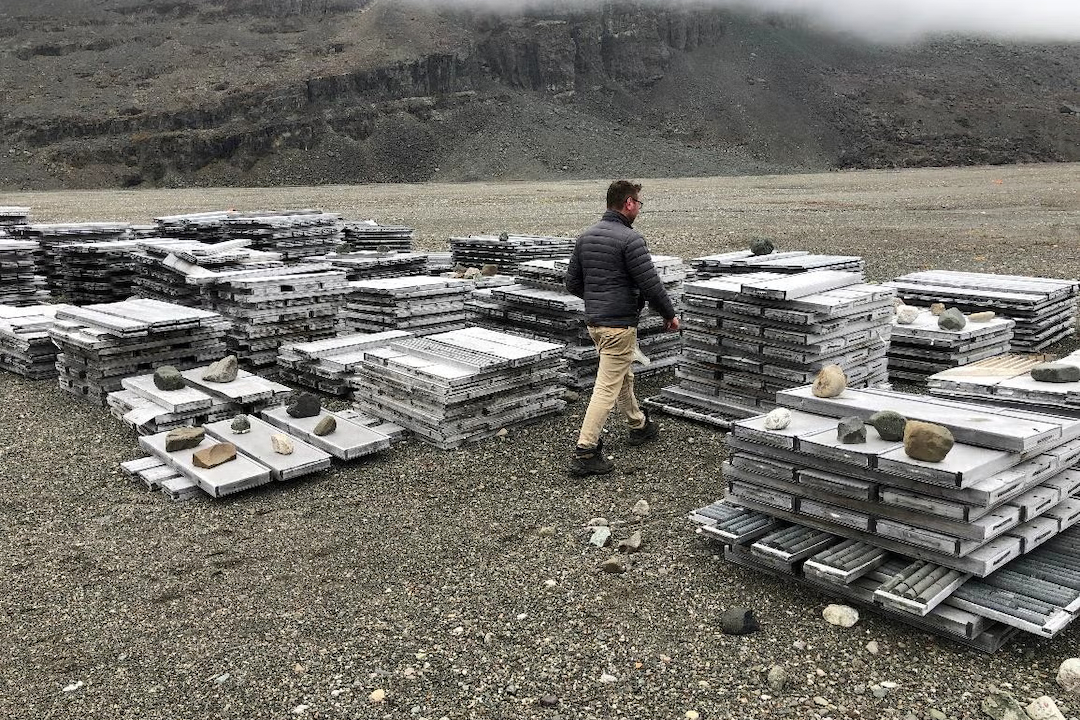
The Skaergaard project sits in East Greenland.
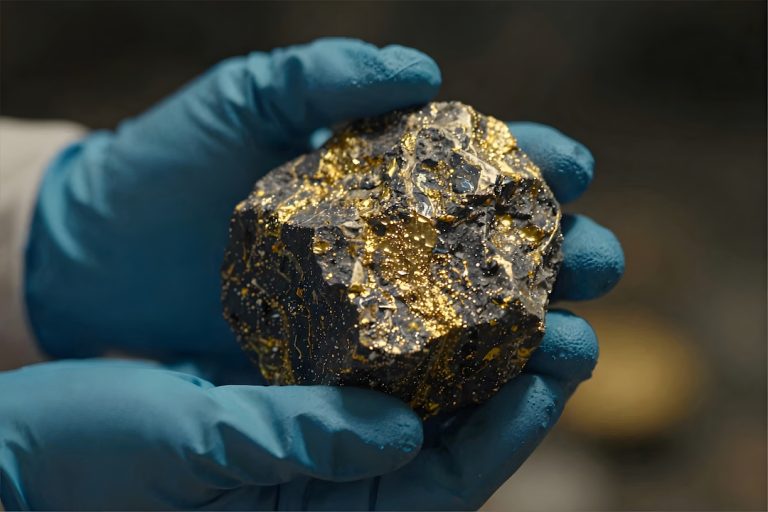
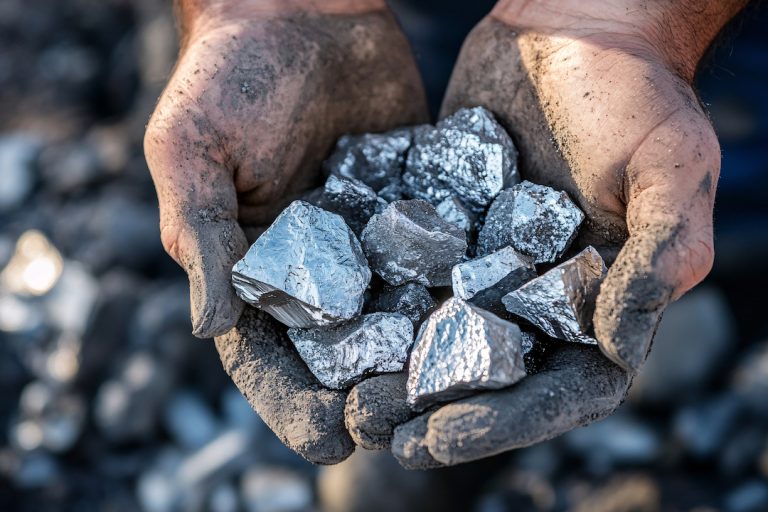
25.4 million ounces of palladium equivalent. 23.5 million ounces of gold equivalent. An in-situ resource value estimated at approximately $68 billion based on February 2026 metal prices. One of the largest undeveloped palladium, gold, and platinum deposits on the planet, in a jurisdiction that is attracting more strategic attention from Western governments than at any point in its modern history.
The deposit is not the problem.
The power is.
Mining in the Arctic typically means diesel generation. All-in power costs at remote Arctic operations can run above $0.20 per kilowatt-hour. At the scale of a full processing facility drawing 50 megawatts continuously, that number is not a variable. It is a project-killer. It is also the reason Greenland Mines (NASDAQ: GRML) signed a Letter of Intent with an Icelandic industrial site owner on April 16, 2026, beginning the formal process of evaluating Iceland as the processing hub for Skaergaard’s output.
Iceland sits roughly 400 kilometers from northwestern Greenland by sea.
Its industrial electricity, drawn from geothermal and hydropower, runs at potentially below $0.03 per kilowatt-hour for large users.
The same operations that would cost $0.20 in Greenland cost $0.03 in Iceland. At 430 gigawatt-hours per year, that difference compounds to over $1 billion in savings across the life of mine.
That is not a marginal improvement. That is a different project.
The North Atlantic processing corridor is a genuine strategic concept
The idea is simple in outline and complex in execution.
Mine and concentrate the ore in East Greenland. Ship it approximately 20 to 30 hours by bulk carrier to an industrial processing hub in Iceland. Refine the palladium, platinum, gold, vanadium, gallium, and titanium using low-carbon Icelandic power. Move the finished metals directly into European and North American supply chains from Iceland’s year-round ice-free ports.
Greenland provides the geology. Iceland provides the energy, infrastructure, and logistics. The North Atlantic provides the shortest possible route between some of the world’s most critical undeveloped mineral resources and the Western markets that most urgently need them.
The concept is also being evaluated with pre-processing in Greenland, crushing and ore-sorting to produce a semi-upgraded product before shipment, which would reduce shipping volumes and further optimize energy use across the two-country operation.
For critical minerals policy, the geographic logic is compelling. The US Geological Survey’s 2025 Mineral Commodity Summaries documented that Russia produces approximately 40% of global palladium supply. South Africa produces most of the rest. Western supply chain security for palladium, essential for catalytic converters, hydrogen fuel cells, and electronics manufacturing, depends almost entirely on two countries with complicated geopolitical relationships with NATO allies.
Skaergaard, in a Danish autonomous territory with a NATO security umbrella, processed in Iceland, a NATO member, represents a supply chain that bypasses that dependency entirely.
Iceland’s industrial model provides the template
Iceland’s aluminum smelting industry demonstrates exactly what Greenland Mines is proposing.
Large aluminum smelters in Iceland operate continuously at multi-hundred-megawatt scale using geothermal and hydropower at industrial rates that make the operations globally competitive. The model works. The infrastructure exists. The regulatory framework for large industrial users of Icelandic power is established.
Processing palladium, platinum, and gold concentrate is not the same as smelting aluminum, but the energy infrastructure requirements, large continuous power draw, deep-water port access, industrial zoned land, and experienced industrial workforce, are the same category of need. Iceland has built that category of infrastructure and has brownfield industrial sites available for refurbishment that could reduce both capital intensity and construction timelines relative to building from greenfield.
The sites under evaluation are in the range of 100,000 to 200,000 square meters with deep-water harbor access and existing grid connections. Refurbishing substantial existing industrial complexes rather than building new reduces capital requirements, accelerates timelines, and aligns with circular economy principles that European financing institutions increasingly require.
The geopolitical context is doing significant work here
Greenland has been at the center of Western strategic conversation for reasons that extend well beyond mining.
US interest in Greenland’s strategic position and mineral resources has intensified. Denmark’s management of Greenlandic affairs and Greenland’s own push for greater autonomy are intersecting with NATO’s interest in Arctic security. The island’s critical minerals, rare earths, uranium, and precious metals are no longer viewed primarily as a commercial opportunity. They are viewed as a national security asset by governments in Washington, Brussels, and Copenhagen simultaneously.
Iceland’s position strengthens this framing. As a NATO member with a potential EU accession track, Iceland provides a regulatory and geopolitical bridge between Greenland’s resources and European and North American markets that is aligned with every major Western critical minerals policy framework currently being developed, including the EU’s Critical Raw Materials Act, the US Defense Production Act authorities, and NATO’s emerging critical minerals security agenda.
According to the European Commission’s Critical Raw Materials Act framework, palladium and platinum group metals are classified as strategic raw materials requiring domestic and allied-nation supply development. A vertically integrated North Atlantic processing chain producing green palladium from Skaergaard ore processed in Iceland fits that framework as precisely as any project currently in development.
What the LOI means and what comes next
A Letter of Intent is a framework for discussions. It is not a binding commitment and it does not guarantee that any specific Icelandic site will become the Skaergaard processing hub.
What it does is formalize a process. Technical, commercial, and permitting discussions can now proceed within a structured framework. The findings feed into future technical studies for Skaergaard, which has not yet completed a preliminary economic assessment, pre-feasibility study, or feasibility study. The mineral resources are real and defined under NI 43-101. The economics of the mine are not yet formally established.
For investors, Skaergaard is an advanced exploration and early development asset with a very large resource, a compelling strategic thesis, and a management team that is systematically building the supply chain logic that will underpin eventual project financing. The gap between a 25-million-ounce palladium equivalent resource and a producing mine is measured in years, capital, and regulatory process.
The North Atlantic processing strategy is addressing one of the most significant economic constraints on that journey, the cost of power, before the project reaches the stage where power costs are formally modeled in a feasibility study.
That is the right time to be solving it.
Sources
- US Geological Survey — Palladium Mineral Commodity Summaries 2025
- European Commission — Critical Raw Materials Act
- Greenland Mines — Investor Relations
Editorial disclosure
This article is based on a press release issued by Greenland Mines Ltd and has been independently rewritten and editorially expanded. It covers a Letter of Intent for an Icelandic industrial processing site and the company’s North Atlantic supply chain strategy for its Skaergaard project. Greenland Mines trades on NASDAQ under the ticker GRML. The Skaergaard mineral resource is an NI 43-101 Indicated and Inferred resource. Mineral resources are not mineral reserves and do not have demonstrated economic viability. No preliminary economic assessment, pre-feasibility study, or feasibility study has been completed. The in-situ resource value of $68 billion is an illustrative calculation that does not account for mining costs, recoveries, metallurgical losses, capital costs, or other technical and economic factors. This article discusses an early-development stage mining company carrying significant speculative risk. The Letter of Intent is non-binding and does not guarantee any specific site selection or development outcome. Market context is sourced from the USGS and the European Commission. Commentary reflects the author’s own assessment. The information provided on this website is for informational and educational purposes only. Our content is derived strictly from verified online sources to ensure accuracy and objectivity. This analysis does not constitute financial, investment, or professional advice. Readers are encouraged to consult with qualified professionals before making decisions based on this information. For more information, please see our full DISCLAIMER.