
Executive Summary
Late April 7, President Trump announced a two-week ceasefire with Iran, contingent on Iran reopening the Strait of Hormuz to safe passage. Iran’s Supreme National Security Council accepted. The market reaction was immediate and dramatic. WTI crude fell as much as 19% in after-hours trading to below $94, the largest single-day drop since the 1991 Gulf War. Brent fell 16% to around $93. S&P 500 futures jumped 2.5%, Dow futures spiked 1,000 points, Nasdaq futures rose 3%. European and Asian markets followed. Oil is still up 47% since the war began on February 28. The ceasefire has not ended the war, resolved the Islamabad talks, settled the question of Hormuz access fees Iran is seeking to impose, or addressed the Israel-Lebanon conflict which Netanyahu says the ceasefire does not cover. Analysts are describing it as a relief trade, not a resolution trade. Two weeks is a long time in this conflict. Investors who bought the ceasefire announcement are now watching for the first tanker to actually transit the strait.
The Deal, the Terms, and What Each Side Claims
Trump’s April 7 announcement came less than two hours before his 8 p.m. ET deadline to strike Iranian power plants and bridges. He posted on Truth Social that Iran had submitted a 10-point peace proposal and that he believed it was a workable basis to negotiate. The ceasefire is contingent on Iran agreeing to a complete, immediate, and safe opening of the Strait of Hormuz. Pakistan’s Prime Minister Sharif brokered the arrangement and invited both delegations to Islamabad on April 10 for continued talks toward a permanent settlement.
Iran’s Supreme National Security Council confirmed acceptance but was explicit that this is not the end of the war. Its statement said the armed forces’ hands remain on the trigger. Iran’s Foreign Minister said safe passage through Hormuz will be possible for two weeks via coordination with Iran’s armed forces and with due consideration of technical limitations. That language around coordination and technical limitations is the ambiguity traders are now pricing. Iran’s semi-official Tasnim News Agency also reported that Tehran intends to charge ships a fee for transit, which Jefferies chief European economist Mohit Kumar described as unacceptable to the US or its allies, though he noted a compromise fee structure for a limited period was possible.
Israel’s position adds another layer of complexity. Netanyahu’s office said Israel supports the ceasefire but added that it does not include Lebanon. US officials have not confirmed the full terms beyond the Hormuz provision. Trump said on Truth Social that almost all major points have been agreed to in principle, a claim neither Iran nor any intermediary has corroborated in specific terms.
The Biggest Single-Day Oil Drop Since the Gulf War
WTI crude fell from an intraday high of $117 on April 7 to below $94 in after-hours trading, a drop of more than 19%. Brent fell from above $100 to around $93, down roughly 16%. Bloomberg described it as the biggest drop in oil in almost six years. Axios called it the biggest one-day fall since the 1991 Gulf War. The scale of the move reflects how much war premium had been built into prices over the preceding six weeks.
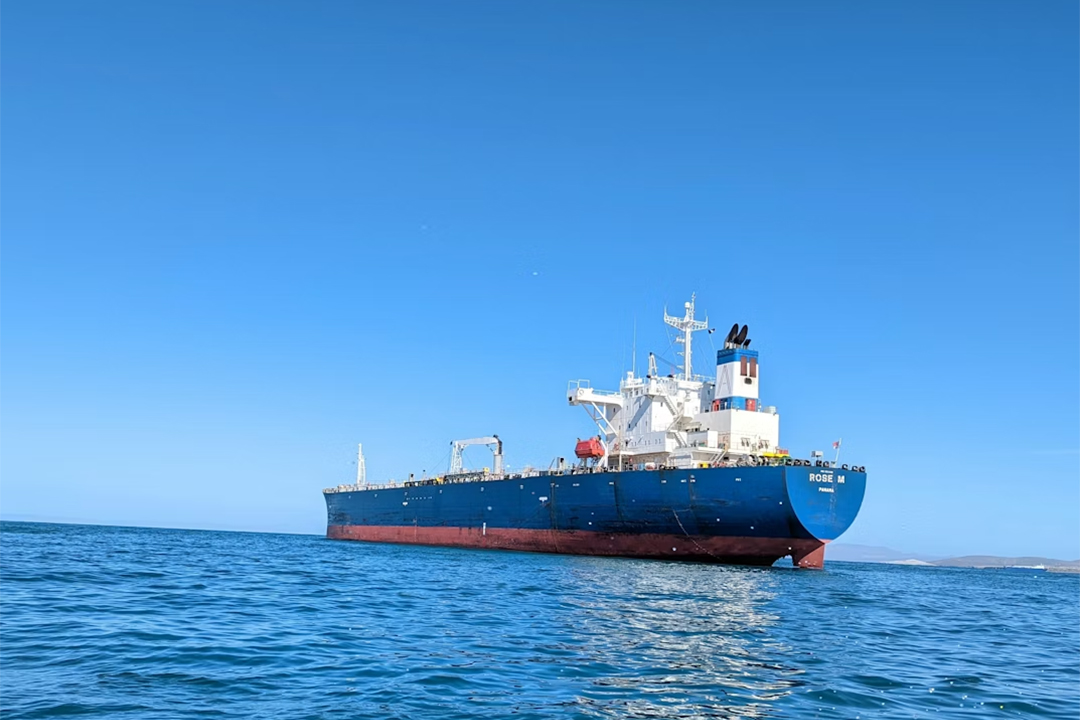
The context matters. WTI was trading at $67.02 on February 27, the day before the war began. At $94 after the ceasefire drop, it is still up approximately 40% from pre-war levels. Brent started the year around $73. At $93 to $95, it is still up roughly $20 per barrel from its pre-conflict baseline. The entire 40-point war premium has not come out. Only the most acute escalation risk, Trump’s threatened infrastructure strikes, has come out. The underlying supply disruption, 150-plus tankers stranded, Gulf producers cutting output, Qatari LNG still offline, has not been reversed by a two-week ceasefire announcement.
GasBuddy’s Patrick De Haan was direct: another two weeks of status quo and barely anything getting through the Strait will likely continue to push oil, gasoline, diesel, and jet fuel prices higher. The EIA’s Short-Term Energy Outlook from March forecast Brent staying above $95 for two months before easing. That forecast assumed a gradual reopening. Two weeks of coordinated passage with technical limitations is not a reopening. US retail gasoline is still at $3.72 per gallon. Analysts expect some pump price relief by the end of the week if tanker traffic actually resumes but a full reversal to pre-war levels requires a permanent settlement, not a pause.
A Relief Rally, Not a Recovery Rally
Global equity markets staged their largest single-day gains in months. S&P 500 futures jumped 2.5%. Dow futures spiked more than 1,000 points. Nasdaq 100 futures rose nearly 3%. Russell 2000 futures gained 2.8%. European markets were even stronger. The pan-European Stoxx 600 advanced nearly 4% in early trading on April 8. Germany’s DAX led with a 4.8% gain. The MSCI Asia benchmark jumped 2.6%. South Korea’s KOSPI surged 5.8%, its best day in months, driven in part by the technology and memory chip exposure that had been crushed throughout the conflict.
Jay Woods, chief market strategist at Freedom Capital Markets, framed it accurately: it wasn’t much of a surprise there was a reprieve. The market has gotten much better at sniffing out Trump’s next move. The concern is whether this all-too-familiar two-week timeframe leads to resolution. Hiroyuki Ueno of Sumitomo Mitsui Trust Asset Management said more bluntly: this is a relief for markets, but things are not guaranteed to go smoothly from here, and investors shouldn’t get ahead of themselves. Zavier Wong of eToro noted that TACO, an acronym the trading community has developed for Trump’s pattern of issuing threats and then pulling back, is becoming less of a joke and more of a trading strategy.
The dollar fell to a four-week low, unwinding some of its haven premium. US 10-year Treasury yields dropped 9.5 basis points to 4.247%, the lowest since mid-March. Two-year yields fell to 3.727%. Traders added back to Federal Reserve rate cut bets as inflation pressure from energy prices appeared to ease at least temporarily. Gold rose 2.5% and silver gained 4.6%, a signal that investors are relieved but not yet confident, still holding some tail-risk protection while rotating into risk assets.
Airlines, Travel, Shipping, and Korean Tech
| Sector / Name | Move April 8 | Why |
| Lufthansa | +10%+ | Airlines are the most direct beneficiary of lower oil. Jet fuel is their largest single operating cost. The ceasefire-driven oil drop provides immediate balance sheet relief. European carriers had been the hardest hit travel names during the conflict. |
| EasyJet | +10%+ | Low-cost carriers have thinner margins and higher fuel cost exposure as a percentage of revenue than legacy carriers. EasyJet’s move reflects the same jet fuel relief trade as Lufthansa but with more operating leverage. |
| TUI (travel) | +11%+ | Tourism and package travel stocks had been hammered by cancelled flights, Middle East route disruptions, and consumer confidence effects from surging gas prices. TUI is the clearest beneficiary of a return to regional stability. |
| Samsung Electronics | +7.1% | Samsung was one of the hardest-hit tech names during the war due to helium exposure and Korean energy dependence on the Gulf. The ceasefire eases the supply chain pressure thesis that had driven the KOSPI down. Samsung is the world’s largest memory chip maker. |
| SK Hynix | +9.6% | SK Hynix sourced 64.7% of its helium from Qatar in 2025. Qatar’s Ras Laffan remains offline but a ceasefire that leads to a permanent settlement eventually restarts it. SK Hynix’s near 10% gain is a direct pricing-in of that optionality. Helium spot prices remain elevated. |
| Nikkei 225 (Japan) | +4.95% | Japan is one of the most exposed energy-importing economies to the Hormuz closure. Japan gets approximately 70% of its oil through Hormuz. Relief on that supply line drives broad market gains across Japanese equities. |
| KOSPI (South Korea) | +5.8% | South Korea is similarly exposed. Its circuit breaker triggered at the start of the war in early March. The KOSPI’s nearly 6% gain on ceasefire news reverses a portion of the 20% drop sustained since the war began. |
Defense Primes, Oil Refiners, and Tankers Give Back War Premium
Every sector that rallied on the outbreak of the war on February 28 reversed on the ceasefire news. The logic is symmetrical. The war created demand for defense production, elevated refiner crack spreads, and pushed tanker rates to record levels. A path toward peace reduces all three of those tailwinds, at least in the near term.
| Sector / Name | Ceasefire Effect | Why and What Holds |
| Defense primes (LMT, NOC, RTX) | War premium deflates | Byron Callan of Capital Alpha Partners identified peace as the primary risk to defense stocks from day one of the conflict. The structural replenishment thesis, the $28.8 billion pre-existing munitions deficit, framework agreements to triple and quadruple production, and a $50 billion-plus supplemental, does not disappear with a two-week ceasefire. But the urgency premium in share prices partially reverses. |
| US refiners (VLO, MPC) | Crack spreads compress | Domestic refiners benefited from the war in two ways: elevated crude prices drove wider crack spreads, and military JP-8 procurement pressure added incremental demand. Lower oil prices compress margins. The structural domestic advantage over Gulf-dependent refiners persists, but the acute crisis premium comes out. |
| Tanker companies (NAT, Nordic) | Rate spike reverses | VLCC spot rates hit a record $423,736 per day in the first week of the conflict. Those rates were driven by near-zero Hormuz transit and forced Cape of Good Hope rerouting adding 15 to 20 days per voyage. A reopened Hormuz collapses ton-miles and normalizes rates. The speed of the reversal depends entirely on how quickly tanker traffic actually resumes rather than being promised to resume. |
| Oil and gas sector broadly | Oil -15 to 16% | The oil and gas sector is the most direct loser. Every energy name from producers to LNG exporters had been pricing in an extended Hormuz closure. Venture Global, Cheniere, and the LNG names that surged in the first week of the war all pull back. Saudi Aramco’s emergency rerouting through Yanbu becomes less urgent. |
Why Two Weeks Is Not a Resolution
The ceasefire has four structural problems that prevent markets from fully pricing in a return to pre-war conditions. Each one is a risk to the current relief rally.
Iran’s Hormuz fee. Iran’s semi-official Tasnim News Agency reported that Tehran intends to charge vessels for transit through the Strait of Hormuz. No Western government or shipping company has agreed to this. The US has not confirmed or denied it as part of the deal. Jefferies’ Mohit Kumar said it would be unacceptable to the US or its allies. If Iran attempts to enforce a toll, the first commercial tanker attempting transit becomes a diplomatic flashpoint rather than a proof of reopening.
Lebanon. Netanyahu’s office explicitly stated the ceasefire does not include Lebanon. Israel is continuing operations against Hezbollah. Iran funds and arms Hezbollah. Any escalation in Lebanon during the two-week ceasefire window risks pulling Iran back into active conflict posture, which would immediately threaten the Hormuz arrangement.
Islamabad talks are not a deal. The April 10 Islamabad negotiations are the start of a process, not the end of one. Iran’s 10-point proposal includes withdrawal of US combat forces from all regional bases, lifting all sanctions, and war reparations. Trump has not confirmed acceptance of any of those terms. He called it a workable basis, not an agreement. Carol Kong of Commonwealth Bank of Australia said the conflict’s root causes remain unresolved and maintained the view that the war will run into June.
Technical limitations on Hormuz. Iran said safe passage will be possible via coordination with its armed forces and with due consideration of technical limitations. That language does not mean free and unencumbered passage. It means Iran retains operational control over who transits and when. Whether shipping companies and their insurers treat that as safe enough to send VLCCs into the strait is a separate question from whether the ceasefire holds politically.
How Much Came Out and How Much Is Left
The concept of a war premium, the price above fundamental value that markets charge for geopolitical risk, is useful for framing how much further relief is available if negotiations succeed.
In oil, Goldman Sachs estimated a $14 per barrel war risk premium as of March 3, roughly two weeks into the conflict. That was based on a full four-week Hormuz closure scenario with spare pipeline capacity used as an offset. WTI was at $67 before the war and traded as high as $117 on April 7. The 16% drop to approximately $94 removed the acute escalation premium tied to Trump’s infrastructure strike threat. But the baseline structural supply disruption premium, the barrels that still cannot physically move, the Gulf producers still cutting output, Qatar still offline, is not yet removed. A fair estimate is that roughly $10 to $12 of the $27 gain since February 28 has come out so far.
In equity markets, the KOSPI fell 20% from its peak and has recovered several percentage points. European travel and airline names fell 15 to 25% during the conflict and recovered 10 to 11% on April 8. In both cases, the recovery is partial. Full recovery to pre-war levels requires not just a ceasefire but a physical reopening of Hormuz and a resumption of normal tanker traffic, confirmed by insurers reinstating war risk coverage at standard rates. That has not happened yet. War risk insurance was pulled on March 5. It will not return until there is a sustained period without attacks.
The Variables That Determine Whether the Relief Rally Holds
First tanker transit. The single most important market signal over the next 48 to 72 hours is whether a non-Iranian commercial tanker successfully transits the Strait of Hormuz with AIS active and without incident. The Pakistani Aframax Karachi was the first non-Iranian AIS-active cargo to transit on March 15, under Iran’s selective passage arrangement. A full commercial reopening under the ceasefire requires major Western-flagged VLCCs and product tankers to attempt transit without attack. Every day that passes without a successful transit is a day the oil market reloads skepticism.
Insurance reinstatement. War risk insurance withdrawal on March 5 was the mechanism that stopped commercial traffic more effectively than the physical threat. Shipping companies will not send a $100 million VLCC through Hormuz without coverage. Lloyd’s of London and the P&I clubs set the standard. Watch for any statement from these institutions on whether they will reinstate coverage during the ceasefire window and under what conditions.
Islamabad talks April 10. The scope and substance of the Islamabad negotiations will determine whether the two-week ceasefire is a genuine path toward a settlement or a diplomatic delay. Iran’s 10-point proposal as described includes US troop withdrawals and war reparations, demands that represent a complete Iranian victory framework. If Trump signals any acceptance of those terms, markets price in a permanent settlement. If talks stall, the ceasefire extension or breakdown becomes the next binary event.
Lebanon. Any escalation between Israel and Hezbollah that draws Iranian retaliation during the two-week window collapses the ceasefire. Watch Israeli operations in southern Lebanon and any Hezbollah missile or drone attacks on Israel. Netanyahu’s Lebanon carve-out from the ceasefire terms creates a meaningful pathway to escalation that neither the US nor Pakistan has closed.
Defense supplemental. For investors in defense primes, the $50 billion-plus supplemental that was being drafted by Deputy Defense Secretary Steve Feinberg does not disappear with a ceasefire. The $28.8 billion pre-existing munitions deficit identified by CSIS before the conflict and the stockpile drawdowns that occurred during six weeks of active operations are permanent regardless of the political outcome. Watch for any statement from the White House or Congress on the supplemental’s status.
Sources
- NPR — US and Iran Agree to 2-Week Ceasefire
- CNBC — Dow Futures Jump 1,000 Points, Oil Tumbles
- Bloomberg — Oil Plunges, Stocks Jump: Markets Wrap
- Reuters — Oil Prices Dive, Stocks Surge
- CNN Business — Oil Prices Drop and Stocks Rally
- Axios — Oil Prices Plunge on Trump’s Ceasefire Post
- Time — Trump Agrees to Ceasefire With Iran
Editorial disclosure
This article is based on a market analysis report covering the financial market reaction to the US-Iran ceasefire announcement of April 7, 2026. It discusses publicly traded securities including airlines, defense companies, energy producers, and technology stocks. All market prices cited are intraday and after-hours figures from April 7 to 8, 2026, and may differ from official closing prices. The ceasefire situation is evolving rapidly and material developments may have occurred after the time of writing. This article does not constitute investment advice. Market context is sourced from CNBC, Bloomberg, Reuters, NPR, Axios, CNN Business, and Time. Commentary reflects the author’s own assessment. The information provided on this website is for informational and educational purposes only. Our content is derived strictly from verified online sources to ensure accuracy and objectivity. This analysis does not constitute financial, investment, or professional advice. Readers are encouraged to consult with qualified professionals before making decisions based on this information. For more information, please see our full DISCLAIMER.

 Watch on YouTube