
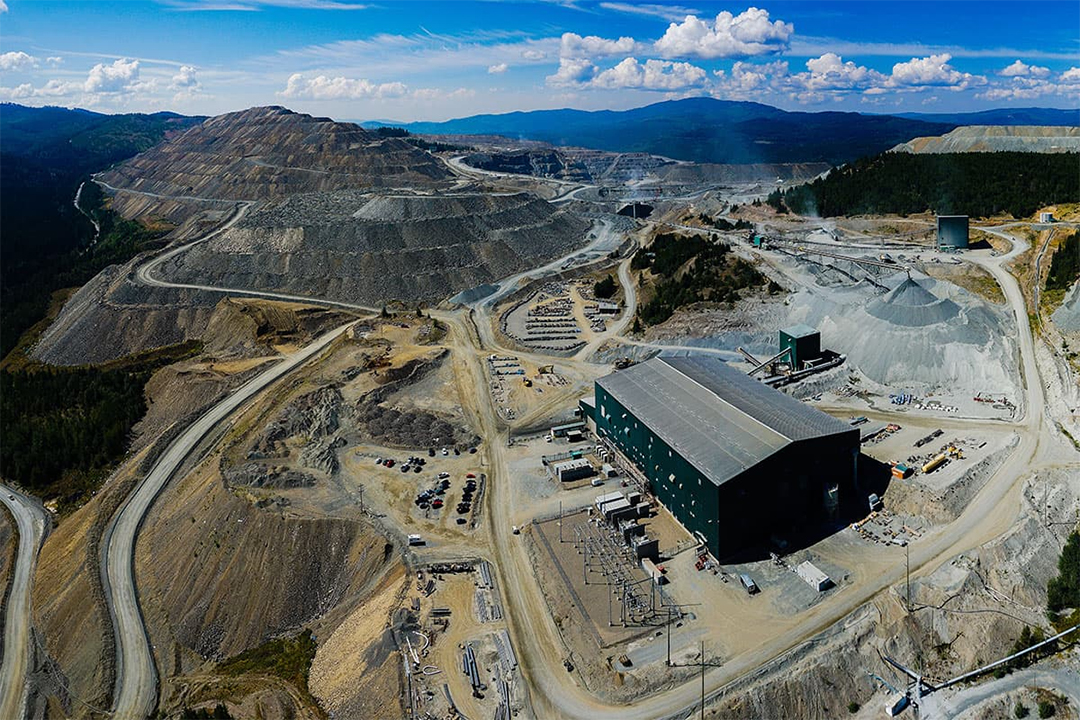
Copper futures are up approximately 8% year to date. Gold is down 7% from the same starting point, and down $1,380 from its January all-time record at $5,405. Hudbay Minerals closed its acquisition of Arizona Sonoran Copper on June 24, creating what it describes as the third-largest copper district in North America. On June 23, Deutsche Bank analyst Michael Hsueh published a research note cutting the bank’s Q3 2026 gold target by roughly 22%, from approximately $5,500 to $4,300, citing ETF outflows, a hawkish Federal Reserve, and fading Chinese physical demand. The one buyer that has not moved is central banks. They bought 244 net tonnes in Q1 2026 alone, above the five-year average, extending 17 consecutive months of net purchases at prices that would have been unthinkable three years ago. The capital rotation and the structural floor are both real, and they are pointing in different directions at the same time.
Hudbay Minerals Closed Its Acquisition of Arizona Sonoran Copper on June 24 to Create the Third-Largest Copper District in North America
Hudbay Minerals Inc. (TSX, NYSE: HBM) announced the closing of its acquisition of Arizona Sonoran Copper Company Inc. on June 24, 2026, by court-approved plan of arrangement, making Arizona Sonoran a wholly owned subsidiary. Former Arizona Sonoran shareholders received 0.242 of a Hudbay common share for each share held, with Hudbay issuing 46,794,082 new shares as total consideration. The exchange ratio represented a 30% premium to Arizona Sonoran’s closing price on February 27, 2026. The transaction was formalized in SEC and EDGAR filings on June 30. Arizona Sonoran’s shares were delisted from the Toronto Stock Exchange and OTCQX on June 25.
The Cactus copper project in Arizona, Arizona Sonoran’s primary asset, sits adjacent to Hudbay’s existing Copper World project in the same state. Hudbay CEO Peter Kukielski: “The addition of the Cactus project to our portfolio creates one of the most significant copper districts in North America.” The combined district positions Hudbay as a leading Americas-focused copper company with a three-mine platform across Arizona, Ontario, and Peru. The deal is expected to be accretive to key per-share metrics. The most recent analyst rating on HBM is Buy at a C$44.00 price target.
Hudbay’s Q1 2026 results, reported in April, were record territory: revenue of $757 million, a 27% increase year over year, adjusted EBITDA of $422 million, and free cash flow of $102 million. The company trades at approximately 14 times earnings, which analysts have described as comparably attractive against its copper-focused peer group, with ten Buy ratings, two Strong Buys, and two Holds on the TSX, implying approximately 19% upside from current levels.
In the same coverage week, Hudbay received approval from Peru’s National Environmental Certification Service for Sustainable Investments to amend its environmental permit and further increase annual mill processing capacity at its Constancia mine. The Constancia approval arrived alongside the Arizona Sonoran close, adding a second operational catalyst in the same five-day window. Constancia is Hudbay’s largest producing mine by copper output and the throughput expansion increases its long-term production runway without requiring new capital commitments at the project level.
The market context for the close is favorable. Copper futures are up approximately 8% year to date against a 7% decline in gold over the same period. The divergence reflects copper demand that continues to surge on the strength of AI infrastructure buildout, data center construction, electric vehicle adoption, and grid electrification. BHP Group estimates copper demand will grow 70% by 2050. A wind turbine consumes 3 metric tonnes of copper per megawatt of power produced. An electric vehicle uses four times as much copper as a traditional internal combustion engine car. The PJM grid emergency the same week — in which data centers were forced onto backup generators to prevent blackouts — is the real-time illustration of the demand story Hudbay is positioning to serve.
The broader North American copper consolidation picture includes two additional events from the coverage window. The Anglo Teck merger, the $53 billion combination of Teck Resources and Anglo American announced in September 2025, continues to await final regulatory approvals from China and South Korea, with close expected between September 2026 and March 2027. Anglo Teck would be a top-five global copper producer with over 70% of its portfolio in copper, $800 million in projected annual synergies, and a Canadian headquarters secured through the Investment Canada Act approval in December 2025. When it closes, it will be the largest mining consolidation in years. Hudbay’s Arizona close is the smaller, completed transaction in the same thematic.
Gold Corrected $1,380 From Its January Record as Deutsche Bank Cut Its Q3 Target to $4,300 — and Central Banks Kept Buying Every Week Anyway
Gold hit approximately $5,405 per ounce in late January 2026 before entering a multi-month correction. By June 24, the spot price had fallen to approximately $4,025, a drawdown of roughly $1,380 from the record — the kind of correction that, in gold’s history, has historically tested the conviction of every category of buyer except one. The category that has not moved is central banks.
Goldman Sachs cut its year-end gold target to approximately $4,900, concluding the Fed was unlikely to cut rates in 2026 and flagging fading ETF inflows. Morgan Stanley sits near the low end of the Street consensus. JP Morgan maintains its $6,300 year-end target, citing an 800-tonne central bank buying forecast for 2026 and a structural shift out of the dollar. Wells Fargo is at $6,100 to $6,300. The gap between the two camps is, at its core, a single question: whether the Fed eases or holds. Lower rates reopen the ETF buying channel. Higher-for-longer keeps a lid on it.
The structural floor is not a rates story. Central banks bought a net 244 tonnes in Q1 2026, above the five-year quarterly average, at near-record prices, extending 17 consecutive months of net purchases without a meaningful response to price levels. World Gold Council reserve-manager surveys show the highest share of central banks planning to increase gold allocations in years. One WGC survey respondent described gold as the “ultimate protection against black swan tail risk events.” A price floor set by sovereign reserve managers operates differently from one set by momentum investors — it does not break on a single jobs report or a hawkish press conference, because the buyers are not there for the rate cycle.
Gold began firming in the final days of the coverage window. The June 3 US jobs report, which showed only 57,000 non-farm payrolls, reduced Federal Reserve rate-hike risk under Chair Kevin Warsh and sent gold back toward $4,100. The same jobs number that snapped the Bitcoin ETF outflow streak provided the immediate catalyst for gold’s partial recovery. CPI prints July 14. FOMC meets July 28–29. Those two data points will determine whether Deutsche Bank’s $4,300 Q3 target is a floor or a ceiling for the next six weeks.
Anglo Teck Final Approvals, HBM Constancia Ramp, Barrick’s Non-Core Monetization, and the CPI-FOMC Binary for Gold
Anglo Teck regulatory close: China and South Korea
The $53 billion Anglo Teck merger awaits final approvals from China’s MOFCOM and South Korean regulators, with close targeted between September 2026 and March 2027. Canada approved under the Investment Canada Act in December 2025. Shareholders of both companies voted overwhelmingly in favor. Anglo Teck would enter the market as a top-five global copper producer with over 70% copper exposure, $800 million in projected annual synergies from connecting Collahuasi and Quebrada Blanca via conveyor infrastructure, and a C$4.5 billion Canadian investment commitment over five years. The regulatory close is the most significant pending event in global copper M&A.
HBM Constancia throughput ramp
The SENACE approval received during the coverage week authorizes Hudbay to increase mill throughput at Constancia beyond current permitted levels. Constancia is Hudbay’s highest-output copper mine and the throughput expansion, combined with the Arizona Sonoran close and the Copper World permitting process, gives Hudbay three active operational catalysts running in parallel through 2026.
Barrick Mining (NYSE: B) non-core monetization
Barrick is one of the world’s largest gold miners with operations in 17 countries. The company has unlocked $6.3 billion in value through non-core asset monetization over the past year, on track toward a $10 billion target. The same gold price correction that Deutsche Bank catalogued in its June 23 note is the valuation environment in which Barrick’s disposals are landing. Watch for Barrick guidance on any adjustment to monetization pace given the Q3 price target reset.
CPI July 14 and FOMC July 28–29 as gold’s binary
A CPI print above consensus on July 14 re-prices rate-hike risk upward and likely pushes gold back toward the low $4,000s or below. A soft print extending the jobs-data signal would reinforce the partial recovery and put Deutsche Bank’s $4,300 Q3 target more in play as a floor than a ceiling. The FOMC decision on July 28–29 under Warsh is the structural decision point for the rest of the year. Gold’s next direction will be set in the two weeks between those two dates.
Sources
- Hudbay completes acquisition of Arizona Sonoran to create the third largest copper district in North America — Hudbay Minerals press release (primary), Globe Newswire, June 24 2026
- Hudbay Minerals Inc. Form 6-K filed June 24 2026 — SEC EDGAR (primary)
- Hudbay Minerals Inc. Form 6-K material change report filed June 30 2026 — SEC EDGAR (primary)
- Hudbay Minerals completes acquisition of Arizona Sonoran Copper Company — TipRanks, June 2026
- Hudbay completes acquisition of Arizona Sonoran — Globe and Mail, June 2026
- Hudbay Minerals completes Arizona Sonoran acquisition: implications for investors — Canadian Mining Report, June 2026
- Hudbay Minerals receives regulatory approval to further increase mill throughput at Constancia mine in Peru — Junior Mining Network, July 2 2026
- Copper stocks are getting a bigger spotlight as gold’s rally cracks — Yahoo Finance/MarketBeat, July 2026
- Deutsche Bank found gold’s price floor — it’s not the buyers you think — GoldSilver.com, June 24 2026
- Gold price forecast 2026: bank targets and 2030 outlook — MyInvest Academy, July 2026
- Gold price forecasts 2026 — Scottsdale Bullion and Coin, updated July 2026
- Teck and Anglo American merger of equals — Teck corporate site (primary)
- Anglo American Teck merger creates global copper market leader — Discovery Alert, 2026
- Canada approves Anglo Teck merger to power the clean energy copper supply chain — Carbon Credits, December 2025
- 5 best copper stocks for July 2026 — Motley Fool, July 2026
- World Gold Council Gold Demand Trends Q1 2026 — WGC (primary)
Editorial Disclosure
This analysis is based entirely on publicly available information including company press releases, SEC and EDGAR filings, and named wire services and secondary reporting from named publications. Securities discussed include Hudbay Minerals Inc. (TSX: HBM, NYSE: HBM) and, in forward-look context, Teck Resources Limited (TSX: TECK.B, NYSE: TECK) and Anglo American plc (LON: AAL). aktiego.com has not received any compensation from any company mentioned, their management, investor relations representatives, or any third party. No staff member or principal of aktiego.com holds a position in any security mentioned at the time of publication. The Hudbay–Arizona Sonoran transaction closed June 24, 2026. Deal metrics cited are sourced to the primary Hudbay press release and SEC 6-K filings. The analyst Buy rating at C$44.00 and the 19% implied upside figure cited represent the views of named analysts and are not aktiego.com’s view and are not guarantees of future outcomes. Hudbay Q1 2026 financial results cited are sourced to named published reports and are not independently verified by aktiego.com. Past financial performance is not indicative of future results. The Anglo Teck merger has not closed as of the date of this article. The transaction remains subject to regulatory approvals from China and South Korea, among other customary conditions. There is no guarantee the deal will close as structured, on time, or at all. Gold price figures cited — including the January 2026 high of approximately $5,405 and the June 24 price of approximately $4,025 — are sourced to named published reports and live price data providers as cited. Commodity prices are highly volatile and subject to rapid change. Analyst gold price targets cited (Deutsche Bank $4,300 Q3 2026, Goldman Sachs $4,900 year-end, JP Morgan $6,300 year-end, Wells Fargo $6,100–$6,300, Morgan Stanley near low end) represent the views of those firms as of the dates cited and are not aktiego.com’s view and are not guarantees of future outcomes. Gold price forecasts are highly speculative. Central bank gold purchase data sourced to World Gold Council Gold Demand Trends Q1 2026 as cited in named published reports and not independently verified by aktiego.com. Copper demand growth projections (BHP 70% by 2050, EV copper intensity, wind turbine copper content) are sourced to named published reports and represent forward-looking estimates subject to change. Both securities and all assets mentioned carry significant investment risk including total loss of capital. Coverage on aktiego.com is provided for informational and educational purposes only. aktiego.com is not a registered investment advisor. Nothing in this article constitutes financial, investment, or professional advice. Readers are encouraged to conduct their own due diligence and consult a qualified financial advisor before making any investment decisions. For more information please see our full DISCLAIMER.

 Watch on YouTube