The average American vehicle turned 12.8 years old in 2025, a record according to S&P Global. Economic pressure is keeping older cars on the road longer. EV adoption, meanwhile, has slowed considerably from earlier projections. The result is a massive, aging internal combustion fleet generating steady demand for complex, high-wear components like fuel injectors and high-pressure fuel pumps.
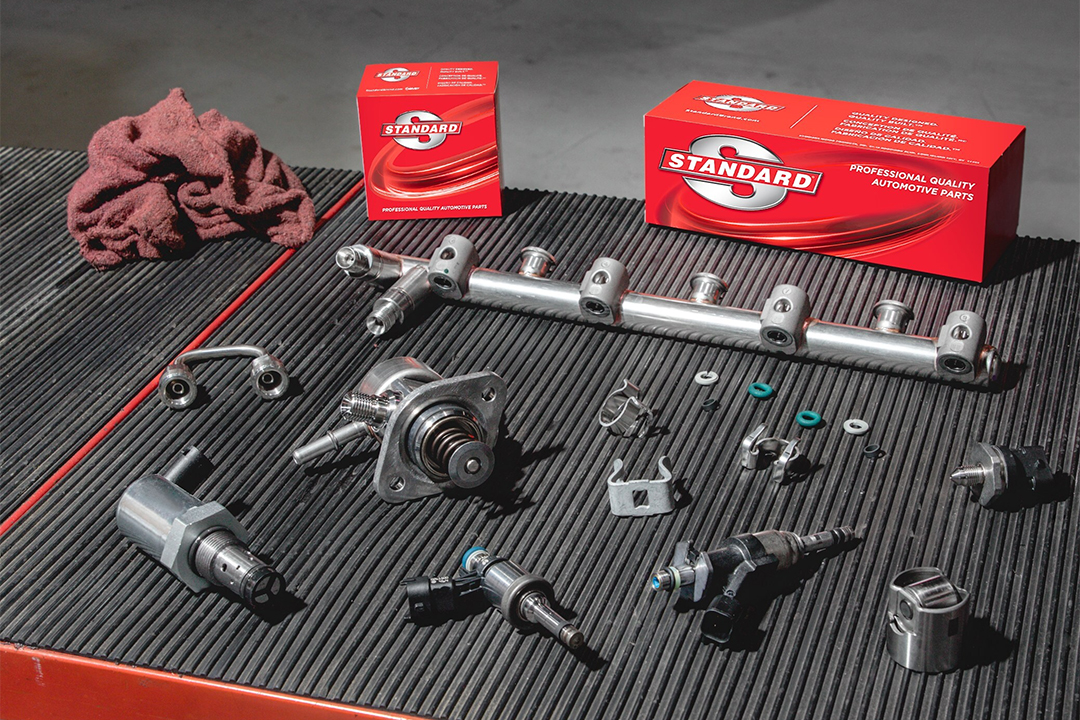
Standard Motor Products, Inc. (NYSE: SMP) is expanding directly into that demand. The company announced Thursday that its Standard® Gasoline Fuel Injection program now covers more than 1,100 all-new, never-remanufactured injectors spanning Gasoline Direct Injection, Multi-Port Fuel Injection, and Throttle Body Injection systems, alongside high-pressure fuel pumps, fuel feed lines, pressure sensors, dampers, regulators, and service kits.
Why GDI Is the Harder Problem
Not all fuel injection is created equal. GDI systems inject fuel directly into the combustion chamber at high pressure rather than upstream into the intake port. Precise, efficient, and increasingly standard across the vehicle fleet. Also harder to service when things go wrong.
High-pressure fuel pumps are the weak point. They operate under intense thermal and mechanical stress, and failure rates climb as vehicles age and mileage accumulates. The global GDI device market was valued at $8.26 billion in 2025 and is projected to reach $12.68 billion by 2032, growing at a 6.3% annual rate. Aftermarket demand is growing faster than OEM, driven precisely by the aging fleet dynamic SMP is targeting.
Standard® GDI High-Pressure Fuel Pumps are built with precision-manufactured stainless steel internals and high-temperature seals, lab-tested and validated on actual vehicles. Over 115 SKUs are currently available. New releases include coverage for 2025-20 Audi Q3 and 2024-19 Volkswagen Jetta applications, plus 1.2 million BMW vehicles through the 2025 model year.
All-New, Not Remanufactured
The distinction matters to technicians. Remanufactured injectors carry the wear history of their previous life. An all-new part delivers predictable performance from day one and is easier to warranty. SMP builds its Standard® fuel injectors at an IATF 16949-certified facility in Greenville, South Carolina, running each unit through more than 35 tests and inspections including endurance, spray pattern analysis, thermal cycling, vibration, shock load, and both dynamic and static flow measurement. Every injector passes 100% end-of-line testing before it ships.
That testing depth addresses the practical concern professional technicians carry into every fuel injection job: comebacks. A failed injector on a GDI vehicle often means a return visit, lost labor time, and a customer who leaves unhappy. SMP’s testing regimen is designed to take that risk off the table.
MFI Multi-Packs extend the coverage story further, supporting over 31 million vehicles in a single-box solution that simplifies ordering and inventory for shops. Recent additions include coverage for the 2025-20 Nissan Frontier and 2025-21 Subaru Crosstrek, two high-volume applications where demand for replacement parts is growing.
The Market Behind the Expansion
The global automotive aftermarket is projected to generate $445.6 billion in 2026 and reach $594.3 billion by 2033, with aging fleets and longer vehicle lifespans as the primary demand drivers. The 2026 SEMA Future Trends Report put it plainly: a larger, older fleet translates directly into increased demand for repair and maintenance, the core of what the aftermarket does.
EV adoption is slowing. Hybrids are gaining ground, but hybrid powertrains still carry gasoline fuel systems requiring the same maintenance and repair cycles as conventional ICE vehicles. The fleet is not electrifying at the pace earlier projections suggested. For an aftermarket parts manufacturer with deep GDI coverage, that is a straightforward commercial tailwind.
SMP has been in business for over a century, distributing across retailers, warehouse distributors, OEM service operations, and international markets. The fuel injection expansion is consistent with a broader strategy of building comprehensive coverage across vehicle systems as the fleet ages and independent repair shops need reliable, professional-grade alternatives to OE parts.
The automotive fuel injection system market sits at $14.35 billion globally in 2025, with projections to nearly $24.64 billion by 2034. Aftermarket providers with tested, all-new inventory and broad vehicle coverage are positioned to take a growing share of that expansion. SMP’s latest program update is a direct play for that ground.
Sources
- Standard Motor Products
- StandardBrand.com
- S&P Global via Net Solutions: 2026 Automotive Aftermarket Data Crisis
- Globe Newswire: Automotive Aftermarket Projected to Reach $594.3 Billion by 2033
- Coherent Market Insights: GDI Device Market Forecast
- Fortune Business Insights: Automotive Fuel Injection System Market
- SEMA 2026 Future Trends Report
Editorial Disclosure
This article is based on a press release issued by Standard Motor Products, Inc. and expanded with independent market data. Standard Motor Products, Inc. (NYSE: SMP) is a publicly traded company. This article is for informational purposes only and does not constitute investment advice or a recommendation to buy or sell any security. Market size projections cited are third-party estimates and subject to revision. Readers should consult a qualified financial advisor before making investment decisions. Market prices cited reflect the date of data and may differ from current prices. The information provided on this website is for informational and educational purposes only. Our content is derived strictly from verified online sources to ensure accuracy and objectivity. This analysis does not constitute financial, investment, or professional advice. Readers are encouraged to consult with qualified professionals before making decisions based on this information. For more information, please see our full DISCLAIMER.