The world’s aging coal fleet has a problem. These three companies just agreed to solve it.
There are over 2,000 coal-fired power plants operating globally.
Most of them are not going to be shut down on any near-term timeline. Replacing them requires capital that many developing economies do not have, grid capacity that does not yet exist, and political will that is frequently absent. The more practical question is not how to close them but how to make them burn something cleaner.
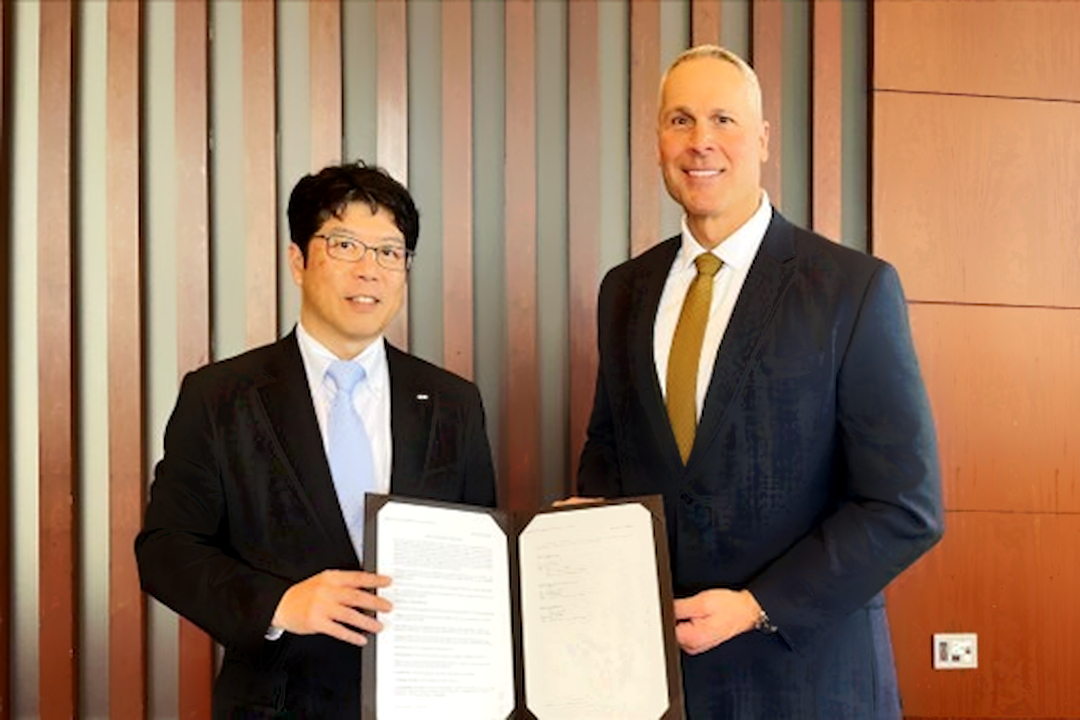
That is the specific problem Babcock Power Services, Riley Power, and IHI Corporation addressed on April 20, 2026, when the three companies signed a strategic collaboration agreement to perform low-carbon fuel conversion and co-firing retrofits for power plant boilers worldwide. The focus is ammonia, a carbon-free fuel that can be co-fired with coal in existing boilers at meaningful substitution ratios without requiring the plant to be rebuilt from scratch.
Seventeen gigawatts of successful fuel conversions between Babcock Power and Riley Power. Real-world ammonia co-firing demonstrations from IHI. Three companies with complementary capabilities pointing at the same problem.
Why ammonia is the fuel that industrial-scale decarbonization needs
Green hydrogen has been the clean energy conversation’s favorite molecule for years. The problem with hydrogen is infrastructure. It requires cryogenic storage, specialist pipelines, and purpose-built combustion equipment. Deploying it at the scale of global power generation requires rebuilding infrastructure that has been in place for decades.
Ammonia carries hydrogen chemically. It can be stored and transported using infrastructure that already exists in large quantities, because ammonia has been manufactured and shipped globally for fertilizer production for over a century. When burned, it releases nitrogen and water, not carbon dioxide. The carbon-free combustion profile is genuine.
The co-firing model exploits this. Rather than converting a plant to run on pure ammonia, co-firing blends ammonia with coal or other fuels at a substitution ratio that meaningfully reduces carbon intensity while keeping the plant operationally stable. The IHI demonstration at JERA’s Hekinan Thermal Power Station in Japan achieved a 20% calorific substitution ratio at scale. One in five units of energy from a carbon-free source, in an existing coal plant, without building a new facility.
That number is not the end state. It is the proof that the approach works at industrial scale. The path from 20% to higher ratios as technology matures is a trajectory, not a ceiling.
According to the International Energy Agency’s ammonia technology assessment, ammonia co-firing in coal plants represents one of the most cost-effective near-term decarbonization pathways available for the existing thermal power fleet, particularly in Asia where coal retirement timelines are measured in decades rather than years.
What each partner brings and why the combination is the point
Babcock Power Services and Riley Power, both subsidiaries of Babcock Power Inc. in Massachusetts, bring something that cannot be replicated quickly: operational experience. More than 17 gigawatts of successful fuel conversions across a wide range of boiler designs. Proprietary retrofit technologies that have already been validated across dozens of different plant configurations. A track record that power plant owners can evaluate against actual performance data rather than theoretical projections.
Fuel conversions fail when the retrofit does not account for the specific combustion characteristics of a particular boiler design. Babcock and Riley have encountered most of the failure modes. That institutional knowledge, embedded in proprietary technology and engineering teams, is the foundation that new fuel types need to deploy reliably at scale.
IHI brings the ammonia-specific technology layer. Its large-scale demonstration at Hekinan in Japan was not a laboratory experiment. JERA’s Hekinan plant is a commercial power station serving Japan’s electricity grid. Achieving 20% ammonia co-firing at operational scale at that facility created a reference case that regulators, financiers, and plant operators can evaluate. IHI also demonstrated ammonia combustion capability in Indonesia, retrofitting burners from other manufacturers with its own ammonia-firing technology. That cross-manufacturer compatibility is significant for a market where plant owners have legacy equipment from multiple suppliers.
The global market for this is large and structurally driven
Coal still generates approximately 36% of the world’s electricity according to the International Energy Agency’s World Energy Outlook. The vast majority of that generation comes from plants that will not be retired in the next decade. Governments in Japan, South Korea, India, Southeast Asia, and the Middle East have all indicated that fuel conversion and co-firing represent preferred pathways for reducing emissions from their existing thermal fleets rather than premature closure.
Japan has made ammonia co-firing a central pillar of its power sector decarbonization strategy, with targets for 20% ammonia co-firing at major coal plants by the early 2030s. South Korea has similar ambitions. The ASEAN grid includes substantial coal capacity that governments are looking to extend rather than retire, making low-carbon fuel conversion the commercially viable alternative to both continued coal burning and premature shutdown.
The collaboration between Babcock, Riley, and IHI is specifically structured to serve global markets. BPS and RPI bring the Western retrofit experience. IHI brings the Asian demonstration track record and ammonia combustion technology. Together they can address plant owners in North America, Europe, and Asia with a combined capability that neither side could deliver alone.
Sources
- International Energy Agency — Ammonia Technology Roadmap
- International Energy Agency — World Energy Outlook 2025
- Babcock Power — Official Website
Editorial disclosure
This article is based on a press release issued by Babcock Power Inc. and has been independently rewritten and editorially expanded. It covers a strategic collaboration agreement between Babcock Power Services, Riley Power, and IHI Corporation for low-carbon boiler fuel conversion retrofits. All three companies are privately held. Market context is sourced from the International Energy Agency. Commentary reflects the author’s own assessment. The information provided on this website is for informational and educational purposes only. Our content is derived strictly from verified online sources to ensure accuracy and objectivity. This analysis does not constitute financial, investment, or professional advice. Readers are encouraged to consult with qualified professionals before making decisions based on this information. For more information, please see our full DISCLAIMER.