DISCLOSURE: AktieGo has a paid relationship with Radiant Uranium Corp. (CSE: RUC), unrelated to this article. This piece wasn’t paid for and doesn’t mention Radiant Uranium or any other company operating in the Athabasca Basin junior exploration space. Full disclosure below.
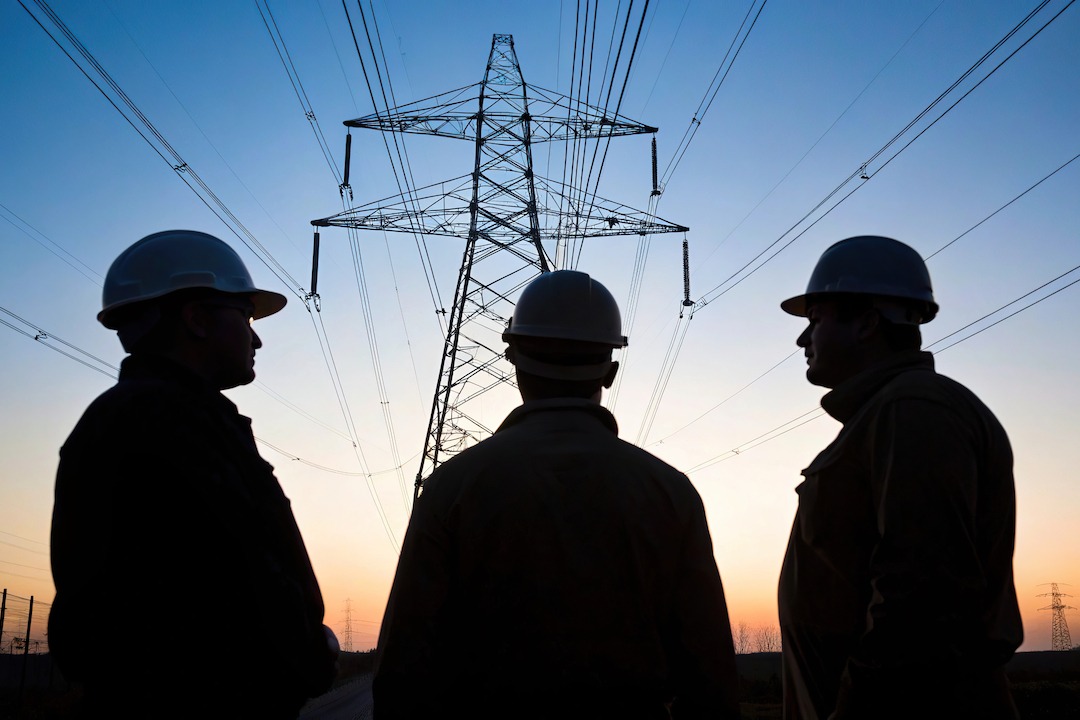
On October 13, the Department of Energy said it plans to back the Tennessee Valley Authority on 84 transmission and distribution projects across eight states, adding roughly 2.5 gigawatts of grid capacity. None of that money buys a reactor or a pound of uranium. It pays for lines, substations and grid upgrades. But the utility receiving it runs one of the country’s larger nuclear fleets, and the award lands at a moment when the real limit on new nuclear power has become hard to miss.
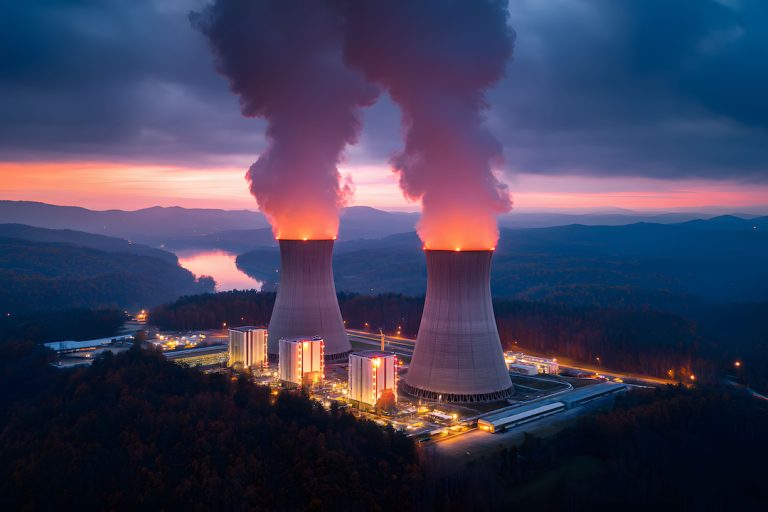
Across the U.S., utilities are trying to restart shuttered reactors, squeeze more output from existing ones, and permit the first small modular units. The appetite for nuclear power is there. What sets the pace is everything around the reactor: regulators, fuel handling, and above all the grid connection that lets the electricity actually go somewhere.
$581 Million for Wires, Not Reactors
The TVA award totals about $581 million, with $250 million in federal funding and roughly $331 million in applicant cost-share, under DOE’s Grid Resilience and Innovation Partnerships program. DOE estimates it will serve 2.58 million families and businesses and support about 800 jobs. It sits alongside an earlier award: under DOE’s SPARK program, TVA plans to upgrade about 125 miles of existing lines in Tennessee, Alabama and North Carolina with advanced conductors, adding roughly 1,900 MW of transmission capacity. Together the two represent nearly $741 million in planned investment and more than 4,300 MW of added grid capacity.
DOE was clear that none of this is final. Funding, scope and schedules still depend on signed agreements and on environmental, permitting, regulatory and Tribal reviews.
TVA’s Nuclear Bet
TVA’s three nuclear plants, Browns Ferry, Sequoyah and Watts Bar, generate an average of about 8,600 MW, enough for roughly 5.1 million homes and businesses by TVA’s count. On September 29, the NRC issued TVA a construction permit for a 300 MW GE Vernova Hitachi BWRX-300 small modular reactor at its Clinch River site near Oak Ridge, Tennessee, the first construction approval for a commercial small modular reactor in the U.S., after a 14-month review. DOE had already committed $400 million to the project in December 2025, half of an $800 million award it split with Holtec.
A construction permit doesn’t let TVA run anything. It still needs a separate operating license, and it hasn’t announced a construction start date. The nuclear story also needs keeping in proportion inside TVA itself. Of the more than 6,200 MW of new generation TVA plans to add, the roughly 3,770 MW already under construction is mostly natural gas, plus one battery project and one solar project.
Three Reactors, Three Different Clocks
The quickest way to add nuclear capacity is to restart a plant that already exists, and three are trying. None of them is running yet.
Palisades in Michigan, an 800 MW reactor owned by Holtec, has come furthest. Fuel loading began on August 30, and the plant was reconnected to its 345-kV switchyard on September 11. But during loading, a previously used fuel assembly tilted after it had been placed in the core, and loading has been paused since. Holtec filed an emergency license amendment request on September 30 to retrieve the assembly with a custom-built tool. The NRC’s public comment period closed on October 8, and staff made a preliminary finding of no significant hazards. Holtec is contracted to start supplying power by March 2027, but hasn’t given a new restart date.
Crane, the former Three Mile Island Unit 1 in Pennsylvania, is an 835 MW reactor that Constellation aims to bring back in 2027. The NRC made its environmental finding official in late September, which means the restart won’t need a full environmental impact statement. Duane Arnold in Iowa, 615 MW and owned by NextEra, is further out. DOE closed a loan of up to $1.9 billion for the restart on September 8, an NRC restart team member has said the license could be approved as soon as January 2028, and NextEra expects to restart in early 2029.
The Wire Problem
Crane is where the grid shows up as the bottleneck. A PJM analysis this spring suggested the plant might not be connected until 2031. According to Constellation’s own filing, transmission upgrades ahead of it in line, including 765-kV and 500-kV projects, aren’t expected to finish until December 2030 and could slip further. A reactor that’s ready in 2027 doesn’t do much good if its full output can’t be delivered.
Constellation’s workaround was to ask FERC to let it move 760 MW of capacity interconnection rights from its Eddystone units near Philadelphia to Crane. PJM’s independent market monitor opposed the request. FERC granted it on June 1, finding the transfer could help Crane become fully operational before the end of 2030. That fixed one plant, using rights its owner happened to hold elsewhere. Most projects waiting in an interconnection queue don’t have that option, which is why grid awards like TVA’s matter to how quickly new generation of any kind gets used, even when they never touch a reactor.
Squeezing More Out of the Old Fleet
Uprates, license changes that let an existing reactor run at higher power, sidestep much of that problem because the plant is already connected. The NRC expects 31 uprate applications from now through 2032, totaling about 2,421 MW of electrical capacity, with 17 of them due in 2027. As of mid-September, it had none under review.
Money is starting to follow. On October 5, DOE offered Vistra a conditional loan of up to $4.2 billion for upgrades at its Beaver Valley, Davis-Besse and Perry plants that would add 433 MW, though Vistra still has to meet technical, legal, environmental and financial conditions before any funds move. DOE’s UPRISE initiative, launched in March, targets 2.5 GW of added nuclear capacity by 2027 and 5 GW by 2029, drawing on uprates, restarts and license renewals together.
Big Headlines, Small Percentages
The U.S. has about 98 GW of operating nuclear capacity. The three restarts together would add about 2,250 MW, or roughly 2.3% of that fleet. Every uprate the NRC expects through 2032 adds about 2,421 MW, roughly 2.5%. If all of it arrives on schedule, that’s an increase of just under 5%, spread across the rest of the decade.
The fuel numbers look similar. U.S. reactor owners bought 46.9 million pounds of uranium in 2025, 16% less than in 2024, and loaded 40.9 million pounds into reactors, down 15%. They ended the year holding 118 million pounds in inventory, about 2.9 years’ worth of 2025’s loadings. Restarts and uprates add fuel demand once they run, and the EIA still counts 186 million pounds of unfilled utility requirements through 2035, but none of this points to a sudden scramble for pounds right now.
Utilities Pay Up for Later, Not for Now
Prices tell the same two-speed story from the buyer’s side. In Cameco’s industry-average series, built from UxC and TradeTech month-end prices, the long-term contract price has sat above spot every month since February and held at a record $96.50 a pound at the end of August and September. Spot closed September at $89.63. Utilities buy about 87% of their uranium under long-term contracts, so the term price is the better read on what they’ll commit to for future delivery.
The gap has narrowed, though. It was $10.50 at the end of June and $6.87 at the end of September, with spot catching up rather than term pulling further ahead.
Five Things to Watch
FAQ
Not directly. It funds transmission and distribution upgrades, not reactors or fuel. Its relevance is indirect: new generation of any kind, nuclear included, needs room on the grid, and Crane shows what happens when that room isn’t there.
Not yet. Fuel loading has been paused since a used fuel assembly tilted during loading, and Holtec hasn’t given a new restart date. The next step is NRC action on Holtec’s request to retrieve that assembly.
A license change that lets an existing reactor run at higher power, usually after equipment upgrades. Because the plant is already built and connected, an uprate can add capacity without waiting in an interconnection queue, though each one still needs NRC approval.
Because they’re well stocked. Utilities ended 2025 holding about 2.9 years of that year’s fuel loadings, so they could buy less even as prices rose. The restarts and uprates in the pipeline are small relative to the whole fleet and arrive over several years.
Most utility uranium is bought on long-term contracts, and the term price reflects what buyers will commit to for future delivery. It has stayed above spot since February, though the gap has narrowed since June as spot caught up.
Sources
- U.S. Department of Energy: Energy Department Backs Major Grid Expansion Across Eight States to Strengthen Reliability and Lower Electricity Costs, October 13, 2026
- Tennessee Valley Authority: Nuclear (Our Power System)
- Tennessee Valley Authority: Our Power System
- U.S. Nuclear Regulatory Commission: NRC Approves Construction of Nation’s First Small Modular Reactor, September 29, 2026
- World Nuclear News: First Construction Permit Issued for BWRX-300 SMR in the US, October 2026
- U.S. Department of Energy: Energy Department Selects TVA and Holtec to Advance Deployment of U.S. Small Modular Reactors, December 2, 2025
- U.S. Department of Energy: FACT SHEET: The Golden Era of American Nuclear Energy Has Arrived, July 25, 2026
- American Nuclear Society, Nuclear Newswire: Incident Pauses Palisades Fuel Loading; Plant Connected to Switchyard, September 25, 2026
- American Nuclear Society, Nuclear Newswire: NRC Reviews LAR on Palisades Fuel Loading Incident, as Pioneer SMR Application Advances, October 8, 2026
- Michigan Public: Palisades Nuclear Plant Restart Plans Pushed Back to “Early 2026”, December 17, 2025
- American Nuclear Society, Nuclear Newswire: FERC Decision on Crane Restart Coming in June or July, Constellation Execs Say, May 13, 2026
- Utility Dive: PJM Market Monitor Opposes Waivers for Constellation’s Three Mile Island Nuclear Restart, April 2026
- American Nuclear Society, Nuclear Newswire: FERC Approves Constellation Waiver Request on Crane Restart, June 5, 2026
- World Nuclear News: NRC and FERC Boosts for Crane Clean Energy Center Project, June 8, 2026
- American Nuclear Society, Nuclear Newswire: NRC Roundup: Crane EA/FONSI; New Agreement State, September 29, 2026
- World Nuclear News: NRC Completes Environmental Review of Crane Restart, September 28, 2026
- U.S. Department of Energy: Energy Department Closes $1.9 Billion Loan to Restart Duane Arnold Nuclear Plant, September 8, 2026
- KCRG: Nuclear Regulatory Commission Hosts Community Meeting on Duane Arnold Restart, April 15, 2026
- American Nuclear Society, Nuclear Newswire: NRC Issues Draft EA/FONSI for Duane Arnold Restart, August 4, 2026
- U.S. Nuclear Regulatory Commission: Expected Applications for Power Uprates, updated September 8, 2026
- U.S. Nuclear Regulatory Commission: Pending Applications for Power Uprates, updated September 15, 2026
- Utility Dive: DOE Intends to Loan Vistra $4.2B for Nuclear Fleet Improvements, October 2026
- U.S. Department of Energy, Office of Nuclear Energy: The Nation’s Nuclear Reactor Fleet Is on the Rise (UPRISE), March 12, 2026
- U.S. Energy Information Administration: U.S. Nuclear Industry (Nuclear Explained), data as of March 2026
- U.S. Energy Information Administration: 2025 Uranium Marketing Annual Report, July 29, 2026 (re-released August 13, 2026)
- Cameco: Uranium Price (industry-average spot and long-term prices from UxC and TradeTech month-end data), September 30, 2026
Full Disclosure
AktieGo has a separate, paid relationship with Radiant Uranium Corp. (CSE: RUC), disclosed in full in AktieGo’s paid coverage of the company. That relationship didn’t fund this article, and Radiant Uranium isn’t mentioned anywhere above.
This standing disclosure runs on all AktieGo uranium-sector coverage, whether or not a piece names Radiant Uranium, for as long as the relationship stays active. The compensation is cash for content creation and distribution, separate from independent editorial work, and has no bearing on what gets published here.
Sources: U.S. Department of Energy, U.S. Nuclear Regulatory Commission, U.S. Energy Information Administration, Tennessee Valley Authority, Cameco/UxC/TradeTech price data, and industry and financial press as cited. AktieGo doesn’t independently verify third-party data, so figures should be checked at the time you’re reading this.
These are speculative investments carrying significant risk including potential total loss of capital. Coverage on aktiego.com is provided for informational and educational purposes only. aktiego.com is not a registered investment advisor. Nothing in this article constitutes financial, investment, or professional advice. Readers are encouraged to conduct their own due diligence and consult a qualified financial advisor before making any investment decisions. For more information please see our full DISCLAIMER.