A building in La Guaira stood for sixty years.
Through oil booms and coups and the slow collapse of nearly everything around it. Through 1967, when the same neighborhoods swayed and some fell and the ones that didn’t were called survivors.
It wasn’t a survivor. It was just waiting.
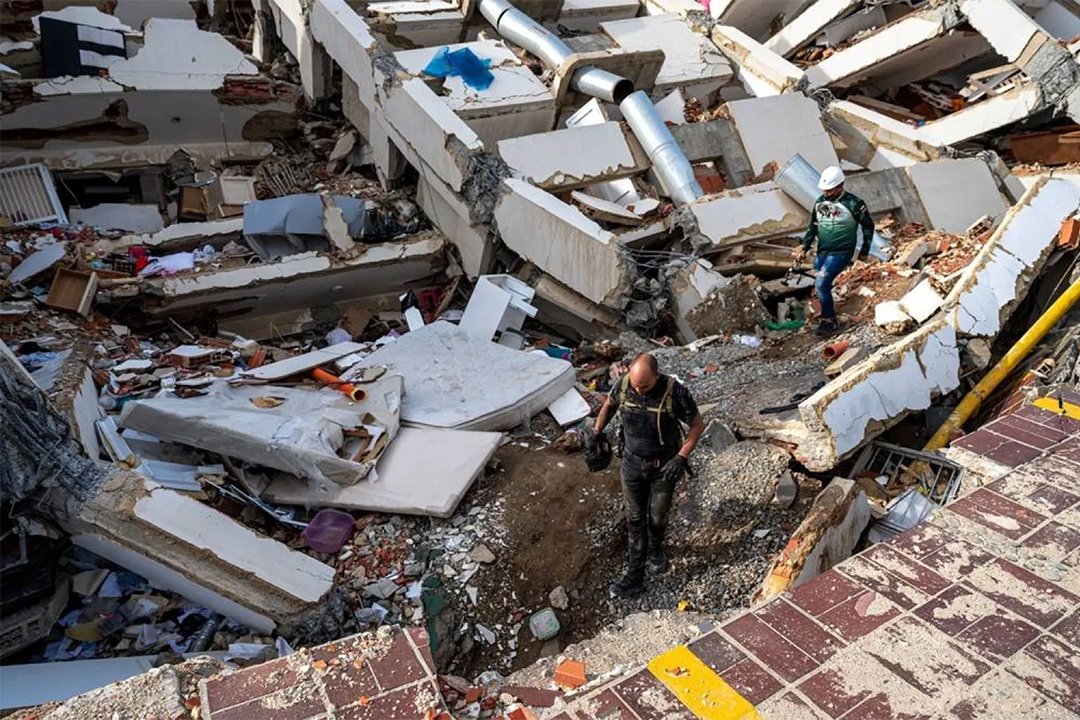
On June 24, 2026, nine seconds found what sixty years of inspection reports didn’t.
You look at the footage and your first instinct is that something went wrong. A shortcut. A bribe. Some specific person who should have known better.
That’s not quite what happened.
Venezuela has had earthquake codes since 1939. Updated them four times since. The code isn’t missing. It never was. But engineers analyzing Venezuela’s construction patterns had warned for years that the country’s combination of soft ground soil and older concrete structures — many lacking sufficient seismic reinforcement — could result in catastrophic destruction when a major earthquake struck.
The technical term for the failure mode structural engineers use is non-ductile concrete construction. The problem isn’t the concrete itself, but how much steel reinforcement surrounds it. In older buildings, columns with widely spaced steel ties shatter outward once overstressed. The core loses confinement. The column gives way. Floor by floor. The buildings that failed this way in La Guaira were concrete that simply couldn’t deform before breaking.
Most of those buildings went up in the 1950s and 60s. Less than 25% of constructions in Venezuela comply with current seismic standards, according to structural engineering analysis published after the quake. Clean lines. The kind of design that ages well visually even when the engineering underneath it doesn’t.
Japan retrofitted after Kobe. Decades of sustained political will, measured in disasters that don’t happen.
Venezuela didn’t. The steel and cement industries were nationalized in 2008. Production fell. The regulatory apparatus eroded alongside everything else that depended on the same institutional substrate.
Not one decision. Not one government.
A long series of decisions made by people who would not be standing in La Guaira on June 24 looking at what they left behind.
Nobody signed a document that said build it weak and let someone else be there when it falls.
That’s almost never how it works.
The building stood for sixty years. Until nine seconds decided it hadn’t, really, been standing at all.
The buildings aren’t the only thing.
Venezuela holds more proven oil reserves than Saudi Arabia. Three hundred billion barrels, give or take, sitting underneath a country currently producing less than one percent of global supply. The engineers who built PDVSA into one of the world’s great oil companies mostly live abroad now. The upgraders that turn heavy Orinoco crude into something exportable have been corroding for years. The pipelines are fifty years old.

Rystad Energy puts the cost of returning to 1990s production levels at $183 billion. Over a decade minimum. The breakeven price for Venezuelan projects is around $80 a barrel. Brent is sitting in the low $60s. These companies would not go there if they know that the breakeven is $80 per barrel and that the prospects for the next two, three, four years see oil prices stay between $60 and $70, said Claudio Galimberti, chief economist at Rystad. They won’t do it, because it makes no sense.
When Maduro was captured in January, Chevron jumped five percent in a day. Halliburton surged 7.8. The Dow hit a record high. Wall Street priced Venezuela as a reopening trade, a frontier finally accessible, a reserve base finally unlockable.
The same week, seventeen million barrels of Venezuelan crude sat stranded in tankers offshore because onshore storage was full and the infrastructure to move it didn’t work.
The potential was always there. It just shared a country with sixty years of decisions made by people who wouldn’t be the ones paying for them.
A disaster is a government stripped of everything it uses to explain itself.
No ideology. No long-term plan. No rival to blame, at least not immediately. Just one question, asked in real time by people standing in rubble: did help come, how fast, and did it reach us.
As of today, July 3, 2026, nine days after the quake:
2,295 confirmed dead. 11,267 injured. Nearly 50,000 still unaccounted for. Satellite analysis estimates 58,870 buildings damaged or destroyed. The USGS warned the real death toll could exceed 100,000. The UN is procuring 10,000 body bags.
In Los Corales, one of the hardest-hit parts of La Guaira, neighborhood volunteers were pulling corpses from collapsed buildings before any state agency arrived.
A German emergency medical team was denied entry to Venezuela. Colombian firefighters sat at a Venezuelan airport for hours without being cleared. A construction worker trying to bring a jackhammer to help dig through rubble told NPR the process took two days because police wanted to see his permit as well as the sales receipt.
Another put it differently. The scale of citizen mobilization tells its own story about what Venezuelans have learned to expect from their government, which is not much.
Rodríguez was defending her administration’s response the day before her 180-day mandate as acting leader was set to expire.
The deciding and the accounting rarely happen on the same timeline. Here they almost did. And the accounting was not good.
The United States committed more than $300 million within 48 hours. Nearly 2,000 troops deployed. A General License issued the next day to ensure sanctions didn’t block relief.
Trump said Venezuelans were dancing in the streets over the country’s transformation. He said this the day before the quake.
The $300 million is real. The question is what real means in practice.
Five years after the 2010 Haiti earthquake, $13.5 billion had been pledged internationally. NPR reported the country was still a long, long way from realizing the bullish goal of building back better. Of the $4.5 billion pledged for the initial two-year recovery period, only slightly more than half was received by the recovery fund and disbursed.
The pledges arrive fast. The accounting comes later. Usually much later. Usually after the cameras have moved on and the rubble has been cleared and the people still living in temporary shelter have stopped being useful to anyone’s narrative.
There’s another layer underneath this one.
The $300 million is coming from seized Venezuelan oil revenue. The oversight of where it flows is, in the words of Laura Cristina Dib, Venezuela program director at the Washington Office on Latin America, a transparency question that lingers. Even before the earthquakes, she said, it was difficult to track how the seized oil revenue was being spent. Venezuela’s oil money, administered by a government that wasn’t elected, paying for Venezuelan disaster relief, while the woman who actually won the 2024 election watches from exile, still barred from returning.
Washington declined to facilitate her return. She remains outside.
The deciding and the paying are almost never done by the same people. Here they’re not even in the same country.
The reconstruction will happen. Somebody will rebuild La Guaira. Aid money, oil money, reconstruction contracts, foreign capital that has been waiting six months for exactly this kind of moment. The January trade thesis — Venezuela is open, Venezuela is investable, Venezuela is accessible — gets a new chapter. Infrastructure contracts. Construction companies. Engineers who go where the work is.
Chevron is already there. Exxon and ConocoPhillips are watching. Goldman Sachs says production could rise fifty percent by 2030 with the right investment. JPMorgan sees 2.5 million barrels a day within a decade, up from under one million today.
Those numbers are real possibilities. They are also the same kind of possibility that Venezuela’s buildings represented in 1965. Enormous potential. Long timeline. Decisions made by people who will not be living in what gets built.
The breakeven problem doesn’t go away because there’s rubble. The enforcement problem doesn’t go away because there are foreign contractors. The institutional decay that left 58,870 buildings unable to survive nine seconds of shaking is the same institutional decay that left the oil wells corroding and the upgraders offline and the pipelines leaking.
You can pour new concrete over that. The question is whether anything underneath it changes.
A disaster doesn’t create weakness.
It finds it.
Venezuela’s weakness was always there, in the rebar spacing of a 1963 apartment block, in the corroded joints of a fifty-year-old pipeline, in the gap between what the inspection report said and what was actually in the wall. Sixty years of normal days in which nothing appeared wrong because nothing had yet applied enough force to show what wrong looked like.
Nine seconds applied that force.
What comes next will be decided by people who were not in La Guaira on June 24. Foreign capital. An interim government whose mandate just expired. An administration in Washington that called this country a success story the day before the ground moved. Markets that priced the opening of a frontier without pricing what a frontier actually costs to rebuild from the inside.

Somewhere downstream of all those decisions are the people who were in La Guaira on June 24. Who dug with their hands before the state arrived. Who watched a German medical team get turned away at the border. Who are living in whatever shelter exists while the transparency questions linger and the pledges work their way through whatever process pledges work through before they become actual things in actual hands.
They didn’t get a vote on the government that’s administering their recovery. They didn’t get a vote on the oil deal that’s funding it. They didn’t get a vote in 1965 on how to pour the concrete, or in 2008 on nationalizing the cement, or in January 2026 on who would be running the country by the time the fault line moved.
Nobody downstream ever does.
The building stood for sixty years. It looked like it was standing. That’s almost the same thing, until it isn’t.
Somewhere in what gets built next, the same assumption is already being made.
We just don’t know yet which building it’s in.
Colt Avery is a contributing writer at Aktiego. The views expressed in this column are the author’s own and do not represent the editorial position of Aktiego.com.
Sources
- Venezuela Earthquake Death Toll and Latest Updates | NPR
- Venezuela Death Toll Rises as UN Continues to Scale Up Response | UN News
- In Venezuela, a ‘Completely Ineffective’ Government Worsens Earthquake Disaster | PBS NewsHour
- U.S. Military Deploys Over 900 Personnel to Venezuela | CNBC
- Rescue Teams Cling to Hope as US Rebuffs Criticisms | Washington Times
- The US Sent $300 Million to Venezuela — But Where Is the $8 Billion in Oil Revenue? | News Americas Now
- Venezuela’s Failed Earthquake Response Exposes Rodríguez’s Poor Leadership | Foreign Policy
- Why Did Venezuela’s Buildings Collapse Like Pancakes? | Today Why
- Before Venezuela Earthquakes, Engineers Warned Tall Buildings Could Collapse | Yahoo News / LA Times
- Less Than 25% of Constructions in Venezuela Comply with Seismic Standards | Ara.cat
- Venezuela Needs $183bn to Revive Oil Output | Energy Voice / Rystad Energy
- The World Has Too Much Oil Right Now. Will Companies Want Venezuela’s? | NPR
- Responding to Venezuela Earthquakes | U.S. Department of State
- 5 Years After Haiti’s Earthquake, Where Did the $13.5 Billion Go? | NPR
- Haiti Earthquake: Humanitarian Aid | Britannica
- Venezuela Earthquakes: How Will Sanctions Impact Aid Operations? | Al Jazeera
Editorial Disclosure
This article is an original opinion piece written in response to the Venezuela earthquake of June 24, 2026, and reflects the author’s own assessment of events, structural causes, geopolitical context, and reconstruction outlook as of July 3, 2026. All statistical figures — including death tolls, injury counts, missing persons, and building damage estimates — were current as of that date and are subject to change as the disaster response continues. The piece draws on verified reporting from NPR, PBS NewsHour, CNBC, the United Nations, the U.S. Department of State, Foreign Policy, Rystad Energy, and multiple structural engineering analyses. Commentary on aid delivery timelines references historical data from Britannica and NPR’s coverage of the 2010 Haiti earthquake. No financial relationships exist with any company, government, or organization mentioned. Commentary reflects the author’s own assessment. The information provided on this website is for informational and educational purposes only. Our content is derived strictly from verified online sources to ensure accuracy and objectivity. This analysis does not constitute financial, investment, or professional advice. Readers are encouraged to consult with qualified professionals before making decisions based on this information. For more information, please see our full DISCLAIMER.