
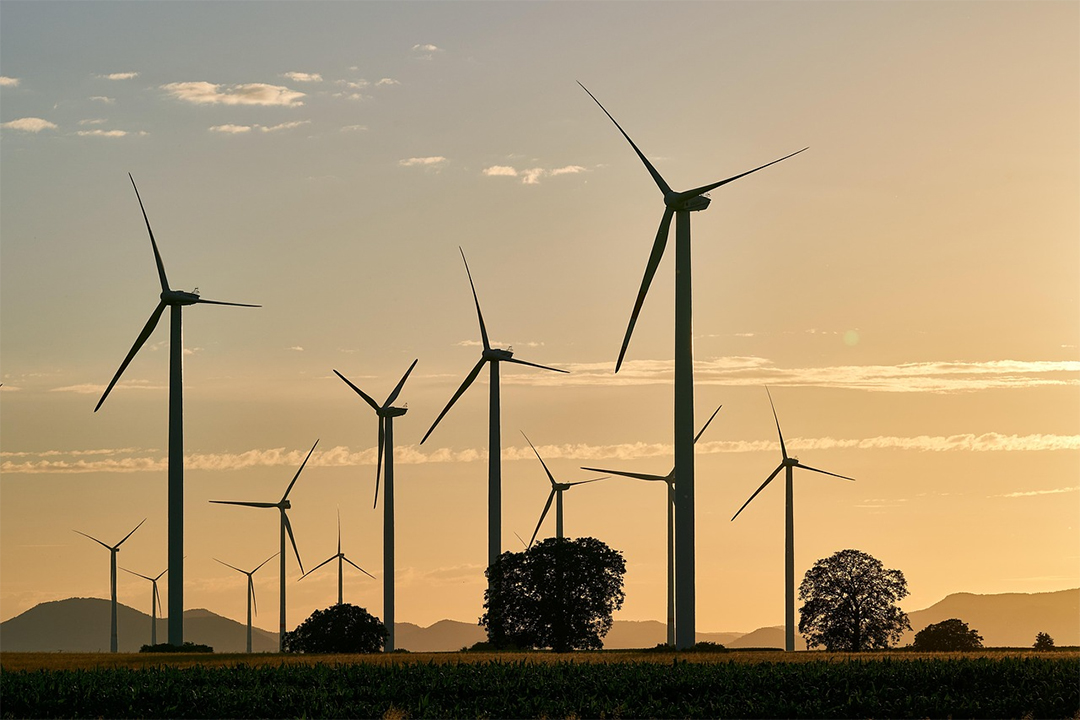
Coal powered the world for a hundred years. Built cities, ran railways, kept the lights on through two world wars. Last year, for the first time in modern history, it generated less electricity than renewables. The transition happened so gradually and then so completely that when the Ember Global Electricity Review published the numbers this week, the reaction was more or less a shrug. Renewables at 33.8% of global generation. Coal at 33.0%. The old king dethroned by a margin thin enough to seem almost polite.
Meanwhile, Brent crude swung $4 in a Monday morning as Iran and Israel exchanged strikes again, oil markets spent the rest of the week trying to figure out what anything was worth, and the July 4 construction deadline for US wind and solar tax credits crept to 19 days away. The structural story and the geopolitical noise have been running alongside each other for months. The Ember report is the clearest evidence yet that the structural story is winning regardless of what oil does.
Renewables Beat Coal in the Global Electricity Mix in 2025 and Battery Costs Fell Another 45%
The Ember Global Electricity Review 2026 puts numbers on what has been building for years. In 2025, renewable energy sources, solar, wind, hydropower, and other clean generation, contributed 33.8% of global electricity, or 10,730 terawatt-hours. Coal fell to 33.0%, or 10,476 terawatt-hours. It is the first time renewables have held a larger share of global generation than coal in the modern power system. China and India, the two largest coal economies on earth, both saw fossil generation fall in 2025. China’s coal output dropped 56 TWh, the first decline since 2015, as solar additions outpaced demand growth. India’s fossil generation fell 52 TWh, driven by record solar and wind output.
Battery costs fell 45% in 2025, following a 20% drop in 2024. The world deployed an estimated 250 gigawatt-hours of battery storage, up 46% from the year before. Those two numbers together describe something important: the economics of storing renewable energy are improving faster than almost any energy analyst modeled five years ago. Solar and wind are already the cheapest new electricity sources in most markets. Batteries are becoming cheap enough to make them dispatchable. Anytime solar, as Ember puts it, rather than daytime solar. The next phase of the transition does not require a policy argument or a subsidy. It is increasingly just cheaper.
Solar and wind are expected to overtake nuclear in the global electricity mix in 2026. That is not a prediction or a target. It is a trajectory that was locked in by installation rates eighteen months ago. The pipeline of projects already under construction or committed makes it essentially certain. For investors watching the energy transition from the smaller end of the market, the Ember data is useful precisely because it documents what has already happened rather than what might. The transition is not coming. It came.

19 Days Until the Section 45Y Wind and Solar Construction Deadline Expires
July 4 is the last day for wind and solar developers to begin construction and qualify for full Section 45Y and 48E tax credit value under the One Big Beautiful Bill Act. Projects that begin physical work before July 5 get a 3.5-year window to place assets in service. Projects that start later get 18 months. For utility-scale wind and solar, 18 months is effectively unusable. The IRS removed the 5% safe harbor last year under Notice 2025-42. Physical work of a significant nature on the actual facility is now the test, not a deposit payment or a preliminary engineering contract.
The deal market is reflecting the deadline in ways that are not yet fully visible in headline announcements. Tax equity investors have been deploying capital into permitted projects at an accelerated pace since April. Developers with shovel-ready sites and executed interconnection agreements are the ones capturing it. Developers still in permitting or waiting on equipment delivery are not. The divergence between those two groups is not academic. It determines which companies enter the second half of 2026 with funded construction underway and which ones are waiting for the next policy cycle to find out whether the credit structure improves.
What happens after July 4 is the question the market has not priced cleanly. The installed base of renewables does not stop generating because tax credits expired. The demand for clean power from AI data centers, industrial customers, and state-level clean energy mandates does not change on July 5. What changes is the project finance math for new development. Projects that pencil out on pure economics survive the credit cliff. Projects that needed the tax credit to work do not. The Ember data suggests the former category is larger than the latter, which is why the response to the OBBBA credit termination has been aggressive near-term deployment rather than sector collapse.
Brent Crude Swung $4 in One Morning and Long-Term Energy Buyers Stopped Caring About the Daily Price of Oil
Iran and Israel exchanged strikes over the weekend of June 7 to 8, the ceasefire broke for the second time, and Brent briefly hit $98 before settling back to $94 as Iran said it had ended its operations and Trump expressed optimism about a new deal. This pattern has repeated roughly every two weeks since April. Oil rallies on escalation, retreats on diplomatic language, and settles somewhere between $90 and $100 while the uncertainty continues.
Corporate energy buyers have been watching this and drawing a straightforward conclusion. A commodity that can swing 4% before lunch on the basis of a statement from a country that has been at war for two months is not a reliable input cost. Long-term renewable power purchase agreements, which lock in electricity prices for 15 or 20 years regardless of what happens in the Strait of Hormuz, have never looked more rational by comparison. This is the argument that turns an ESG motivation into a procurement decision. It is being made in boardrooms across manufacturing, data center, and industrial sectors right now and it is converting into signed contracts at a pace the solar and wind industry has not seen since the early 2020s.
The smaller developers and independent power producers that benefit from this are the ones with contracted revenue structures, power purchase agreements rather than merchant exposure, in markets where industrial and corporate demand is growing. The ones that struggle are the ones dependent on merchant electricity prices that track gas and oil through the spot market. The energy security premium that elevated PPA demand in 2025 and 2026 is not going away just because a ceasefire eventually gets signed. The procurement departments that locked in long-term clean power contracts during the Hormuz crisis are not going to tear them up when oil falls to $80.
July 4 Construction Deadline, EIA Monthly Report, and the Post-Hormuz Clean Energy Demand Thesis to Watch
July 4: 19 days. Watch for a surge in physical construction commencement announcements from wind and solar developers in the next two weeks. Any project that has been waiting on a final equipment delivery or a last contractor mobilization is moving now. Tax equity commitment announcements are the leading indicator.
EIA June electricity generation data: the monthly electricity generation figures will begin incorporating the spring 2026 renewable additions. Watch for any update to the US renewables vs natural gas generation share following the historic March 2026 crossover when renewables generated more electricity than natural gas for the first time.
Post-Hormuz demand thesis: the key question for clean energy investment in H2 2026 is whether the elevated PPA demand driven by energy security concerns survives a Hormuz reopening. History suggests it does. Companies that locked in long-term renewable contracts during the 1970s oil shocks did not exit them when prices fell. Watch for any corporate announcements of large-scale PPA signings over the next four to six weeks as procurement decisions driven by the current volatility environment convert into signed agreements.
Sources
- Ember Energy: Global Electricity Review 2026, renewables 33.8% vs coal 33.0%, battery costs fall 45%, 250 GWh storage deployment, solar and wind to overtake nuclear in 2026
- Creative Planning: IRS Notice 2025-42, Section 45Y and 48E physical work test, July 4 2026 construction deadline, One Big Beautiful Bill Act credit termination
- CNBC: Oil prices spike as Iran and Israel trade strikes, Brent hits $96-98, settles at $94, June 8 2026
- IEA World Energy Investment 2026: $2.2 trillion to low-emission technologies, $365 billion solar, $100 billion battery storage
Editorial Disclosure
This analysis is based entirely on publicly available information including verified research publications, regulatory filings, and named market data sources. No individual securities are discussed in this article as primary subjects. The Ember Global Electricity Review 2026 is sourced directly to ember-energy.org. Tax credit information is sourced to IRS Notice 2025-42 and named legal advisory publications and does not constitute tax or legal advice. Oil price data sourced to CNBC and named commodity markets, timestamped June 8 to 14, 2026. Forward-looking commentary regarding energy transition timelines, regulatory outcomes, and market developments is opinion only. aktiego.com has not received any compensation from any organization mentioned. Coverage on aktiego.com is provided for informational and educational purposes only. aktiego.com is not a registered investment advisor. Nothing in this article constitutes financial, investment, or professional advice. Readers are encouraged to conduct their own due diligence and consult a qualified financial advisor before making any investment decisions. For more information please see our full DISCLAIMER.