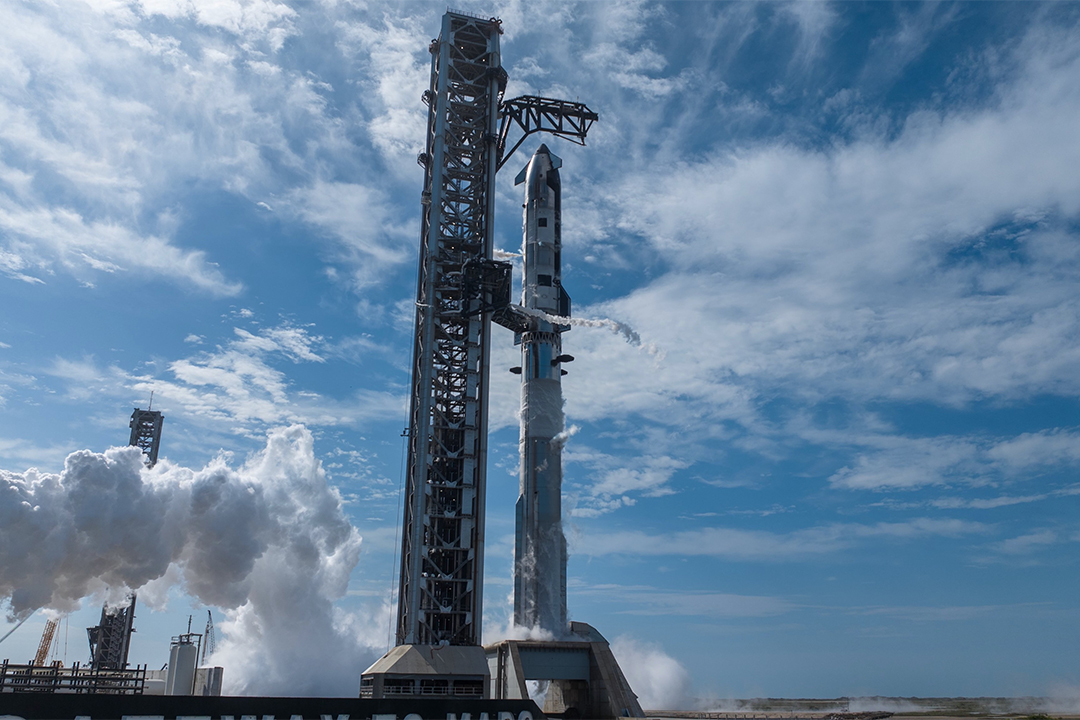
SpaceX listed June 12 at $135 per share. It opened at $150, peaked at $172 during the session, and closed at $160.95, up 19% on the first day. Market cap crossed $2 trillion before the afternoon bell. The largest IPO in history raised $75 billion in a single session.
SpaceX S-1 Financial Breakdown: $18.7 Billion in Revenue, a $4.9 Billion Net Loss, and Three Businesses with Nothing in Common
The S-1 consolidates three entities under the common control of Elon Musk: SpaceX core, xAI acquired February 2, 2026, and X Holdings acquired by xAI on March 28, 2025. All historical financials were retrospectively recast to include them. The numbers investors are now analyzing are not what SpaceX would have reported as a standalone company. They are a constructed baseline that did not exist until this year.
The filing presents three reporting segments. Connectivity is Starlink. Space is the rocket and launch business. AI combines xAI, Grok, and X following the February 2026 merger. Total 2025 revenue came in at $18.7 billion, up from $14 billion in 2024. Net loss was $4.9 billion, a swing from a $791 million profit in 2024. What happened between those two years is visible in the segment breakdown.
Revenue grew from $10.4 billion in 2023 to $14 billion in 2024 to $18.7 billion in 2025, a trajectory that is hard to argue with. The losses grew on the same path. The company presenting that revenue mix to public investors for the first time is carrying all three businesses under one ticker. Analysts are being asked to value Starlink, a rocket company, and an AI infrastructure build-out simultaneously. The S-1 gives them the numbers to start. It does not make the calculation simple.
Starlink Revenue 2026: 10 Million Subscribers, 63% EBITDA Margins, and an ARPU Falling Every Quarter
Starlink is the only segment generating profit and the reason SpaceX can fund everything else. In 2025 it produced $11.4 billion in revenue, growing 48% year over year. Operating profit reached $4.4 billion. EBITDA margin sits at 63%. The subscription model is 85% recurring revenue. By Q1 2026 the service had crossed 10 million active subscribers across 160 countries, generating $3.26 billion in revenue and $1.19 billion in operating income in a single quarter. SpaceX has characterized Starlink’s total addressable market at $1.6 trillion, split roughly between fixed broadband and mobile services.
The number underneath those figures deserves the same attention. Average revenue per user (ARPU) fell from $99 per month in 2023 to $81 in 2025 to $66 in Q1 2026. The decline is deliberate. Starlink has been cutting prices to accelerate adoption in emerging markets, trading revenue density for subscriber volume. The subscriber count grows. The revenue per subscriber falls. Both are visible in the same quarterly data.
Competition is forming outside the subscriber numbers. Amazon’s LEO constellation is scheduled for commercial launch in 2027. Blue Origin has 5,400 satellites planned with deployment beginning Q4 2027. OneWeb, operated by France’s Eutelsat, is already in orbit with more than 600 satellites operational. Starlink built its current margin structure before any of that supply reached the market. The S-1 discloses this competition in its risk factors. The ARPU trend was already moving before a single Amazon satellite went live.
SpaceX xAI Segment and the Anthropic Deal: Colossus Built to Beat a Competitor, Rented to That Competitor on 90 Days Notice

xAI built Colossus, the largest coherent AI training cluster in the world at the time of construction, to train Grok and compete with frontier model labs. The build took 122 days. By the time the S-1 filed, Colossus was running at approximately 11% utilization. Grok users were leaving.
In May 2026, SpaceX signed Cloud Services Agreements with Anthropic, the company Musk had publicly called evil months earlier, granting access to approximately 325,000 NVIDIA GPUs across Colossus and Colossus II. Anthropic agreed to pay $1.25 billion per month through May 2029. Up to $45 billion over the full term. Either party can terminate with 90 days notice.
For context on that number: Anthropic is paying nearly as much per quarter for GPU access alone as Starlink’s entire Q1 2026 revenue of $3.26 billion. That single contract is the clearest public data point on what frontier AI compute costs at scale and who controls access to it. Anthropic confirmed the $1.25 billion monthly figure to Business Insider.
The AI segment posted a $6.35 billion operating loss in 2025. SpaceX declared $12.7 billion in AI capital expenditure that year and $7.7 billion in Q1 2026 alone. X advertising revenue fell $100 million in Q1 2026 as the platform dealt with an overhaul of its ad technology. The Anthropic deal converts idle infrastructure into contracted revenue. The 90-day exit clause converts $45 billion in projected revenue into a figure that can reach zero in a quarter. SpaceX noted in the S-1 that it expects to sign similar agreements with other customers. None have been announced.
SpaceX Bitcoin Holdings: 18,712 BTC, a $35,300 Average Cost Basis, and What Fair Value Accounting Does to Quarterly Earnings
SpaceX holds 18,712 BTC on its balance sheet, acquired at a total cost of $661 million, at an average purchase price of roughly $35,300 per coin. The position was valued at $1.29 billion as of Q1 2026. On-chain analysts had previously estimated SpaceX held around 8,285 BTC. The actual position is more than double that figure.
The holding makes SpaceX the eighth-largest public corporate Bitcoin holder, ahead of Coinbase and Riot Platforms. Combined with Tesla’s 11,509 BTC, Musk-linked companies now hold more than 30,000 BTC on public balance sheets. After listing, Michael Saylor of Strategy noted that 25% of what he called the Mag8 now holds Bitcoin on the balance sheet.
The cost basis is well below current price and the unrealized gain is real. What changes on day one of being a public company is the accounting treatment. Fair value accounting requires digital assets to be marked to market at the end of each reporting period, with gains or losses flowing through the income statement. Bitcoin’s price movement hits reported earnings every quarter regardless of whether SpaceX buys or sells a single coin. A 30% BTC drawdown erases roughly $400 million from the balance sheet in a single reporting period. Investors buying SPCX are now holding a crypto position whether they intended to or not.
How SpaceX handles this in its first few quarterly reports could set a precedent. No company of this size has simply held Bitcoin as a treasury reserve and reported the results publicly at scale.
Elon Musk, SpaceX Governance, and the S-1’s Most Unusual Disclosures: Mars, Cybertrucks, and a Security Firm He Owns
The governance section of the S-1 is unlike any public company filing in recent memory.
Musk holds 85% of combined voting power through Class B shares, each carrying ten votes against one for the Class A shares available to public investors. He can only be removed from his position by voting to do so himself. His compensation package is tied to two milestones: a $7.5 trillion market capitalization and a permanent human colony on Mars with at least one million inhabitants. The word Mars appears 63 times in the document, including under the executive compensation heading. A second compensation tranche grants additional restricted shares for running orbital data centers with 100 terawatts of compute capacity, the equivalent of 100,000 one-gigawatt nuclear reactors operating simultaneously.
Then the related-party transactions. SpaceX spent nearly $700 million purchasing Tesla products in 2024 and 2025, including $131 million on Cybertrucks at a time when Cybertruck demand had not recovered. xAI bought $506 million of goods and services from Tesla in 2025. A security company owned by Musk protects Musk personally and bills SpaceX for the service. X leases office space from a Boring Company subsidiary. SpaceX owns aircraft Musk uses for Tesla business and bills Tesla for the time. A joint chip manufacturing project called Terafab between SpaceX and Tesla is described in the prospectus at length with no timeline, capex, or milestones attached.
Governance specialists have noted the compensation structure creates tension with Tesla shareholders, since both companies now use extraordinary pay packages explicitly designed to retain Musk’s focus. He controls both. One finance operator reviewing the filing noted that they had sat in audit committee meetings over a single $200,000 related-party transaction. The Tesla footprint in this filing is north of $700 million in a single year. There is no established framework in public markets for pricing this governance structure at this scale.
Starship: SpaceX’s Top Self-Disclosed Risk and the Dependency Every Long-Term Thesis Carries

SpaceX listed Starship as the top risk factor on its own list. Not a regulator.
The Space segment is running approximately $3 billion per year in Starship-specific research and development with no Starship revenue offsetting it. V3 Starlink, the next generation of the satellite service, requires Starship to deploy the updated constellation. The orbital AI compute satellites SpaceX plans to begin deploying in 2028 require Starship at commercial operating scale. The lunar economy revenue thesis requires Starship. The Mars colony that unlocks Musk’s largest compensation tranche requires Starship.
The amended S-1 added water availability as a formal risk factor not present in the original confidential filing. “Water availability has become a critical consideration in data center site selection.” That disclosure relates to the AI data center buildout that also depends on the infrastructure Starship is meant to enable. It was added between the original filing and the amended version filed June 3.
Most of what the $2 trillion valuation is pricing runs through a rocket that does not yet operate commercially.
SPCX Index Inclusion and the Anthropic OpenAI Pipeline: What SpaceX’s First Weeks Signal for the Rest of the IPO Calendar
Not all index inclusion is equal. Most coverage of SpaceX’s listing has treated it as a single bullish data point.
Russell 1000 and Russell Top 200 fast-entry was confirmed, with SpaceX added June 26, five trading days after listing. MSCI standard and large-cap indexes adding June 29. The S&P 500 is a different story. SpaceX does not meet the requirement of four consecutive quarters of GAAP profitability. S&P 500 inclusion is pushed to mid-2027 at the earliest. The largest pool of passive index money in the world is not in play for the next twelve months.
SpaceX’s performance in the coming weeks is the pricing signal every company behind it in the pipeline is watching. Anthropic filed its S-1 on June 1 and is targeting an October listing at a valuation approaching $1 trillion. OpenAI filed June 8 and is targeting Q4 at a valuation of $852 billion to $1 trillion. Capital Economics said it the day before the IPO: if the mega listings are well received, many more companies will ride the wave. Morningstar noted the exit value generated by SpaceX alone already exceeds all VC-backed IPOs in the last decade combined.
A strong hold into September opens the window for both Anthropic and OpenAI. A stumble reprices everything behind it. SpaceX is not just the biggest IPO in history. It is the bellwether for an entire wave of trillion-dollar listings that have never had to report a quarterly number before.
Key Risks for SPCX Investors: Starlink Competition, the 90-Day Anthropic Clause, Bitcoin Volatility, and the Lockup Calendar
Starlink ARPU compression is already in the quarterly data and the competition that could accelerate it arrives in 2027. The Anthropic contract representing up to $45 billion in projected AI segment revenue is terminable by either party with 90 days notice. Bitcoin fair value accounting introduces quarterly earnings volatility with no connection to the core aerospace or satellite businesses. The Tesla-related party transaction volume exceeded $700 million in a single year and sits inside a governance structure that public market frameworks are not designed to price. S&P 500 inclusion is off the calendar until mid-2027 at the earliest.
The lockup calendar is the final variable. Standard 180-day expiry falls in December 2026, with a staggered structure per the S-1. Goldman Sachs research shows large IPOs with initial floats below 10% see free float swell to approximately 46% within a year. One early SpaceX investor told CNBC when asked whether his firm would sell at first lockup expiration that it is their business to return capital to investors. Bank of America described the broader 2026 IPO cycle as a large-scale transfer of risk from early investors to the public market. December is not a prediction. It is a date on the calendar with a named investor who has already said what he intends to do with it.
What SPCX Investors Should Watch: September Earnings, December Lockup, the Anthropic Renewal Window, and the Amazon LEO Timeline
September 2026 is the first earnings call. The first time management answers analyst questions on ARPU trajectory, xAI losses, Bitcoin fair value movement, the Anthropic contract status, and Starlink competition on a live call with the market listening. No SpaceX spokesperson has been available for those questions under SEC disclosure requirements before now. That changes in September.
The Anthropic termination window opens in August 2026. Either party can exit from that point with 90 days notice. Whether the contract holds, gets renegotiated, or terminates is the single most important revenue variable in the AI segment and the number most likely to move the stock when first disclosed publicly.
December 2026 is the lockup expiry. The first real test of whether a $2 trillion valuation holds when early holders have a liquid exit. One of them has already said on camera what he plans to do.
Amazon’s LEO commercial launch in 2027 is the first external pressure test for Starlink’s ARPU line. Watch the subscriber numbers in the quarters before and after that launch date.
Mid-2027 is the S&P 500 GAAP profitability gate. Four consecutive profitable quarters on a cost structure that includes $7.7 billion in AI capex per quarter is the requirement. The math on that has not been settled.
The metric that matters most across all of it is not revenue growth. It is whether Starlink ARPU stabilizes before Amazon’s satellites go live and whether the Anthropic contract is still in place when the AI segment posts its next quarterly number.
The first day told investors SpaceX can attract capital. The S-1 tells them what they bought. Starlink is real and the margins are exceptional. xAI built the largest AI training cluster in the world and is renting it to a competitor on 90 days notice. There are 18,712 Bitcoin on the balance sheet. Musk’s compensation is tied to a Mars colony. The Cybertrucks are on the balance sheet too. All of it lands on the same income statement in September. That is the first real test of what a $2 trillion valuation means.
Sources
- Space Exploration Technologies Corp. Form S-1 and amended S-1/A, SEC EDGAR — May 20 and June 3, 2026
- NPR — SpaceX IPO makes history as largest ever. Stock gains 19% on first day — June 12, 2026
- Inc. — SpaceX Revealed Its Rocket Launches Are Losing Millions. Here’s How It Actually Makes Money — June 13, 2026
- The Next Web — Starlink growth is getting harder ahead of SpaceX IPO — June 12, 2026
- CoinDesk — Here’s What SpaceX’s IPO Means for Its 18,000 Bitcoin Holdings — June 13, 2026
- CNN Business — SpaceX shares debut after biggest IPO in history — June 12, 2026
- CNN Business — The 5 Strangest Things About SpaceX’s IPO Prospectus — May 21, 2026
- Mostly Metrics — SpaceX S-1: Starlink Revenue, Launch Margins, Musk’s Mars Pay — June 2, 2026
- MarketWise — SpaceX: The Grok Failure That Made Anthropic’s $15 Billion Deal Possible — June 13, 2026
- Fortune — The Key Disclosures Missing from SpaceX’s S-1 — May 28, 2026
- Morningstar — 6 Charts on SpaceX’s Pre-IPO Financials — May 2026
- Relve HQ — SpaceX Amends IPO Filing to Add Water Risk, Reveals $1.25B Monthly Anthropic Compute Deal — June 2026
- Technology.org — SpaceX Board Sets Musk Compensation Around Mars Settlement and Orbital Data Centers — April 29, 2026
- TradingKey — Wall Street Debates 2026 SpaceX, OpenAI and Anthropic IPOs — June 8, 2026
- Fortune — Morningstar Says SpaceX Is Overvalued by Half — June 3, 2026
- Via Satellite — SpaceX’s IPO Filing Gives First Look Into Company’s Financials — May 20, 2026
- CNBC — SpaceX Is Heavily Reliant on Starlink for Growth and Profit — May 21, 2026
- Bitcoin Treasuries — Corporate BTC Holdings Data — accessed June 14, 2026
- GF Value / GuruFocus — SPCX Options Trading Set to Launch Following Strong IPO Performance — June 14, 2026
- BitMEX Blog — SpaceX IPO Guide: S-1 Breakdown, Valuation and Trading Strategy — June 2026
Editorial Disclosure
Securities discussed in this article: Space Exploration Technologies Corp. (Nasdaq: SPCX). AktieGo has not received, and has not been offered, any direct or indirect compensation from Space Exploration Technologies Corp. or any related party in connection with this article. AktieGo holds no position in SPCX or any security referenced in this article as of the date of publication. All financial figures, subscriber data, and operational metrics cited in this article are sourced from SpaceX’s Form S-1 (filed May 20, 2026, SEC EDGAR) and amended S-1/A (filed June 3, 2026, SEC EDGAR), supplemented by named financial publications as listed in the sources section above. Market price and market capitalization data reflect trading conditions on or around June 14, 2026, and are subject to change. Forward-looking statements and analytical conclusions represent the editorial opinion of AktieGo’s research team and are not investment advice. Investing in public equities involves risk, including the risk of total loss of invested capital. Readers should conduct their own due diligence and seek advice from a licensed financial professional before making any investment decision. Full disclaimer and disclosure policy here