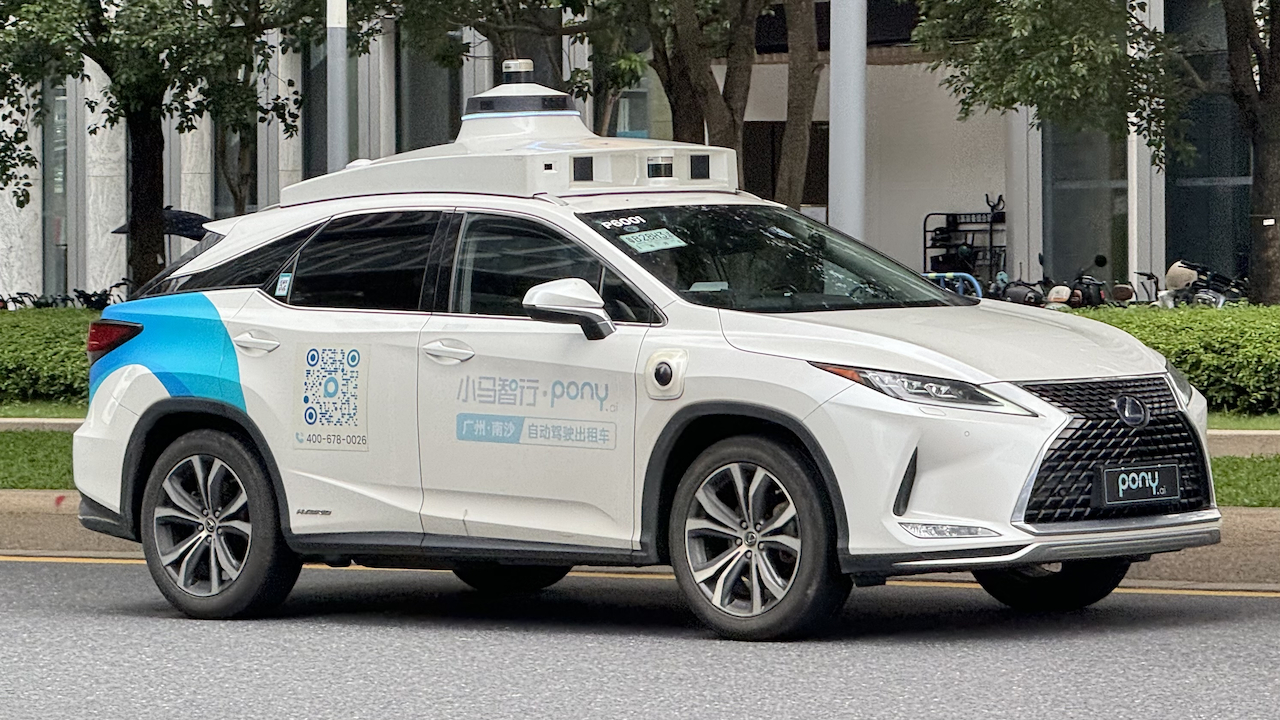
Pony.ai has been building autonomous vehicles since 2016. Most of its competitors are still explaining why the technology is hard.
Pony.ai (NASDAQ: PONY | HKEX: 2026) is past that stage. On April 25, 2026, the company announced its next-generation autonomous driving domain controller, built on NVIDIA’s DRIVE Hyperion platform and powered by NVIDIA DRIVE AGX Thor with NVLink. The system delivers a combined maximum computing performance of 4,000 FP4 TFLOPS and is designed to power both Pony.ai’s own L4 robotaxi fleet and a growing commercial domain controller business supplying third-party autonomous mobility applications.
Two distinct businesses. One compute platform.
What the new controller actually does
A domain controller is the brain of an autonomous vehicle. It takes sensor data from cameras, lidar, and radar, fuses it into a coherent real-time picture of the environment, runs perception models, makes driving decisions, and executes commands, all simultaneously, all with the safety redundancy required for a vehicle operating without a human at the wheel.
The performance demands are extraordinary. A single high-end lidar generates millions of data points per second. Multiply that across eight to twelve sensors, add cameras covering every angle, layer in radar, and the computational load is immense. L4 autonomy, which means the vehicle handles all driving tasks in defined conditions without human intervention, requires that load to be processed with latency measured in milliseconds and reliability measured in years of continuous operation.
4,000 FP4 TFLOPS represents a substantial step up from the Orin-based system currently powering Pony.ai’s seventh-generation robotaxis. The NVLink interconnect enables high-speed communication between two Thor SoCs, allowing flexible single and multi-chip configurations depending on the application’s compute requirements.
The energy efficiency improvement matters commercially as much as the raw performance gain. Every kilowatt consumed by the compute platform is a kilowatt the battery cannot use for propulsion. In electric robotaxi economics, compute efficiency is not a secondary consideration.
The domain controller business is the less-discussed story
Pony.ai’s robotaxi operation gets most of the attention. The domain controller business may be more important for near-term revenue.
In 2025, shipments of Pony.ai’s Fangzai domain controller surged more than 500% year over year. Customers span low-speed delivery robots, robotic street sweepers, logistics vehicles, mining equipment, autonomous shuttles, and broader robotics applications across dozens of countries including Germany, the UK, South Korea, Japan, and Switzerland.
This is not a robotaxi company selling surplus hardware. It is a full-stack autonomous driving technology company that has productized its compute expertise into a commercial business line. The domain controller is sold to customers who need autonomous driving capability but are not building the compute architecture themselves.
According to McKinsey’s analysis of the autonomous vehicle technology market, the market for autonomous driving components and systems is projected to reach $400 billion by 2035, with compute hardware representing a significant share of that value. Companies that control the full stack, software and hardware together, capture more margin than those that provide only one layer.
Pony.ai builds both. That software-hardware co-design approach enables system-level optimization that neither a pure software company nor a pure hardware company can replicate alone.
Unit economics breakeven is the number that changes the conversation
Pony.ai has achieved unit-economics breakeven in two of China’s major metropolitan markets.
That is not a projection. It is a reported operational milestone. For a robotaxi business, breakeven at the unit level means the revenue generated per vehicle per day covers the variable cost of operating that vehicle. It does not mean the company is profitable overall, but it means the model works at the vehicle level. Scale from there and the math changes.
The company is targeting more than 3,000 vehicles and more than 20 cities globally by the end of 2026. If unit economics hold as the fleet scales, the financial picture becomes considerably more interesting than it looks today for most autonomous vehicle companies still burning capital without demonstrated revenue viability.
The NVIDIA relationship is nine years old
The collaboration between Pony.ai and NVIDIA began in 2017, one year after Pony.ai was founded. The progression from early development work through successive generations of compute architecture reflects a genuine technology partnership rather than a vendor relationship.
The Orin-based controller launched in 2022 went into sixth-generation robotaxis. The four-Orin configuration that began mass production in 2025 powers the seventh-generation fleet. This new Thor-based platform is the eighth step in that progression. Each generation has been deployed in actual commercial operations, not just tested in controlled environments.
NVIDIA’s DRIVE platform sits at the center of most serious autonomous driving programs globally, and the collaboration with Pony.ai represents one of its most commercially advanced deployments. The Thor SoC was designed specifically for the compute demands of next-generation autonomous driving, with AI performance far beyond what prior generations could deliver.
Sources
- McKinsey — Autonomous Vehicle Technology Market
- NVIDIA — DRIVE Platform
- Pony.ai — Investor Relations
Editorial disclosure
This article is based on a press release issued by Pony AI Inc. and has been independently rewritten and editorially expanded. It covers the announcement of Pony.ai’s next-generation autonomous driving domain controller built on NVIDIA DRIVE Hyperion. Pony.ai trades on NASDAQ under the ticker PONY and on HKEX under 2026. Unit-economics breakeven figures are as reported by management and have not been independently verified. Fleet and city expansion targets are forward-looking. Market context is sourced from McKinsey and NVIDIA. Commentary reflects the author’s own assessment. The information provided on this website is for informational and educational purposes only. Our content is derived strictly from verified online sources to ensure accuracy and objectivity. This analysis does not constitute financial, investment, or professional advice. Readers are encouraged to consult with qualified professionals before making decisions based on this information. For more information, please see our full DISCLAIMER.