
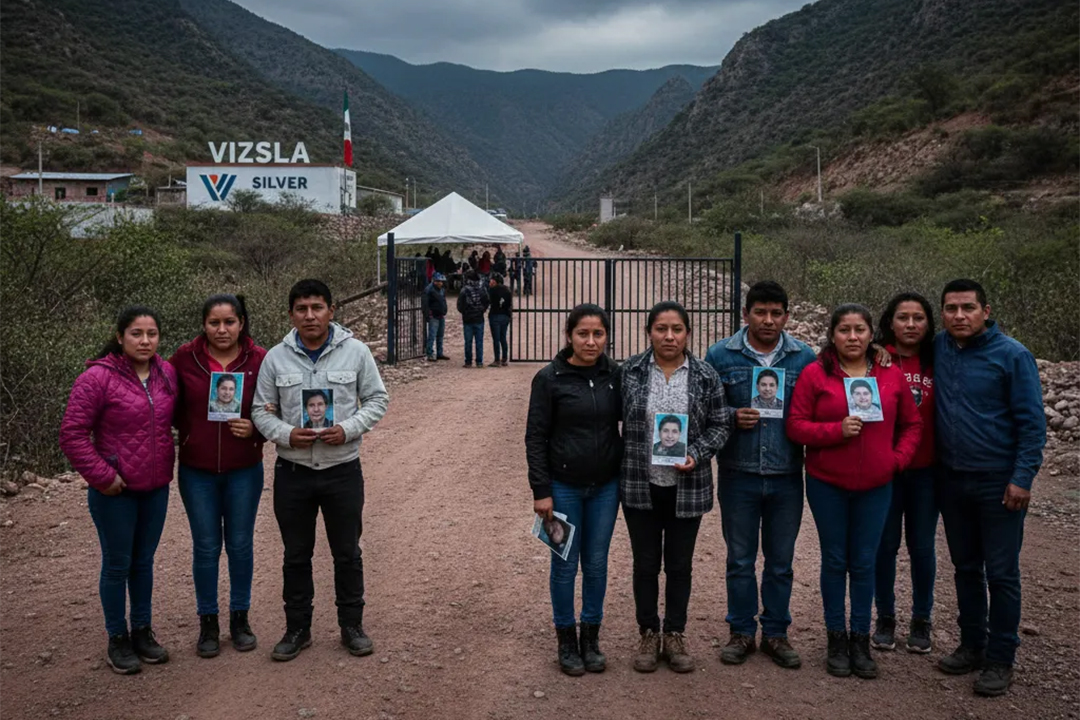
Vizsla Silver Corp.
The incident has significantly impacted the company’s local operations; with site activities remaining suspended while security protocols undergo an exhaustive review. In an official statement, CEO Michael Konnert reaffirmed the company’s long-term commitment to the Panuco project despite the “pain, grief, and uncertainty” currently facing the team. The area, located approximately 50 kilometers east of Mazatlán, has reportedly seen a surge in violence attributed to rival cartel factions: a factor that has complicated the safety landscape for several international mining firms operating within the state.
Impact of Cartel Violence on the Panuco Silver-Gold Project
The security breach highlights the escalating risks associated with resource development in volatile jurisdictions. According to reports from Mexican security authorities, the Concordia region is currently a contested territory under the influence of the “Los Chapitos” faction of the Sinaloa cartel. This environment has introduced severe operational and social risks for Vizsla Silver: which had previously targeted 2027 for its first production milestone. The physical abduction of ten workers represents one of the most extreme security-risk cases for a listed silver developer in recent years.
Beyond the immediate human cost, the company faces logistical hurdles as it attempts to maintain project timelines. While engineering and planning activities are continuing remotely, the inability to access the physical site for drilling or construction has led market analysts to push back expected production dates. Vizsla Silver is currently cooperating with state and federal investigators; however, the timeline for a safe resumption of on-site work remains undefined. The company has emphasized that its “highest priority” is the implementation of new, reinforced security measures in direct coordination with Mexican law enforcement.
Investor Sentiment and Legal Scrutiny Following Security Disclosures
The financial markets responded sharply to the escalating crisis. Following the initial report of the abductions on January 29, 2026, Vizsla Silver’s shares plummeted by nearly 15 percent: and they saw a further 4.6 percent intraday drop following the March 5 update. The volatility reflects deep investor concern over the “security discount” now applied to the Panuco asset. While the silver market itself is facing a structural deficit of 67 million ounces in 2026—a factor that typically drives silver equities higher—Vizsla’s specific geographic risk has decoupled its performance from the underlying commodity price.
Furthermore, the company is now navigating a secondary front of legal challenges. On March 4 and 5, 2026, law firms including The Schall Law Firm and Pomerantz LLP announced investigations into potential violations of securities laws. These probes focus on whether Vizsla Silver issued false or misleading statements regarding its on-site security and risk management prior to the abductions. For institutional investors, the “Information Gain” here is the realization that technical feasibility and mineral resource estimates are secondary to the physical safety of the workforce; as an inaccessible mine effectively holds zero immediate value regardless of the silver grade.
Operational Outlook and the 2027 Production Timeline
The path forward for Vizsla Silver depends entirely on the stabilization of the Concordia region. Management has signaled that they will not resume full site operations until a “safe and responsible path” is established with local communities and authorities. This cautious approach is necessary to prevent further tragedies: but it also introduces a period of capital inefficiency as the company continues to burn cash on security and administrative overhead without advancing its development goals. The market is now closely watching for the USDA and Mexican regulatory bodies’ responses to the incident, which could affect future permitting.
The long-term potential of the Panuco project remains significant, but the investment narrative has shifted from “discovery and growth” to “security and recovery.” Investors should expect increased “Compliance Costs” in the coming quarters as the company likely pivots toward a “fortress-style” operational model: incorporating private security details and hardened infrastructure. Until the three missing colleagues are located and a permanent security presence is established, the Panuco project remains a high-risk asset with a “structural delay” that may push production well beyond the original 2027 target.
Sources
- Vizsla Silver: Official Update on the Situation in Concordia March 5, 2026
- Reuters: Vizsla Silver Confirms Worker Deaths After Abduction at Mexican Mine
- Mining.com: Vizsla Confirms Two More Deaths in Mexico Kidnappings
- SEC: Vizsla Silver Corp. Form 6-K Security Update Filing
- Simply Wall St: Vizsla Silver Shares Under Legal Scrutiny After Incident
Editorial Disclosure
This report is for informational and educational purposes only. This article includes subjective analysis and expert commentary from the writer. It is based on verified press releases and corporate announcements. It is not intended to provide financial, investment, or legal advice. All reporting is based on verified online sources as of March 6, 2026. Please read our full Disclaimer.