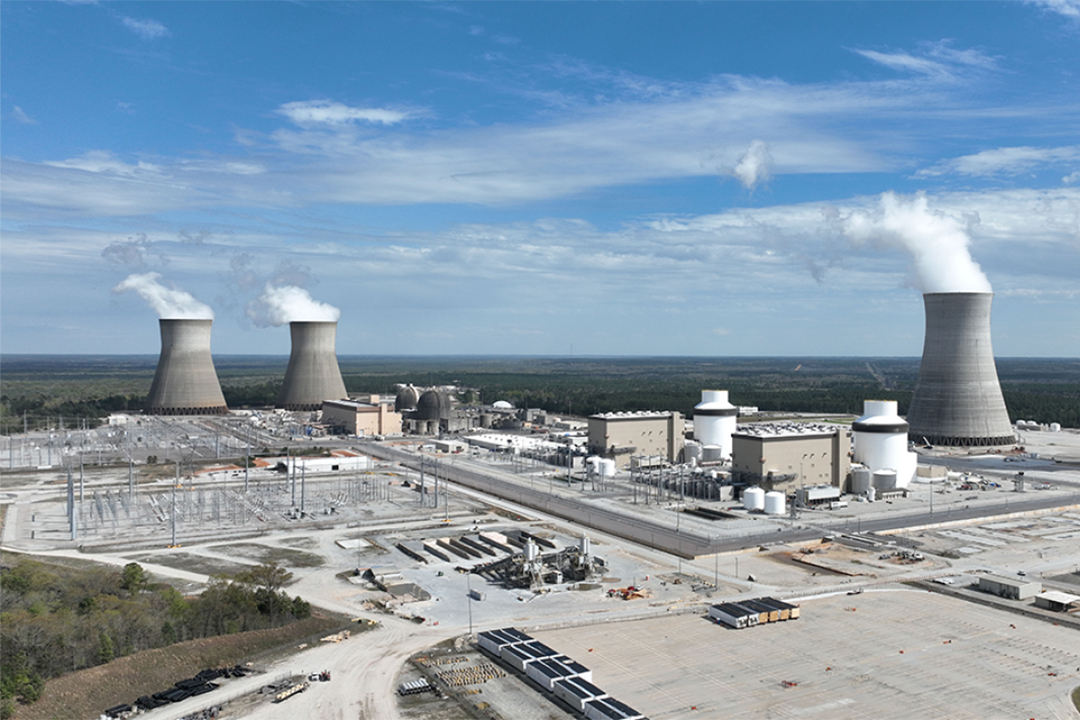
Three companies announced a significant partnership on March 18, 2026, that puts nuclear energy and artificial intelligence infrastructure in the same sentence for serious commercial reasons. Guidehouse, IP3 Corporation, and Cybernetic Intelligence are joining forces to build nuclear-powered computing infrastructure designed for government, defence, and mission-critical AI workloads. The partnership is based in Virginia and targets a problem that is becoming impossible to ignore: the power grid cannot keep up with what AI actually needs.
This is not a research project. It is a commercial infrastructure play aimed at a very specific and growing market.
What the three companies actually bring together
Each partner contributes something the others cannot provide alone. Guidehouse is a global professional services firm with around 18,000 professionals and deep experience across energy, utilities, national security, and regulatory environments. In this partnership, it serves as the owner’s integrator, handling governance, programme management, and coordination across stakeholders. That role matters enormously in nuclear projects, where regulatory complexity and community engagement can make or break a development timeline.
IP3 Corporation specialises in civil nuclear power development and operations. Founded by retired US Navy Rear Admiral Michael Hewitt, the company has spent years navigating the intersection of nuclear technology, national security, and private sector investment. It brings the nuclear development expertise that neither Guidehouse nor Cybernetic Intelligence has on its own.
Cybernetic Intelligence develops AI systems specifically designed for mission-critical environments. Its software is built to be interpretable, auditable, and autonomous, meaning it can operate and explain its decisions in environments where a black-box AI system is simply not acceptable. Defence, intelligence, and industrial operations all fall into that category.
Together the three companies are attempting to build something that does not widely exist yet: contractor-owned, contractor-operated nuclear-powered computing infrastructure that runs independently of the commercial grid.
Why the commercial grid is no longer reliable enough for the most sensitive AI workloads
The core problem this partnership is solving is one we have covered before in the context of data centres and private power grids. AI computing demands enormous, continuous, reliable electricity. The commercial grid was not built for that requirement, and expanding it takes decades.
For most commercial AI applications, private power solutions like natural gas or solar with battery backup can fill the gap. However, for national security, defence, and intelligence workloads, the bar is much higher. These systems cannot tolerate outages. They cannot rely on fuel supply chains that could be disrupted. And increasingly, they cannot share infrastructure with commercial operators for sovereignty and security reasons.
Nuclear power addresses all three of those concerns simultaneously. It generates continuous baseload electricity around the clock regardless of weather. It does not depend on continuous fuel deliveries the way gas generators do, since nuclear fuel is loaded infrequently and stored on site. And a nuclear-powered facility operating behind the meter, meaning disconnected from the commercial grid, gives a government or defence operator genuine energy sovereignty.
According to the U.S. Department of Energy, nuclear energy is the only carbon-free power source capable of delivering consistent baseload electricity at scale. Furthermore, the International Atomic Energy Agency has highlighted the growing interest in small modular reactors as a practical solution for dedicated industrial and computing facilities that need reliable on-site power without connecting to the national grid.
Virginia is not a random location for this kind of infrastructure
The partnership’s Virginia base is a deliberate strategic choice. Northern Virginia is already the largest data centre market in the world, home to more than 70% of the world’s internet traffic flowing through its infrastructure on any given day. The state has a deep existing ecosystem of defence contractors, intelligence agencies, and technology companies that represent the exact customer base this partnership is targeting.
Virginia also has established nuclear expertise. The state is home to existing nuclear generation capacity and a regulatory environment with experience handling complex nuclear projects. Combined with strong veteran workforce development programmes, which the partnership explicitly highlights as a priority, it offers the talent pipeline a contractor-operated nuclear computing facility would need.
For the defence and intelligence community specifically, Virginia’s proximity to Washington DC, the Pentagon, and major intelligence agency campuses makes it the natural anchor point for this kind of infrastructure.
The bigger picture: compute sovereignty is becoming a national security priority
What makes this partnership particularly timely is the framing around compute sovereignty. The idea that a nation’s ability to run its own AI workloads, independent of foreign infrastructure, foreign energy supplies, or vulnerable commercial networks, is a strategic asset is gaining serious traction in policy circles.
The RAND Corporation has noted that AI infrastructure is increasingly being treated as critical national infrastructure, with the same strategic importance as military hardware or energy reserves. Countries and organisations that cannot guarantee the availability and security of their own computing capacity face a genuine strategic vulnerability as AI becomes more central to defence, intelligence, and government operations.
This partnership is a direct commercial response to that policy direction. By combining nuclear energy security with sovereign computing infrastructure and mission-ready AI systems, Guidehouse, IP3, and Cybernetic Intelligence are positioning themselves at the intersection of two of the most significant infrastructure trends of the next decade.
Sources
- U.S. Department of Energy — What Nuclear Energy Can Do
- International Atomic Energy Agency — Nuclear Power
- RAND Corporation — Artificial Intelligence
- Guidehouse — Official Press Release via PRNewswire
Editorial disclosure
This article is based on a press release issued by Guidehouse. It covers a strategic partnership between Guidehouse, IP3 Corporation, and Cybernetic Intelligence to develop nuclear-powered computing infrastructure for AI and national security applications. Market context is sourced from the U.S. Department of Energy, the International Atomic Energy Agency, and the RAND Corporation. Commentary reflects the author’s own assessment. The information provided on this website is for informational and educational purposes only. Our content is derived strictly from verified online sources to ensure accuracy and objectivity. This analysis does not constitute financial, investment, or professional advice. Readers are encouraged to consult with qualified professionals before making decisions based on this information. For more information, please see our full DISCLAIMER.