The US electric grid cannot connect new power demand fast enough. The interconnection queue for new generation and large load projects in North America now runs to more than five years on average. AI data centers need power on a timeline measured in months, not years. That gap between what the grid can deliver and what AI infrastructure operators need is the defining commercial problem in clean energy right now, and it is generating a wave of investment in distributed, on-site power solutions that do not depend on transmission.
Two cleantech companies moved materially on that problem the week of June 29. FuelCell Energy announced that the Export-Import Bank of the United States had approved a $49 million financing package for its South Korean export operations, triggering a third round of institutional upgrades on the back of a 380-megawatt AI data center power agreement announced days earlier. The stock surged 65 percent over three trading sessions. PowerBank Corporation announced an AI compute co-location agreement pairing its distributed renewable energy project sites with containerized AI compute infrastructure, offering data center operators a speed-to-power path that bypasses the transmission queue entirely.
The macro context is straightforward. Goldman Sachs estimates AI infrastructure will drive more than $100 billion in annual electricity demand by 2030, roughly triple current data center consumption. The IRA’s investment tax credits and standalone storage incentives continue to make distributed solar and battery energy storage economics competitive with grid power in most North American markets. And the combination of data center urgency and renewable energy development pipeline creates a natural pairing that both companies are trying to capitalize on, from different positions and at very different market capitalizations.
FuelCell Energy Surges 65% on EXIM Financing and Back-to-Back Buy Upgrades as 380 MW Data Center Deal Reshapes the Investment Thesis
FuelCell Energy (NASDAQ: FCEL) has spent several years as a commercially real but financially challenged hydrogen and fuel cell power company, with meaningful South Korean revenue, a history of losses, and a stock that spent most of 2024 below $5. The week of June 29 looked like something else entirely.
FuelCell Energy announced on June 29 that the Board of Directors of the Export-Import Bank of the United States had approved a $49 million financing package to support the delivery of fuel cell equipment to South Korea. The financing will be disbursed in two tranches, with the first providing net proceeds of approximately $22 million. The EXIM approval is non-dilutive and supports FuelCell’s existing revenue stream from South Korean utility partners, which has been a reliable source of backlog for the company for more than a decade.
B. Riley analyst Ryan Pfingst upgraded FuelCell Energy to Buy from Neutral on June 29, raising his price target to $32 from $13, calling the investment thesis meaningfully strengthened by the company’s June 24 strategic agreement with Fit Energy USA LP. That agreement covers up to 380 megawatts of clean, baseload fuel cell power for AI data centers across multiple delivery structures including behind-the-meter, microgrid, and grid-connected configurations. An initial deposit for 30 megawatts of power set to begin delivery later in 2026 accompanies the agreement. Jefferies analyst Julien Dumoulin Smith had upgraded the stock to Buy with a $24 price target on June 26, citing both the Fit Energy deal and what he described as a deep valuation discount to Bloom Energy. B. Riley’s $32 target represented a Street-high and pointed to roughly 5.5 times the firm’s fiscal 2027 revenue estimate of $347.2 million.
The fundamental picture underneath the upgrades is mixed in ways that matter. FuelCell reported second-quarter fiscal 2026 results on June 8, showing revenue of $35.6 million, down 5 percent year over year and below the analyst consensus of $40.5 million, with a net loss of $77.6 million that included a Groton project impairment. Adjusted EBITDA improved but remained negative. Pipeline surged 250 percent quarter over quarter to 4 gigawatts, with approximately 89 percent of submitted proposals tied to AI and data center operators. Cash on hand was approximately $441 million. The company is targeting 100 megawatts of annualized production at its Torrington, Connecticut facility by late October 2026, a milestone it says will take it to positive EBITDA. The Torrington facility is being expanded to support up to 500 megawatts of annualized capacity over time.
The stock entered the June 29 week up approximately 255 percent year to date following the Fit Energy and Jefferies catalysts. After the three-day 65 percent surge on the EXIM financing and B. Riley upgrade, it pulled back with the broader market into the end of the week. Post-window note for readers: on July 8, FuelCell announced a $225 million underwritten common stock offering priced at $21 per share, a 19 percent discount to the prior close. The offering sent shares down approximately 15 percent in after-hours trading. The stock has subsequently rebounded partially but the dilution is material.
PowerBank Corporation Pairs Distributed Renewable Energy Sites with Containerized AI Compute to Bypass Transmission Queue
PowerBank Corporation (NASDAQ: PBK | Cboe CA: PBK | FSE: 103) is a Toronto-based independent renewable energy developer, owner, and operator with a development pipeline exceeding 1 gigawatt across solar photovoltaic, battery energy storage, and EV charging projects in Canada and the United States. The company was formerly known as SolarBank Corporation and changed its name to PowerBank Corporation in July 2025 as it began expanding beyond solar into energy storage and, more recently, AI compute infrastructure.
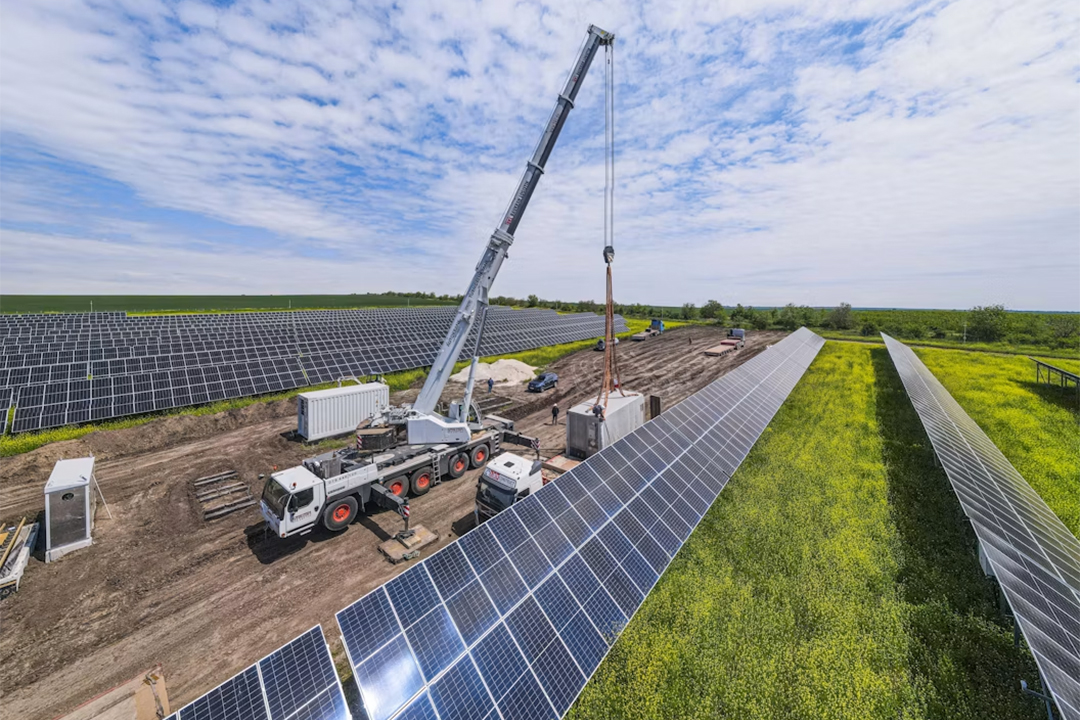
PowerBank announced on June 29 that it had entered into an AI compute co-location agreement that unlocks new revenue from its existing distributed renewable energy assets by pairing them with containerized AI compute infrastructure. The distributed, speed-to-power model pairs clean energy generation directly with compute capacity at PowerBank’s project sites, shortening the time-to-power timeline for data center operators who would otherwise face multi-year transmission interconnection wait times. The company said its 1 gigawatt-plus development pipeline across Canada and the United States positions it to provide on-site generation for digital operations at a time of unprecedented power demand.
On June 30, PowerBank entered into securities purchase agreements with two new long-term institutional investors for the purchase and sale of 7,000,000 common shares in a registered direct offering. The institutional placement adds two new long-duration shareholders to the register alongside the AI co-location announcement.
PowerBank’s operating portfolio provides the foundation for the AI compute pivot. Three projects are producing power as operating independent power producer assets: Geddes, US1, and VC1. The 4.99-megawatt battery energy storage project in Cramahe, Ontario reached commercial operation in May 2026 under a 22-year revenue contract with the Independent Electricity System Operator of Ontario. Nine New York State solar and storage projects have been mobilized for 2026 construction, with construction value of approximately $74.3 million and estimated potential federal investment tax credit value of $29.7 million. The company ended its most recently reported quarter with working capital of $10.7 million, positive for the first time, and a narrowed net loss.
Upcoming Catalysts: FCEL Production Ramp, PowerBank Construction Milestones, AI Power Demand Data
FuelCell Energy: 100 megawatt annualized production run rate target at Torrington, Connecticut by late October 2026; initial 30 megawatt delivery under the Fit Energy USA agreement later in 2026; $225 million offering close expected on or about July 9, 2026; fiscal Q3 2026 results, which will show whether the data center pipeline is converting to recognized revenue; EBITDA trajectory toward positive at 100 MW production scale; any additional data center power agreements from the 4 GW pipeline.
PowerBank Corporation: Q3 fiscal 2026 results showing the financial impact of the nine New York State solar and storage projects under construction; IRS Physical Work Test safe-harbor deadline for projects in New York and Pennsylvania, which affects $29.7 million in potential federal investment tax credit eligibility; first AI compute co-location site-level agreement and any associated revenue disclosure; Nasdaq bid price compliance plan update; any additional AI data center operator partnerships announced under the co-location framework.
Cleantech macro: US interconnection queue reform timeline under Federal Energy Regulatory Commission Order 1920; IRA investment tax credit status under current Congressional review; AI data center electricity demand forecasts from TSMC, Microsoft, Google, and Amazon quarterly earnings in July; Goldman Sachs and Wood Mackenzie updated power demand forecasts; any White House executive action on distributed energy regulation.
Sources
- PowerBank Corporation: AI compute co-location agreement announced, June 29, 2026
- PowerBank Corporation: securities purchase agreements with two new institutional investors, June 30, 2026
- FuelCell Energy, Inc.: $49 million EXIM Bank financing approved for US clean energy exports to South Korea, June 29, 2026
- FuelCell Energy, Inc.: strategic agreement with Fit Energy USA for up to 380 MW of clean power for data centers, June 24, 2026
- B. Riley Securities: FuelCell Energy upgraded to Buy, price target raised to $32 from $13, June 29, 2026 (Barchart)
- Barchart: back-to-back upgrades signal rising institutional support for FuelCell Energy stock, July 2, 2026
- TipRanks: Bloom Energy vs FuelCell Energy, July 3, 2026 (analyst consensus and pipeline analysis)
- StockTitan: PowerBank rebrands around AI data centers, changes ticker PBK, June 4, 2026 (background and LOI context)
- StockAnalysis: PowerBank Corporation market cap and revenue data
Editorial Disclosure
This roundup is based entirely on publicly available information including press releases, SEC filings, and company investor relations pages. Securities discussed include PowerBank Corporation (NASDAQ: PBK | Cboe CA: PBK | FSE: 103) and FuelCell Energy, Inc. (NASDAQ: FCEL). aktiego.com has not received any compensation from any company mentioned, their management, investor relations representatives, or any third party. No staff member or principal of aktiego.com holds a position in any security mentioned at the time of publication. PowerBank Corporation press releases confirmed as June 29, 2026 (AI compute co-location agreement) and June 30, 2026 (securities purchase agreements with institutional investors), both via PRNewswire and powerbankcorp.com/news. PowerBank was formerly known as SolarBank Corporation and changed its name to PowerBank Corporation in July 2025. PowerBank received a written notice from the Listing Qualifications Department of Nasdaq Stock Market LLC in April 2026 indicating that its common shares had closed below the minimum $1.00 per share bid price requirement for 30 consecutive business days from February 19 to April 1, 2026. The company has been granted a compliance period to address the deficiency; the current status of the Nasdaq compliance plan has not been confirmed in a filing as of this article’s publication date. Readers should verify current share price and Nasdaq compliance status before making any investment decisions. PowerBank’s fiscal year 2025 revenue was $41.53 million, a decrease of 28.86 percent year over year, and the company reported a net loss of approximately $31 million for the same period. The AI compute co-location agreement announced June 29 follows a non-binding letter of intent with Nodiac announced June 4, 2026; the June 29 agreement represents a definitive arrangement at the company level but site-by-site definitive agreements remain to be negotiated. Revenue from AI compute co-location has not been received and no timeline for revenue recognition has been publicly specified. The June 30 institutional placement of 7,000,000 common shares is dilutive to existing shareholders. FuelCell Energy, Inc. press release date confirmed as June 29, 2026 (EXIM Bank $49 million financing approval), via GlobeNewswire and fuelcellenergy.com/investors. The June 24, 2026 Fit Energy USA strategic agreement is referenced as the underlying catalyst for the in-window EXIM financing and analyst upgrade events; that release predates the coverage window by five days but is the foundation for the week’s catalysts. The B. Riley upgrade to Buy with a $32 price target was issued June 29, 2026 by analyst Ryan Pfingst; the Jefferies upgrade to Buy with a $24 price target was issued June 26, 2026 by analyst Julien Dumoulin Smith. Both upgrades are analyst opinions and do not constitute investment advice. Wall Street consensus as of the coverage period was Hold across nine analyst evaluations, with a mean price target of $22.86, which at the post-surge price implied material downside. FuelCell Energy reported second-quarter fiscal 2026 results on June 8, 2026, showing revenue of $35.6 million, down 5 percent year over year, a net loss of $77.6 million including a Groton project impairment, and negative adjusted EBITDA. Post-window disclosure: on July 8, 2026, FuelCell Energy announced and priced an underwritten public offering of 10,714,286 common shares at $21.00 per share, raising approximately $225 million in gross proceeds; this offering represents material dilution to existing shareholders and the announcement sent the stock down approximately 15 percent in after-hours trading. The $225 million offering closed on or about July 9, 2026. FuelCell Energy is included in this article as a significant cleantech catalyst story of the coverage week; its market capitalization during the week of coverage ranged from approximately $1.5 to $1.7 billion, placing it above the typical aktiego small and micro-cap coverage universe. These are speculative investments carrying significant risk including potential total loss of capital. Coverage on aktiego.com is provided for informational and educational purposes only. aktiego.com is not a registered investment advisor. Nothing in this article constitutes financial, investment, or professional advice. Readers are encouraged to conduct their own due diligence and consult a qualified financial advisor before making any investment decisions. For more information please see our full DISCLAIMER.

 Watch on YouTube