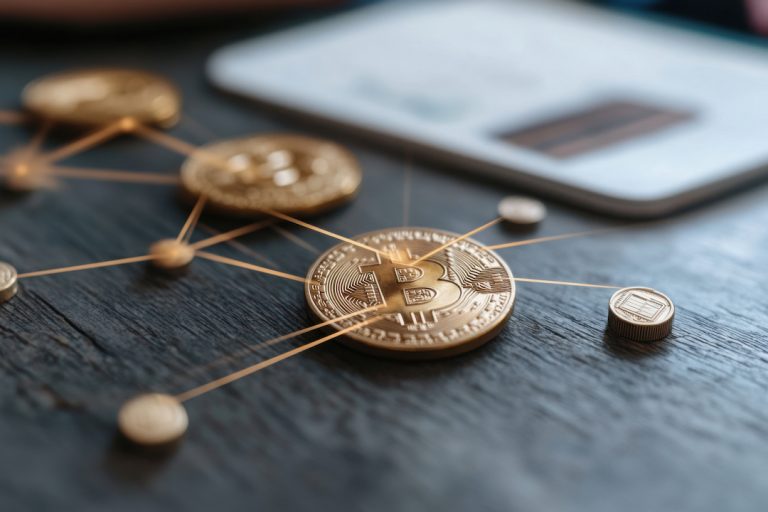

ANAP Holdings started as a fashion retailer. It is now one of the top three Bitcoin-holding listed companies in Japan.
That transition is not as unusual as it sounds in the current Japanese market, but it does illustrate something important about where corporate treasury strategy is heading in Asia’s most carefully regulated digital asset environment.
On April 22, 2026, HashKey Group announced an agreement in principle to partner with ANAP Holdings (TSE: 3189) on institutional Bitcoin lending services in Japan. HashKey Japan, registered with Japan’s Financial Services Agency under the Payment Services Act, will provide structured lending services that allow ANAP to generate yield from its approximately 1,417 BTC in treasury holdings, currently valued at around $133 million at prevailing prices.
ANAP holds Bitcoin. Until now, it just sat there.
What the partnership actually does
Bitcoin treasury companies face a specific problem that gold holders do not. Gold can be lent through established precious metals lending markets with decades of operational history. Bitcoin lending infrastructure at institutional grade, with proper custody, legal documentation, and regulatory compliance, is newer and concentrated among a small number of regulated operators.
HashKey Japan provides that infrastructure. Under the partnership, ANAP can deploy a portion of its Bitcoin treasury into structured lending arrangements, earning yield on holdings that would otherwise generate nothing. The mechanics are similar to securities lending in traditional finance: the asset is lent to a counterparty, collateral is held, interest accrues, and the asset is returned at maturity.
The regulatory framing matters here. HashKey Japan operates under FSA registration, which means the lending service operates within Japan’s established legal framework for crypto asset exchange and lending services, not outside it.
Japan’s regulatory transformation is the context this requires
Japan has been quietly building one of the world’s most complete regulatory frameworks for digital assets. Japan’s 2026 reforms reclassified major cryptocurrencies as financial products under the Financial Instruments and Exchange Act, introduced a flat 20% capital gains tax replacing the previous progressive rates that topped out at 55%, and established the FSA’s new Digital Finance Bureau as a dedicated oversight body.
The effect on institutional sentiment has been measurable. A survey published in April 2026 by Nomura and its digital asset subsidiary Laser Digital, covering 518 investment professionals across Japanese institutional investors, family offices, and public-interest organizations, found that 79% of interested investors now have concrete digital asset investment plans. Nearly 80% of surveyed institutions plan to allocate to crypto within three years. The questions have shifted, as one analysis put it, from existential skepticism to practical implementation.
That is the market HashKey is moving into. And the institutional services it is selling, lending, asset management, treasury optimization, are exactly what the Nomura survey identified as the next frontier of Japanese institutional adoption.
ANAP is not alone in this playbook
Japan’s most visible corporate Bitcoin holder is Metaplanet, the Tokyo-listed company that has accumulated over 5,000 BTC following the Strategy Inc. model and seen its stock respond accordingly. ANAP, with 1,417 BTC, sits in the same universe of Japanese listed companies treating Bitcoin as a primary treasury reserve asset.
The difference is that ANAP is now taking the next step: not just holding, but using. Generating yield from treasury holdings through institutional lending is how corporate treasuries in traditional finance have operated for decades. Cash earns interest. Securities get lent. The fact that Bitcoin treasury companies are now accessing the same model reflects the maturation of the institutional digital asset infrastructure around them.
HashKey Group’s parent, HashKey Holdings Limited (HK: 3887.HK), is listed on the Hong Kong Stock Exchange and operates across regulated exchanges, OTC trading, and institutional custody across Asia. Its presence in Japan through a registered FSA entity gives it the local regulatory standing to offer these services legally within Japan’s framework.
What comes next
The agreement in principle is expected to convert to a formally executed agreement by end of April 2026. Beyond Bitcoin lending, both parties have indicated interest in expanding into broader digital asset management, treasury optimization, and on-chain financial services.
Japan’s institutional market is moving from exploration to execution. The infrastructure being built through partnerships like this one is the plumbing that will carry that transition. It is not visible from the outside. But it is how financial markets actually change.
Sources
- Nomura / Laser Digital — 2026 Institutional Investor Survey via Blockster
- HashKey Group — Official Website
- ANAP Holdings — Tokyo Stock Exchange
Editorial disclosure
This article is based on a press release issued by HashKey Group and has been independently rewritten and editorially expanded. It covers an agreement in principle between HashKey Japan and ANAP Holdings for institutional Bitcoin lending services. HashKey Holdings Limited trades on the Hong Kong Stock Exchange under 3887.HK. ANAP Holdings trades on the Tokyo Stock Exchange under 3189. The agreement in principle had not yet been formally executed at time of writing. This article discusses cryptocurrency treasury management and institutional Bitcoin lending, which carry significant asset price volatility, counterparty, and regulatory risk. Does not constitute financial or investment advice. The information provided on this website is for informational and educational purposes only. Our content is derived strictly from verified online sources to ensure accuracy and objectivity. This analysis does not constitute financial, investment, or professional advice. Readers are encouraged to consult with qualified professionals before making decisions based on this information. For more information, please see our full DISCLAIMER.