When one of the world’s largest pharmaceutical companies writes a check for $115 million upfront and structures a deal worth up to $2.75 billion in total, the industry pays attention. On March 29, 2026, Insilico Medicine (HKEX: 3696) announced a global R&D collaboration with Eli Lilly and Company that grants Lilly an exclusive worldwide license for a portfolio of AI-discovered drug programs across multiple therapeutic areas. The deal is one of the largest AI drug discovery partnerships ever announced and signals a fundamental shift in how the pharmaceutical industry thinks about artificial intelligence as a drug development tool.
This is not a technology licensing agreement. It is a bet on whether AI can find drugs that humans would miss.
What Insilico Medicine actually does and why Lilly wanted it
Most pharmaceutical companies use AI as a tool to assist human researchers. Insilico Medicine was built around a different premise: that AI can drive the entire drug discovery process end to end, from identifying disease targets to designing candidate molecules to predicting clinical outcomes.
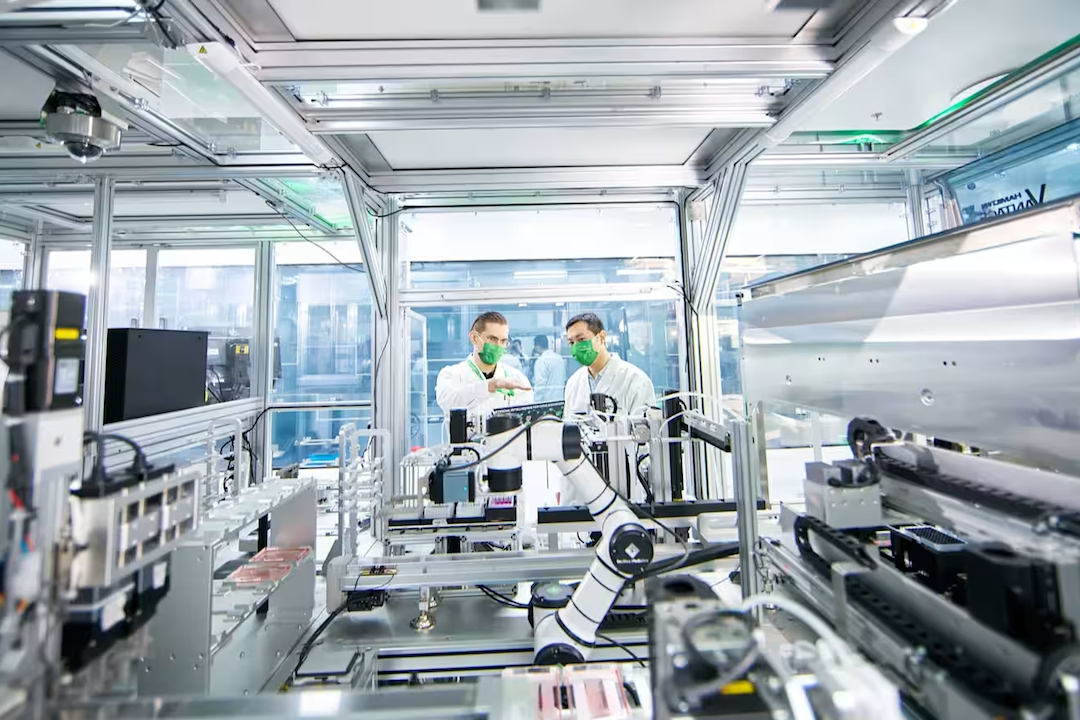
The company’s Pharma.AI platform integrates generative AI, deep learning, and automation across what it calls the full drug discovery pipeline. It uses what founder Alex Zhavoronkov describes as world models of human and animal life, essentially AI systems trained to understand biological processes at a level of complexity that no human research team could track manually. The platform can identify targets that drive multiple diseases simultaneously, a capability that is particularly valuable for conditions with overlapping biological mechanisms like fibrosis, inflammation, and metabolic disease.
Insilico has already demonstrated this works in practice. It has advanced multiple AI-generated drug candidates into clinical trials, including programs in fibrosis and oncology. It listed on the Hong Kong Stock Exchange in December 2025, giving it public market validation alongside this landmark Lilly deal.
For Lilly, the appeal is clear. The company has extraordinary clinical development capabilities and deep disease-area expertise built over decades. What AI offers is the ability to find novel targets and design candidate molecules faster and across a wider search space than traditional chemistry can cover. Combining Lilly’s development infrastructure with Insilico’s discovery engine creates a pipeline that neither company could build alone.
The deal structure tells you how confident both sides are
The financial terms of this collaboration are worth examining carefully because they reveal how both parties are thinking about the risk and upside.
Insilico receives $115 million upfront. That is a meaningful immediate payment for a clinical-stage biotech company, providing capital to fund ongoing research without immediate dilution pressure. The total deal value reaches approximately $2.75 billion through development, regulatory, and commercial milestones, plus tiered royalties on future sales of any approved products.
Milestone-based deal structures in pharma are standard, but the ratio here is notable. The $115 million upfront represents about 4% of the total potential value. That structure strongly favors Lilly in the early stages, which makes sense because the programs are in preclinical development and have not yet generated clinical proof of concept. However, it also means that if even a fraction of the portfolio advances successfully, the financial return to Insilico is transformational.
According to Nature Biotechnology’s analysis of AI drug discovery deals, the average success rate for preclinical drug candidates reaching approval is approximately 10%. A portfolio of programs across multiple therapeutic areas, selected using AI target identification, could statistically generate several approved products if the AI selection is genuinely better than conventional methods. The $2.75 billion ceiling reflects what that scenario would look like commercially.
Why this deal matters beyond just two companies
The Insilico and Lilly collaboration is one of several large AI drug discovery deals that have reshaped how the pharmaceutical industry views AI partnerships over the past two years. But it stands out for two specific reasons.
First, the breadth. The agreement covers multiple therapeutic areas simultaneously, not a single disease focus. That breadth reflects confidence in AI’s ability to generate valuable candidates across diverse biology, not just in one well-understood disease area.
Second, the target selection model. Under the agreement, Lilly selects the biological targets and Insilico’s AI designs the drug molecules against those targets. That division of labor is strategically interesting. Lilly brings its clinical and commercial knowledge of which diseases and mechanisms represent the highest value opportunities. Insilico brings the computational capability to find novel approaches to those targets faster than conventional medicinal chemistry.
The McKinsey Global Institute has estimated that AI and machine learning could generate up to $50 billion in annual value for the pharmaceutical industry by the early 2030s, primarily through faster target identification, reduced failure rates in clinical development, and the discovery of novel mechanisms that human researchers would take decades to find conventionally. The Lilly and Insilico deal is a direct attempt to capture a portion of that value.
What this means for patients and the future of drug discovery
The most important downstream consequence of deals like this is not the financial terms. It is what happens if the drugs work.
Insilico’s focus areas include fibrosis, oncology, immunology, pain, and obesity and metabolic disorders. These are conditions with enormous unmet medical need and existing patient populations that have been waiting years or decades for better treatment options. If AI-designed drugs can find novel mechanisms that conventional research has missed, the patient impact could be significant.
According to the FDA’s Center for Drug Evaluation and Research, average drug development timelines from target identification to approval run 10 to 15 years. AI drug discovery platforms like Insilico’s are designed to compress the earliest and most failure-prone stages of that process, potentially cutting years from development timelines for drugs that do advance. For patients with serious conditions, that acceleration is not an abstract benefit. It is measurable in outcomes.
Insilico Medicine and Lilly are not the only companies pursuing this path. But the scale of this deal makes it one of the clearest signals yet that the pharmaceutical industry has moved past skepticism about AI drug discovery and into active deployment of it at the highest levels.
Sources
- Nature Biotechnology — AI Drug Discovery Analysis
- McKinsey Global Institute — The Bio Revolution
- FDA — Drug Development and Approval Process
- Insilico Medicine — Investor Relations
Editorial disclosure
This article is based on a press release issued by Insilico Medicine and has been independently rewritten and editorially expanded. It covers a drug discovery collaboration between Insilico Medicine and Eli Lilly and Company. Insilico Medicine is listed on the Hong Kong Stock Exchange under the ticker 3696. The drug programs discussed are in preclinical development and have not yet demonstrated clinical efficacy or received regulatory approval. Total deal value of $2.75 billion is contingent on achievement of development, regulatory, and commercial milestones that may not be realized. This article does not constitute medical or investment advice. Market context is sourced from Nature Biotechnology, McKinsey Global Institute, and the FDA. Commentary reflects the author’s own assessment. The information provided on this website is for informational and educational purposes only. Our content is derived strictly from verified online sources to ensure accuracy and objectivity. This analysis does not constitute financial, investment, or professional advice. Readers are encouraged to consult with qualified professionals before making decisions based on this information. For more information, please see our full DISCLAIMER.
 Watch on YouTube