
LOTTE Biologics did not exist four years ago. Today it is operating a 40,000-litre biomanufacturing campus in New York, running a dedicated antibody-drug conjugate facility, breaking ground on a $3.3 billion manufacturing campus in South Korea, and expanding its second antibody manufacturing agreement with a clinical-stage biotech targeting dual-paratopic cancer immunotherapy.
The pace is intentional. LOTTE Group, the South Korean conglomerate behind department stores, hotels, and chemicals, made a deliberate entry into contract biologics manufacturing by acquiring Bristol-Myers Squibb’s commercial-scale Syracuse, New York facility in January 2023. The strategy from day one: build a US track record first, then use it to accelerate commercial-scale contract wins at the Korean mega-campus coming online behind it.
The Ottimo Pharma announcement this week is evidence that track record is accumulating. The expanded collaboration extends an antibody development and manufacturing agreement signed in June 2025, now bringing LOTTE’s Syracuse team into commercial process development and characterization for OTP-01, Ottimo’s PD-1/VEGFR2 dual-paratopic antibody currently in Phase 1/2a trials.
What a Dual-Paratopic Antibody Actually Is
OTP-01 is worth understanding in its own right. Conventional monoclonal antibodies bind a single target. Biparatopic antibodies bind two distinct epitopes, either on the same protein or on different ones. OTP-01 simultaneously targets PD-1, the checkpoint receptor central to cancer immunotherapy, and VEGFR2, a key driver of tumor blood vessel formation. Combining checkpoint inhibition with anti-angiogenesis in a single molecule is the core of Ottimo’s thesis: more complete tumor suppression through simultaneous immune activation and vascular disruption.
The biparatopic antibody field is early but moving fast. Roche, AstraZeneca, and a wave of biotechs are all developing molecules in this class, betting that dual engagement produces synergistic rather than additive effects. For LOTTE, manufacturing a molecule with this complexity is a credible commercial demonstration of capability.
The Two-Site Strategy
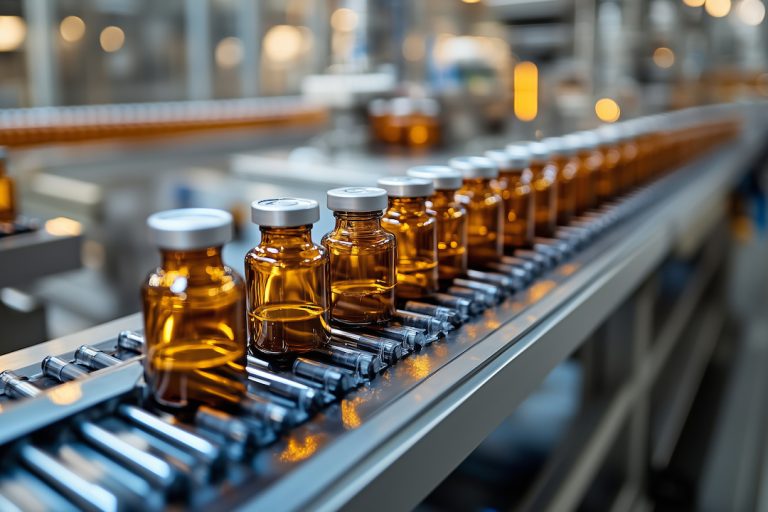
The Syracuse campus operates at 40,000 litres across eight 5,000-litre stainless steel bioreactors, supplemented by over $100 million invested in dedicated ADC conjugation infrastructure including 1,000-litre conjugation suites. LOTTE signed its first ADC production contract in April 2025 with an Asia-based biotech. Five CDMO contracts have now been announced from the Syracuse campus since 2023.
The Songdo Bio Campus in Incheon is the larger bet. A $3.3 billion investment is building three biomanufacturing plants totalling 360,000 litres of capacity by 2030. Plant 1, at 120,000 litres, is targeting GMP readiness by end of 2026 and commercial production in 2027. Plant 2 follows in 2028, Plant 3 in 2030. Combined with Syracuse, total capacity reaches 400,000 litres, exceeding the average production capacity of the world’s top 10 CDMOs.
The sequencing is deliberate. Syracuse generates the compliance track record, client relationships, and FDA inspection history that Asian biotechs and Western pharma companies need to see before committing large-scale commercial production contracts to a newer player. Songdo scales what Syracuse validates.
The Competitive Context
Samsung Biologics, the established Korean CDMO leader, operates five plants in Songdo with approximately 600,000 litres of bioreactor capacity. It has a 14-year head start. LOTTE is not close to matching that scale yet, but the trajectory is aggressive. The $3.3 billion Songdo investment is not a modest expansion. It is a declaration of intent to compete in the same tier.
The CDMO market has structural tailwinds supporting new entrants. Global biologics outsourcing is expanding as mid-size biotechs without manufacturing infrastructure advance complex molecules toward commercialization. Demand for ADC manufacturing capacity specifically has outpaced supply. LOTTE’s decision to invest early in a dedicated ADC facility at Syracuse, before Songdo comes online, positions it in one of the highest-demand segments of the CDMO market at a moment when capacity is constrained.
The Ottimo Pharma expansion is a single contract. It reads like a data point, but it is part of a deliberate pattern: each Syracuse contract builds the evidence base that makes Songdo’s commercial ramp-up easier to execute. LOTTE entered biomanufacturing three years ago. It plans to be a top-ten global CDMO. The two-site strategy is how it gets there.
Sources
- LOTTE Biologics
- BioProcess Insider: Lotte Launches Dedicated ADC Business
- DCAT Value Chain Insights: CDMOs Movers and Shakers 2025
- Seoul Economic Daily: Lotte Biologics Accelerates Global CDMO Orders
- Towards Healthcare: Lotte Biologics CDMO Expansion 2025
- PRNewswire: LOTTE Biologics Begins Full-Scale ADC Operation
Editorial Disclosure
This article is based on a press release issued by LOTTE Biologics and expanded with independent industry and company data. LOTTE Biologics is a privately held subsidiary of LOTTE Group. Ottimo Pharma is a privately held company. No securities are discussed in this article. OTP-01 is an investigational drug candidate in Phase 1/2a clinical trials; it has not received regulatory approval. Capacity and production timeline figures are based on company-disclosed plans and are subject to change. CDMO contract details are based on disclosed information only. The information provided on this website is for informational and educational purposes only. Our content is derived strictly from verified online sources to ensure accuracy and objectivity. This analysis does not constitute financial, investment, or professional advice. Readers are encouraged to consult with qualified professionals before making decisions based on this information. For more information, please see our full DISCLAIMER.