
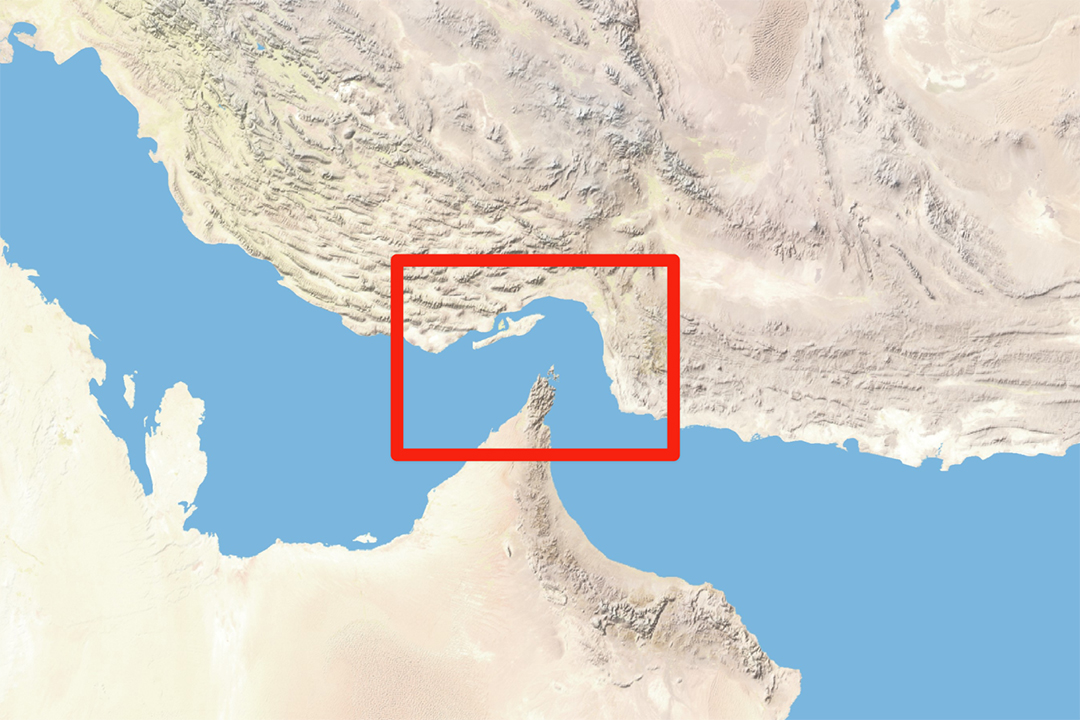
The world just woke up to a new, terrifying reality. Following a series of devastating, high-precision U.S. and Israeli strikes on February 28, 2026, the Islamic Revolutionary Guard Corps (IRGC) has officially declared the Strait of Hormuz closed. This isn’t just a regional flare-up. It is a full-scale assault on the world’s primary energy artery.
I’m looking at the live feeds, and the sheer scale of the disruption is staggering. We’ve discussed “black swan” events for a decade, but this is the flock coming home to roost. Roughly 20 million barrels of oil and 20% of global liquefied natural gas (LNG) pass through that narrow 21-mile stretch of water every single day. If those gates stay locked, the global economy isn’t just slowing down; it’s heading for a structural reset.
The Breaking News: Operation Epic Fury
The weekend began with a calculated decapitation strike. Dubbed Operation Epic Fury by the Pentagon and Operation Lion’s Roar by Israel, the joint mission targeted the heart of the Iranian regime.
- The Death of a Leader: Iranian state media confirmed on March 1, 2026, that Supreme Leader Ayatollah Ali Khamenei was killed during a strike on his office in Tehran. He wasn’t alone. High-ranking officials, including IRGC Commander-in-Chief Mohammad Pakpour, security adviser Ali Shamkhani, and Defense Minister Aziz Nasirzadeh, were also eliminated.
- The Blockade: Tehran’s response was a “Total Deterrence” strategy. While some Iranian officials claim the channel remains open, major shipping lines aren’t taking the bait. Carriers like Maersk, MSC, and Hapag-Lloyd have officially suspended all transits through the Strait.
- The Retaliation: It didn’t stop at words. The IRGC has launched waves of missile and drone attacks targeting Israeli military assets and 27 U.S. bases in the Middle East. One person was killed in Bahrain following a missile interception, and loud explosions continue to rock western Tehran as the kinetic engagement intensifies.
I’ve seen escalations before, but this is a geopolitical rupture. The killing of Khamenei has removed the “clerical off-ramp.” We are now dealing with a cornered military leadership that sees the blockade as its only remaining leverage.
Market Analysis: The $90 Breach and the $150 Threat
The reaction in the futures pits was a violent upward move. Brent crude, which closed at a seven-month high of $72.87 on Friday, spiked by up to 12% at the Monday open before settling.
- Oil Price Trajectory: Brent crude futures are currently trading more than 8% higher, hovering above $78.24 per barrel. Analysts at Bernstein Research warn that a prolonged closure could trigger a spike to $150/bbl, a level that would introduce “material recession risks” into the global economy.
- The Bidding War: Iran exports roughly 1.6 million barrels a day, mostly to China. If that supply is severed, Chinese buyers will be forced to bid up global supplies elsewhere, driving premiums to record highs.
- LNG and Natural Gas: The disruption of exports from Qatar and the UAE removes approximately 83 million tonnes of LNG annually. Bernstein equates this to the 2022 loss of Russian gas, projecting north Asian benchmark LNG prices to surge from $9 to $40 per million BTU.
| Asset | Feb 27 Price | March 2, 2026 Price | % Change |
| Brent Crude | $72.87 | $78.24 | +7.37% |
| Spot Gold | $5,278.01 | $5,365.12 | +1.65% |
| Bitcoin (BTC) | $67,661 | $66,004 | -1.25% |
| TTF Gas | €31.77 | €31.96 | (Volatile) |
Investment Thesis: The Flight to Hard Assets
As of Monday morning, the “fear trade” is in full swing. For institutional and retail portfolios, the “Hormuz Factor” requires a pivot toward hard assets.
1. Gold: The “Pure” Safe Haven
Gold is acting as the ultimate asset of last resort. It hit a historic peak of $5,365.12 per ounce this morning, up 1.65%. I’m watching the “war premium” build in real-time. Investors are fleeing to physical gold as a hedge against a fracturing global order where sea lanes are no longer guaranteed.
2. Bitcoin: The “Risk-On” De-coupling
Despite the “digital gold” narrative, Bitcoin is currently trading like a risk asset. It slid to $66,004, failing to mirror gold’s surge. When the missiles fly, institutional liquidity often exits crypto first to cover margin calls in equities and energy. This decoupling suggests Bitcoin hasn’t yet earned its stripes as a wartime haven.
3. The Defense Sector
The market is pricing in a prolonged engagement. Lockheed Martin and BAE Systems are seeing heavy inflows as the Pentagon’s “Operation Epic Fury” enters its second day. If the U.S. moves to forcefully reopen the Strait, the demand for precision munitions will reach levels not seen in decades.
The Domino Effect: Supply Chain Paralysis
The closure of the Strait is a massive, immediate tax on global trade.
- Maritime Insurance: Major carriers like Hapag-Lloyd have implemented a War Risk Surcharge (WRS) effective March 2, 2026. All ocean carriers have informed of a full suspension of shipping through the Strait, with vessels being rerouted via the Cape of Good Hope.
- Asian Vulnerability: Japan and South Korea are most exposed. With the Nikkei 225 already down 1.54% at the open, the market is pricing in the brutal reality of a region that relies on the Gulf for over 80% of its energy imports.
I’m watching the carrier strike groups. If this turns into a long-term blockade, $78 oil is just a warm-up.
Editorial Disclosure: This report is for informational purposes only. It is based on verified news reports from Al Jazeera, Reuters, Bloomberg, and Trading Economics as of March 2, 2026. This content does not constitute financial or technical advice. Geopolitical situations are highly volatile and subject to rapid change. Please read our full Disclaimer.