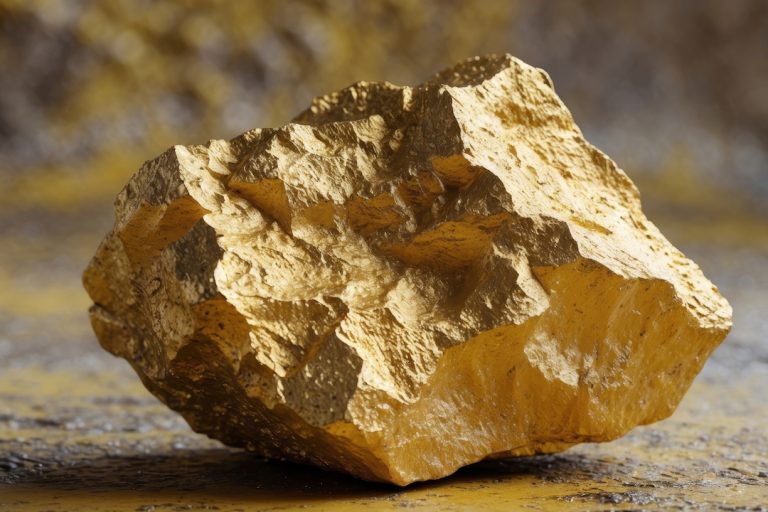
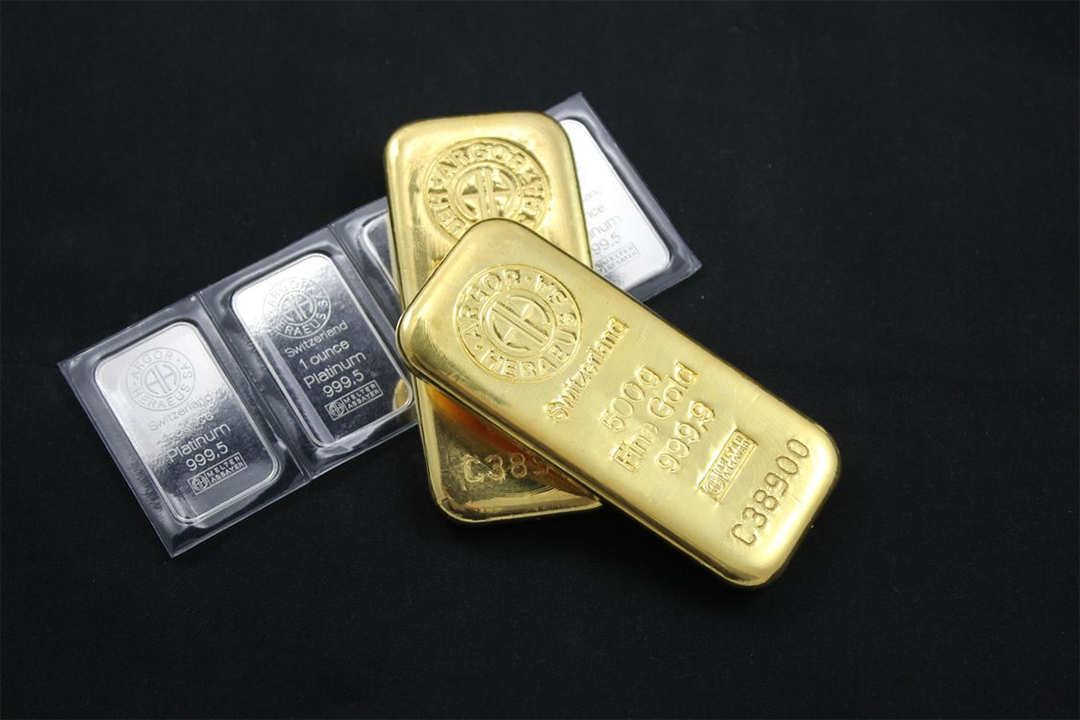
Gold futures are sitting at $4,713 an ounce this morning, up 3.80% on the week. Silver is up 7.54% to $75.48. Platinum is up 4.22% to $1,973. Those are not small moves, and they did not happen in a vacuum. The European Central Bank published a report this week confirming that gold has overtaken US Treasuries in global central bank reserve holdings for the first time since 1996. That is not a technical footnote. It is a structural shift in how the world stores wealth, and it is showing up in the price.
Copper is telling a different story, one built on shortage rather than sentiment. Chile’s output fell 9% in March. Freeport’s Grasberg restart has been pushed back again. Kamoa-Kakula is running at reduced capacity because of a sulfuric acid shortage that traces directly back to a Chinese export restriction. Morgan Stanley is forecasting a 600,000-tonne refined copper deficit in 2026, the largest in more than 20 years. The Commerce Department has to deliver a copper market update to the President before June 30. That date is four weeks away and what comes out of it will move the copper market significantly in either direction.
Underneath both stories, a pair of Canadian juniors had a strong week. Q2 Metals released new drill results from Cisco this morning and closed a $70 million bought deal last week. Silver X Mining delivered record first-quarter results on May 29. The macro and the microcap are pointing in the same direction right now, which is not always the case in this sector.
Gold Just Surpassed US Treasuries as the World’s Most Held Reserve Asset for the First Time Since 1996
The ECB report published June 2 put a number on something the market has been watching build for years. Central banks now hold more than 36,000 tonnes of gold globally, approaching levels last seen during the Bretton Woods era when currencies were tied to the US dollar. The World Gold Council estimates the value of foreign central bank gold holdings is approaching $4 trillion, which now exceeds their roughly $3.9 trillion in US Treasury holdings. China, Poland, Turkey, and India have been the most consistent buyers. New central banks that had been inactive in the gold market for years are entering it. The ECB noted the trend carries implications for global financial markets and the international monetary system that extend well beyond the current price cycle.

Goldman Sachs revised its central bank gold demand model upward on May 19, lifting its estimate to 60 tonnes per month through 2026. That is up from 50 tonnes under its previous methodology, reflecting what the bank describes as unrecorded sovereign buying that its earlier model had missed. Goldman’s year-end gold price target remains $5,400 per ounce. JP Morgan is forecasting toward $5,000 by the fourth quarter. Both are working from the same foundation: institutional demand from sovereign buyers who are not price-sensitive in the way retail or ETF investors are. Central banks do not sell because gold has a bad week. They accumulate on a mandate, and that mandate is not changing.
For junior gold miners, the structural shift in reserve demand is the most durable argument for elevated gold prices that has emerged in this cycle. Rate environment, inflation expectations, dollar strength — all of those factors move gold in the short term and can reverse. The decision by dozens of sovereign wealth funds and central banks to structurally reduce their US Treasury exposure in favor of gold does not reverse on a Fed statement. It took years to build and it will take years to unwind. The juniors with defined resources, low-cost jurisdictions, and a credible path to production are operating against a structural demand backdrop that has not existed since the early 2000s.
The Copper Deficit Is the Largest in 20 Years and the June 30 Section 232 Update Will Define the Second Half
Morgan Stanley is forecasting a 600,000-tonne refined copper deficit in 2026, the largest in more than two decades. JP Morgan puts it at 330,000 tonnes. The International Copper Study Group revised its 2026 balance from a 209,000-tonne surplus forecast in October 2025 to a 150,000-tonne deficit in May 2026. Three separate institutions, three separate methodologies, the same directional conclusion. Supply cannot keep up with demand.
The supply side failures are not concentrated in one place. Chile’s national copper output fell 9.04% year on year in March 2026, according to Cochilco. Codelco was down 10%. BHP’s (ASX: BHP) Escondida fell 15.75%. The Glencore (LON: GLEN) and Anglo American (LON: AAL) Collahuasi joint venture contracted 10.80%. Freeport-McMoRan (NYSE: FCX) pushed the full restart of the Grasberg mine in Indonesia from 2027 to 2028. Ivanhoe Mines’ (TSX: IVN) Kamoa-Kakula operation in the Democratic Republic of Congo is running at reduced capacity because of sulfuric acid shortages caused by Chinese export restrictions on the reagent, which is critical to roughly 15% of global copper processing. When disruptions span Chile, Indonesia, and the DRC simultaneously, there is no cross-compensation. The market cannot offset losses at one mine with gains at another.
The policy layer sits on top of all of that. The Commerce Department is required to deliver a copper market update to the President before June 30, after which additional Section 232 tariff action on refined copper becomes possible. A 50% tariff on copper products has been in place since August 2025 and was restructured on April 6, 2026 to apply to the full customs value of imported articles. Goldman Sachs forecasts a tariff of at least 25% on refined copper following the June 30 review. COMEX copper stocks have risen sharply since the tariff probe began as traders reposition metal toward US delivery. The spread between COMEX and LME prices reflects exactly that dynamic. For junior copper developers with US-based or near-domestic projects, the tariff regime is transforming their competitive position relative to imported refined copper. Projects that were marginal on pure cost economics two years ago are being re-evaluated against a tariff-protected domestic market. That repricing has not yet fully worked through junior valuations.
Q2 Metals Closed a $70 Million Financing Last Week and Released Drill Results This Morning at Cisco
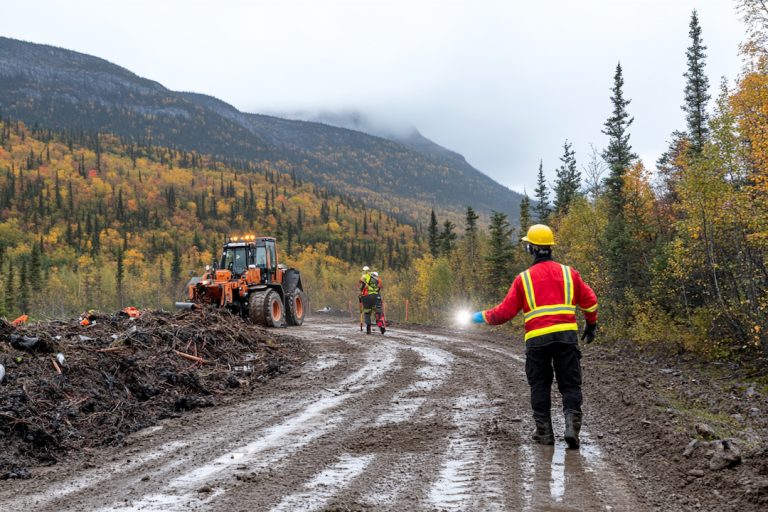
Q2 Metals Corp. (TSX-V: QTWO; OTCQB: QUEXF) announced its inaugural inferred mineral resource estimate at the Cisco Lithium Project on April 20, defining a total combined inferred resource of 295 million tonnes grading 1.36% Li₂O. The deposit sits in Quebec’s James Bay region, 6.5 kilometers from the paved, all-season Billy Diamond Highway, which connects to rail infrastructure and deep sea ports beyond. CEO Alicia Milne described the result as positioning Cisco among the top hard rock lithium projects globally. That is not promotional language for a 295 million tonne inferred resource at 1.36% Li₂O. It is a reasonable technical characterization.
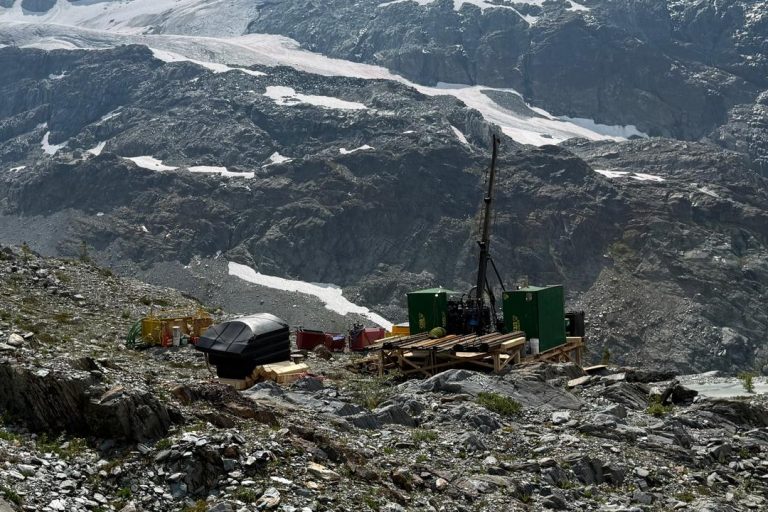
On May 27, Q2 announced the 2026 Summer Exploration Program and confirmed the completion of a $70 million bought deal financing backed by institutional support. The financing came after a resource estimate that put Cisco in a peer group most retail investors have not yet found. Then this morning, Q2 released drill results from Hole 71 in the 2026 winter drill program showing 264.6 meters at 1.84% Li₂O and 152.9 meters at 1.59% Li₂O. The deposit remains open in all directions with multiple high-priority targets yet to be drill-tested across the 41,253 hectare project area.
The lithium market context makes the timing meaningful. The Northern Miner noted in April that the global lithium market is set to enter a near-decade-long deficit as insufficient mine investment weighs on supply. UBS is forecasting spodumene concentrate at US$1,800 per tonne in 2026 as the start of a deficit phase. Canaccord has brought forward its tightening thesis to 2026 with peak assumptions of $2,250 per tonne for spodumene and $25,000 per tonne for lithium chemicals in the cycle. CATL earmarked $4.4 billion to push deeper into mining this year in direct response to the structural supply shortfall. Q2 Metals has one of the largest hard rock lithium resources in the Americas, a $70 million institutional backing, and new drill results out today. The market is still working out what that combination is worth.
Silver X Mining Turned Cash Flow Positive in Q1 as Silver Averaged $91 an Ounce at the Mine Gate
Silver X Mining Corp. (TSX-V: AGX; OTCQX: AGXPF) reported record first-quarter 2026 results on May 29 directly from its Nueva Recuperada Project in Peru. Net income came in at $4.6 million, against a net loss of $0.3 million in the same quarter a year earlier. Operating income was $7.0 million, up 791%. EBITDA reached $6.1 million. The company’s silver realized price averaged $91.39 per ounce in Q1, up 189% year on year. Gold averaged $5,131 per ounce.
Those realized prices are the story underneath the financial results. Silver X is not a royalty company or a streaming company collecting a percentage of someone else’s production. It is a producer, hauling ore out of the ground in Peru and selling it. When the realized silver price at the mine gate is $91.39 an ounce, the margin structure of a well-run silver operation changes completely. CEO José M. Garcia said Q1 represented a defining quarter, with record revenue, a return to profitability, and the largest financing in company history all arriving in the same period. The $50.3 million senior secured convertible debenture closed March 18, 2026 also enabled the acquisition of the Pampas Gold-Silver Project, transitioning Silver X into a multi-asset platform in central Peru.
Silver X also graduated to the OTCQX Best Market on May 12, moving up from the OTCQB. That is a capital markets signal as much as a listing milestone. The OTCQX graduation opens the stock to US institutional and retail investors who could not or would not hold an OTCQB-listed name. The timing, immediately ahead of record quarterly results, was not accidental. For smaller silver producers demonstrating actual profitability at current prices rather than projecting it, the access to US investor capital is a meaningful re-rating catalyst.
What to Watch
June 30 Section 232 copper update: the Commerce Secretary’s report to the President is the single biggest near-term catalyst in the copper market. Goldman Sachs expects a tariff of at least 25% on refined copper to follow. Any signal before June 30 about the direction of that decision will move copper equities.
Federal Reserve June 17 to 18 meeting: no rate change expected but the statement language matters for gold. Any shift toward easing or a more dovish tone reduces the opportunity cost of holding a zero-yield asset and removes one of the remaining headwinds for bullion.
Goldman Sachs $5,400 gold target: the bank’s year-end forecast is $5,400 per ounce from current levels of $4,713. The central bank demand revision published May 19 was the basis for maintaining that target. Watch for any Q2 central bank purchase data that confirms or adjusts the 60 tonnes per month buying rate Goldman is now modeling.
Q2 Metals summer drill program: the 2026 summer program is now underway following the $70 million bought deal. New drill results from step-out holes and targets beyond the main Cisco zone will be the catalysts for resource expansion. The deposit is open in all directions.
Silver X Q2 2026 results: with Q1 establishing a profitable baseline at current silver prices and the $50.3 million debenture providing capital to advance the Pampas acquisition and ramp production, Q2 results will test whether the profitability is sustainable or was driven by a one-time price spike. Silver at $75 per ounce in the current week suggests the pricing environment has not deteriorated.
Sources
- Mining.com: Gold overtakes US Treasuries in global reserve shift, ECB report June 2 2026
- Kitco News: Goldman Sachs revises central bank gold demand model to 60 tonnes per month, $5,400 year-end target, May 19 2026
- JP Morgan Global Research: Gold price forecast 2026, $5,000 per ounce by Q4
- Crux Investor: Mine supply disruptions and Section 232 tariff risk, Morgan Stanley 600,000-tonne deficit forecast, May 2026
- Congress.gov: Section 232 copper tariffs, June 30 Commerce Secretary update requirement, April 23 2026
- White and Case: United States modifies Section 232 copper tariffs, full customs value applies April 6 2026
- Q2 Metals GlobeNewswire: Inaugural inferred mineral resource estimate 295 Mt at 1.36% Li2O, Cisco Lithium Project, April 20 2026
- Q2 Metals GlobeNewswire: 2026 Summer Exploration Program and $70 million bought deal financing, May 27 2026
- Q2 Metals drill results via InvestingNews: 264.6 meters at 1.84% Li2O and 152.9 meters at 1.59% Li2O, Drill Hole 71, June 2 2026
- Silver X Mining Corp: Record Q1 2026 results, $4.6M net income, $91.39 silver realized price, May 29 2026
- Silver X Mining Corp: Graduation to OTCQX Best Market, May 12 2026
- Mining.com: Central bank gold buying momentum carries into 2026, WGC forecast 850 tonnes, March 2026
- The Northern Miner: Global lithium market set to enter near-decade-long deficit, UBS and Canaccord forecasts, April 2026
Editorial Disclosure
This analysis is based entirely on publicly available information including company press releases sourced directly from company websites and named wire services, regulatory filings, and verified market data. Securities discussed include Q2 Metals Corp. (TSX-V: QTWO; OTCQB: QUEXF), Silver X Mining Corp. (TSX-V: AGX; OTCQX: AGXPF), BHP Group Limited (ASX: BHP), Glencore PLC (LON: GLEN), Anglo American PLC (LON: AAL), Freeport-McMoRan Inc. (NYSE: FCX), and Ivanhoe Mines Ltd. (TSX: IVN). Large-cap mining companies are referenced for sector context only. aktiego.com has not received any compensation from any company mentioned, their management, investor relations representatives, or any third party. No staff member or principal of aktiego.com holds a position in any security mentioned at the time of publication. All company-specific data verified against original press releases from company websites or named wire services. Resource estimates cited are NI 43-101 compliant and sourced to named company press releases. All commodity price data sourced to named instruments, timestamped May 25 to June 2, 2026. Analyst forecasts attributed to named firms and sourced to named published reports. Forward-looking commentary regarding commodity prices, tariff decisions, production timelines, and market developments is opinion only. References to individual companies are for market context and analytical purposes only and do not constitute investment recommendations. All securities carry significant investment risk including total loss of capital. Coverage on aktiego.com is provided for informational and educational purposes only. aktiego.com is not a registered investment advisor. Nothing in this article constitutes financial, investment, or professional advice. Readers are encouraged to conduct their own due diligence and consult a qualified financial advisor before making any investment decisions. For more information please see our full DISCLAIMER.