
Our last two lessons covered the spread and the order type. This one covers a question that comes before both, how much should you actually put into a position on a stock that barely trades at all.
A stock trading $10,000 a day in total dollar volume isn’t unusual on the CSE or the far end of the TSXV. It’s also a completely different animal than a stock trading $10 million a day, and sizing a position the same way on both is how people get stuck.
What $10K a Day Actually Means
Average daily dollar volume is the share price multiplied by the shares traded, averaged over some recent period. It’s a better measure than share count alone, since a $50,000-share day in a five-cent stock is a very different amount of real capital changing hands than a 50,000-share day in a five-dollar stock.
A stock trading $10,000 a day in dollar volume means that on an average day, only ten thousand dollars worth of shares change hands across every buyer and seller combined. That’s not your position size. That’s the entire market for that stock, for one day.
Why Percentage of Daily Volume Matters More Than Dollar Amount
Institutional trading desks think about this constantly, and one common guideline is instructive even at retail scale. A widely used risk-management heuristic caps a single day’s trading at no more than 10% of a security’s average daily volume, precisely because trading a larger share of the day’s total activity starts to move the price against the trader doing it.
Regulators think about this too. A proposed SEC rule on fund liquidity classification set a 20% of average daily volume threshold as the point past which a trade is considered to have significant price impact. That’s a formal regulatory reference point for exactly the same idea the 10% institutional guideline captures informally, trading a meaningful share of a single day’s volume moves the price.
Neither number is a hard rule for a retail investor buying a few thousand dollars of a small cap. They’re both useful anchors for the same underlying point. The smaller the stock’s daily volume, the smaller your position needs to be relative to your total capital, not because the company is necessarily worse, but because the market for its shares is thinner.
A Worked Example
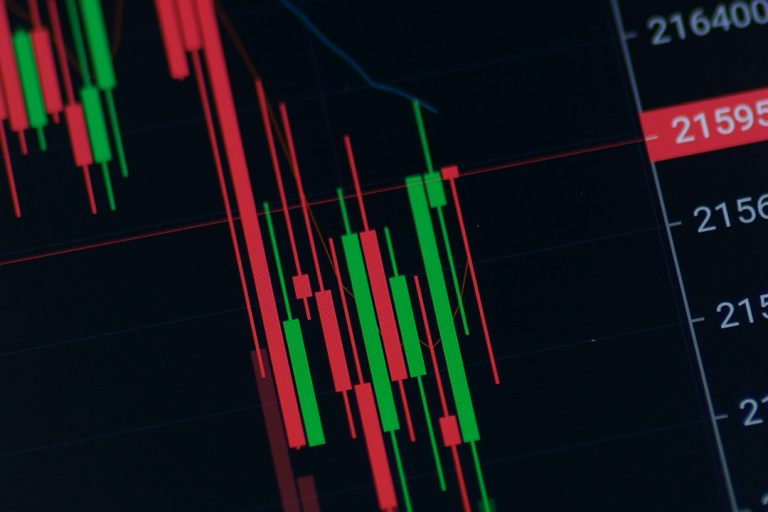
Take a stock trading $10,000 a day in dollar volume. A $2,000 buy order represents 20% of that entire day’s activity, using the SEC’s own reference point for where price impact becomes significant. Buying that position in one order on a thin day likely means paying up through several price levels to fill it, and the stock’s own daily chart will show your trade as a visible spike.
Now consider selling that same $2,000 position later. If daily volume hasn’t grown, you’re facing the identical problem in reverse, and this time you’re the one with the incentive to get a price rather than set one. If the stock has also dropped and other holders are trying to exit at the same time, the available liquidity on the way out can be even thinner than what greeted you on the way in.
Exiting Is the Real Risk, Not Entering
Most new investors think about position sizing purely in terms of getting in. The harder problem on a thin stock is getting out, particularly if you need to exit quickly, or if you’re trying to exit at the same time other holders are.
This connects directly to the spread and order type mechanics covered in our earlier lessons. A wide spread on a thin stock already costs you money on entry and exit separately from position size. Add a position that represents a large share of daily volume, and a market order to exit can walk the price down through multiple levels before it fills completely, well beyond what the last quoted price suggested you’d receive.
A Practical Sizing Framework
Check the stock’s actual average dollar volume over the last few weeks, not just a single unusual day, before deciding how much to buy. Decide what percentage of that daily volume you’re comfortable representing, treating figures in the 10% to 20% range as a ceiling worth respecting rather than a target to hit. On thin names, staying well under that ceiling gives you more room to exit without materially moving the price.
Consider spreading a larger purchase across several days instead of one order, using limit orders as covered in our previous lesson. The same logic applies in reverse when it’s time to sell. And size the position with your exit in mind from the start, not just your entry, since a position you can comfortably buy over a few days might still be uncomfortably large to sell quickly if the situation changes.
Key Takeaways
- Average daily dollar volume, not share count alone, is the right way to judge how thin a stock actually trades.
- Institutional desks often cap a single day’s trading at 10% of average daily volume. A proposed SEC rule uses 20% as a threshold for significant price impact. Both are useful anchors, not hard rules, for retail position sizing.
- On a stock trading $10,000 a day, a $2,000 position already represents a meaningful share of the entire day’s activity.
- Exiting a position is often harder than entering one, size with your exit in mind, not just your entry.
Related Reading
- Market Makers and Bid-Ask Spreads on Thinly Traded Stocks
- Why Market Orders Are Dangerous on Thin Volume (and How to Use Limit Orders)
- Why Liquidity Risk Matters More Than Volatility for Small Caps
- Short Selling Small Caps: Why It’s Harder and Riskier Than It Looks
Sources
- Positioned: Average Daily Volume (ADV) Definition, Traders’ Glossary
- BestEx Research: Rethinking Participation Rates and RATS, Empirical Insights for Trading and Regulation
- U.S. Securities and Exchange Commission: A Characterization of Market Quality for Small Capitalization US Equities
Editorial Disclosure
This lesson is based on publicly available information including regulatory research analysis and independent trading education references on average daily volume and market impact. It does not cover, endorse, or recommend any individual company, stock, security, trading platform, or broker, and the figures and worked examples in this lesson are illustrative rather than guidance for any specific real trade. aktiego.com has not received compensation from any exchange, listed company, IR firm, brokerage, or third party in connection with this lesson. No staff member or principal of aktiego.com holds a position influencing this content. Position sizing guidelines referenced here are heuristics used in parts of the industry, not universal rules or regulatory requirements for retail investors, and should be adapted to your own risk tolerance and circumstances. This lesson is provided for informational and educational purposes only. aktiego.com is not a registered investment advisor. Nothing in this lesson constitutes financial, investment, legal, or professional advice. Investing in small-cap and early-stage companies carries significant risk, including potential total loss of capital. Readers are encouraged to conduct their own due diligence and consult a qualified financial advisor before making any investment decisions. For more information, please see our full DISCLAIMER.