Anthropic filed confidentially for an IPO on Monday. Microsoft announced its first proprietary AI models on Tuesday. By Wednesday, both stories had been absorbed into a larger question that every enterprise software company is now sitting with: what is my product worth in a world where the tools that build software are accelerating faster than the software itself? Wall Street answered that question in May by selling off the sector broadly, then reversed course as the data came in. The rebound did not resolve the underlying tension. It just pushed it into the next quarter.
Anthropic Filed for an IPO at a $965 Billion Valuation and Every AI Exit Multiple Just Got Reset
Anthropic confidentially filed for an initial public offering on June 1, days after closing a $65 billion Series H funding round that pushed its valuation to $965 billion, surpassing OpenAI to become the most valuable private AI company in the world. OpenAI is also readying its own confidential filing. Microsoft (Nasdaq: MSFT) has invested $13 billion in OpenAI and $5 billion in Anthropic, making it a significant stakeholder in both companies now racing each other to the public market.
A $965 billion valuation for a private AI company is not a number that fits inside any conventional valuation framework. It is not a discounted cash flow number. It is a statement about market position and competitive moat in a technology category that is repricing faster than the models that drive it. The question for public market investors will be whether the growth trajectory that justifies that number is sustainable at the scale required to support it as a public company with full disclosure obligations and quarterly earnings scrutiny.
The IPO filing matters for the broader AI ecosystem in two ways. First, it sets a benchmark. Every smaller AI company that has raised private capital at a multiple of revenue will now be evaluated against whatever Anthropic trades at in the public market. If Anthropic lists at a revenue multiple that compresses from its private valuation, the downstream effect on smaller AI company valuations could be significant. If it holds or expands, it validates the entire sector’s private pricing. Second, the dual IPO race between Anthropic and OpenAI concentrating institutional attention on frontier AI as a public investment category will lift the visibility of the entire space, including smaller AI infrastructure, application, and tooling companies that have been building in relative quiet.
Microsoft Launched Its Own AI Models at Build and Is Now Competing With the Companies It Funds
Microsoft unveiled MAI-Code-1-Flash and MAI-Thinking-1 at its Build developer conference in San Francisco on June 2 and 3, its first proprietary AI models. MAI-Code-1-Flash takes written descriptions and generates source code for applications and websites. MAI-Thinking-1 is a reasoning model available in private preview through Microsoft Foundry. Microsoft claims MAI-Thinking-1 was preferred over Claude Sonnet 4.6 in blind evaluations run by its independent human rating partner Surge, and says the model matches Claude Opus 4.6 on coding benchmarks. Those are direct comparisons to the Anthropic models Microsoft itself funded.
The strategic shift is significant and worth understanding clearly. Microsoft has been the infrastructure and investment layer of the AI boom: Azure cloud, equity stakes in OpenAI and Anthropic, and GitHub Copilot integrating third-party models from multiple providers. That position was structurally comfortable because Microsoft’s success was tied to the success of the frontier AI labs it funded. Building proprietary models changes that. Microsoft is now a model competitor to OpenAI and Anthropic while simultaneously being their largest cloud infrastructure customer and one of their biggest investors. That conflict of interest will become more visible as the models mature and Microsoft starts routing Azure workloads toward its own stack.
For smaller AI developers building on Azure, the announcement raises a specific question. If Microsoft is now building models that compete with Anthropic and OpenAI, how does it manage model selection, pricing, and feature development for its own competing models versus the third-party models it also hosts? Developers who have built production systems on Claude or GPT-4 via Azure are now building on a platform whose operator has a financial incentive to route them toward its own models. The dynamics of platform competition in AI are getting complicated in ways that favor developers who have diversified their model dependencies.
Cursor Signed a $60 Billion SpaceX Deal and the AI Coding Market Is Consolidating Faster Than Anyone Expected
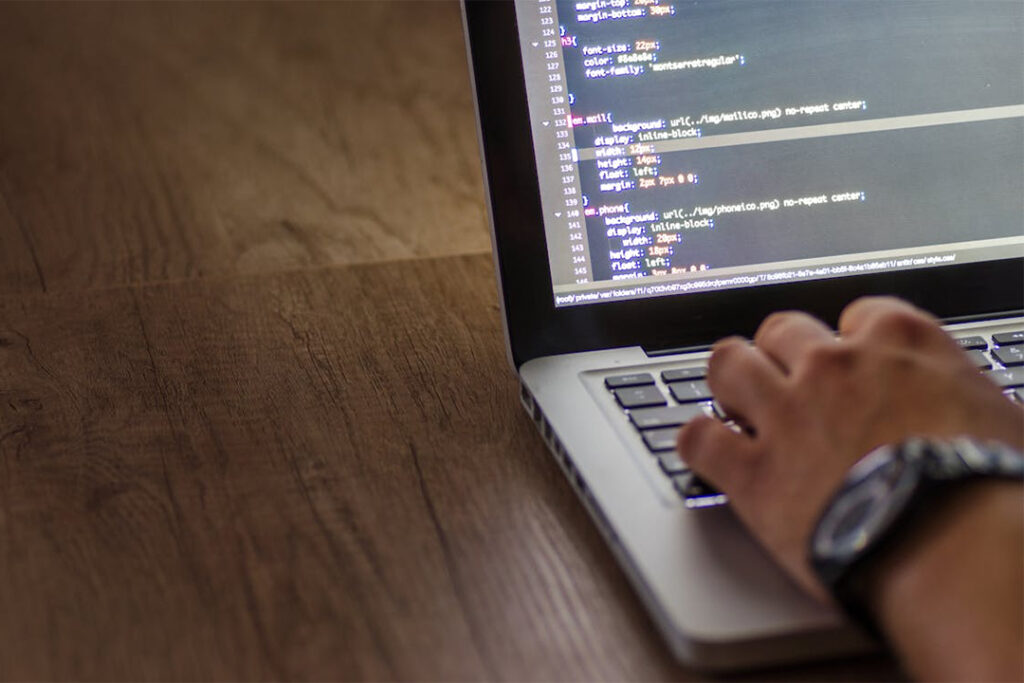
In May, Cursor signed an agreement with SpaceX giving Elon Musk’s company the right to acquire the startup for $60 billion, according to CNBC. Cursor is an AI-powered code editor that has become the dominant tool in the vibe coding movement, where developers and non-technical users generate functional software applications through natural language prompts rather than traditional programming. The $60 billion acquisition right is a data point on how the largest technology and industrial companies are valuing AI coding capability as a strategic asset.
Vibe coding is not a niche development. Vibe coding refers to the practice of building software applications entirely through conversational AI prompts, without writing code directly, using tools like Cursor, GitHub Copilot, and Claude Code to translate intent into working applications at a speed and cost that traditional software development cannot match. The AI coding tools market has concentrated rapidly around a small number of players. Anthropic’s Claude Code has emerged as a leading enterprise coding assistant. OpenAI’s Codex is competing directly. Microsoft’s GitHub Copilot is the incumbent with the largest installed base. Google is emphasizing coding tools in Gemini. New entrants are finding the bar for differentiation rising every quarter.
The consolidation signal from Cursor is that the largest enterprise buyers of AI coding capability are moving from evaluation to commitment. SpaceX acquiring the right to buy Cursor for $60 billion is not a company buying a software tool. It is an industrial operator internalizing the capability to build and iterate software at machine speed as a core operational function. That shift, from AI coding as a developer productivity tool to AI coding as an industrial capability, is the trend that defines what the market will look like in two years. The smaller companies that get acquired into that trend are the ones with genuine differentiation in specific domains, languages, or enterprise verticals where the general-purpose tools have not yet dominated.
Software Stocks Sold Off on Vibe Coding Fear Then Rebounded and the Underlying Question Did Not Go Away
Wall Street started selling software stocks in May on concern that AI coding tools had reached the point where entire software products could be vibe coded into existence by non-technical users, eliminating the need for the companies that built those products over years. The sector sold off broadly. Then it rebounded. The pattern was familiar: fear of displacement, followed by the realization that the displacement thesis, while directionally correct, was operating on a longer timeline than a single quarter’s earnings.
The underlying question did not resolve. It just moved to Q3. The companies most exposed to vibe coding displacement are the ones with thin product moats, high price points relative to what a vibe-coded alternative could deliver, and customer relationships that are not embedded deeply enough in enterprise workflows to create switching costs. Companies with deep data integrations, complex compliance requirements, or mission-critical process dependencies are significantly more protected than point solutions or productivity tools that a developer could replicate in a weekend with Claude Code.
For smaller enterprise software companies, the practical read is about where their product sits on that spectrum. A standalone analytics tool that surfaces data in a specific format is more exposed than a workflow management platform embedded in a customer’s procurement process. A point solution that automates a single repetitive task is more exposed than a system of record that multiple teams depend on. The vibe coding wave does not wipe out enterprise software. It accelerates the consolidation of value toward the products that are genuinely hard to replace, and it does that faster than the traditional competitive dynamics of the software industry would have.
What to Watch
Anthropic IPO timeline: the confidential filing on June 1 starts a process that typically runs three to six months before a public listing. Watch for the S-1 registration statement, which will be the first public view of Anthropic’s revenue, margins, and customer concentration. That document will reset AI sector valuation frameworks more definitively than any analyst note.
OpenAI IPO filing: OpenAI is readying its own confidential filing. Whether it files before or after Anthropic will affect which company sets the public market benchmark for frontier AI valuation. Watch for any announcement of an underwriter selection or filing date.
Microsoft MAI model performance data: MAI-Thinking-1 is in private preview through Microsoft Foundry. Developer feedback on real-world performance versus the stated benchmark comparisons to Claude Opus 4.6 will be the first independent read on whether Microsoft’s model claims hold up outside the lab. Watch developer forums and early adopter reports.
Software sector earnings: Q2 2026 earnings season begins in late July. The first full quarter with AI coding tools at current capability levels will produce the data that either confirms or refutes the vibe coding displacement thesis. Watch for commentary on customer churn, new customer acquisition costs, and any changes in net revenue retention among smaller enterprise software companies.
Sources
- CNBC: Anthropic confidentially files for IPO at $965 billion valuation after $65 billion Series H, June 1 2026
- Euronews Next: Microsoft launches MAI-Code-1-Flash and MAI-Thinking-1 at Build 2026, competes with Anthropic and OpenAI, June 3 2026
- CNBC: Microsoft and Google take on Anthropic and OpenAI in AI coding models, Cursor SpaceX $60 billion deal, June 1 2026
- LLM Stats: AI model releases and updates June 2026 tracker
Editorial Disclosure
This analysis is based entirely on publicly available information including press releases, earnings disclosures, and verified news sources. Securities discussed include Microsoft Corporation (Nasdaq: MSFT), Alphabet Inc. (Nasdaq: GOOGL), and Meta Platforms Inc. (Nasdaq: META). Anthropic PBC is a private company referenced in the context of its IPO filing and funding round. OpenAI is a private company referenced in the context of its IPO preparations. Cursor is a private company referenced in the context of the SpaceX acquisition rights agreement. SpaceX is a private company. aktiego.com has not received any compensation from any company mentioned, their management, investor relations representatives, or any third party. No staff member or principal of aktiego.com holds a position in any security mentioned at the time of publication. All information is sourced from named published news sources. Private company revenue and valuation figures cited are sourced to named published reports and not independently verified. Forward-looking commentary regarding IPO timelines, model performance, and market developments is opinion only. References to individual companies are for market context and analytical purposes only and do not constitute investment recommendations. All securities carry significant investment risk including total loss of capital. Coverage on aktiego.com is provided for informational and educational purposes only. aktiego.com is not a registered investment advisor. Nothing in this article constitutes financial, investment, or professional advice. Readers are encouraged to conduct their own due diligence and consult a qualified financial advisor before making any investment decisions. For more information please see our full DISCLAIMER.