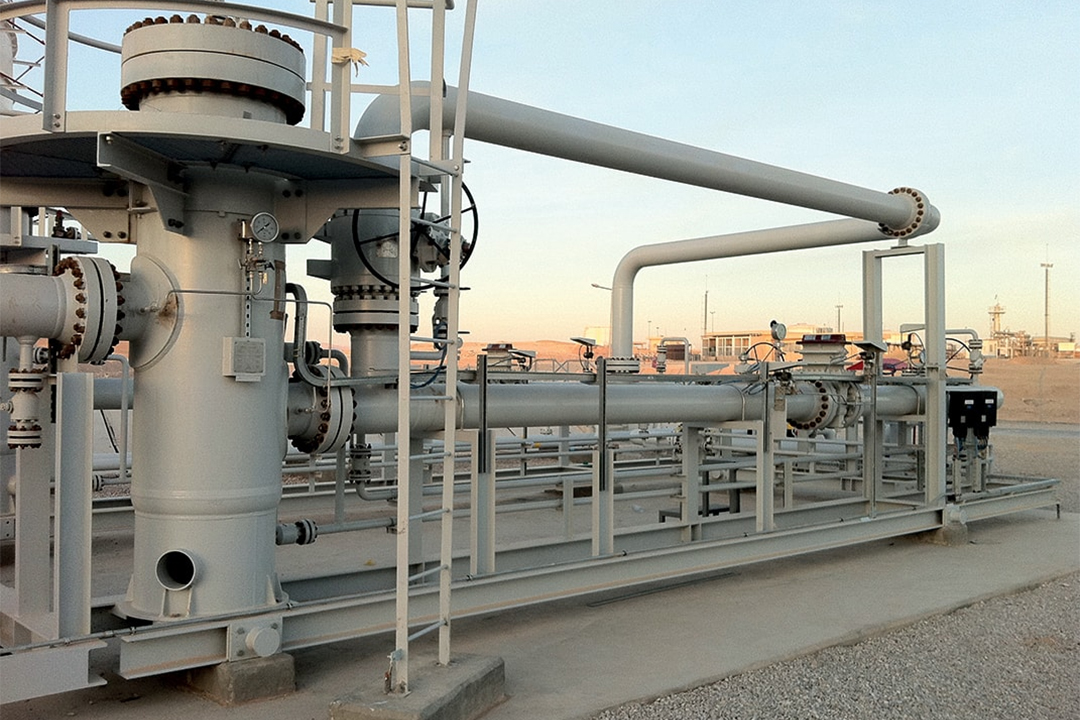
The global midstream oil and gas filtration market is set to grow steadily, from $2.8 billion in 2025 to $3.73 billion by 2030, a CAGR of 5.9 percent. Growth is driven by stricter environmental rules, more pipelines and LNG terminals, and improvements in filtration technology.
LNG expansion is a major factor, with over 90 bcm of capacity approved in 2025. Filtration systems are needed to remove impurities from oil and gas, keeping pipelines, compressors, and storage systems running safely.
For investors, this is a defensive growth market, particularly in high-margin filtration technologies. North America is the largest market, while Asia Pacific is the fastest-growing. Companies like Parker Hannifin (NYSE: PH) and Eaton (NYSE: ETN) have posted strong gains in 2026, up 6.07 percent and 9.37 percent so far.
Market Overview
Midstream filtration focuses on cleaning oil and gas during transportation, storage, and processing. Filters remove liquids, solids, and other contaminants, protecting equipment and helping companies comply with emissions regulations.
Market growth is supported by:
- Tighter regulations: Methane and air pollution rules encourage the use of more efficient filtration systems.
- Infrastructure growth: US gas production reached 18.5 Bcf per day in 2024, up 6 percent. This boosts filtration demand for LNG plants and pipelines.
- Better technology: New coalescers, cartridge filters, and filter media last longer, resist chemicals better, and cost less to maintain.
Market Numbers:
- 2024: $2.65 billion
- 2025: $2.8 billion
- 2030 projected: $3.73 billion
- CAGR (2025–2030): 5.9 percent
Segment Highlights
Filter Technology:
- Coalescer filters lead the market with 27 percent of the share. They remove liquids and aerosols effectively.
- Cartridge filters are second, popular for modular design and easy maintenance.
Filter Media:
- Fiberglass holds the second-largest share. It is durable, chemical-resistant, and efficient at removing contaminants.
- Synthetic polymers are growing fastest, offering strong performance in tough conditions.
Applications:
- Gas processing plants lead the market due to high impurity levels.
- LNG processing is growing quickly because new facilities are being built worldwide.
Filtration Phase:
- Oil filtration is the largest and fastest-growing segment.
- Gas filtration is growing as high-pressure transmission pipelines expand.
Regions:
- North America is the largest market, driven by US LNG and Canadian pipelines.
- Asia Pacific is the fastest-growing, with investments in China, India, and other countries expanding gas infrastructure.
Investor Opportunities
This market is a steady growth sector with several ways for investors to benefit:
- Innovation and Manufacturing: Companies making advanced filters and media are likely to win business. Retrofitting older pipelines and terminals creates recurring revenue.
- Infrastructure Growth: Expanding LNG capacity and pipelines will increase the need for filtration.
- Regional Opportunities: Asia Pacific offers high growth potential. North America provides stability and steady revenue from aftermarket services.
Key Public Companies
| Company | YTD 2026 Change | Notes |
|---|---|---|
| Parker Hannifin (NYSE: PH) | +6.07% | Acquired Filtration Group for $9.25 billion in 2025. Strong industrial filter portfolio |
| Eaton (NYSE: ETN) | +9.37% | Launched high-performance filters. Benefits from pipeline integrity focus |
| CECO Environmental (NASDAQ: CECO) | +15.97% | Expanded in emissions control through acquisitions |
| Pentair (NYSE: PNR) | +1.08% | Strong liquid filtration portfolio for storage and midstream |
| 3M (NYSE: MMM) | -2.25% | Diversified media expertise. Growth in synthetic polymers possible |
| Danaher (NYSE: DHR) | -1.60% | Pall leads in coalescers and aftermarket services |
| Donaldson (NYSE: DCI) | N/A | Air and liquid filters. Exposure to midstream filtration |
Private companies like Jonell Systems and Graver Technologies could be attractive for M&A opportunities. Broader exposure is possible through energy ETFs such as XLE or IYE.
Risks
- Supply Chain Pressure: Rising costs for steel, alloys, and filter media could delay projects.
- Operational Challenges: Variability in feed and fouling can increase maintenance costs.
- Market Volatility: Transitioning to gas or low-carbon fuels may shift demand.
- Competition: Many small companies offer customized solutions, challenging bigger players.
Broader Perspective
This market aligns with global energy security and environmental goals. As LNG, gas pipelines, and low-carbon fuels grow, filtration systems will remain essential. Over the next 3 to 5 years, Parker Hannifin and Eaton are strong candidates for steady returns in the 10 to 15 percent range, while also benefiting from digital monitoring and retrofit opportunities.
Forward-looking information is subject to risks and uncertainties. Please read our full DISCLAIMER.