Sigenergy just opened a $70 million AI-powered factory — and it makes a battery pack every 15 seconds
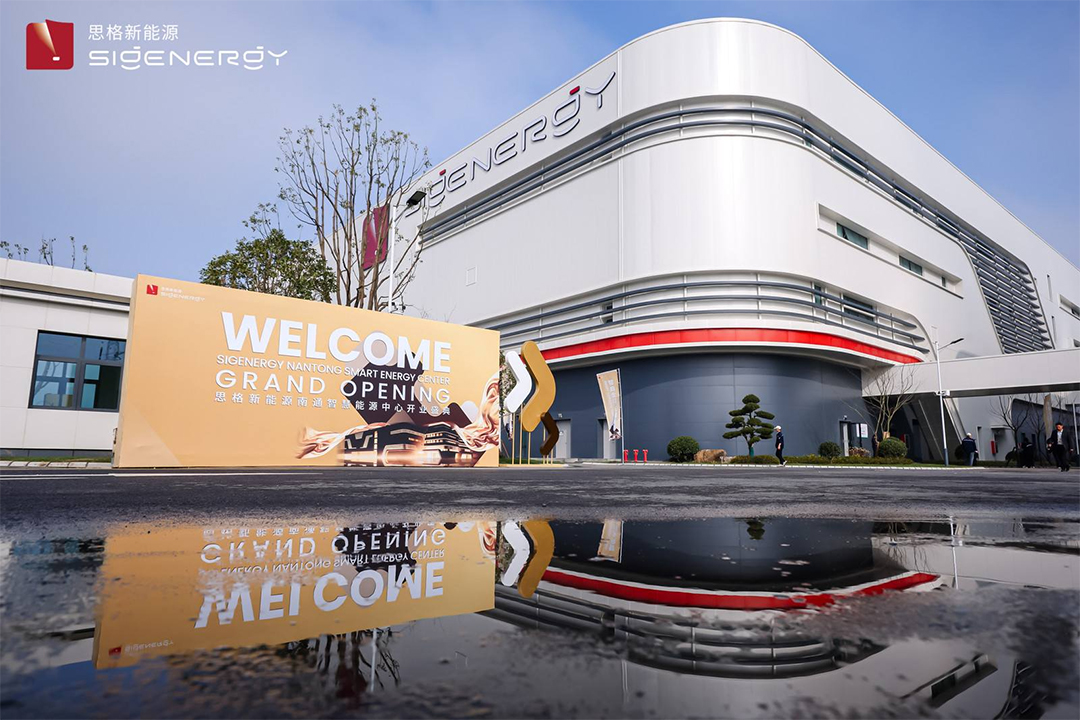
Sigenergy officially opened its brand new Nantong Smart Energy Center on March 13, 2026, in Jiangsu Province, China. Nearly 2,000 people from more than 50 countries showed up for the opening. That included CEOs, founders, and senior executives from the company’s biggest distribution and installation partners around the world. Along with the factory opening, Sigenergy announced a new AI strategy and launched three new energy products. It was, by any measure, a significant moment for a company that has quietly become one of the most globally connected names in clean energy.
What this factory actually does, in plain terms
The Nantong Smart Energy Center is not your average factory. It covers 136,000 square meters, which is roughly the size of 19 football fields. Sigenergy invested RMB 500 million, approximately USD 70 million, to build it. The factory can produce more than 300,000 inverters and battery packs every single year.
But the speed is what really stands out. The factory produces one battery pack every 15 seconds and one inverter every 21 seconds. That level of output is only possible because almost everything inside is automated and connected. Manufacturing systems, warehouse systems, and energy management systems all talk to each other in real time. As a result, the factory can adjust production, move materials, and fix issues without human intervention slowing things down.
The quality numbers back this up. Automated welding with visual inspection achieves a 99.9% yield rate. For context, that means fewer than one in every thousand units has a defect. For customers buying these products in Europe or Australia, where replacing a faulty battery system is expensive and disruptive, that consistency matters enormously.
What “AI in All” actually means for everyday people
Sigenergy used the factory opening to announce its new “AI in All” strategy. The name sounds technical, but the idea behind it is straightforward. The company wants artificial intelligence to be built into everything it makes, not added on as an extra feature.
Think of it this way. A basic solar battery system stores energy and releases it when you need it. A smart one, with AI built in, learns your household habits, predicts when energy prices will spike, and automatically adjusts how it charges and discharges to save you the most money. It does all of this without you touching a single setting.
That is the kind of experience Sigenergy is building toward. AI sits at three levels across its products. At the product level, it manages energy use and controls how power flows. At the software level, it monitors performance and adjusts strategy. At the system level, it connects everything together, from a single home battery to a large solar power plant, so they all work as one intelligent network.
Why the global energy storage market makes this the right moment to go big
Sigenergy’s timing is not accidental. The global market for battery storage is growing faster than almost anyone predicted just a few years ago. According to BloombergNEF, global battery storage installations surpassed 150 GWh in 2024, with both residential and utility segments hitting record numbers. Wood Mackenzie projects that cumulative global storage capacity will exceed 1,000 GWh by 2030.
Europe is a key part of that story. Rising electricity prices, unreliable grids, and government incentives across Germany, Italy, and the Netherlands have pushed more households toward home battery systems than ever before. Because of that, a factory capable of producing 300,000 units per year with a near-perfect yield rate is not just impressive. It is exactly what the market needs right now.
On the commercial and utility side, the International Energy Agency has identified battery storage as one of the fastest-growing segments in global energy infrastructure. Solar projects across the Middle East, Southeast Asia, and Latin America increasingly require intelligent inverters that can handle complex terrain and manage performance remotely. Sigenergy’s new products are built precisely for those conditions.
Three new products that cover everything from your home to a solar power plant
Alongside the factory opening, Sigenergy launched three new products aimed at very different customers.
The first is the SigenStor Neo, a home energy system that combines a solar inverter, battery, energy management system, and smart gateway all in one unit. For homeowners, that means fewer boxes on the wall, simpler installation, and a system that manages itself intelligently. It is designed to make home energy storage feel as easy as setting up a smart speaker.
The second is a 166 kilowatt inverter for businesses and industrial sites. Companies running factories, warehouses, or large commercial properties need solar and battery systems that are powerful, efficient, and reliable. This inverter is built for that scale, with higher power density than previous models.
The third is a utility-scale inverter delivering up to 500 kilowatts of output. It is designed for large solar power plants operating across difficult terrain. With up to 18 independent power tracking systems and AI-powered generation forecasting, it helps plant operators squeeze more energy out of every panel and plan smarter around weather conditions. For utility companies managing hundreds of megawatts, that kind of intelligent performance monitoring is not optional. It is essential.
Here is why Sigenergy’s AI strategy is actually a smart business move
The solar inverter and battery storage market is getting more competitive every year. More manufacturers are entering the space, and hardware prices are under constant pressure. However, the companies that will stay profitable over the long term are not necessarily the ones making the cheapest hardware. They are the ones whose software and intelligence layer makes customers reluctant to switch.
That is exactly what Sigenergy is building. Once a homeowner’s energy system is learning their habits, or a utility operator’s plant is running on Sigenergy’s AI forecasting tools, the inverter underneath becomes far harder to replace. According to the Rocky Mountain Institute, integrated hardware and software platforms in energy storage consistently command a price premium in developed markets over standalone hardware. Sigenergy’s “AI in All” strategy is a direct play for that premium. Whether the AI performs as well in the field as it does in the factory will be the real test, and that answer will come from customers over the next few years.
Sources
- BloombergNEF — Global Energy Storage Market Outlook
- Wood Mackenzie — Power and Renewables Research
- International Energy Agency — Batteries and Secure Energy Transitions
- Rocky Mountain Institute — Utilities and Infrastructure
- Sigenergy Technology — Official Press Release via PRNewswire
Editorial disclosure
This article is based on a press release issued by Sigenergy Technology Co., Ltd. It covers a major factory opening and AI product strategy announcement in the global clean energy and battery storage sector. Market data is sourced from BloombergNEF, Wood Mackenzie, the International Energy Agency, and the Rocky Mountain Institute. Commentary reflects the author’s own assessment. The information provided on this website is for informational and educational purposes only. Our content is derived strictly from verified online sources to ensure accuracy and objectivity. This analysis does not constitute financial, investment, or professional advice. Readers are encouraged to consult with qualified professionals before making decisions based on this information. For more information, please see our full DISCLAIMER.