OceanaGold just updated the technical blueprints for three of its mines — and the timing couldn’t be better for gold investors
When a gold producer files updated technical reports across multiple operations simultaneously, it is worth paying attention. On March 27, 2026, OceanaGold Corporation (TSX: OGC | OTCQX: OCANF) filed its Annual Information Form alongside updated NI 43-101 Technical Reports for three of its four operating mines: the Haile Gold Mine in South Carolina, the Macraes operation in New Zealand, and the Didipio Mine in the Philippines. All three reports carry an effective date of December 31, 2025.
The headline from the filing is straightforward. At current gold prices, which are trading near record levels above $3,000 per ounce, OceanaGold’s mine plans are positioned to generate substantial free cash flow. For investors evaluating intermediate gold producers in a high-price environment, that is the kind of disclosure that demands a closer look.
What these technical reports actually are and why they matter
NI 43-101 Technical Reports are formal regulatory documents required by Canadian securities law for mining companies listed on Canadian exchanges. They provide independently verified mine plans, mineral reserve and resource estimates, production profiles, cost projections, and operating assumptions prepared or reviewed by qualified persons with specific technical credentials.
These are not press releases or management presentations. They are legally accountable technical documents that form the foundation of everything investors and analysts use to value a mining company. When OceanaGold files updated reports for three mines on the same day with the same effective date, it signals that management has completed a comprehensive review of its operating assets and is confident enough in the results to put them on record.
The mine plans in these reports are based exclusively on OceanaGold’s 2025 Mineral Reserves, estimated using a conservative gold price of $2,200 per ounce. That is a critical detail. With gold currently trading more than $800 per ounce above the reserve price assumption, the economic returns implied by these mine plans are significantly more favorable in the real world than the reports’ conservative base case suggests. The reports also exclude inferred mineral resources and exploration upside, meaning the actual value potential of these operations is higher than what the documents formally capture.
The three mines covered and why each one matters
The Haile Gold Mine in Lancaster County, South Carolina is OceanaGold’s flagship US operation and one of the few significant gold mines in the eastern United States. It benefits from strong infrastructure, an established workforce, and a jurisdiction that carries lower sovereign risk than many emerging market gold operations. Haile has been expanding its underground development alongside open-pit operations, and the updated technical report reflects the current state of that combined mining plan.
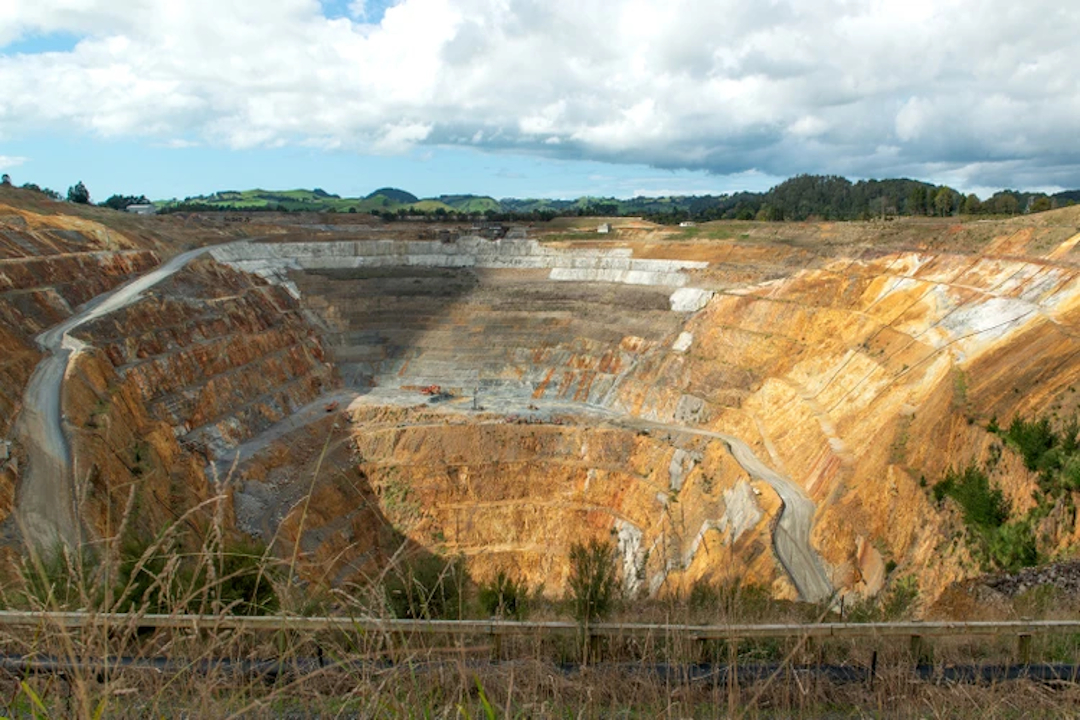
The Macraes operation in Otago, New Zealand is one of the longest-running gold mines in the Southern Hemisphere, with a multi-decade production history and ongoing resource development work extending its mine life. New Zealand is consistently rated among the lowest-risk mining jurisdictions in the world by the Fraser Institute’s Annual Survey of Mining Companies, making Macraes a reliable, stable contributor to OceanaGold’s portfolio.
The Didipio Mine on Luzon Island in the Philippines is an 80%-owned copper-gold operation that adds both commodity diversification and exposure to Southeast Asia’s growing resource sector. Copper byproduct revenue provides a natural hedge against gold price volatility, similar to the dynamic we discussed in the context of New Afton in the Coeur Mining and New Gold transaction covered earlier in this series.
Why the free cash flow story resonates at current gold prices

Gold is trading near record levels in 2026. According to the World Gold Council, spot gold has been above $3,000 per ounce for sustained periods this year, driven by central bank buying, geopolitical uncertainty from the Iran conflict, and continued demand for inflation hedging. At those prices, the economics of any gold operation running on a $2,200 per ounce reserve assumption look dramatically better than the base case.
For OceanaGold specifically, that gap between reserve price and spot price translates directly into free cash flow generation that was not modeled in the technical reports. The World Gold Council’s gold demand research has highlighted that mid-tier gold producers with low-cost operations generate disproportionate margin expansion during gold price bull markets because their fixed cost base stays constant while revenue rises with the gold price. OceanaGold’s four-mine portfolio, spanning the US, New Zealand, and the Philippines, gives it geographic diversification that reduces single-jurisdiction risk while maintaining concentrated exposure to gold price upside.
The company’s 2026 guidance remains unchanged from the February 18 release, confirming that management sees no operational surprises significant enough to require revision after the technical report review process.
What investors should take from this filing
Technical report filings are not typically news in the conventional sense. They are compliance documents. What makes this one worth covering is the context: three simultaneous updates across multiple continents, conservative reserve pricing that significantly understates returns at current spot prices, and a clear statement that the operations are positioned to generate substantial free cash flow.
For investors building exposure to gold in a high-price environment, intermediate producers with documented, NI 43-101-compliant mine plans across multiple operating assets in stable jurisdictions represent a different risk profile than exploration-stage companies or single-asset operators. OceanaGold’s filing gives investors an updated, qualified-person-approved picture of exactly what its production pipeline looks like through the life of its current reserves.
The full technical reports and Annual Information Form are available on SEDAR+ under OceanaGold’s profile and on the company’s website at oceanagold.com.
Sources
- World Gold Council — Gold Prices
- World Gold Council — Gold Demand Trends
- Fraser Institute — Annual Survey of Mining Companies 2025
- OceanaGold Corporation — Investor Relations
Editorial disclosure
This article is based on a press release issued by OceanaGold Corporation and has been independently rewritten and editorially expanded. It covers the filing of updated NI 43-101 Technical Reports and an Annual Information Form for OceanaGold’s Haile, Macraes, and Didipio operations. OceanaGold Corporation trades on the TSX under the ticker OGC and on OTCQX under OCANF. Mineral reserves referenced in this article are estimates prepared under NI 43-101 standards, which differ from SEC standards applicable to US domestic issuers. Free cash flow is a non-IFRS measure. Market context is sourced from the World Gold Council and the Fraser Institute. Commentary reflects the author’s own assessment. The information provided on this website is for informational and educational purposes only. Our content is derived strictly from verified online sources to ensure accuracy and objectivity. This analysis does not constitute financial, investment, or professional advice. Readers are encouraged to consult with qualified professionals before making decisions based on this information. For more information, please see our full DISCLAIMER.