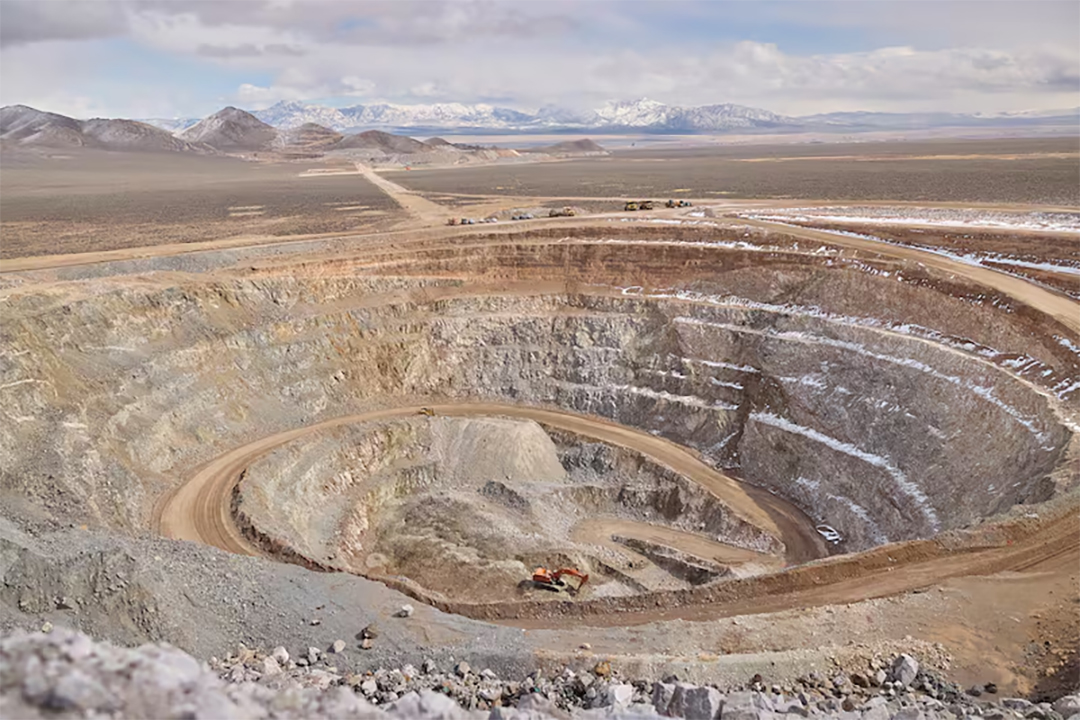
China controls 80% of the world’s tungsten supply. A new partnership in Beaver County wants to change the math — starting with what’s already been dug up.
The United States hasn’t commercially mined tungsten in roughly a decade. In the meantime, China built a stranglehold over global tungsten supply chains, accounting for about 80% of tungsten concentrate production in 2024. Washington is now scrambling to fix that.
Beijing isn’t making it easier. From January through September 2025, China’s tungsten exports dropped 13.75% compared to the same period in 2024. Add a 25% Section 301 tariff the Trump administration imposed on Chinese tungsten products in September 2025, and the pressure on domestic supply is acute. New Department of Defense regulations prohibit the use of China-mined tungsten after January 2027.
That deadline is less than two years away.
The Partnership
Milford Mining Company Utah and Furnace Japan Co., Inc. signed a Memorandum of Understanding this week to build a pilot plant in Milford, Utah, targeting tungsten recovery from historical mine tailings. The deal pairs MMCU’s existing mineral assets — copper resources, legacy tungsten deposits, and stockpiled tailings — with Furnace Japan’s patented electric resistance furnace technology.
It is an MOU, not a production contract. Pilot validation comes first. Commercial scale follows if the results hold.
Still, the timing is deliberate. MMCU has been on a rebuild trajectory since restarting its Beaver County copper operations in 2023. According to the Deseret News, the company grew from eight employees to 160 full-time staff and contractors, invested $40 million to modernize its facilities, and has a $200 million expansion underway projected to create more than 1,000 jobs over the next decade. Tungsten recovery from tailings extends that platform without requiring a greenfield mine.
Why Tailings, and Why Now
Conventional tungsten extraction is acid-heavy. Large volumes of waste, environmental liability, and high processing costs make legacy tailings an unattractive target under traditional methods. Furnace Japan’s approach is different: the electric resistance furnace uses primarily electrical energy to process both fresh ore and legacy material, sidestepping the acid consumption problem. What’s left is slag that can be repurposed for industrial use rather than stored as waste.
Clean processing running on clean energy. The Milford site sits inside Utah’s Milford Renewable Energy Corridor, with geothermal and wind resources available to power operations.
That combination matters beyond the environmental pitch. As Foreign Policy noted, securing new supply chains requires not just locating a resource but establishing processing and manufacturing capabilities alongside it. Furnace Japan’s ERF technology handles the processing side. MMCU holds the ground. The Corridor provides the energy. It’s a more complete answer than most domestic tungsten proposals currently on the table.
The Strategic Context
Tungsten is not a bulk commodity. Its applications span superalloys, semiconductor manufacturing, military equipment, aerospace precision components, and AI hardware. Demand is growing across every one of those sectors simultaneously. According to Carbon Credits, the tungsten market expanded from $6.04 billion in 2024 to $6.50 billion in 2025, with projections pointing to $11.16 billion by 2032 at a compound annual growth rate of 7.95%.
Supply, meanwhile, is tightening. The Trump administration’s Section 232 review is assessing national security implications across 50 critical minerals including tungsten, with Commerce required to report recommendations on tariffs, quotas, or other measures. The DoD has already moved: the 2027 prohibition on Chinese tungsten in defense procurement is written policy, not a proposal.
MMCU and Furnace Japan are building directly into that gap. The pilot plant targets tungsten already sitting in the ground as tailings, which means lower capital exposure and faster time to validation than a new mine. If it works at pilot scale, the commercial buildout targets both tailings processing and upstream ore, with allied technology and domestic minerals under one roof.
What an MOU Is — and Isn’t
Governor Spencer Cox’s endorsement and the U.S.-Japan allied framing give this deal political tailwind. The technology is patented and operational elsewhere. The mineral assets are real. But an MOU is a statement of intent. Permitting, pilot results, funding, and commercial feasibility still lie ahead.
As analysts covering domestic tungsten development have consistently noted, even well-positioned projects depend on capital, permitting, technical performance, and infrastructure before they deliver supply. The Milford partnership has a cleaner setup than most: existing infrastructure, established operations, and a domestic energy corridor. That reduces the execution list. It doesn’t eliminate it.
What it does represent, clearly, is the kind of allied industrial cooperation Washington has been calling for. Japanese processing technology, Utah mineral assets, domestic energy, and a 2027 defense procurement clock ticking in the background. The pilot plant will answer whether the pieces fit together as well on the ground as they do on paper.
Sources
- Milford Mining Company Utah
- USGS Mineral Commodity Summaries 2025: Tungsten
- Foreign Policy: Trump’s Critical Minerals Security Push Targets Tungsten
- Deseret News: How a Formerly Mothballed Mine Is Breathing New Life Into Beaver County
- Carbon Credits: U.S. Tungsten Revival
- Fastmarkets: How the US Is Bankrolling a Worldwide Tungsten Network
Editorial Disclosure
This article is based on a press release issued by Milford Mining Company Utah (MMCU) and expanded with independent industry and regulatory data. MMCU and Furnace Japan Co., Inc. are privately held companies. No securities are discussed in this article. The partnership described is at Memorandum of Understanding stage; no commercial production has been established. Mineral resources referenced are not mineral reserves and do not have demonstrated economic viability. Market projections cited are third-party estimates and subject to revision. Pilot plant results, permitting outcomes, and commercial feasibility have not been determined. The information provided on this website is for informational and educational purposes only. Our content is derived strictly from verified online sources to ensure accuracy and objectivity. This analysis does not constitute financial, investment, or professional advice. Readers are encouraged to consult with qualified professionals before making decisions based on this information. For more information, please see our full DISCLAIMER.