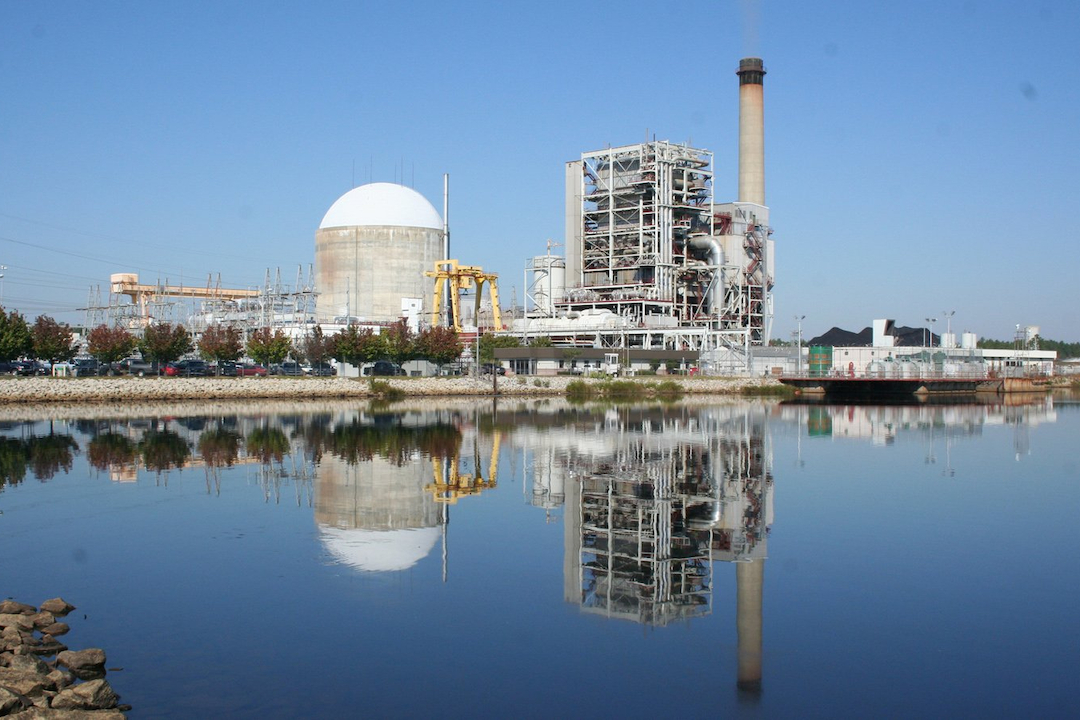
Robinson Nuclear Plant has been running since 1970. It will now run until 2050.
The US Nuclear Regulatory Commission renewed the operating license for Duke Energy’s (NYSE: DUK) Robinson Nuclear Plant on April 23, 2026, extending its operational life by another 20 years. The plant sits in Hartsville, South Carolina, delivers 759 megawatts of electricity, and powers nearly 570,000 homes. It has been operating for 56 years. With $1.7 billion in equipment upgrades completed, it will operate for at least 80.
That is not a small decision. It is a statement about where the US power grid is heading.
Why license renewals are becoming the most important story in American energy
Building a new nuclear plant in the United States takes roughly 15 to 20 years and costs between $20 and $30 billion. Renewing the license of an existing one costs a fraction of that and preserves generation capacity that cannot be quickly replaced by anything else.
Robinson produces 759 megawatts of always-on, carbon-free electricity. No weather dependency. No fuel supply interruption. No intermittency. The same 759 megawatts at 2am on a January night as at noon on a clear summer day. For a regional grid managing explosive demand growth from data centers, manufacturing reshoring, and electrification of transportation and heating, that reliability profile is irreplaceable.
Duke Energy’s nuclear fleet provides approximately 51% of its customers’ energy needs in the Carolinas. Robinson is one plant in that fleet. Duke plans to seek subsequent license renewal for all 11 of its operating nuclear units.
The economics make the case without needing the climate argument
Nuclear power’s critics often focus on construction cost. License renewal sidesteps that entirely. The plant is built. The capital is sunk. The marginal cost of continued operation is dramatically lower than any new generation source, which translates directly to customer bills.
According to the Nuclear Energy Institute, operating nuclear plants produce electricity at an average cost of $30 to $33 per megawatt-hour, making them among the cheapest sources of firm, dispatchable generation in the country. New gas peakers cost $60 to $80 per megawatt-hour or more. New nuclear, when it eventually gets built, will cost significantly more than that.
Every year Robinson runs is a year the Carolinas avoid building replacement capacity at higher cost. Over the 20-year extension, the savings compound.
Robinson also contributes approximately $28 million in annual local tax revenue to Darlington County and supports nearly 500 high-paying jobs. The Pee Dee region is not a major economic center. For a community of that size, a single employer of that scale and stability is foundational.
The broader nuclear revival this fits into
Robinson’s renewal follows Oconee Nuclear Station, which received subsequent license renewal approval in 2025. Duke is the second time through this process now. The NRC has been processing subsequent license renewal applications with increasing regularity as utilities across the country recognize that their existing fleets represent irreplaceable baseload capacity.
The US Department of Energy estimates that extending the operating life of existing US nuclear plants could preserve up to 100 gigawatts of carbon-free generation capacity through the 2050s. At a time when AI data center demand is projected to add the equivalent of several new large cities’ worth of electricity consumption by 2030, every gigawatt of firm generation matters.
Three Mile Island restarted in September 2024. Palisades, shuttered in 2022, is in the process of restarting. Constellation Energy, Pacific Gas & Electric, and Duke are all pursuing license extensions across their fleets. The policy environment is supportive. The economics are compelling. And the alternative, replacing retiring nuclear with combinations of gas, wind, and solar, is both more expensive and less reliable.
Robinson opened in 1970 as one of the first commercial nuclear plants in the Southeast. For much of the intervening half-century, the assumption was that it would eventually be retired like the rest of the first generation of American nuclear infrastructure.
The assumption was wrong. It is not being retired. It is being extended into its ninth decade of operation.
Sources
- Nuclear Energy Institute — US Nuclear Generating Statistics
- US Department of Energy — Nuclear Power Plants
- Duke Energy — Investor Relations
Editorial disclosure
This article is based on a press release issued by Duke Energy and has been independently rewritten and editorially expanded. It covers the NRC license renewal for Robinson Nuclear Plant through 2050. Duke Energy trades on NYSE under the ticker DUK. Market context is sourced from the Nuclear Energy Institute and the US Department of Energy. Commentary reflects the author’s own assessment. The information provided on this website is for informational and educational purposes only. Our content is derived strictly from verified online sources to ensure accuracy and objectivity. This analysis does not constitute financial, investment, or professional advice. Readers are encouraged to consult with qualified professionals before making decisions based on this information. For more information, please see our full DISCLAIMER.