Large-Scale Medicare Study Validates CathWorks FFRangio Outcomes Through Two Years
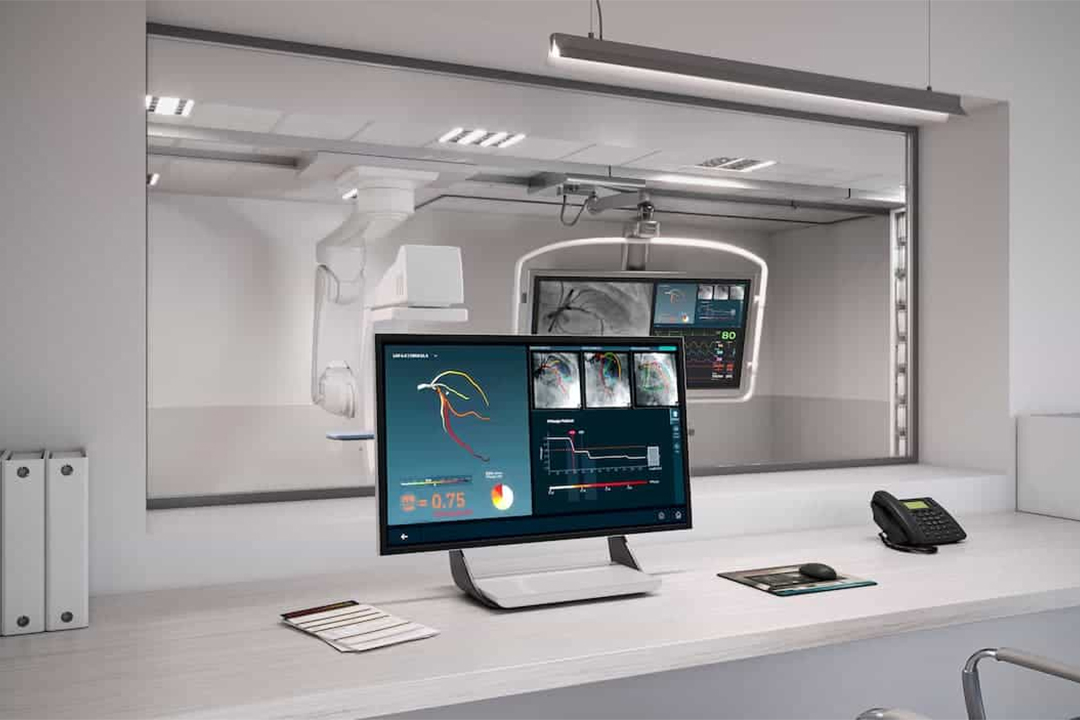
At the Cardiovascular Research Technologies (CRT) 2026 conference in Washington, D.C., researchers presented the first-ever United States Medicare data comparing angiography-derived physiology (ADP) to traditional invasive methods. The study, led by Dr. Christopher Chieh Yang Koo and investigators from Harvard Medical School, analyzed over 4,000 patients using the CathWorks FFRangio System. The results demonstrated that this AI-driven, wire-free technology provides clinical outcomes similar to the gold standard invasive pressure wire-guided procedures through a two-year follow-up period.
The analysis utilized data from 2019 to 2024; showing a massive 8-fold increase in the adoption of ADP technology during that window. For patients who underwent percutaneous coronary intervention (PCI), the incidence of major adverse cardiac events (MACE) was 24.8% for the FFRangio group compared to 23.5% for the invasive group. In patients who did not require PCI, the outcomes were also nearly identical, with MACE rates of 24.1% and 23.9% respectively. These findings suggest that the digital approach is effectively as safe as traditional invasive testing for long-term patient health.
Market Impact of Shifting from Invasive Wires to AI-Driven Diagnostics
The rapid adoption of the FFRangio System marks a significant shift in how hospitals manage coronary artery disease. Traditionally, measuring fractional flow reserve (FFR) required a physical pressure wire to be threaded through the heart and the use of drugs to stimulate blood flow. This process is often time-consuming, expensive, and carries minor risks for the patient. By using artificial intelligence to calculate these values from routine X-ray images (angiograms), CathWorks has removed the need for extra hardware and medications inside the operating room.
The capital flow in the medical device sector reflects this transition. As a leader in this digital health space, CathWorks has benefited from a strategic partnership with Medtronic, allowing for rapid expansion across the U.S., Japan, and Europe. The CRT 2026 data shows that FFRangio is not just a technological curiosity but a reliable clinical tool that matches the performance of invasive methods. As healthcare systems look to reduce resource utilization and improve patient flow, the move toward wire-free physiology is expected to accelerate; potentially making invasive pressure wires obsolete for many routine procedures.
Why FFRangio is Winning the Battle for the Cath Lab
If you look at the history of cardiology, we have always tried to get more information with less equipment inside the patient. For decades, the pressure wire was the only way to know if a blockage actually needed a stent. However, because it was a hassle to set up, doctors only used it in about 15% to 20% of cases. CathWorks is changing that math by making the diagnostic process invisible.
The most impressive part of this CRT 2026 presentation isn’t just the safety data; it is the 8-fold growth in adoption. Doctors are choosing this because it fits into their existing workflow without adding thirty minutes to the procedure. When a doctor can see the FFR value for the entire heart on a screen just by taking a standard X-ray, they make better decisions. This Medicare cohort is the real-world proof that when we make high-level diagnostics easier to use, more patients get the right treatment. We are seeing the death of the “one-size-fits-all” stenting approach and the birth of a more precise, AI-guided standard of care.
Sources
- Circulation: Cardiovascular Interventions: Clinical Outcomes of Angiography-Derived Physiology
- CathWorks: LBCT Presentation of First-Ever US Cohort at CRT 2026
- SCAI: Expert Opinion on the Expanding Role of Angiography-Derived Physiology 2026
- Life Science Intelligence: Ramin Mousavi on the Growth of CathWorks and Medtronic Partnership
- Journal of the Society for Cardiovascular Angiography & Interventions (JSCAI): ADP in Clinical Practice
Editorial Disclosure
This report is for informational and educational purposes only. This article includes subjective analysis and expert commentary from the writer. It is based on verified press releases and corporate announcements. It is not intended to provide financial, investment, or legal advice. All reporting is based on verified online sources as of March 8, 2026. Please read our full Disclaimer.