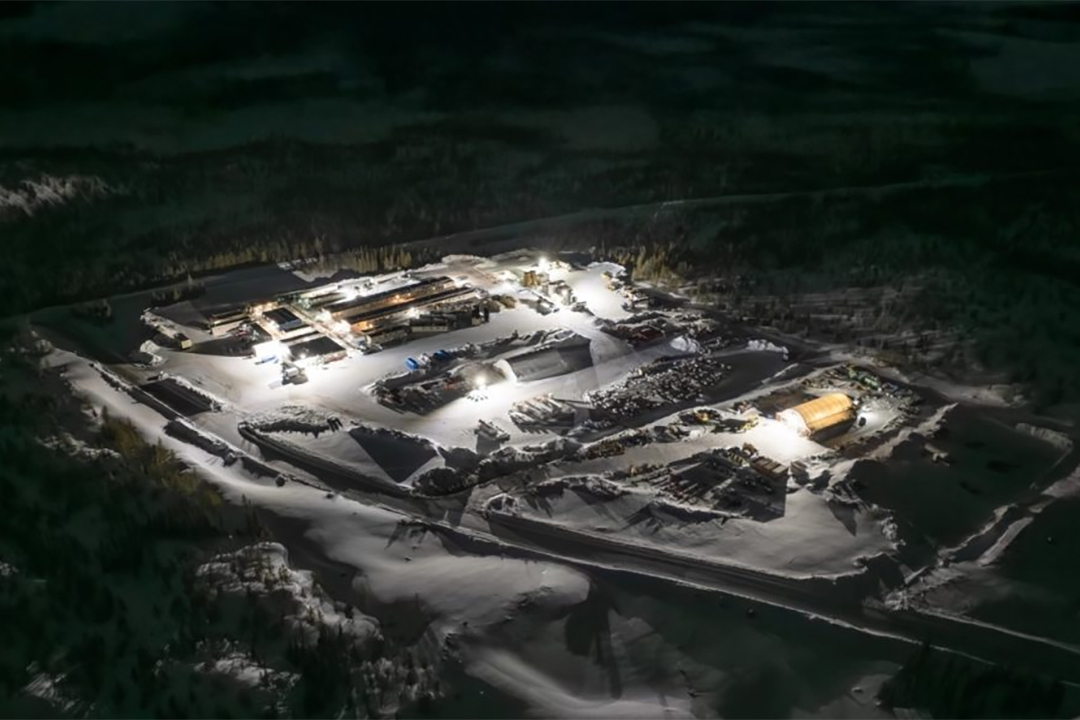
PMET Resources Inc. (TSX: PMET; ASX: PMT; OTCQX: PMETF) has released assay results from its 2025 drill program at the Shaakichiuwaanaan Project in Quebec, highlighting some of the widest and highest-grade caesium intercepts reported at the company’s Vega Zone. The results include multiple thick and high-grade intervals of caesium oxide (Cs₂O) that build on the project’s growing position as a major source of critical minerals, including lithium and tantalum.
Notable Drill Highlights at Vega Zone
The 2025 exploration campaign delivered strong caesium intersections at the Vega Zone, with several intervals showing elevated Cs₂O grades over significant widths. Highlights include:
- 28.0 m at 8.05% Cs₂O including 18.3 m at 11.84% Cs₂O from hole CV25-948
- 18.2 m at 7.13% Cs₂O including 3.0 m at 23.63% Cs₂O from hole CV25-1023
- 5.5 m at 14.83% Cs₂O including 2.2 m at 26.48% Cs₂O from hole CV25-1006
- Within that interval, the company recorded the highest reported Cs₂O value to date at ~29.79%
- Additional results include multiple intervals of caesium mineralization across other holes, illustrating both width and grade improvements.
These results expand the interpreted footprint and width of caesium mineralization at Vega, reinforcing the zone’s potential to host a large, high-grade pollucite-dominated deposit.
High-Grade Caesium at Newly Discovered Helios Zone
In addition to Vega, the drill program confirmed high-grade caesium mineralization at the recently discovered Helios Zone, a new target within the CV13 Pegmatite system. Results to date from Helios include 1.0 m at 21.52% Cs₂O from hole CV25-975, a strong indication of significant caesium presence in this area. These findings come from an interpreted mineralized footprint roughly 180 m by 80 m, with mineralization remaining open for expansion at depth and along strike.
Supporting Exploration at Rigel and Broader CV13 Pegmatite
Caesium results from the Rigel Zone also contributed positive intersections, including 6.2 m at 5.12% Cs₂O with higher-grade core intervals. These combined zones at CV13 form part of a broader critical mineral system that includes defined lithium and tantalum resources, underscoring the multi-commodity nature of the project.
Implications for Project Development
The strength and consistency of these caesium intercepts add to the existing mineral resource base at Shaakichiuwaanaan, which already hosts one of the largest pollucite-hosted caesium resources globally alongside significant lithium and tantalum mineralization. With ongoing work to interpret and model the 2025 drill dataset, PMET plans to integrate these results into forthcoming resource updates and development planning, which will be central to defining the project’s commercial potential.
Outlook
For investors, these drilling results highlight both scale and grade potential for caesium at PMET’s flagship property. High caesium grades combined with significant widths support the case for the Shaakichiuwaanaan Project as a key North American source of strategic minerals that are critical to advanced technologies and supply chains.
Forward-looking information is subject to risks and uncertainties. Read full DISCLAIMER.