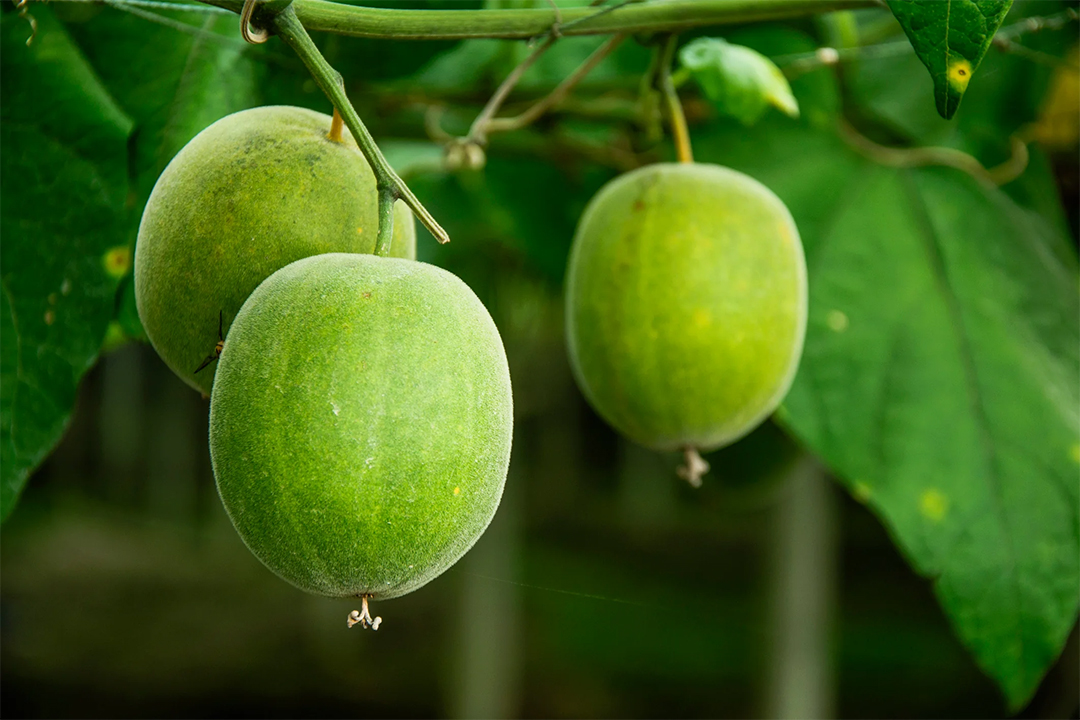
Monk fruit is usually talked about as a sugar substitute, and that is fair. That is how most people encounter it. The plant, known as Luo Han Guo (Siraitia grosvenorii), comes from southern China and belongs to the same family as squash and cucumbers. It has been used there for a long time, mostly in food and traditional preparations.
Recently, researchers have been looking at monk fruit in a more detailed way. A study published in the Journal of the Science of Food and Agriculture focused on what compounds are actually present in the fruit. The idea was not to hype it up, but to understand why monk fruit keeps showing up in health focused food discussions.
What Researchers Found Inside Monk Fruit
The paper looks closely at secondary metabolites. These are compounds plants produce for reasons other than growth. They often end up being the reason certain foods have health related effects.
In monk fruit, researchers identified terpenoids, flavonoids, and amino acids as the main groups of interest. None of these are unusual on their own. You find them in plenty of plants. What matters is how they show up together and in what amounts.
Terpenoids are often linked to antioxidant and anti inflammatory activity. Flavonoids are common in fruits and vegetables and are usually tied to managing oxidative stress. Amino acids are more basic, but still necessary for protein production and immune function.
The researchers separated the peel and the pulp and compared four monk fruit varieties. The chemical profiles were not identical. Some parts of the fruit carried more activity than others.
Why the Biological Details Matter
The study did not stop at listing compounds. It also looked at how these substances interact with receptors in the body. Receptors are part of how cells respond to signals.
When these plant compounds interact with receptors, they can influence pathways related to inflammation, metabolism, and cell protection. This does not mean monk fruit is medicine. It just helps explain why it keeps being labeled as a functional ingredient rather than a simple sweetener.
Differences Between Monk Fruit Varieties
One clear takeaway is that monk fruit is not a uniform product. Different varieties contain different levels of active compounds. That affects how useful they are for food products, extracts, or supplements.
The authors argue that detailed chemical profiling matters. From a practical standpoint, this means sourcing and cultivar choice can change the final product more than people might expect.
Bottom Line
Monk fruit is still mainly valued for being sweet without calories. That is not changing anytime soon. What research like this does is add context.
The fruit contains a mix of antioxidants, plant metabolites, and amino acids that give it a more complex profile than most sweeteners. It is not a breakthrough ingredient, but it helps explain why monk fruit continues to gain traction as clean label and functional foods stay in demand.