Executive Summary
The global energy landscape faced a seismic shift on March 2, 2026, as QatarEnergy officially suspended all liquefied natural gas (LNG) production at its Ras Laffan and Mesaieed facilities. This unprecedented shutdown followed a series of coordinated Iranian drone strikes that directly impacted the structural integrity of the world’s most critical gas export infrastructure. Qatar, currently the world’s second-largest LNG exporter, contributes approximately 77 million tonnes per year (mtpa) to the global market, representing roughly 20% of the total world supply.
Concurrent with the production halt, the Iranian Revolutionary Guard Corps (IRGC) declared the Strait of Hormuz closed to commercial shipping. This waterway is the primary exit point for nearly 80 million tonnes of LNG annually (19% of global supply). The simultaneous removal of Qatar’s production and the blockade of the regional transit chokepoint has effectively erased a fifth of the world’s LNG availability in a single 72-hour window.
Market reactions were immediate and violent. The Dutch TTF benchmark, Europe’s primary gas price index, surged over 50% on March 2, peaking at EUR 58.60/MWh. As of March 4, the TTF remains elevated at EUR 52.88/MWh, a 67% increase from pre-conflict levels of EUR 31.6/MWh. Similarly, the Japan-Korea Marker (JKM), the Asian spot price benchmark, peaked at $15.07/MMBtu before settling near $13.37. With European storage at a precarious 30% capacity (46 bcm), Goldman Sachs warns that a prolonged disruption exceeding two months could push prices beyond EUR 100/MWh, triggering significant industrial demand destruction.
What Happened and Why It Matters
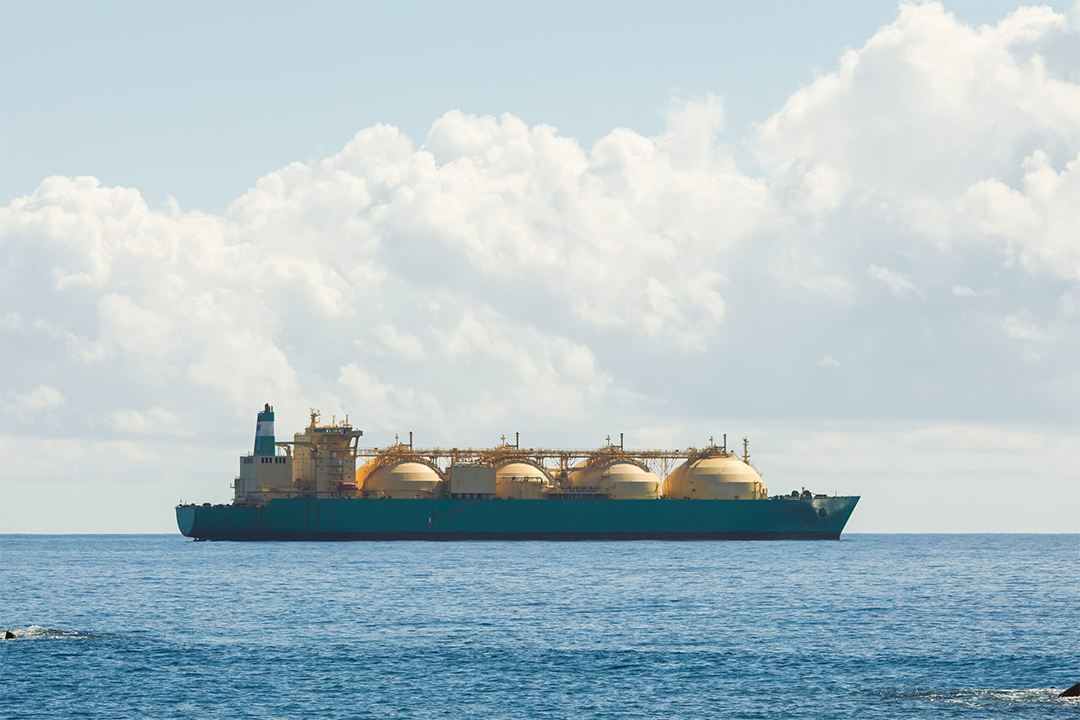
To grasp the severity of this crisis, one must understand the unique vulnerability of the LNG supply chain. LNG (Liquefied Natural Gas) is natural gas cooled to -260 degrees Fahrenheit, a process that shrinks its volume by approximately 600 times. This allows it to be transported via specialized cryogenic tankers across oceans, bypassing the geographical limitations of fixed pipelines.
Unlike the global oil market, which features diverse production hubs and a flexible maritime logistics network, the LNG market is extraordinarily concentrated. A small handful of facilities—most notably Qatar’s Ras Laffan complex—underpin the energy security of entire continents. Ras Laffan operates 14 production “trains” (liquefaction units). When Iranian drones struck these facilities on March 2, they did not just hit a factory; they severed the main artery of the global transition to cleaner-burning fuels.
The closure of the Strait of Hormuz adds a second, insurmountable layer to the crisis. Even if Qatar’s production trains remained functional, the tankers have no safe exit. The withdrawal of war-risk insurance by major underwriters has grounded the fleet, leaving the world’s most sophisticated energy delivery system paralyzed. As noted by Alex Munton of Rapidan Energy, the global market is now “short” by 20%, a deficit that no other combination of exporters can bridge in the short term.
Market Prices and Immediate Price Response
The following table tracks the surge across global benchmarks. These figures represent the “fear premium” currently baked into energy costs for utilities from Berlin to Tokyo.
| Benchmark | Pre-Conflict (Feb 27) | Mar 4, 2026 | Change |
| TTF (Europe Gas) | EUR 31.6/MWh | EUR 52.88/MWh | +67% |
| JKM (Asia LNG) | ~$11/MMBtu | **$13.37/MMBtu** | +22% |
| Henry Hub (US Gas) | ~$2.80/MMBtu | **$2.98/MMBtu** | Modest (+6%) |
| UK NBP (UK Gas) | EUR 32.1/MWh | EUR 53.05/MWh | +65% |
Sources: OilPriceAPI, Investing.com, Bloomberg Intelligence.
The TTF move is particularly alarming. While still below the 2022 peak of EUR 345/MWh seen after the invasion of Ukraine, the speed of the current ascent is historically unprecedented. The Henry Hub remains relatively stable because the U.S. is a net exporter; however, as U.S. LNG terminals maximize their “feedgas” intake to capture high international prices, domestic prices may eventually see upward pressure.
The Supply Disruption in Detail
The disruption is multifaceted, affecting both production capacity and logistics.
| Facility / Route | Country | Capacity | Status (March 4, 2026) |
| QatarEnergy Ras Laffan | Qatar | 77 mtpa | Fully Halted. Drone damage to liquefaction trains. |
| Strait of Hormuz | Gulf | ~80 mtpa | Blocked. IRGC blockade; insurance unavailable. |
| Leviathan Field | Israel | Regional | Precautionary Shutdown. Regional supply impacted. |
| US Gulf Coast | USA | ~111 mtpa | At Capacity. Running at maximum operating limits. |
Sources: Al Jazeera, CNBC.
The scale of what is offline cannot be overstated. Global LNG trade in 2024 was approximately 404 million tonnes. Removing 77–80 million tonnes creates a vacuum. Furthermore, the Leviathan field shutdown, though primarily affecting regional piped gas to Egypt and Jordan, removes “buffer” gas that Egypt occasionally uses to facilitate its own modest LNG exports.
European Exposure: Low Storage and High Dependence
Europe enters this crisis in a structurally weak position. Since the 2022 pivot away from Russian pipeline gas, the continent has become reliant on a “bridge” of LNG.
The Storage Crisis
According to Bruegel, EU storage currently sits at 46 bcm (30% capacity). This is a significant drop from the 60 bcm held at the same point in 2025. European regulations mandate a 90% fill level by November 1 each year to ensure winter survival. To reach that goal, Europe must procure massive volumes during the spring and summer—the exact window now threatened by the Qatari outage.
Industrial and Residential Impact
While most residential users are shielded by long-term contracts, industrial users (chemical, steel, and glass manufacturers) are exposed to spot prices. A sustained TTF price above EUR 55/MWh forces these industries to reduce output. If prices hit the EUR 74/MWh mark forecasted by Goldman Sachs for a month-long blockade, we can expect a wave of factory furloughs across Germany and Northern Italy.
Asian Exposure: China, Japan, South Korea
Asia remains the world’s largest LNG demand center. In 2025, 85% of Hormuz LNG flows were destined for Asian markets.
- Japan and South Korea: These nations have almost zero domestic gas and limited pipeline connections. They are “floating islands” of energy consumption that rely entirely on the reliability of the tanker fleet. While they maintain strategic reserves, a multi-week outage will force them to outbid Europe for Atlantic-basin cargoes.
- China: China has a more diversified portfolio, including Russian and Central Asian pipelines. However, its massive industrial base still requires spot LNG to meet peak demand. As noted by Gregory Brew of Eurasia Group, the “shutoff” will trigger an immediate bidding war between the two hemispheres.
US LNG: Running at Capacity
The United States is now the world’s leading exporter, but it cannot play the role of “swing producer” in this crisis. Facilities like Cheniere’s Sabine Pass and Venture Global’s Plaquemines are already pushing their equipment to the thermal limit.
The only leverage the U.S. has is cargo redirection. Because U.S. LNG is often sold on a “free-on-board” (FOB) basis, the buyer—not the producer—decides where the ship goes. In a crisis, a cargo originally meant for India might be diverted to France if the price differential is high enough. This provides liquidity, but it does not add a single molecule of new gas to the global pool.
Price Scenario Analysis
Goldman Sachs and the IEA have modeled the following trajectories based on the duration of the Hormuz closure:
| Duration | Estimated TTF Price | Market Consequence |
| < 4 Weeks | EUR 35–45/MWh | Volatility but no structural shortage. |
| 4–6 Weeks | EUR 74/MWh | Maximum coal-switching; industrial stress. |
| 8+ Weeks | EUR 100+/MWh | Widespread demand destruction; economic recession. |
Sources: Goldman Sachs Research, EIA STEO.
Key Variables to Watch
The market will look for specific signals to determine the next leg of price movement:
- Damage Assessment: Will satellite imagery from Ras Laffan show superficial damage or the total loss of liquefaction “cold boxes”?
- US Naval Escorts: President Trump’s announcement of a naval escort program on March 3 is the only hope for restoring Hormuz transit. If the first escorted convoy passes safely, the risk premium will collapse.
- IEA Coordination: Will the IEA authorize a release of strategic gas reserves (where available) or mandate demand reduction?
- The “JKM-TTF Spread”: If the price of gas in Asia rises faster than in Europe, ships will turn away from the Atlantic, worsening Europe’s storage crisis.
Structural Context and Long-Term Outlook
Even before this conflict, the LNG market was tight. While 2026 was supposed to be a year of 7% supply growth, that growth was predicated on a peaceful expansion of Qatari and U.S. capacity.
The long-term lesson for the European Union is clear: the diversification away from Russian gas has created a new, different dependency on the Middle East. As Bruegel analysts point out, “fragmentation is costly.” Moving forward, we expect a massive acceleration in US LNG Phase 2 project approvals and a renewed push for nuclear and renewable baseload power to reduce the “gas bridge” altogether.
Sources
- OilPriceAPI: TTF Gas Price Real-Time Data
- Investing.com: JKM LNG Futures Tracking
- U.S. EIA: February 2026 Short-Term Energy Outlook
- Al Jazeera: QatarEnergy Halts Production Following Attacks
- Bruegel: European Gas Storage Dataset
- Goldman Sachs: Commodity Research Note – March 3, 2026
- CNBC: US LNG Exporters and the Qatar Disruption
Editorial Disclosure. This report is for informational and educational purposes only. This article includes subjective analysis and expert commentary. It is based on verified press releases and corporate announcements as of March 4, 2026. This content does not constitute financial or technical advice. Read our full Disclaimer.