Executive Summary
Operation Epic Fury expended more than 2,000 munitions of various types in its first 100 hours. The Center for Strategic and International Studies estimates the cost of those 100 hours at $3.7 billion, of which $3.5 billion was unbudgeted. At that pace, the daily munitions replacement cost runs $758.1 million. The all-in daily war cost is $891.4 million. Before the first missile was fired, CSIS analyst Tom Karako placed the pre-existing US munitions deficit at $28.8 billion and told lawmakers that the supplemental required to address the combined deficit and wartime expenditure is not $50 billion. It is triple-digit billions.
The stockpile picture is layered. At the medium grade, JDAM kits and conventional bombs, the US has large inventories and President Trump’s public statements about abundance are accurate. At the high end, THAAD interceptors, Patriot PAC-3 MSE missiles, SM-3, and SM-6 ship-borne interceptors, the constraint is real. Approximately 25% of the entire THAAD inventory was used in the June 2025 12-day Iran war. Analysts estimate a further 20 to 50% of the remaining inventory has been expended in Epic Fury. The US procured 11 new THAAD interceptors in FY25 and expects 12 in FY26. Secretary of State Rubio stated it plainly: Iran builds 100 or more missiles a month while the US builds 6 to 7 interceptors. That asymmetry is the core investment thesis behind the entire defence industrial base ramp-up effort.
On March 6, President Trump met at the White House with the CEOs of BAE Systems, Boeing, Honeywell Aerospace, L3Harris, Lockheed Martin, Northrop Grumman, and RTX. Lockheed confirmed it has agreed to quadruple critical munitions production. RTX confirmed acceleration of five key munitions programs. Framework agreements have not yet been definitized into binding contracts. That gap between framework and contract is the most important near-term variable for defence investors to watch.
The Full Arsenal: What CENTCOM Confirmed
US Central Command confirmed the US employed more than 20 weapons systems across air, land, sea, and missile defense forces in the opening phase of Operation Epic Fury. More than 1,700 targets were struck. The primary weapons and their roles are described below.

- Tomahawk TLAM (RTX, $1.3 to 2 million each)
- The primary deep-strike weapon of the campaign, the Tomahawk is a long-range cruise missile fired from Arleigh Burke-class destroyers and submarines. It was used against fixed Iranian targets including nuclear infrastructure, missile production sites, and air defence systems. At least 100 are estimated to have been fired in the opening phase. The US held approximately 4,000 Tomahawks before Epic Fury began. RTX is the sole manufacturer, meaning there is no alternative production line if RTX’s output is insufficient.
- Patriot PAC-3 MSE (Lockheed Martin missile, RTX radar, $4 million per missile, full battery $1 billion or more)
- The primary intercept system for Iranian short-range ballistic missiles and cruise missiles. Patriot batteries were deployed across Saudi Arabia, Israel, the UAE, Kuwait, and Qatar. Intercepts often require multiple missiles per incoming target, which drives consumption rates well above what single-shot planning would suggest. The US Army requested 13,773 PAC-3 missiles in its coming procurement cycle, a figure that reflects how far current inventory falls short of what sustained operations require.
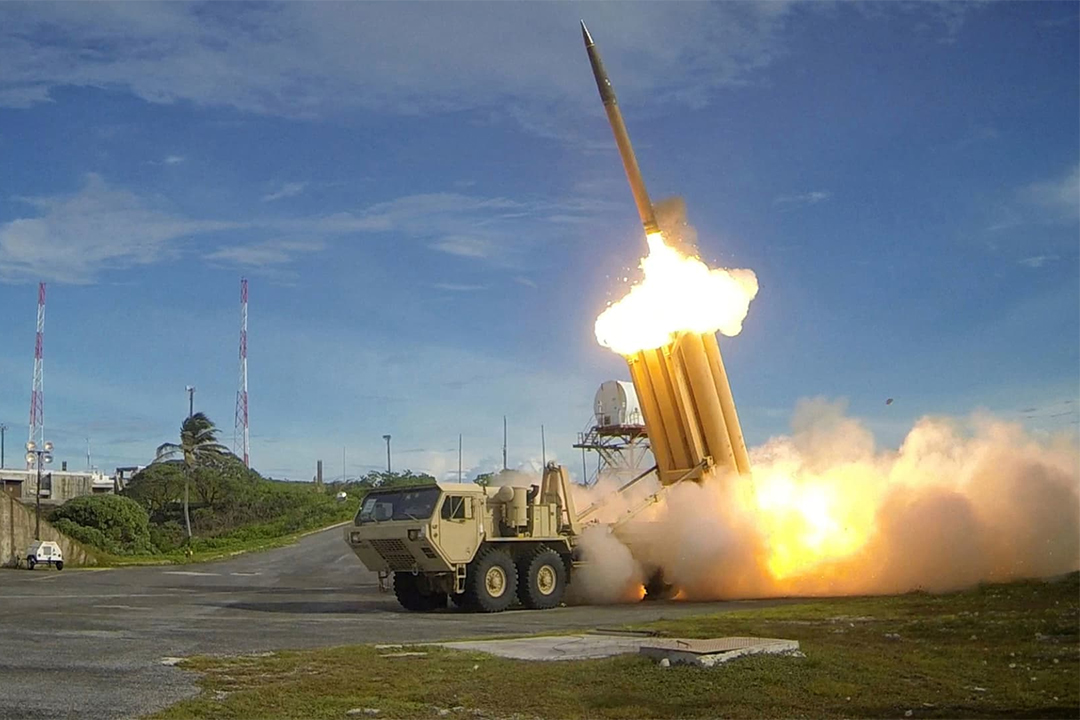
- THAAD interceptor (Lockheed Martin, $12.77 million per interceptor, battery $1 to 1.8 billion)
- The THAAD system engages medium- and intermediate-range ballistic missiles at high altitude, before they begin their terminal descent. It was used to defend US bases, carrier strike groups, and partner infrastructure from Iranian ballistic missile barrages throughout the conflict. Each THAAD battery contains 48 interceptors across 6 launchers, requires 95 soldiers to operate, and takes two years to train a crew. Production in FY25 was 11 new interceptors. FY26 expects 12. The gap between what is being consumed and what is being produced is the clearest single expression of the stockpile crisis.
- B-2 Spirit stealth bomber (Northrop Grumman, approximately $2.1 billion per aircraft)
- The B-2 delivered Massive Ordnance Penetrators and precision-guided bombs against hardened Iranian nuclear and underground facilities. It is the only aircraft in the US inventory capable of delivering the 30,000-pound MOP against deeply buried targets. Only 20 B-2 Spirit aircraft exist. Each is irreplaceable on any near-term timeline. Each aircraft lost removes five percent of total US stealth heavy bomber capacity. Their use in Epic Fury directly validates the case for the B-21 Raider replacement program.
- JDAM guidance kits (Boeing, $20,000 to $30,000 per kit)
- JDAM kits convert unguided gravity bombs into precision GPS-guided munitions. They are high-volume, low-cost weapons used across all strike packages. Large inventories exist and production is straightforward. This is the category that best supports Trump’s public statements about medium-grade abundance. The constraint is not JDAMs. The constraint is the high-end precision interceptors that JDAM kits cannot substitute for.
- LUCAS one-way attack drones (various manufacturers, estimated $20,000 to $50,000 each)
- Reverse-engineered from the Iranian Shahed-136, LUCAS drones are low-cost attritable attack munitions deliberately designed to be expendable. Used in high volume against radar sites, air defence systems, and surface targets. Their primary tactical value is saturation: enough drones overwhelm Iranian air defence systems, allowing more expensive munitions to reach their targets. Defense Secretary Hegseth has publicly identified drone acceleration as a top DoD priority. Red Cat, AeroVironment, and Kratos are all producing variants.
- MQ-9 Reaper (General Atomics, $32 million per aircraft)
- Used for intelligence, surveillance, and reconnaissance plus precision strike missions. Supports target acquisition and real-time battle damage assessment. Slower and more expensive to replace than LUCAS drones, which limits how aggressively they are committed to high-threat environments.
- F-35 Lightning II (Lockheed Martin, $82 to $110 million per aircraft)
- Carrier-based F-35Cs operating from USS Abraham Lincoln and USS Gerald R. Ford conducted suppression of enemy air defences, electronic warfare, and precision strike missions. The F-35 contains approximately 900 pounds of rare earth materials. This is the direct link between the munitions stockpile article and Article 3 of this series: replacing F-35s lost in combat faces the same critical minerals bottleneck that faces the weapons they carry.
- HIMARS (Lockheed Martin, $5 million per vehicle, $168,000 per GMLRS rocket)
- High-mobility rocket artillery used against Iranian ground force positions and logistics infrastructure. The same system type supplied extensively to Ukraine. Stockpile pressure from both theaters is cumulative, meaning the US is drawing from the same production pipeline to support two simultaneous high-intensity operations.
SECTION 2: WHAT IT COSTS
The CSIS Cost Analysis: $891 Million Per Day
The Center for Strategic and International Studies published a cost analysis of the first 100 hours of Operation Epic Fury on March 6, 2026. The analysis was conducted by researchers Mark Cancian and Chris Park and is the most detailed public accounting of the conflict’s financial architecture available.

Munitions replacement alone cost $3.1 billion in the first 100 hours and was entirely unbudgeted. Operational costs including fuel, logistics, and personnel came to $196 million, of which $178 million was covered by the base DoD budget and $18 million was not. Combat losses and infrastructure repair added a further $350 million, also unbudgeted. The total first-100-hour cost was $3.7 billion, with $3.5 billion of that figure falling outside the existing defence budget. The daily all-in run rate at that pace is $891.4 million. The daily munitions replacement cost alone is $758.1 million.
Those numbers describe the ongoing cost. They do not describe the starting deficit. Before the first missile was fired, CSIS analyst Tom Karako told lawmakers that the US entered the conflict with a pre-existing munitions shortfall of $28.8 billion. That figure represents the gap between where US munitions inventories actually were and where they needed to be to fight a major regional conflict. Karako’s position is that addressing the full deficit while replenishing wartime expenditure requires sustained procurement commitments of $100 billion or more over several years. The $50 billion supplemental being drafted by Deputy Defense Secretary Steve Feinberg covers replacement of what has already been used plus some incremental inventory building. It does not close the pre-existing gap.
The scale compounds quickly. A four-week campaign at the current burn rate runs $25 billion. An eight-week campaign runs $50 billion before a supplemental has been debated in Congress. The Iraq War ultimately cost an estimated $3 trillion when long-term veteran care and economic consequences were included, according to the National Priorities Project. The Iran conflict is not yet on that trajectory, but the arithmetic of $891 million per day accumulates faster than most budgetary processes can respond.
Sources: Al Jazeera (CSIS cost analysis, Cancian and Park, $3.7B first 100 hours, $891.4M/day, $3.5B unbudgeted, $758.1M/day munitions replacement, published March 6, 2026); CSIS public event, Tom Karako testimony ($28.8B pre-existing munitions deficit, triple-digit billions required, cited via The Founders’ Signal and Akron Proud Substack, March 6, 2026); Responsible Statecraft ($5 billion and counting, cost context, March 7, 2026).
What Is Actually Running Low and What Isn’t
The public messaging on US munitions has been deliberately imprecise. Trump’s statements about virtually unlimited supplies are accurate at the medium grade. Defense Secretary Hegseth’s statement that stockpiles remain extremely strong refers to the aggregate inventory across all munition types. Neither statement addresses the specific constraint: high-end precision interceptors. The picture below breaks that down by system.

| System | Pre-Epic Fury Status | Current Status (March 9) | Key Facts and Constraints |
| THAAD interceptors | CRITICAL: 25% of total inventory used in June 2025 12-day war alone | CRITICAL: 20-50% of remaining inventory estimated expended in Epic Fury (CSIS) | 9 THAAD batteries worldwide. 48 interceptors per battery. US procured 11 new interceptors in FY25. 12 expected FY26. 37 planned for FY27. Framework agreement January 2026 to reach 400/year over 7 years. At current production of roughly 12/year, replacing 150+ interceptors used in the June war alone would take more than 12 years. Production timeline: even under the quadrupled target, 400/year is a 7-year goal, not a near-term reality. Exact inventory classified; analysts estimate 20-50% expended between both Iran engagements. |
| Patriot PAC-3 MSE | STRAINED: Multi-theater demand from Ukraine, Israel, Gulf | STRAINED: Multiple batteries engaging Iranian missiles daily | Army requested 13,773 total missiles in coming years. Multi-year deal to triple production announced January 2026. Each intercept of an Iranian ballistic missile can require multiple PAC-3 missiles. Secretary Hegseth stated stockpiles ‘remain extremely strong’ at a March 4 Pentagon briefing. Classified inventory; analysts note heavy engagement pace. |
| Tomahawk cruise missiles | ADEQUATE but drawing down: ~4,000 remaining before Epic Fury | DRAWING DOWN: Hundreds fired; no near-term replenishment capacity | Approximately 4,000 remaining before Epic Fury. FY25 budget funded 18 Tomahawks. FY26 request: 57 units at $1.3M each. New framework agreement with RTX to ramp to 1,000/year. That agreement is not yet definitized. At 57/year procurement vs hundreds used per campaign, the gap between annual production and combat consumption is not a capability shortfall. It is a planning failure. Bryan Clark (Hudson Institute) estimated at least 100 fired in Epic Fury opening phase. |
| SM-3 and SM-6 interceptors | LOW: CNN reported reserves under strain from sustained operations | LOW: Multi-theater demand; ships pulling from Indo-Pacific stocks | Ship-borne interceptors fired from Arleigh Burke-class destroyers. CNN reported US reserves of SM-3 and SM-6 are under strain. The US ran out of large numbers of ship-borne interceptors during the June 2025 12-day war. Any reallocation from Indo-Pacific Command reduces deterrence against China. Framework deal with RTX to double or quadruple production of SM-3 IIA/IB and SM-6 announced January 2026. Not yet definitized. |
| JDAM guidance kits | ADEQUATE: Large inventory; Trump’s ‘unlimited’ medium-grade claim applies here | ADEQUATE: High-volume production; not a near-term constraint | JDAM kits are produced in large quantities by Boeing. Low unit cost ($20,000-$30,000) and relatively straightforward production means this category aligns with Trump’s public statements about medium-grade abundance. The constraint is not JDAMs. The constraint is the high-end precision interceptors that JDAM kits cannot substitute for. |
| LUCAS one-way attack drones | INCREASING: Production being actively scaled | INCREASING: DoD has prioritized drone acceleration | Deliberately attritable. Low unit cost allows high-volume production. Defense Secretary Hegseth has publicly identified drone acceleration as a top priority. Not a stockpile constraint; a manufacturing ramp-up opportunity. Red Cat, AeroVironment, Kratos all producing variants. The US is producing these at scale and they are being used at scale. |
Sources: CNN (25% of THAAD inventory used in June 2025 12-day war; FY25 11 new interceptors procured; FY26 12 expected; FY27 37 planned; SM-3/SM-6 stocks under strain, July 2025 and updated March 2026); Fortune (Ryan Brobst: several hundred THAAD and Patriot used across both Iran engagements; Iranian ballistic missiles down 86% by week’s end); CSIS estimate of 20 to 50% THAAD inventory expended in Epic Fury via Investor Ideas (March 6, 2026); Breaking Defense (Tom Karako on supplemental need); Secretary Rubio statement (Iran 100+ missiles/month vs US 6-7 interceptors/month).
The 86% reduction in Iranian ballistic missile fire by the end of the first week, confirmed by General Caine at a Monday Pentagon briefing, is the most significant single data point for evaluating the stockpile thesis. If US and Israeli offensive operations continue to degrade Iranian missile production and launch infrastructure at that rate, the demand on THAAD and PAC-3 interceptors falls materially. The conflict can resolve not because the US runs out of interceptors, but because Iran runs out of missiles to fire. That is the scenario in which Trump’s claims about decisive victory without exhausting inventory prove correct. It is also the scenario that Byron Callan of Capital Alpha Partners identified as the primary risk to the defence equity trade: if Iran is decisively degraded quickly, the urgency premium in defence stocks partially reverses.
What Was Committed at the March 6 White House Meeting
On March 6, 2026, President Trump hosted the CEOs of BAE Systems, Boeing, Honeywell Aerospace, L3Harris Technologies, Lockheed Martin, Northrop Grumman, and RTX Corporation at the White House. Defense Secretary Pete Hegseth attended. Trump posted on Truth Social that contractors had agreed to quadruple production of the exquisite class weaponry. Lockheed Martin confirmed publicly that it agreed to quadruple critical munitions production. RTX confirmed commitment to accelerate five key munitions programs.

The critical qualifier, noted by multiple reporters covering the meeting, is that the framework agreements announced in January 2026 have not yet been translated into definitized procurement contracts. A framework agreement establishes intent, production targets, and general financial parameters. A definitized contract is the legally binding commitment that triggers factory investment, workforce hiring, and supply chain engagement. The gap between the two is where production ramp timelines live or die.
- THAAD interceptor
- Lockheed Martin has committed to a seven-year program to increase production from roughly 12 per year to 400 per year. That commitment was confirmed at the March 6 meeting but has not yet been definitized. At the 400 per year target rate, replacing one campaign’s expenditure of 150 interceptors would take less than six months of full-rate production. But full-rate production is seven years away under the current framework, and only if definitization and factory investment proceed without delay.
- Patriot PAC-3 MSE
- Lockheed Martin has committed to triple PAC-3 production under the January 2026 framework, confirmed at the March 6 meeting. Both Lockheed and L3Harris have committed to raising capital expenditures by 38% from 2025 levels. Facility expansion takes a minimum of 18 to 24 months before additional units begin to flow through the production line.
- Tomahawk cruise missile
- RTX’s framework agreement targets 1,000 Tomahawks per year, up from 57 funded in FY26 through a reconciliation supplemental and 18 funded in FY25. At $1.3 million per missile, reaching 1,000 per year requires $1.3 billion in annual Tomahawk procurement alone. The agreement is not yet definitized. Tom Karako at CSIS called the journey from 18 to 57 to 1,000 a procurement planning failure that accumulated over years of underinvestment in industrial base capacity.
- AMRAAM (AIM-120) air-to-air missile
- RTX has committed to double or quadruple AMRAAM production under the January framework. Demand from Ukraine, Israel, and the Gulf has drawn down NATO-wide AMRAAM inventories across all three theaters simultaneously. RTX described this as one of its five priority munitions acceleration commitments at the March 6 meeting.
- SM-3 IIA/IB and SM-6
- RTX has committed to double or quadruple production of both SM-3 and SM-6. SM-6 is dual-capable: it functions as both an air defense interceptor and an anti-ship missile, making it relevant to both the Gulf campaign and Pacific deterrence simultaneously. The units being used to shoot down Iranian ballistic missiles today are the same units that would be needed to defend against Chinese naval operations near Taiwan tomorrow.
- B-21 Raider
- Northrop Grumman is in low-rate initial production on the B-21 Raider, the long-term replacement for the B-2 Spirit. A minimum of 100 aircraft are planned under the program, with full production extending through the 2030s. The B-2 Spirit aircraft used in Epic Fury are irreplaceable on any near-term timeline. Each one lost permanently reduces US stealth heavy bomber capacity by five percent. The B-21 program does not address that constraint in the near term but addresses it over the decade.
Who Makes What and What the Backlog Numbers Mean
The defence prime contractors are fundamentally different investments from the small-cap parabolic movers covered in the companion market article. They are not trading on a single contract announcement or a retail sentiment surge. They are trading on multi-year backlog expansion, framework agreement definitization, and supplemental procurement funding that is bipartisan in the sense that both parties in Congress want the US military to have enough weapons to fight the wars it is in.
Lockheed Martin
RTX Corporation
Northrop Grumman
L3Harris
Boeing Defence
General Dynamics
What to Watch Going Forward
The single most important near-term variable for defence investors is whether the January 2026 framework agreements with Lockheed and RTX are definitized into binding multi-year procurement contracts in the coming weeks. A definitized contract is the legal trigger for factory investment. Without it, the production ramp remains aspirational regardless of what was announced at the March 6 White House meeting.
The second variable is the size and composition of the supplemental funding request. If the final request comes in at $50 billion, it validates the near-term replenishment thesis but falls short of Karako’s triple-digit assessment of what is actually needed. If Congress approves a larger package under emergency authority, as it did repeatedly during the Iraq and Afghanistan wars through the Overseas Contingency Operations budget mechanism, the thesis extends meaningfully.
The third variable is the 86% reduction in Iranian ballistic missile fire confirmed by General Caine. If Iranian missile capacity continues to degrade at this rate, the demand on THAAD and PAC-3 interceptors falls materially. The strategic replenishment thesis survives regardless because the gap between current inventory and adequate deterrence levels was identified before the conflict and will not close without sustained procurement. But the short-term burn rate of high-end interceptors could slow significantly if the offensive campaign achieves its stated objective of destroying Iranian missile production infrastructure.
The fourth variable is rare earths. Scaling THAAD to 400 per year, PAC-3 to triple current output, and Tomahawk to 1,000 per year all require rare earth magnets, specialized alloys, and critical mineral inputs that are currently sourced primarily from China. The production ramp commitments made at the March 6 meeting are only achievable if the rare earth supply chain bottleneck is addressed in parallel. That connection is why the DLA contract awarded to REalloys’ Terves LLC on March 2, the first day of the conflict, matters more than its dollar value alone would suggest.
Sources
- CSIS: Cost Analysis of the First 100 Hours of Operation Epic Fury
- CENTCOM: Official Weapons Systems Employment Briefing March 2026
- Heritage Foundation: 2026 Index of US Military Strength Interceptor Inventory Report
- Lockheed Martin: Strategic Framework for Production Ramp-Up March 2026
- Al Jazeera: The Financial Architecture of the US-Iran Conflict
Editorial Disclosure
This report is for informational and educational purposes only. This article includes subjective analysis and expert commentary from the writer. It is based on verified press releases and corporate announcements. It is not intended to provide financial, investment, or legal advice. All reporting is based on verified online sources as of March 10, 2026. Please read our full Disclaimer.