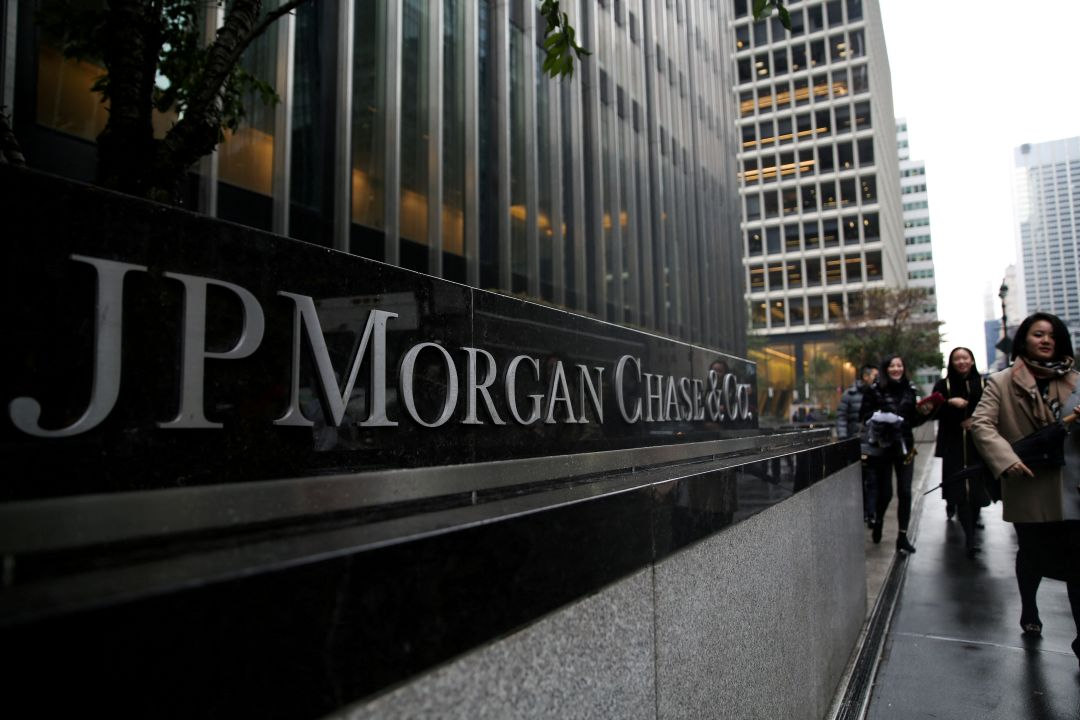
JPMorgan Chase (JPM) reported fourth-quarter earnings Tuesday, wrapping up a record year even though its Apple Card deal with Goldman Sachs cut into profits. The bank made $13 billion in net income for the quarter, which included $2.2 billion in expected losses from the deal. Without those costs, net income would have been $14.7 billion. Adjusted earnings per share came to $5.23, beating Wall Street’s $4.85 estimate. Including the deal costs, EPS was $4.63. Shares rose about 1% after the report.
CEO Jamie Dimon said the U.S. economy has been “resilient,” with consumers still spending and businesses generally healthy. He added that risks such as global tensions, persistent inflation, and high asset prices might be bigger than markets realize.
Lending and Trading
JPMorgan’s net interest income from loans, credit cards, and deposits rose 7% in the fourth quarter to $25 billion. Trading in stocks, bonds, currencies, and commodities also did well, up 15% from last year. Investment banking fees fell slightly as lower underwriting activity offset other gains.
For the full year, the bank earned $57 billion in net income, down 2% from 2024, but revenue hit a record $182 billion. Excluding a one-time Visa gain last year, profits were higher than 2024. JPMorgan stayed the world’s top investment bank for the 13th year in a row, advising on big deals including Electronic Arts’ leveraged buyout and Medline Inc.’s IPO.
Looking ahead, the bank expects net interest income to reach $95 billion in 2026, showing confidence in its lending business even if trading results are unpredictable.
Investor Takeaway
JPMorgan’s results give a look at how banks and their customers handled the end of a strong 2025. Shares are up 35% over the past year, though news over the weekend about President Trump suggesting a 10% cap on credit card interest rates caused some concern. Other big banks, including Bank of America, Citigroup, and Wells Fargo, are reporting results Wednesday, which will give more insight into the sector.
Bottom Line
JPMorgan finished the year on a strong note thanks to lending and trading. Investors should watch political developments, interest rate proposals, and upcoming bank earnings for clues on how the industry may perform in 2026.