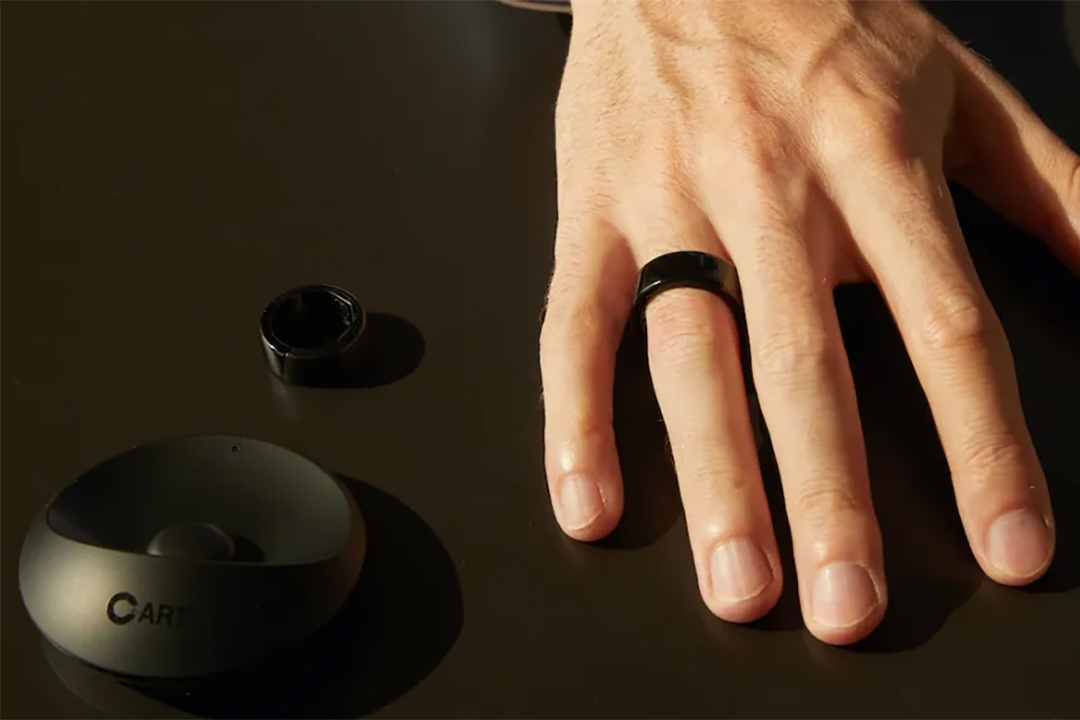
Sky Labs has launched CART ON, a hospital ward solution that uses a ring-type wearable to continuously measure and manage inpatient blood pressure. The release marks the company’s expansion from outpatient and consumer monitoring into inpatient care, targeting one of the most workflow-intensive areas of hospital operations.
For investors and healthcare operators, the move signals Sky Labs’ push to establish a full-spectrum blood pressure monitoring platform that spans daily life, outpatient clinics, and now hospital wards.
Bringing Wearable Monitoring Into Inpatient Care
CART ON replaces traditional cuff-based blood pressure monitoring in wards with a ring-type device prescribed by medical staff. Using a built-in photoplethysmography sensor, the ring automatically measures blood pressure around the clock without manual intervention.
Data collected by the device is transmitted to an inpatient monitoring platform and integrated into nurse station dashboards and hospital electronic medical record systems. This automation removes the need for repeated manual measurements and data entry, two major sources of inefficiency and error in inpatient settings.
The solution is positioned for use in patients requiring 24-hour ambulatory blood pressure monitoring, particularly those with fluctuating or difficult-to-manage blood pressure.
Clinical Validation and Accuracy
Sky Labs reports that the ring-based monitoring technology has been validated through comparative clinical trials against established standards. These include auscultation, cuff-based ambulatory monitoring, and invasive arterial line measurement.
Comparisons with arterial line monitoring, widely regarded as the clinical reference standard, demonstrated that the ring device can deliver precise measurements even during periods of significant blood pressure variation. This validation is critical for inpatient use, where treatment decisions often depend on small but clinically meaningful changes in readings.
Operational Impact for Hospitals
From an operational perspective, CART ON is designed to reduce workload for nursing staff by automating measurement, recording, and reporting. This allows nurses to focus more time on direct patient care such as medication and fluid management.
Physicians benefit from access to continuous, objective blood pressure data, supporting more accurate diagnoses and medication adjustments. For patients, the ring format eliminates arm compression and mechanical noise, reducing discomfort and sleep disruption commonly associated with cuff-based monitoring.
The device also enables measurement during normal movement within the ward, allowing more complete data collection across daily activities.
Market Impact
The launch strengthens Sky Labs’ position in the medical device market by extending its technology into inpatient wards, a setting with high recurring demand and strong institutional purchasing dynamics. Hospital adoption could drive longer-term contracts and deeper integration into clinical workflows, increasing switching costs once deployed.
Near term, the solution’s success will depend on hospital procurement cycles and clinical adoption, but its automation and patient comfort advantages directly address persistent pain points in inpatient monitoring.
Long-Term Opportunity
CART ON fits into a broader trend toward smart wards and continuous vital sign monitoring. As hospitals invest in digital infrastructure and automation, solutions that integrate seamlessly with electronic records and reduce staff burden are likely to see sustained demand.
By offering a unified lineup that spans consumer, outpatient, and inpatient monitoring, Sky Labs is positioning itself as a platform provider rather than a single-device company. This approach could support future expansion into additional vital signs and chronic disease monitoring applications.
Company Overview
Founded in 2015, Sky Labs is a healthcare technology company focused on ring-type wearable medical devices for chronic disease monitoring. The company develops the CART platform, which has expanded from cardiac rhythm monitoring to continuous blood pressure measurement. Its products are used in clinical and consumer settings, with growing emphasis on hospital-based applications.
Forward-looking information is subject to risks and uncertainties. Please read our full DISCLAIMER