Executive Summary
The global UV curing system market is gaining steady momentum as manufacturers across electronics, automotive, packaging, medical devices, and industrial coatings look for faster, cleaner, and more energy-efficient production methods. UV curing allows inks, coatings, and adhesives to harden almost instantly, cutting energy use, lowering emissions, and increasing throughput. These advantages are becoming increasingly important as companies face tighter environmental rules and higher efficiency targets.
According to MarketsandMarkets™, the market is expected to grow from USD 3.00 billion in 2026 to USD 4.85 billion by 2032, representing a compound annual growth rate of 8.3 percent. This estimate focuses mainly on core industrial uses and is generally viewed as conservative.
Other research firms paint a more aggressive picture. The Insight Partners estimates the market at USD 7.54 billion in 2025, growing to USD 28.76 billion by 2034, driven by rapid adoption in disinfection, printing, EV battery manufacturing, and electronics. Similar high-growth forecasts come from 360iResearch, Mordor Intelligence, and SkyQuest Technology. While the numbers vary widely, they all point in the same direction: UV curing is moving from a niche technology into a core manufacturing tool.
Asia Pacific is expected to be the fastest-growing region, supported by industrial expansion in China, India, Japan, and South Korea. On the corporate side, the market is led by players such as Nordson Corporation
For investors, this market sits at the intersection of automation, clean manufacturing, and electrification. That combination gives it strong long-term appeal, especially for portfolios focused on industrial technology and ESG-aligned growth.
Market Overview
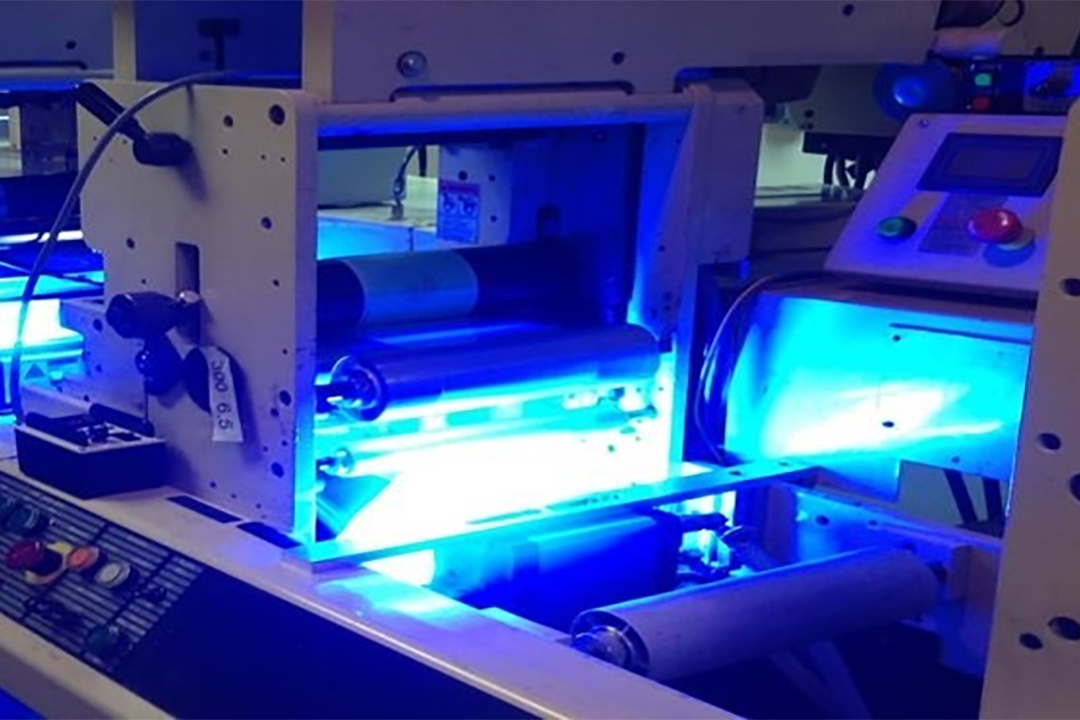
UV curing systems use ultraviolet light to instantly harden inks, coatings, and adhesives through a photochemical reaction. Compared with traditional heat or solvent-based curing, UV systems offer faster cycle times, lower energy consumption, and minimal environmental impact. In many cases, curing happens in seconds rather than minutes.
The technology has evolved significantly over the past three decades. Early systems relied heavily on mercury vapor lamps, which were powerful but energy-intensive and environmentally problematic. Today, UV LED systems are becoming the standard due to longer lifespans, lower operating costs, and the elimination of mercury.
Following the COVID-19 pandemic, demand expanded beyond traditional industrial uses into medical devices and disinfection. As global manufacturing normalized, sustainability and automation became the main growth drivers. By 2025, most estimates placed the market somewhere between USD 4 billion and USD 7.5 billion, depending on whether full systems, components, and emerging applications were included.

A blended view suggests the market is likely growing at 12 to 15 percent annually through 2030, with upside tied to EV production, semiconductor manufacturing, and advanced electronics.
Key Trends and Growth Drivers
Shift to UV LED Technology
UV LED systems are the fastest-growing segment. They consume up to 70 percent less energy than mercury lamps, last significantly longer, and offer precise wavelength control. Global restrictions on mercury, including the Minamata Convention, are accelerating this transition.
Sustainability and Regulation
UV curing eliminates or significantly reduces volatile organic compounds. This makes it attractive for manufacturers trying to meet environmental regulations in the United States, Europe, and Asia. Packaging and coatings companies are adopting UV curing to support recyclable and low-emission products.
Expansion into EVs and Semiconductors
UV curing is increasingly used in EV battery assembly, particularly for bonding and sealing applications. In semiconductor manufacturing, UV systems support high-precision processes tied to advanced lithography. Growth in these industries adds a strong structural tailwind.
Automation and Industry 4.0
High-volume industries favor UV curing because it integrates easily into automated production lines. Conveyor and spot curing systems support faster output with consistent quality, which is critical in electronics and automotive manufacturing.
Segmentation Highlights
- System Type: Spot curing systems lead in electronics and medical devices. Conveyor systems are growing fastest due to packaging and industrial manufacturing demand.
- Technology: UV LED is the clear growth leader and is expected to surpass mercury systems before 2030 in most regions.
- Pressure Type: Medium-pressure systems dominate due to their flexibility across applications.
- Components: Hardware accounts for most of the market, while software and services are growing as predictive maintenance and monitoring become more common.
- End Users: Electronics and automotive lead demand, followed by healthcare, packaging, and industrial manufacturing.
Regional Outlook

Asia Pacific
Asia Pacific accounts for roughly 40 to 50 percent of global demand and is growing the fastest. China’s manufacturing base, India’s electronics expansion, and EV production across the region are major drivers. Government incentives for clean manufacturing further support adoption.
North America
North America remains the largest single market today, supported by strong regulatory standards and investment in semiconductors and automation. The U.S. CHIPS Act and domestic manufacturing initiatives are positive long-term catalysts.
Europe
Europe shows steady growth, driven by automotive manufacturing and strict environmental rules. Demand is focused on high-value and high-precision applications.
Competitive Landscape and Comparables
The market is moderately concentrated, with leading players controlling roughly half of global revenue.
Nordson Corporation
Nordson is the most relevant public comparable for investors. UV curing systems are part of its broader adhesives and advanced technology portfolio. As of early February 2026, the stock trades around USD 276, implying a market capitalization near USD 15 to 16 billion. UV-related revenue growth has been driven by electronics and automation demand, making Nordson a stable, diversified way to access the theme.
Hoenle AG
A Europe-focused UV and LED specialist, Hoenle benefits from sustainability regulations and industrial upgrades. While smaller and less liquid, it offers more direct exposure to UV technology.
Excelitas Technologies, IST METZ, Dymax
These private companies are key technology leaders, particularly in LED systems, spot curing, and medical applications. Their innovation pace often sets the direction for the broader market.
Comparables Outside UV Curing
Investors sometimes compare UV curing exposure with broader industrial automation names like Rockwell Automation or Emerson, and with semiconductor equipment leaders such as ASML. While these companies are not direct competitors, they operate in adjacent ecosystems tied to automation and advanced manufacturing.
Opportunities and Risks
Opportunities
- Rapid growth in EV battery manufacturing
- Semiconductor capital spending cycles
- ESG-driven adoption of low-emission technologies
- Expansion of UV curing into 3D printing and advanced materials
Risks
- High upfront costs for LED system upgrades
- Competition from alternative curing methods such as electron beam
- Cyclical manufacturing slowdowns
- Supply chain disruptions for LED components
Investment Considerations
For 2026, the UV curing market offers attractive exposure to clean manufacturing and industrial automation.
- Core exposure: Nordson provides diversified, lower-risk access with steady cash flow and a history of disciplined capital allocation.
- Growth exposure: Smaller European and private players offer higher upside but come with liquidity and execution risk.
- Portfolio fit: Best suited as part of an industrial technology or ESG-focused allocation rather than a standalone bet.
Investors should monitor LED adoption rates, EV production trends, semiconductor capital spending, and regional manufacturing data.
Conclusion
The UV curing system market is evolving into a critical layer of modern manufacturing. While market size estimates vary, the direction is clear. Demand is expanding as industries prioritize speed, efficiency, and sustainability. With growth rates ranging from high single digits to the mid-teens, the sector offers meaningful long-term potential.
For investors in 2026, companies with strong automation exposure and UV capabilities, particularly Nordson, are well positioned to benefit as global manufacturing continues to modernize and decarbonize.
Forward-looking information is subject to risks and uncertainties. Please read our full DISCLAIMER.