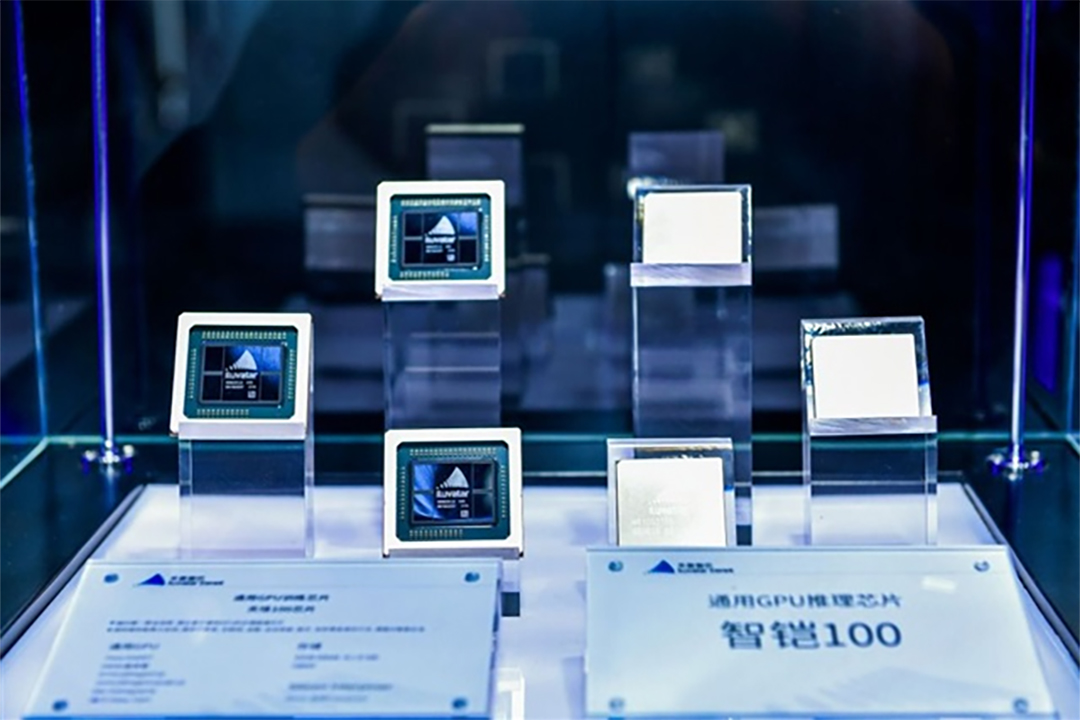
Shanghai-based GPU designer Iluvatar CoreX Semiconductor (HKG: 9903) has unveiled a multi-year roadmap targeting Nvidia’s next-generation Rubin platform. The company claims it can surpass Nvidia in AI training and inference hardware by 2027, reflecting China’s push to build homegrown alternatives to Western AI chips.
Ambitious Multi-Stage Plan
Iluvatar CoreX has outlined four GPU architectures, all named after Chinese terms linked to the Big Dipper:
- Tianshu – Currently in use; the company says it already outperforms Nvidia’s Hopper generation.
- Tianxuan – Compared internally to Nvidia’s Blackwell GPUs.
- Tianji – Expected to surpass Blackwell this year.
- Tianquan – Targeted to exceed Rubin by 2027, followed by a “breakthrough” redesign.
The company claims Tianshu achieves more than 90% effective compute utilization and roughly 20% higher performance than Hopper on internal tests.
Expanding Beyond Data Centers
Iluvatar CoreX is also developing edge AI chips under its Tongyang (TY) series, covering 100–300 TOPS (tera-operations per second). The company says its TY1000 already outperforms Nvidia’s Jetson AGX Orin in tests, though independent verification is currently unavailable.
Company Background
- Founded in 2015, Iluvatar CoreX launched China’s first domestically mass-produced AI training GPU.
- TG Gen1 debuted in 2015, TG Gen2 in 2023, and TG Gen3 is slated for production later this year.
- In 2022, it launched inference-focused ZK chips.
The company went public in Hong Kong on January 8, 2026, with a market capitalization of around HK$46.3 billion. In the first half of 2025, Iluvatar reported 324 million yuan in revenue and shipped over 52,000 general-purpose GPUs.
Investor Takeaways
Iluvatar CoreX’s claims are ambitious and largely unverified by third-party benchmarks. But the roadmap highlights China’s aggressive push to develop domestic AI hardware. For investors, this is a company to watch: it’s growing quickly, expanding its product line, and positioning itself as a competitor to Nvidia in the rapidly expanding AI chip market.