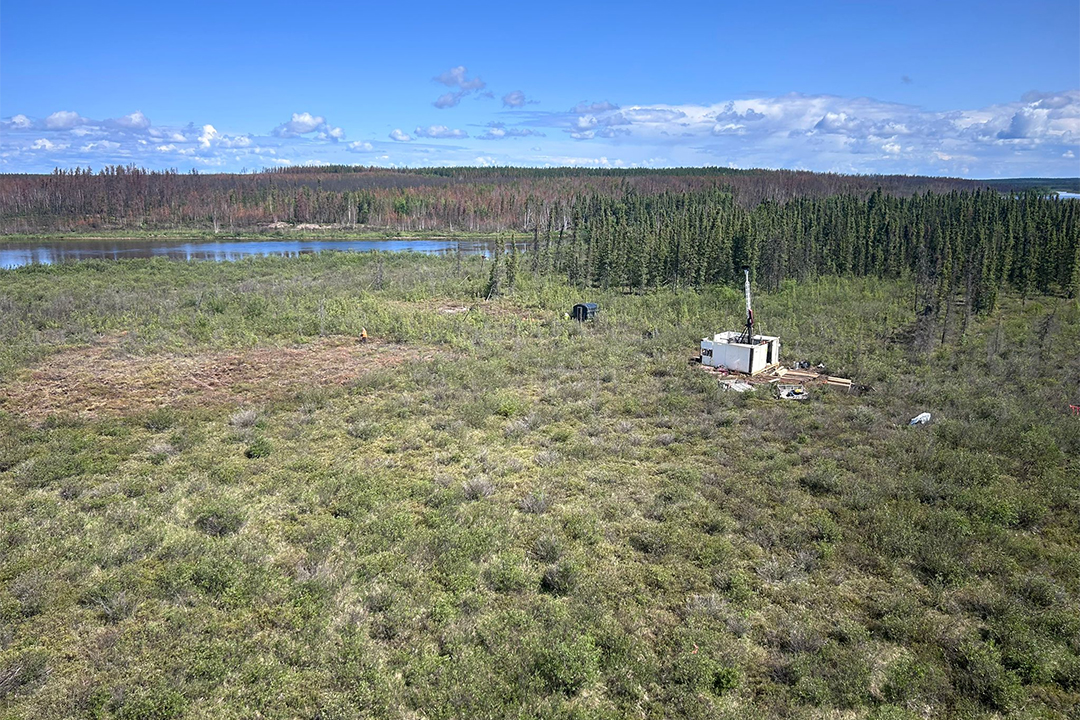
Fermi Exploration Ltd is making early but encouraging progress at its Perch River uranium property in Saskatchewan’s Athabasca Basin. This is one of the world’s top uranium districts, and recent work using Fleet Space Technologies’ ExoSphere platform has helped the company zero in on high-potential drill targets.
For investors, the big takeaway is that Fermi may have identified a major structural corridor that could host uranium. If follow-up drilling confirms this, it could add serious value to the project.
Why the Athabasca Basin Matters
The Athabasca Basin is famous for unconformity-related uranium deposits. These deposits usually form along faults or at the boundary between ancient basement rock and younger sandstones. They are often very high-grade, but also deep and structurally complex. That makes exploration tricky and expensive.
Global uranium demand is rising, too. Nuclear power is increasingly being used to cut carbon emissions, while new supply has not kept pace. That makes early-stage projects in proven uranium districts particularly interesting for investors looking for exposure to the uranium market.
ExoSphere Identifies Key Structural Zone
Fermi used ExoSphere in 2025 to map the property. Part of the area is crossed by a 100-meter-wide river, which made traditional geophysics difficult. ExoSphere was able to get around that and revealed a low-velocity zone called the Rapids Fault System. The company believes this feature could have acted as a pathway for uranium-bearing fluids.
This is important for investors. By confirming a key structural target, Fermi can focus drilling on the most promising zones. That lowers risk and makes exploration more efficient.
Drillhole PR25_04A Shows Promising Signs
Fermi drilled PR25_04A along the western edge of the low-velocity zone. The hole intersected a 100-meter interval from 290 to 390 meters with intense alteration and radiogenic lead isotopes. Alteration included chlorite-hematite, shearing, fracturing, and brecciation—all signs of hydrothermal fluids moving along faults.
Lead isotope results reached 242.8 (²⁰⁶Pb/²⁰⁴Pb) and 0.15 (²⁰⁷Pb/²⁰⁶Pb), which are typically associated with uranium mineralization in the Athabasca Basin. These results suggest that the Rapids Fault System is structurally significant and could host high-grade uranium.
What This Means for Investors
- Tier-One Exposure: Perch River offers early-stage access to one of the richest uranium districts in the world.
- Potential Upside: If follow-up drilling confirms uranium, the project could add significant value. Structural validation makes future drilling more efficient.
- Market Timing: Uranium prices are rising due to limited supply and increased nuclear demand. A discovery here could attract attention from both investors and larger mining companies.
- Lower Risk Exploration: Combining ExoSphere mapping with geochemistry gives Fermi a clearer picture of where to drill, reducing exploration uncertainty.
Fleet Space CEO Flavia Tata Nardini said that ExoSphere provides “real-time, 3D subsurface intelligence,” helping explorers identify structures faster while limiting environmental impact. Tools like this are likely to become more important as investors focus on efficiency and sustainability.
Next Steps
Fermi plans more drilling along the Rapids Fault System. Investors will be watching for:
- Follow-up drill results confirming uranium mineralization.
- Expansion of structural corridors that could host multiple high-grade zones.
- Updates on partnerships or financing to accelerate exploration.
If the project continues to deliver results, Perch River could become a high-impact uranium asset. With its combination of a proven district, advanced technology, and clear drill targets, Fermi is positioned to move faster and more efficiently than many other early-stage uranium companies. That makes the property an intriguing story for investors looking for exposure to uranium and the global clean energy transition.