
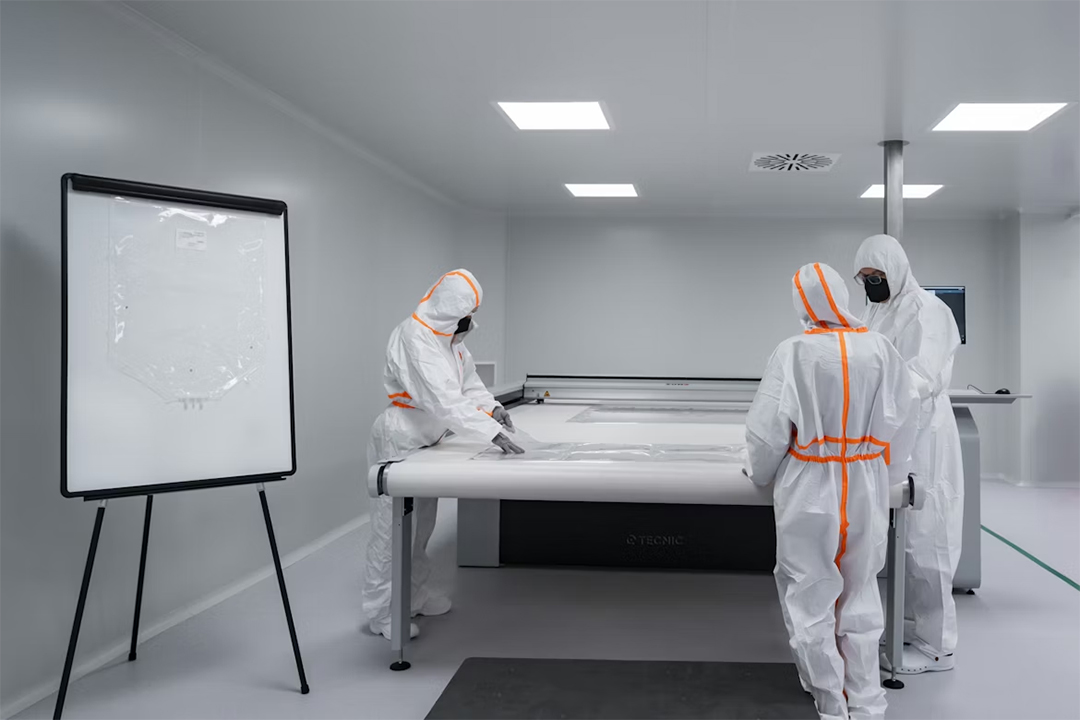
The Shanghai-based biopharmaceutical company announced this week that 9MW5211 received FDA IND clearance to begin clinical studies in inflammatory bowel disease. Simultaneously, China’s National Medical Products Administration accepted clinical trial applications for multiple indications including IBD and multiple sclerosis for review. The compound is described as the world’s first clinical-stage drug candidate for its specific target, a claim Mabwell has not accompanied with the name of that target. In early-stage drug development, that is standard practice: protecting IP on a novel mechanism before competitors can build around it.
What the Drug Actually Does
IBD and MS sit at opposite ends of the body but share a core pathology. In both, the immune system turns on the patient’s own tissue. In IBD, that means chronic inflammation of the gastrointestinal tract. In MS, it means progressive damage to the myelin sheath protecting nerves in the brain and spinal cord. Existing therapies intercept this process through various routes: blocking specific cytokines, inhibiting immune cell trafficking, suppressing signaling pathways. Each targets a piece of the immune cascade.
9MW5211 takes a different approach. Rather than blocking a signaling protein, it depletes the problem cells entirely. The antibody selectively recognizes and eliminates immune cells that abnormally express its specific target marker, a biological flag that appears on the surface of pathogenic cells during abnormal activation. Strip those cells out and the immune cascade that drives inflammation loses its core driver.
The mechanism also suggests a potential dosing advantage. Deep depletion of a pathogenic cell population can sustain remission longer than continuous pathway suppression. If that holds in human trials, extended dosing intervals could meaningfully improve patient compliance and quality of life compared to therapies requiring frequent infusions or injections.
Preclinical results across multiple mouse autoimmune disease models showed significant therapeutic activity. Safety evaluations in cynomolgus monkey models returned a favorable profile. Those are the data that persuaded the FDA to clear the path to human trials. They are also, by definition, the earliest possible signal. Mouse models and primate safety studies routinely precede human trials that produce different outcomes.
A Market With Room for New Mechanisms
IBD treatment has evolved significantly over the past decade. Anti-TNF biologics like Humira and Remicade established the category. A new generation of more targeted agents followed: vedolizumab, ustekinumab, the IL-23 inhibitors including risankizumab and guselkumab, and oral JAK inhibitors. The global IBD therapeutics market reached $28.95 billion in 2026 and is projected to hit $37.92 billion by 2031, growing at 5.55% annually.
The IBD biologics segment specifically runs larger: estimated at $63.9 billion in 2026, with projections to $149.9 billion by 2036, growing at 8.9% annually. That growth is real, but so is the competitive density. AbbVie, Johnson and Johnson, Takeda, Pfizer, and Eli Lilly dominate the current landscape with extensive approved portfolios and deep clinical pipelines. The IBD market is crowded with novel therapies recently launched or nearing approval, and any new entrant needs to demonstrate clear differentiation against entrenched blockbusters.
A genuinely novel target with a depleting mechanism, if validated in Phase 1 and subsequent trials, provides that differentiation. A mechanism that no approved drug has yet exploited is, by definition, not yet competing head-to-head. Whether it works well enough in humans to reach that competition is the question 9MW5211’s clinical program now has to answer.
The dual-indication strategy is notable. IBD and MS are both autoimmune diseases where abnormal immune cell activation drives pathology. If 9MW5211’s target is shared across both disease states, a single clinical program could generate data across two large unmet-need markets simultaneously. Global MS cases reached 3 million in 2024 and are projected to reach 3.5 million by 2035. Mabwell has flagged additional indications are actively being advanced. The breadth of potential application suggests the target biology is not narrow.
What Comes Next
Phase 1 trials will establish safety and tolerability in humans, and begin dose-finding. That typically takes one to two years. Phase 2 establishes efficacy signals. Phase 3 runs the large-scale controlled trials required for regulatory approval. The full path from IND clearance to potential approval, if everything goes well, is measured in years rather than months.
This is an early-stage drug with no human efficacy data. FDA clearance to proceed is not endorsement of the mechanism, and preclinical success does not predict clinical outcomes. What Mabwell has established is a regulatory starting line no other company has reached with this target. That is significant. The race from here is long.
Sources
- Mabwell
- Mordor Intelligence: Inflammatory Bowel Disease Therapeutics Market
- Future Market Insights: IBD Biologics Market
- iHealthcareAnalyst: IBD Market Landscape and Future Outlook
- PMC: Emerging Therapies in Inflammatory Bowel Disease
- Grand View Research: US IBD Treatment Market
Editorial Disclosure
This article is based on a press release issued by Mabwell (Shanghai) Bioscience Co., Ltd. and expanded with independent market and clinical research data. Mabwell is a publicly listed company on the Shanghai STAR Market (688062.SH) and Hong Kong Stock Exchange (02493.HK). This article does not constitute investment advice or a recommendation to buy or sell any security. 9MW5211 is an investigational drug candidate that has not been approved by the FDA or any other regulatory authority. FDA Investigational New Drug clearance permits the initiation of clinical trials only; it does not constitute approval of safety or efficacy. Preclinical results in animal models do not guarantee equivalent outcomes in human clinical trials. Clinical development is a multi-year process subject to significant regulatory, scientific, and commercial uncertainty. Phase success does not guarantee subsequent phase success or regulatory approval. This article is for informational purposes only and does not constitute medical advice. Readers experiencing symptoms of IBD, MS, or any other medical condition should consult a qualified healthcare professional. The information provided on this website is for informational and educational purposes only. Our content is derived strictly from verified online sources to ensure accuracy and objectivity. This analysis does not constitute financial, investment, or professional advice. Readers are encouraged to consult with qualified professionals before making decisions based on this information. For more information, please see our full DISCLAIMER.