Montenegro generates electricity for roughly 600,000 people. It is not, by any measure, a large energy market. But it has something most larger markets lack: a direct submarine power cable to Italy, EU candidate status, and a national energy plan that needs battery storage to work. For PowerX, a Japanese BESS manufacturer that listed on the Tokyo Stock Exchange Growth Market just five months ago, those three things together make Montenegro worth a serious bet.
The company signed a Memorandum of Understanding with Elektroprivreda Crne Gore (EPCG), Montenegro’s national electricity utility, on May 7, targeting approximately 500 MWh of battery energy storage capacity over an initial three-year period. The deal covers grid reliability, peak shaving, and frequency regulation, with PowerX also exploring the potential to establish local BESS assembly capabilities in the country.
Montenegro’s 2030 Problem
The timeline is not abstract. In December 2025, Montenegro adopted its National Energy and Climate Plan, committing to a 55% reduction in greenhouse gas emissions and a minimum 50% renewable energy share in gross final consumption by 2030. Both targets are binding under Energy Community commitments tied to EU accession progress.
The complication is structural. Montenegro’s electricity system runs heavily on hydropower, specifically the Piva and Perućica plants built in the 1960s and 1970s. Hydro is clean but weather-dependent. Wind and solar capacity is expanding, but variable generation at scale demands storage to maintain grid stability. EPCG has 874 MW of installed capacity across hydropower, thermal, wind, and solar assets, and has identified BESS as a core component of the grid modernization it needs to hit those targets.
The Pljevlja coal plant complicates the picture further. Montenegro’s coal phase-out is not planned until 2035, leaving a decade of transition management ahead. Storage helps bridge that gap, absorbing surplus renewable generation and filling demand when intermittent sources are down.
Why This Is Actually About Europe
PowerX has been explicit about the strategic logic. Montenegro’s EU candidate status and the Italy-Montenegro submarine interconnector transform a small Balkan market into something more interesting: a potential export gateway for clean electricity into one of Europe’s largest power markets. If Montenegro builds substantial renewable and storage capacity, that cable becomes an export corridor. PowerX wants to be embedded in that infrastructure before it becomes contested territory.
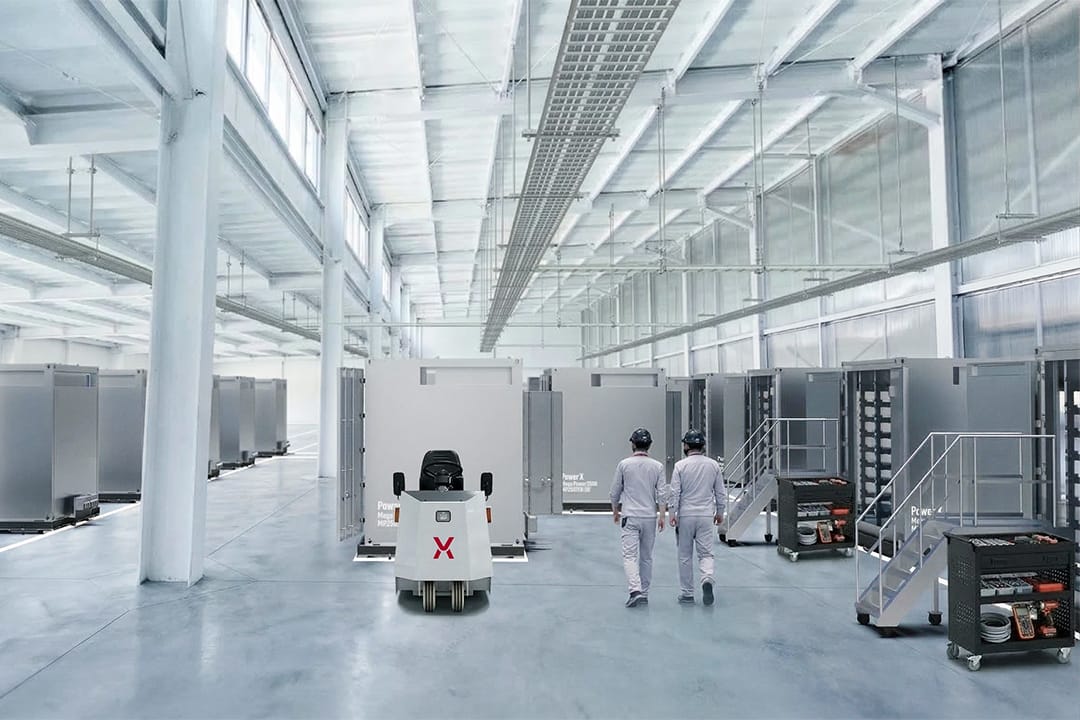
The company lists this MOU as the foundation for broader European expansion. That is a credible ambition backed by a real operational track record. PowerX’s BESS has been selected for 153 project sites in Japan, with a cumulative adopted capacity of 2.8 GWh. Its Mega Power containerized systems have been deployed with Kansai Electric Power, Toyota Motor East Japan, and major renewable developers across the country.
The IPO in December 2025 provided capital to pursue exactly this kind of international move. The company plans to scale annual production capacity from 0.8 GWh in FY2025 to 6.8 GWh per year by FY2029, with a second manufacturing facility in Hokkaido underway. Europe needs that supply. Chinese BESS dominates on cost, but procurement concerns, geopolitical risk, and EU supply chain diversification pressures are opening space for alternatives. PowerX’s CEO has acknowledged the company’s systems cost approximately 10 to 15% more than Chinese equivalents at the system level, a premium buyers in regulated European markets are increasingly willing to pay.
One supply chain caveat: PowerX currently sources battery cells exclusively from China, with plans to begin diversifying to Southeast Asian suppliers by 2027. That dependency is worth watching as European procurement standards tighten around supply chain origin requirements.
What 500 MWh Actually Means Here
To put the target in context: 500 MWh across three years is a meaningful deployment for a country of Montenegro’s grid size, not a rounding error. It would represent a substantial portion of the storage capacity EPCG needs to stabilize variable renewable integration under the NECP targets. For PowerX, it is a commercial reference project in a European regulatory environment, with potential to demonstrate the technology to neighboring Western Balkan markets and EU-adjacent utilities watching the same energy transition pressures unfold.
This is an MOU. Specific volumes, timelines, and investment figures remain subject to further negotiation. No supply contract has been signed. PowerX has made appropriate disclosures to the Tokyo Stock Exchange consistent with listing rules.
The shape of the deal is clear even at this stage. A Japanese manufacturer with proven technology, a newly public balance sheet, and an explicit European ambition just placed its first marker on the continent. Montenegro gave them a door. The Italy cable is what’s behind it.
Sources
- PowerX, Inc.
- EPCG Montenegro
- New Polis: Montenegro Adopts Landmark Energy and Climate Reforms
- Balkan Green Energy News: Montenegro Adopts National Energy and Climate Plan
- Montenegro Business: Montenegro Energy Transition and EU Green Deal Alignment
- Bankwatch: Energy Sector in Montenegro
- Japan Energy Hub: PowerX IPO and Production Scale-Up
- Balkan Green Energy News: Montenegro Leading Energy Transition
Editorial Disclosure
This article is based on a press release issued by PowerX, Inc. and expanded with independent regulatory, market, and company data. PowerX, Inc. (TSE Growth Market: 485A) is a publicly listed company on the Tokyo Stock Exchange. This article does not constitute investment advice or a recommendation to buy or sell any security. The partnership described is at Memorandum of Understanding stage; no definitive supply contract has been executed, and specific project timelines, volumes, and investment amounts remain subject to further negotiation. Forward-looking statements, including production capacity targets and European expansion plans, are subject to risks and uncertainties. Battery cell supply chain dependencies noted. Montenegro’s 2030 energy targets are policy commitments subject to implementation. Market prices cited reflect the date of data and may differ from current prices. The information provided on this website is for informational and educational purposes only. Our content is derived strictly from verified online sources to ensure accuracy and objectivity. This analysis does not constitute financial, investment, or professional advice. Readers are encouraged to consult with qualified professionals before making decisions based on this information. For more information, please see our full DISCLAIMER.