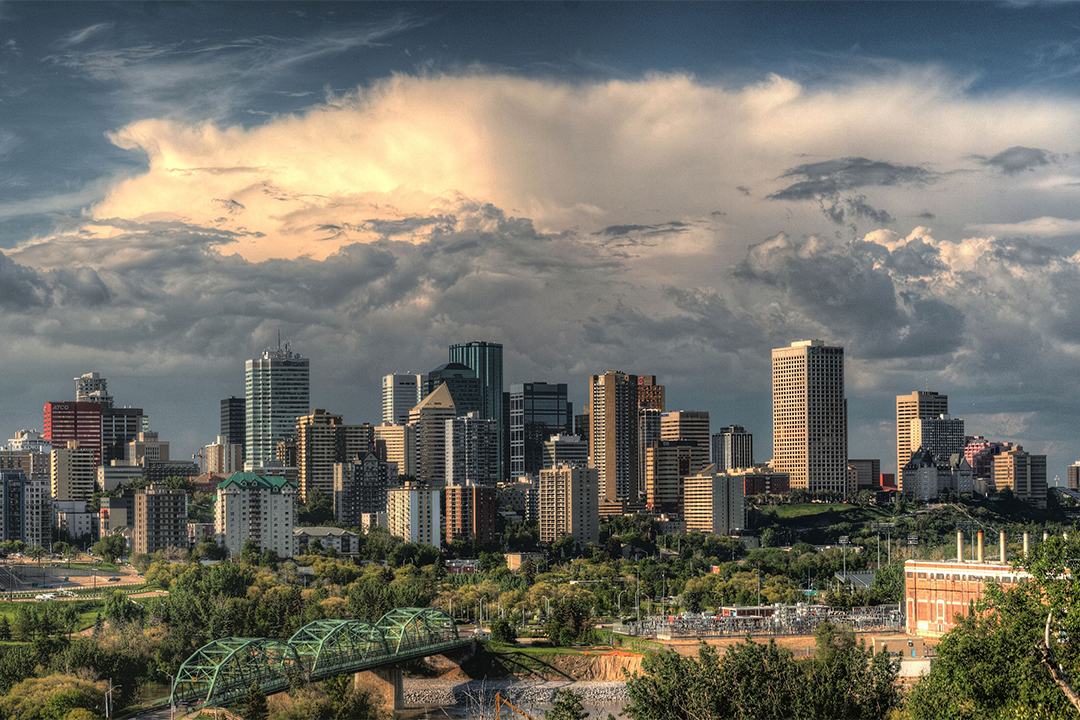
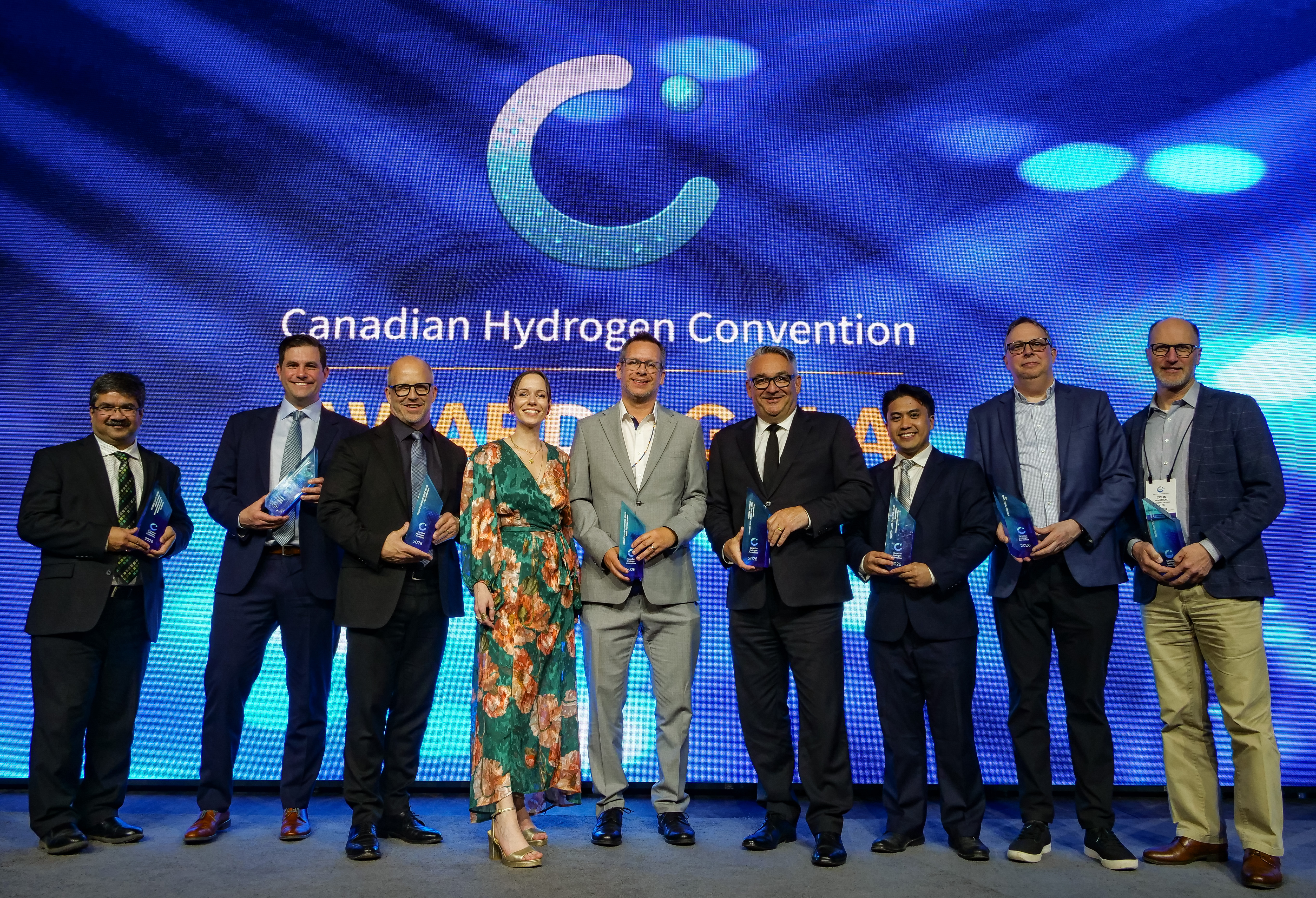
Last week, more than 7,500 people flew into Edmonton for three days to talk about a single fuel source. Energy executives, government officials, Indigenous leaders, engineers, investors, and international buyers from across Europe and Asia all converged on the Edmonton Convention Center for the Canadian Hydrogen Convention, North America’s largest gathering dedicated to hydrogen. The hotels were full. The sessions were packed. The deals being discussed ran into the billions.
When that many people show up to talk about something, it’s worth paying attention. Canada is making a serious bet that hydrogen is its next major export industry. And the clock, as several speakers at the convention made clear, is already ticking.
What Is Hydrogen, and Why Does Canada Care?
Hydrogen is the most abundant element in the universe, but here on Earth it doesn’t exist on its own. It has to be extracted from water, natural gas, or other sources. When used as a fuel, it produces no carbon emissions, just water vapor. That makes it enormously attractive for industries that are hard to electrify: heavy manufacturing, long-haul transport, shipping, and steel production, where batteries simply don’t cut it.
Canada’s pitch is straightforward. We have everything needed to produce hydrogen at scale. Vast renewable energy resources in every region of the country. Deep expertise in oil and gas that transfers directly to hydrogen production. Existing pipeline networks that can be repurposed. Ports on three oceans. And a stable, rule-of-law country that trading partners, especially those currently nervous about energy security, can rely on. The question has never really been whether Canada could produce hydrogen. It’s been whether the world would buy it, and whether Canada would move fast enough to be the one selling it.
The Political Moment
Timing, in energy, is everything. And right now, Canada’s political moment and its hydrogen opportunity are pointing in the same direction.
Prime Minister Mark Carney won last year’s federal election on a platform that placed energy at its center, not just as an environmental issue, but as an economic sovereignty play. His government’s platform was explicit: make Canada the world’s leading energy superpower, diversify trade away from the United States, and use clean energy as the foundation of a more resilient economy. The backdrop, of course, is President Trump’s tariffs and his repeated suggestions that Canada should become the 51st state. Canada’s response, in energy terms, has been to accelerate. Find new buyers, build new corridors, move faster.
Hydrogen sits squarely in that strategy. The federal government has committed to keeping its clean energy investment tax credits in place, financial incentives worth billions that make Canadian hydrogen projects more attractive to investors. It has also pledged to cut the time it takes to approve major energy projects from five years to two, a change that, if delivered, would dramatically accelerate the pace at which hydrogen infrastructure gets built.
At the provincial level, Ontario became the first province to formally write hydrogen development into its electricity legislation, passing a law late last year that makes building a hydrogen economy a statutory objective of the province’s energy system. A $30 million Hydrogen Innovation Fund is currently evaluating applications, with successful projects set to be announced next month. Alberta and British Columbia both have formal hydrogen strategies. Six provinces in total have now committed to hydrogen as part of their energy future.
On the international stage, Canada and Germany have signed a formal agreement to build a transatlantic hydrogen corridor, a trading relationship that would see Canadian-produced hydrogen shipped to Europe to help Germany meet its decarbonization targets. It is the most concrete bilateral hydrogen export arrangement Canada has in place, and it was a recurring topic at the Edmonton convention.
Something Is Actually Getting Built
For years, hydrogen in Canada was largely a story about potential. Announcements, strategies, roadmaps, frameworks. The 2026 convention felt different, because the conversation has shifted from whether to build to how fast.

Across the country, hydrogen infrastructure is now under active construction. Railways are retrofitting locomotives to run on hydrogen fuel cells, with test facilities already operating in Alberta. Industrial facilities are switching from fossil fuels to hydrogen for heat and power. Export terminals on Canada’s Atlantic coast are being developed specifically to ship hydrogen derivatives to European buyers. Pipelines originally built for natural gas are being repurposed to carry hydrogen. In some cases, entire buildings are already being heated by 100% hydrogen, not as a pilot project, but as a working demonstration of what the broader rollout could look like.
The convention’s site tours on the final day made this tangible. Attendees walked through operating facilities in Edmonton that would have been theoretical just a few years ago. The infrastructure is not complete. It is not at scale. But it is no longer hypothetical.
The Wild Card Nobody Saw Coming
Every industry has its unexpected twist, and hydrogen’s arrived quietly from beneath the Canadian prairies.
Natural hydrogen, sometimes called white or gold hydrogen, is hydrogen that exists underground, produced by geological processes over millions of years, the same way oil and gas formed. Until recently, most energy experts assumed it existed only in trace amounts, too scattered and too small to be commercially meaningful. That assumption is now being seriously questioned.

In January 2026, Canada confirmed its first subsurface natural hydrogen system in Saskatchewan, a discovery that sent ripples through the global energy community. Early estimates suggest the deposit could be part of a much larger geological trend stretching across the prairies and into the northern United States. Exploration is in its earliest stages, and significant uncertainty remains about how much is recoverable and at what cost. But the implications, if the geology holds, are significant. This would be hydrogen that nature has already produced, potentially extractable at a fraction of the cost of manufactured alternatives.
Natural hydrogen was given its own dedicated panel at this year’s convention for the first time, a signal that the industry is taking it seriously, even as it remains careful not to get ahead of the science.
The Window
The Canadian Hydrogen Association put a number on it before the convention opened: Canada has a three to five year window to cement its position as a global hydrogen leader. After that, other countries, including Australia, Chile, Norway, and several in the Middle East, will have moved far enough ahead that catching up becomes exponentially harder.
Canada’s advantages are real. The natural resources, the expertise, the political will, the trading relationships all exist. But advantages don’t build pipelines or sign offtake agreements on their own. The countries that will win the hydrogen race are the ones that convert their potential into production fastest.
What happened in Edmonton last week was a gathering of the people who intend to do exactly that. Whether they succeed is the more complicated story, and one worth watching closely.
Sources
- Canadian Hydrogen Association
- Natural Resources Canada — Hydrogen Strategy
- Government of Canada — Clean Hydrogen Investment Tax Credit
- Ontario Ministry of Energy — Hydrogen Innovation Fund
- Canadian Hydrogen Convention — Official Website
Editorial disclosure
This article is original editorial content produced by aktiego.com covering the 2026 Canadian Hydrogen Convention and Canada’s hydrogen industry development. It incorporates analysis of federal and provincial hydrogen policy, infrastructure developments, and the emerging natural hydrogen sector in Saskatchewan. Policy details reflect publicly available government announcements as of the date of publication. The three to five year window estimate is sourced from the Canadian Hydrogen Association. Natural hydrogen discovery details reflect early-stage exploration findings and carry significant uncertainty regarding commercial recoverability. Commentary reflects the author’s own assessment. The information provided on this website is for informational and educational purposes only. Our content is derived strictly from verified online sources to ensure accuracy and objectivity. This analysis does not constitute financial, investment, or professional advice. Readers are encouraged to consult with qualified professionals before making decisions based on this information. For more information, please see our full DISCLAIMER.