
American military drones are currently powered by batteries built with Chinese materials.
That is the problem Section 842 of the FY2026 National Defense Authorization Act was written to fix. Starting when the provision takes effect, the Department of Defense will be prohibited from procuring batteries from foreign entities of concern. The FCC moved first, banning foreign-produced UAS critical components in December 2025.
The legislation creates a mandate. The supply chain to fulfill it barely exists.
6K Energy and CRG Defense announced a seven-year collaboration on April 28, 2026, aimed at building exactly that supply chain, from cathode active materials through battery cells and packs, entirely within the United States. 6K Energy supplies single crystal NMC811 cathode material from its North Andover, Massachusetts facility today, with its PlusCAM facility in Jackson, Tennessee coming online in early 2028 at production scale.
What cathode active material actually is and why it matters
A lithium-ion battery cell has two electrodes and an electrolyte. The cathode is where energy is stored and released during charge and discharge cycles. The cathode active material, the chemistry inside that electrode, determines the battery’s energy density, voltage, thermal stability, and cycle life.
NMC811 is a high-nickel cathode chemistry, with 80% nickel, 10% manganese, and 10% cobalt. It delivers higher energy density than lower-nickel formulations, making it attractive for applications where weight and volume matter. Drones are exactly that application. Every gram of battery weight is payload capacity or flight time lost.
China dominates NMC cathode material production globally. According to the US Department of Energy’s critical materials assessment, China accounts for approximately 70% of global cathode active material production. For a defense industrial base that has committed to NDAA-compliant procurement, that supply chain dependency is not an abstract policy concern. It is a procurement problem with a legal deadline.
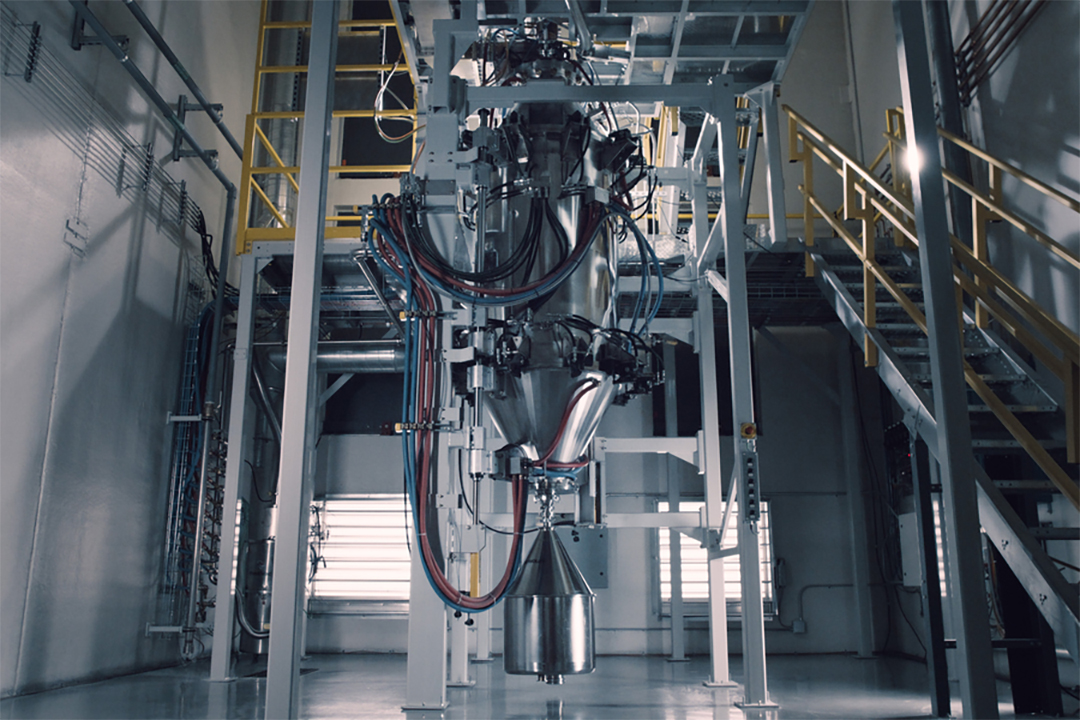
6K Energy’s UniMelt platform addresses it through microwave plasma processing, a production method that reduces cost, improves yield, and can be operated domestically at scale. The single crystal NMC811 it produces is the specific material format that delivers optimal performance in demanding applications, with better cycle life and thermal stability than polycrystalline alternatives at the same energy density.
CRG Defense’s position in the NDAA compliance ecosystem
CRG Defense manufactures battery cells and packs in the United States, delivering components fully compliant with FCC Covered List requirements and NDAA Section 842. For drone manufacturers, prime contractors, and system integrators facing equipment authorization barriers and DoD procurement restrictions, a domestic battery supply chain that is traceable from material to finished cell is not a preference. It is a requirement for continued DoD business.
The collaboration structure reflects that urgency. A seven-year agreement with a structured Quarterly Purchase Plan is not a pilot program. It is long-term capacity planning that allows 6K Energy to invest in the Jackson, Tennessee facility with a committed offtake anchor, and gives CRG Defense supply reliability for programs that cannot tolerate procurement disruption.
Patrick Hood, CEO of CRG Defense, framed the commercial reality directly: drone platforms will now be powered by technology that is American made from the chemistry up. That phrase, from the chemistry up, captures what makes this different from simply assembling imported components in a US facility. NMC cathode material is where the supply chain security begins. CRG Defense is building battery cells. The materials feeding those cells are now domestic.
The broader defense battery supply chain gap
The 2026 NDAA’s battery procurement restrictions are part of a larger US policy push to reduce defense supply chain dependence on China across critical components. The Congressional Research Service has documented that Chinese entities supply a significant share of the battery materials, battery cells, and electronic components used in current US defense systems, creating both economic and national security vulnerability.
Building a domestic alternative from the material level up requires exactly the kind of long-term commercial agreements that 6K Energy and CRG Defense have structured. Battery material facilities require years of capital investment and qualification before they can supply defense-grade components. A seven-year offtake agreement provides the revenue visibility that makes that investment bankable.
6K Energy’s PlusCAM facility in Jackson, Tennessee is expected to be one of the first domestic cathode active material facilities capable of producing NMC811, 721, and high-nickel battery materials at commercial scale. When it comes online in early 2028, it will be supplying a customer base that has a legal mandate to buy domestic.
Sources
- US Department of Energy — Critical Materials Assessment
- Congressional Research Service — Defense Supply Chain
- 6K Energy — Official Website
- CRG Defense — Official Website
Editorial disclosure
This article is based on a press release issued by 6K Inc. and has been independently rewritten and editorially expanded. It covers a seven-year strategic collaboration between 6K Energy and CRG Defense for domestic battery cathode material supply for US defense applications. Both companies are privately held. The PlusCAM facility in Jackson, Tennessee is expected to come online in early 2028 and has not yet commenced production. Market context is sourced from the US Department of Energy and the Congressional Research Service. Commentary reflects the author’s own assessment. The information provided on this website is for informational and educational purposes only. Our content is derived strictly from verified online sources to ensure accuracy and objectivity. This analysis does not constitute financial, investment, or professional advice. Readers are encouraged to consult with qualified professionals before making decisions based on this information. For more information, please see our full DISCLAIMER.