Northwestern Alaska has one of the richest undeveloped copper districts on earth. It has also been one of the most difficult to reach. Both of those facts are about to change.
Trilogy Metals (NYSE American: TMQ | TSX: TMQ) announced on April 21, 2026 that Ambler Metals, its 50/50 joint venture with South32, has submitted a Clean Water Act Section 404 permit application to the US Army Corps of Engineers, formally initiating federal permitting for the Arctic Project in Alaska’s Ambler Mining District. A 2026 summer field program is expected to commence in May, funded through Ambler Metals’ $35 million annual budget.
The permitting submission is the starting gun for a project that has been decades in the making.
What Arctic actually is
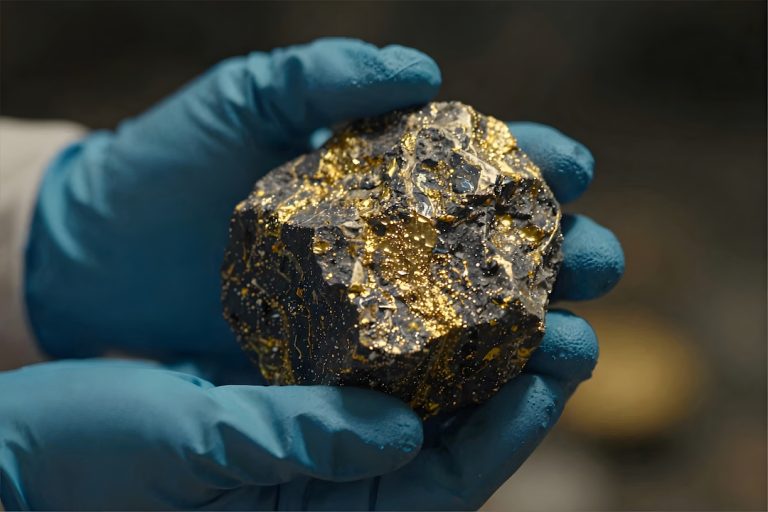
Measured by grade, the Arctic Project is among the most significant undeveloped open-pittable copper deposits in the world. The estimated average grade of approximately 5% copper equivalent includes meaningful gold and silver by-product credits alongside zinc and lead. That grade profile matters because it determines whether a project can survive commodity price cycles that kill lower-grade deposits.
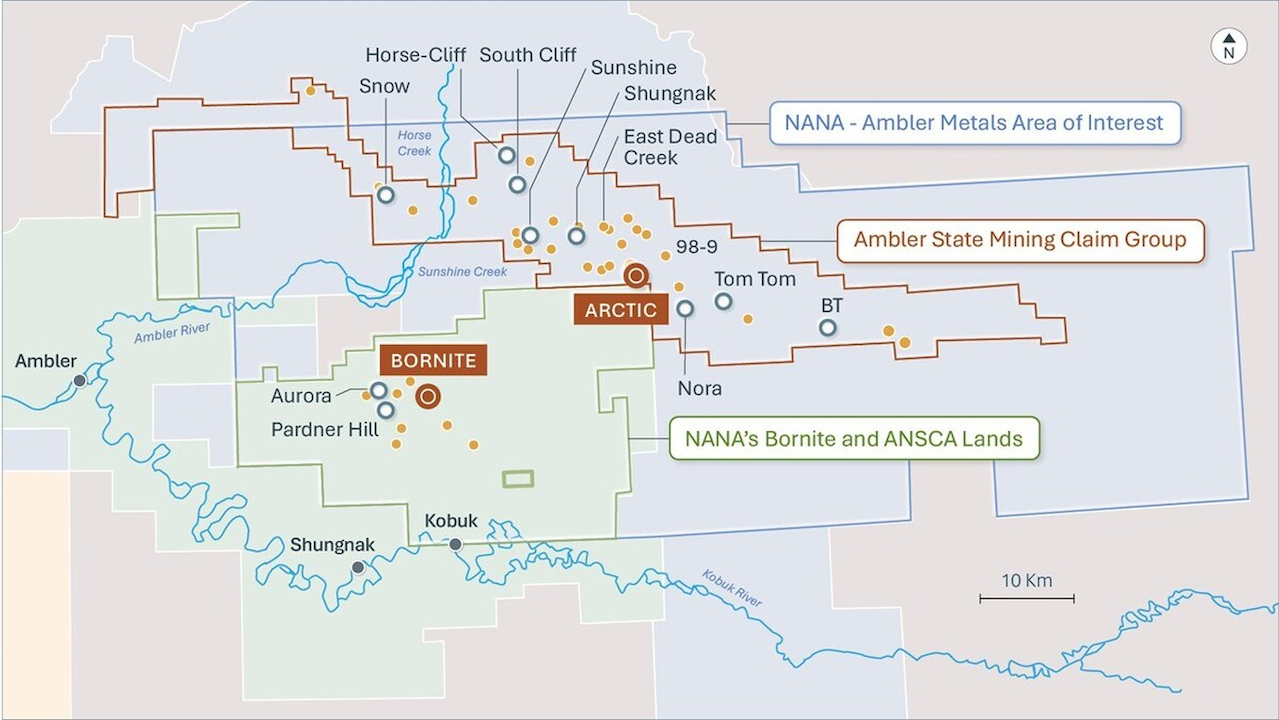
The deposit sits within the broader Upper Kobuk Mineral Projects, a land package covering 190,929 hectares across a 100-kilometer VMS mineral belt hosting 30 known volcanogenic massive sulfide occurrences. Arctic is the first phase. Bornite, a carbonate-hosted copper-cobalt deposit 25 kilometers to the southwest, is the second. The district-wide opportunity extends well beyond either.
Bornite alone carries an inferred resource of 208.9 million tonnes grading 1.42% copper, containing approximately 6.5 billion pounds of copper, with a preliminary economic assessment projecting 1.9 billion pounds of copper production over a 17-year mine life and potential extension beyond 30 years. For context, that is comparable in character to world-class carbonate replacement districts including Mount Isa in Australia and Kipushi in the Democratic Republic of the Congo.
The permitting structure and why FAST-41 matters
Federal permitting for large-scale resource development in the US has historically been fragmented, slow, and unpredictable. Multiple agencies conducting reviews on different timelines, with no coordinated schedule and limited transparency for project developers trying to plan financing and construction.
FAST-41, administered by the Federal Permitting Improvement Steering Council, changes that. It creates an integrated permitting timetable across participating agencies, with mandatory coordination and a public-facing dashboard showing progress against milestones. Ambler Metals has applied for FAST-41 coverage, which would provide the kind of schedule predictability that project lenders and equity investors require before committing capital to a development of this scale.
The Section 404 permit from USACE is the primary federal requirement. All other significant permits for Arctic are issued at the state and local levels. Concentrating federal review into a single, well-defined process while keeping everything else at the state level is a structurally simpler pathway than the multi-agency federal reviews that have slowed comparable projects.
According to the White House Council on Environmental Quality, projects enrolled in FAST-41 have historically completed permitting 20 to 30% faster than comparable non-enrolled projects, with significantly higher schedule predictability for stakeholders.
The economic impact numbers are unusually concrete
An independent economic analysis prepared by McKinley Research Group, benchmarked against Teck Resources’ Red Dog Mine on NANA lands, quantifies what Arctic means for Alaska.
Construction supports an average of 750 jobs annually with cumulative wages of approximately $220 million across the state. Operations support approximately 870 total jobs and $89.8 million in annual wages. Annual state taxes and fees reach $31.3 million. NANA Regional Corporation receives a 1% net smelter royalty estimated at $85.7 million over the mine life, with an option to acquire a 16% to 25% direct interest or take a 15% net proceeds royalty worth an estimated $400 million to $570 million cumulatively.
The infrastructure impact may matter most of all. The Ambler Access Project road, a prerequisite for mine development, is estimated to reduce heating fuel transportation costs for remote Alaska Native villages by approximately 70% per gallon and cut the cost of building a single-family home in the Upper Kobuk region by nearly 40%, roughly $287,000 per home. Communities including Ambler, Kobuk, Shungnak, Alatna, and Allakaket face some of the highest costs of living in the United States. A road that cuts those costs by that magnitude is not a secondary benefit.
The critical minerals context
Copper is not optional for the energy transition. Electric vehicles use three to four times more copper than internal combustion vehicles. Offshore wind turbines require significant copper for generators and cables. Grid modernization and data center expansion are adding demand on top of the transition itself.
The USGS 2025 Mineral Commodity Summaries identify copper as a critical mineral with projected demand growth significantly outpacing current mine development pipelines. New copper mines take 10 to 20 years from discovery to production. The projects permitted and built this decade will determine whether supply meets demand in the 2030s and 2040s.
Arctic, with a feasibility study already completed and permitting now formally initiated, is ahead of that development curve. A high-grade, open-pittable deposit in a US jurisdiction, backed by South32 and with NANA partnership framework in place, is precisely the kind of domestic critical minerals asset that US industrial policy has been trying to accelerate.
The 2026 field season starting in May will drill 40 to 45 holes targeting at least 5,650 meters. Those results will support the final investment decision that determines whether Arctic moves from permitted project to operating mine.
Sources
- USGS — Copper Mineral Commodity Summaries 2025
- White House Council on Environmental Quality — FAST-41 Program
- Trilogy Metals — Investor Relations
Editorial disclosure
This article is based on a press release issued by Trilogy Metals Inc. and has been independently rewritten and editorially expanded. It covers the commencement of federal permitting for the Arctic Project and the 2026 field program. Trilogy Metals trades on NYSE American and TSX under the ticker TMQ. The Arctic Project has a completed feasibility study. Bornite carries only inferred mineral resources, which are not mineral reserves and do not have demonstrated economic viability. Economic impact figures are estimates prepared by McKinley Research Group and reflect feasibility study assumptions that may differ from actual outcomes. This is a development-stage mining company carrying permitting, financial, and commodity price risk. Market context is sourced from the USGS and the White House Council on Environmental Quality. Commentary reflects the author’s own assessment. The information provided on this website is for informational and educational purposes only. Our content is derived strictly from verified online sources to ensure accuracy and objectivity. This analysis does not constitute financial, investment, or professional advice. Readers are encouraged to consult with qualified professionals before making decisions based on this information. For more information, please see our full DISCLAIMER.