A Spanish gold discovery just delivered some of the highest surface grades seen in European exploration this year
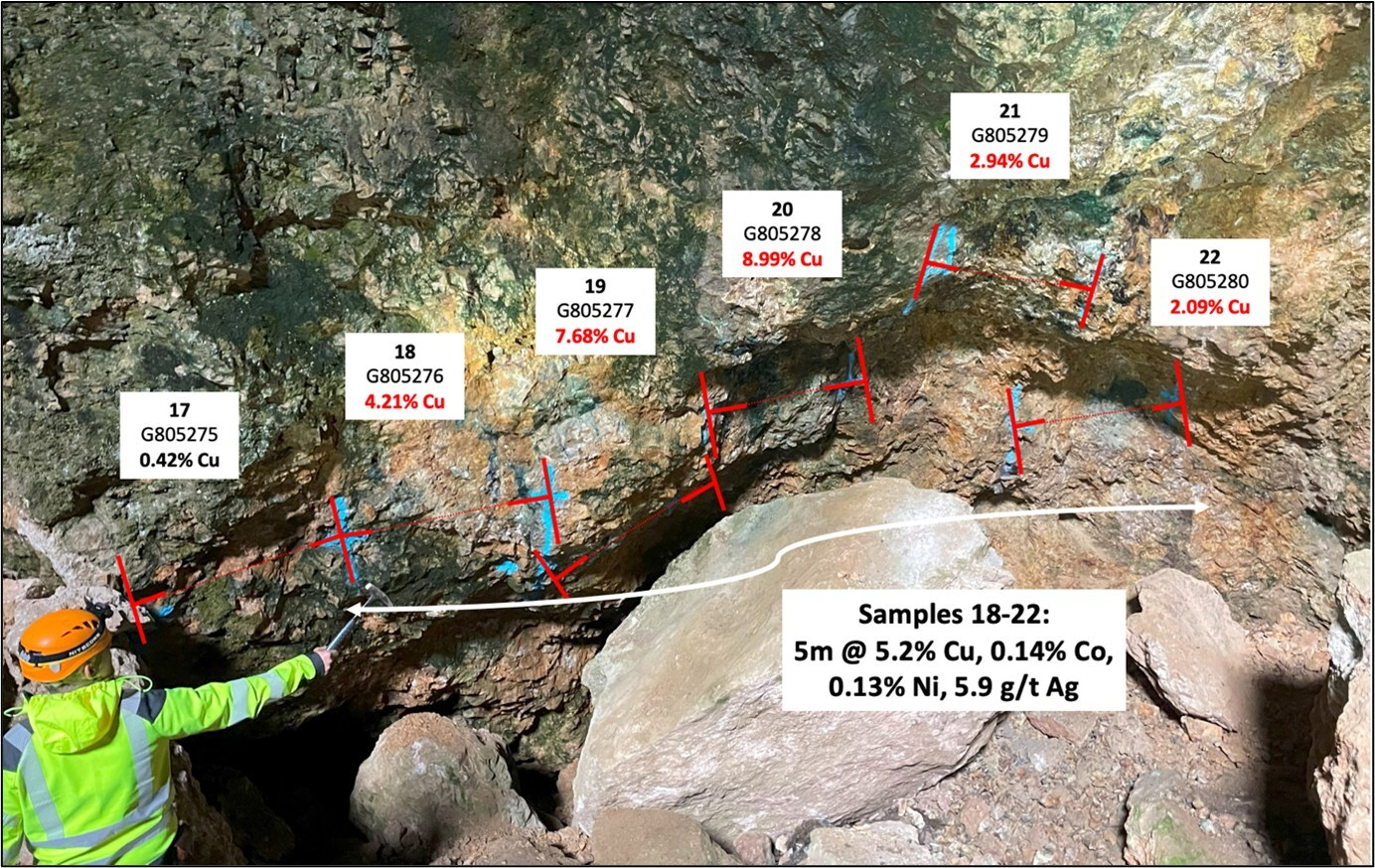
Surface sampling does not get much more attention-grabbing than this. Pan Global Resources Inc. (TSXV: PGZ | OTCQB: PGZFF | FRA: 2EU) has announced channel sampling results from the Providencia target within its Cármenes Project in northern Spain that returned 29.8 grams per tonne gold over 3.0 meters, sitting within a broader 6.0 meter interval grading 15.0 grams per tonne from surface. The peak assay hit 43.8 grams per tonne gold over a single meter, accompanied by 1.06 grams per tonne platinum and 0.82 grams per tonne palladium. A seven-hole, 1,000-meter follow-up drill program is now underway.
To put those numbers in context, anything above 5 grams per tonne is generally considered high-grade in the gold mining industry. Nearly 30 grams per tonne at surface, in Europe, from a target that only saw its first modern drill program in 2025, is the kind of result that gets serious attention.
What the Cármenes Project is and why it matters
The Cármenes Project sits on the Rio Narcea Gold Belt in northern Spain, approximately 55 kilometres north of León. Pan Global holds five Investigation Permits covering 5,653 hectares, all 100% owned. The project area includes the former Providencia and Profunda mines, which last operated in the 1930s producing copper and cobalt concentrates. That historical production context is important: it confirms the presence of a mineralised system without providing any reliable indication of what modern exploration methods might find.
The geology is characterised as carbonate-hosted hydrothermal breccia style mineralisation, a deposit type that can have significant vertical dimensions exceeding one kilometre. Pan Global’s maiden drill program at Providencia in 2025 delivered a new gold discovery, confirming that near-surface high-grade gold extends both at depth and beyond the historical mine workings. The current channel sampling from newly exposed surface bedrock and a newly accessible underground tunnel approximately 30 meters below previous sampling levels is building on that foundation.
More than 20 new geochemical and geophysical targets have also been identified across the broader Cármenes Project area for follow-up sampling and potential drill testing. The discovery at Providencia appears to be opening a much larger exploration story across the project.
Why the platinum and palladium values add strategic weight
The gold grades are the headline, but the platinum and palladium values deserve separate attention. Sample 5 returned 43.8 grams per tonne gold alongside 1.06 grams per tonne platinum and 0.82 grams per tonne palladium over a single meter. Samples 3 to 5 averaged 0.91 grams per tonne platinum and 0.73 grams per tonne palladium across the 3.0 meter high-grade interval.
Platinum and palladium are critical metals with significant strategic value. As covered extensively in our analysis of the Iran conflict’s semiconductor implications, Russia and South Africa control approximately 80% of global palladium production according to the US Geological Survey. European palladium and platinum discoveries carry genuine strategic interest in the context of supply chain diversification efforts being driven by both the European Commission and NATO member governments.
The European Commission’s Critical Raw Materials Act has classified platinum group metals as strategic raw materials requiring domestic and allied-nation supply development. A European deposit containing meaningful platinum and palladium values alongside high-grade gold is not just a mining story. It sits at the intersection of precious metals exploration and critical minerals supply chain policy.
Spain is one of the best jurisdictions in Europe for mining investment
Pan Global’s flagship Escacena Project in the Iberian Pyrite Belt in southern Spain has already demonstrated the company’s ability to operate effectively within the Spanish regulatory environment. The European Commission has explicitly designated copper as a Strategic Raw Material, and Spain has a well-established mining industry, excellent infrastructure, and a permitting track record that compares favourably with most European jurisdictions.
The Cármenes area in northern Spain similarly benefits from a long mining history, strong local infrastructure, and community familiarity with mineral extraction operations. According to the Mining Journal’s World Risk Report, Spain consistently ranks among the lower-risk European jurisdictions for mining investment, with a functioning legal framework, established mining codes, and access to skilled technical labour.
For investors comparing European exploration opportunities, jurisdiction quality matters as much as geology. Pan Global is operating in a country where mining has social and historical context rather than starting from scratch in an environment hostile to resource development.
What the drill results will determine and what investors should watch
The channel sampling results are genuinely exciting, but it is important to understand what they are and what they are not. The company’s own disclosure notes that channel samples are selective in nature and may not be representative of overall grade or continuity of mineralisation. True widths of the reported intervals are unknown. These are surface channel samples from exposed bedrock, not drill intersections that define a resource.
The seven-hole, 1,000-meter drill program now underway is what will determine whether the surface grades translate into a coherent mineralised body with meaningful tonnage potential. Continuity along strike and at depth are the critical unknowns. The additional underground channel sampling in the newly accessible tunnel 30 meters below previous sampling will help refine the structural model before drill results are available.
Gold is currently trading near record prices, with spot gold above $3,000 per ounce, according to the World Gold Council. At those prices, deposit economics that would have been marginal at $1,500 gold become potentially viable. High-grade surface discovery results in a politically stable European jurisdiction, with platinum and palladium credits, timed against record gold prices and a critical minerals policy tailwind from Brussels, is about as favourable a setup as a junior explorer can find.
The drill results will tell the real story. Watch for them as they are released.
Sources
- US Geological Survey — Palladium Statistics and Information
- European Commission — Critical Raw Materials Act
- World Gold Council — Gold Prices
- Pan Global Resources — Official Press Release via PRNewswire
Editorial disclosure
This article is based on a press release issued by Pan Global Resources Inc. and has been independently rewritten and editorially expanded. It covers high-grade gold surface sampling results and a follow-up drill program at the Cármenes Project in Spain. Pan Global Resources trades on the TSX Venture Exchange under the ticker PGZ. Channel sampling results are selective in nature and may not be representative of overall mineralisation. True widths of reported intervals are unknown. No mineral resource or reserve has been established at the Providencia target. This is an early-stage exploration result and carries significant speculative risk. Market context is sourced from the US Geological Survey, the European Commission, and the World Gold Council. Commentary reflects the author’s own assessment. The information provided on this website is for informational and educational purposes only. Our content is derived strictly from verified online sources to ensure accuracy and objectivity. This analysis does not constitute financial, investment, or professional advice. Readers are encouraged to consult with qualified professionals before making decisions based on this information. For more information, please see our full DISCLAIMER.